

Instead of repeatedly calling about dental insurance pre-authorization, keep the treatment plan, insurer response, and scheduling decision in one record so each follow-up has a clear next step. This 2026 workflow takes you from checking your plan’s requirements to confirming a visit without treating an insurance response as a promise of payment.
- Dental insurance pre-authorization reviews proposed treatment; it does not guarantee payment or book your appointment.
- Dental Arts of Atlantis provides family dental care in Lake Worth; confirm your specific insurance arrangements directly.
- Use one treatment record to connect benefits verification, the insurer’s written response, and appointment scheduling.
- Recheck insurance requirements when your treatment, coverage, provider, or appointment date changes.
Why this matters
Insurance review and clinical treatment planning answer different questions. Your dentist recommends care based on your oral health; your insurer applies your plan’s coverage rules. A favorable insurance response does not replace an examination, consent, or confirmation of your appointment.
Dental Arts of Atlantis is best for Lake Worth families seeking general, cosmetic, pediatric, and implant dental care in one practice. Before connecting insurance paperwork to a visit, start by checking whether dental insurance covers your procedure.
For your 2026 treatment planning, separate 3 checkpoints: coverage requirements, review results, and scheduling confirmation. Keeping these distinct prevents an unresolved request from being mistaken for a booked treatment visit.
Before you start
- Gather your current plan details. Have your insurance card, subscriber information, patient details, and access to the insurer’s member account or member-services phone number. For a child, confirm the correct subscriber and dependent information.
- Obtain the proposed treatment details. Ask your dental team for the procedures being considered, relevant teeth or treatment areas, and who will supply supporting records. Your insurer determines which materials its review requires.
- Check the terminology before submitting anything. Pre-authorization, predetermination, and benefits verification are not interchangeable. Ask which process applies, whether it is required, and whether the treating provider must submit it.
Keep sensitive records in the insurer’s or practice’s designated secure channel. Do not send insurance-card images, clinical records, or identifying information through public comments or an unconfirmed email address.
Know which insurance review you need
Insurers use different terminology. This table explains the general distinctions; your plan documents and written response control the requirements for your case.
| Process | Best for | What it helps establish | Limitation |
|---|---|---|---|
| Benefits verification | Checking eligibility and plan provisions | Whether coverage is active and which rules apply | Does not establish that a specific claim will be paid |
| Predetermination or pretreatment estimate | Understanding how proposed treatment would be considered | A plan’s advance assessment of submitted procedures | Is not a guarantee of payment; terminology varies |
| Pre-authorization | Meeting a plan’s advance-review requirement | Whether submitted treatment satisfies the applicable authorization criteria | Applies only within the response’s stated scope and conditions |
Use the process your insurer requires, not the label that sounds most reassuring. Ask what happens if treatment starts before the review is complete and whether any exceptions apply to urgent care.
Treatment record
The following instructions describe a patient-managed checklist, not a particular insurer’s portal. Use your actual insurer’s instructions for submissions; portal controls and required fields differ.
- Create the record. Use a secure folder or private note containing the patient’s name, insurer, plan identifier, proposed treatment, and treating provider. Keep unrelated family members’ requests separate.
- Confirm the requirement. Ask the insurer whether the proposed procedures require advance authorization, qualify for an optional pretreatment estimate, or need another review. Record the answer and the source.
- Check the provider details. Ask the insurer about the specific treating dentist and location. Do not assume that a practice’s ability to submit a claim establishes your plan’s network status.
- Assign the next action. Record who needs to act next: you, the dental team, or the insurer. Add the follow-up date supplied by that party, rather than inventing a standard turnaround time.
Expected result: You have 1 patient record showing what is proposed, which review applies, and who owns the next action. An unresolved coverage question remains visible instead of disappearing into a phone conversation.
For a 2026 request, use your current coverage documents. An older insurance card or a previous treatment response does not establish the rules for today’s proposed care.
Submission and status tracking
A treatment recommendation becomes an insurance request only after the required information reaches the correct review channel. Preparing documents and submitting them are separate tasks.
- Confirm the submission owner. Ask whether the dental provider must submit the request and supporting records. Supply your current subscriber information through the channel the office designates.
- Match the request to the plan. Ask the dental team to confirm that the submitted procedures and treatment areas match the proposed care. Leave clinical coding and documentation to the treating team.
- Confirm receipt. Obtain the submission date and request reference when available. Ask whether the insurer has received the supporting materials, not just the initial request.
- Record the current status. Use the insurer’s actual wording. Distinguish a request awaiting documents from one awaiting review, and distinguish either from a completed decision.
- Set the follow-up. Use the insurer’s stated response or follow-up date. If no date is supplied, ask when and how you should check again.
Expected result: You can identify the submitted request, confirm its receipt, and explain what must happen next. A submission receipt is evidence of delivery, not authorization.
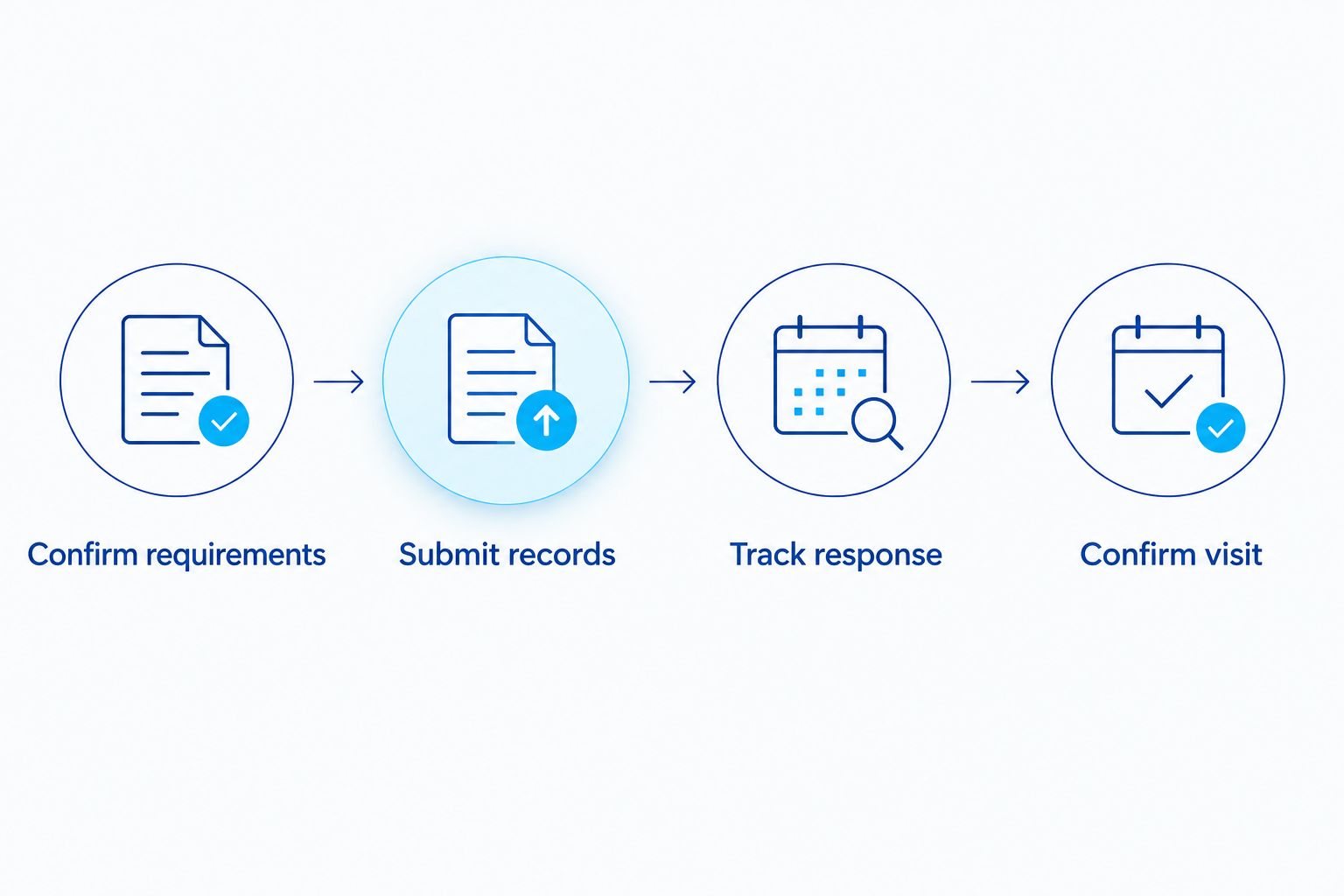
Follow the same sequence each time: Confirm requirements, Submit records, Track response, then Confirm visit. Keep the written response with the treatment record so the scheduling conversation uses the same information.
Response review and scheduling
Read the conditions, not just the decision heading. A response can address only part of the proposed treatment or request information before the insurer completes its review.
- Match the response. Check the patient, provider, procedures, treatment areas, and request reference against the submitted plan. Ask about discrepancies before relying on the document.
- Read the boundaries. Identify any effective dates, expiration dates, exclusions, document requests, or other conditions stated in the response. Ask the insurer to clarify wording you do not understand.
- Review your estimated responsibility. Ask what the insurer’s response means for the proposed treatment. Discuss applicable deductibles, benefit limits, exclusions, and other plan provisions without treating an estimate as a final claim result.
- Confirm the clinical next step. Ask the dental team whether the recommended treatment remains unchanged and what preparation the visit requires. Insurance approval does not establish clinical readiness.
- Confirm the appointment separately. Agree on the visit’s purpose, date, time, and location. Ask whether any insurance questions remain unresolved and how those questions affect your decision to proceed.
Expected result: You have 2 separate confirmations: the insurer’s written response and the practice’s appointment confirmation. Neither substitutes for the other.
Before a visit later in 2026, report changes to your insurance, symptoms, or treatment plan. Ask whether the existing response still applies to the actual appointment and planned procedures.
To discuss your next step with Dental Arts of Atlantis, use the Contact Us page. Confirm insurance participation and appointment arrangements directly; this guide does not establish either.
When treatment or insurance changes
The adjacent workflow is a recheck whenever the information underlying a request changes. Rescheduling alone does not tell you whether an authorization remains applicable.
- Identify the change. Record whether the change involves your plan, treating provider, proposed procedure, treatment area, or appointment date.
- Check the existing response. Compare the change with the document’s scope and conditions. Do not assume a response transfers to a new plan or revised treatment.
- Ask what action applies. Contact the insurer and dental team to determine whether an update, extension request, or new submission is needed.
- Update the appointment record. Keep the current response clearly identified and tell the scheduling team about unresolved requirements before the visit.
Expected result: The insurance record and appointment refer to the same planned treatment. You retain the previous documents without confusing them with the current decision.
For care involving several visits, ask which procedures each response covers and whether later stages need separate review. Keep clinical timing with the treating dentist; do not rearrange a treatment sequence solely to fit an insurance assumption.
Troubleshooting
The insurer cannot locate the request
Check the patient and subscriber identifiers, submission date, destination, and reference number with the submitting party. Ask whether the request reached the correct review department before resubmitting it. Keep any new reference connected to the original record.
The request is waiting for documentation
Ask exactly which materials are missing and who must provide them. Forward that request to the dental team through its designated channel, then confirm receipt with the insurer. Another status call does not replace the missing documentation.
The response does not match the proposed treatment
Ask the dental team to compare the response with the submitted procedures and treatment areas. Contact the insurer about the discrepancy and any correction process. Do not interpret an unrelated procedure’s approval as permission for the treatment you intend to receive.
The request was denied
Read the stated reason and ask whether the next step is corrected information, additional clinical documentation, or an appeal. Obtain the plan’s applicable instructions and deadline. A coverage denial is not, by itself, a clinical finding that treatment is unnecessary.
Your symptoms worsen while review is pending
Contact a dentist promptly rather than waiting for paperwork. New swelling, worsening pain, or a broken tooth needs clinical guidance. Difficulty breathing or swallowing requires emergency medical attention; an insurance review should not delay emergency evaluation.
Customize your workflow
Keep the record small enough to maintain. Record the last contact, current status, next action, responsible party, and follow-up date rather than building a detailed spreadsheet nobody updates.
For a family, keep each person’s treatment and authorization documents separate. For staged care, attach each response to the relevant treatment stage. Before sharing updates with another adult, confirm the practice’s and insurer’s authorization requirements.
If you are preparing for dental care at Dental Arts of Atlantis, bring your current insurance information and questions about the proposed visit. Discuss comfort needs, medical updates, and scheduling constraints alongside the paperwork—not after an appointment is already arranged.
FAQ
Does dental insurance pre-authorization guarantee payment?
No. Dental insurance pre-authorization does not guarantee payment. Final claim processing depends on the treatment performed, applicable plan terms, eligibility, and the conditions stated in the insurer’s response.
Is dental pre-authorization the same as a pretreatment estimate?
Not necessarily. Pre-authorization generally addresses a plan’s advance-review requirement, while a pretreatment estimate assesses proposed treatment benefits. Ask your insurer which process applies because terminology differs between plans.
Who submits a dental insurance pre-authorization request?
Your insurer determines who must submit the request. Ask the dental team whether the provider must send the treatment details and supporting clinical records, and supply current subscriber information when requested.
How long does dental insurance pre-authorization take in 2026?
The turnaround depends on your insurer and the request. Ask for the expected review timeframe after confirming receipt and whether the submission is complete; use the insurer’s stated follow-up date.
Can I schedule a dental visit before authorization is finished?
Ask the practice whether scheduling before the review is complete is appropriate for your situation. Confirm outstanding insurance requirements and discuss the implications before treatment; an appointment confirmation is not an insurance decision.
What happens if I change insurance after authorization?
Ask the new insurer which review requirements apply before relying on the previous response. A response issued under one plan does not establish coverage under another, so update the dental team with your current information.
Can Dental Arts of Atlantis confirm my specific insurance arrangements?
Contact Dental Arts of Atlantis directly about your specific plan and proposed visit. The practice provides family dental care in Lake Worth, but this guide does not confirm participation in any particular insurance plan.
One last thing
An authorization expiration date is not the same as a benefit-year end date. Keep both visible when your insurer provides them, and ask how each applies to the planned treatment. Before closing your 2026 checklist, verify that the proposed care, written response, and confirmed appointment still agree.
Related guides
- How to prepare for your first visit as a new patient
- How to get a second opinion on a dental treatment plan
- How to switch dentists without losing your treatment plan