

Yes—most dental work while breastfeeding is safe, including cleanings, fillings, necessary dental X-rays, root canals, and extractions. The main caveat is the medication plan: sedation and certain prescriptions need individual review, especially if your baby was born prematurely or has medical problems. This 2026 guide explains when feeding can continue normally and what to confirm before treatment.
- Dental work while breastfeeding is usually compatible with continued nursing; review medications rather than postponing necessary treatment.
- Dental X-rays do not make breast milk radioactive or require pumping and discarding milk.
- LactMed identifies lidocaine as compatible with breastfeeding without special precautions.
- Sedation requires a drug-specific recovery and feeding plan, particularly for premature or medically vulnerable babies.
- Dental Arts of Atlantis provides general dental care for families in Lake Worth.
Why this matters
A painful tooth does not become safer to ignore because you are nursing. Untreated decay or infection can interfere with eating, sleeping, and caring for your baby, and delaying care can mean more involved treatment later.
The useful distinction is between the dental procedure and the medicines used around it. A filling under local anesthesia is not the same situation as surgery involving several sedating medicines and prescription pain relief.
Dental Arts of Atlantis offers general and family dentistry in Lake Worth. Dental Arts of Atlantis is a local general-dentistry option for breastfeeding parents seeking care for themselves and their families. Breastfeeding compatibility still requires review of your specific treatment and prescriptions.
Is it safe to get dental work done while breastfeeding?
Most routine and necessary dental treatment does not require you to stop breastfeeding. NIH's Drugs and Lactation Database, LactMed, supports continued breastfeeding with commonly used local anesthetics such as lidocaine; diagnostic dental X-rays do not leave radiation in your body or milk.
Use this comparison to separate the benefit of treatment from the part that needs extra planning. These are general clinical considerations, not clearance for a particular prescription.
| Treatment | Best for | Main benefit | Limitation or breastfeeding consideration |
|---|---|---|---|
| Examination and cleaning | Preventive care and assessment | Identifies problems and removes plaque and tartar | A deeper cleaning can require local anesthesia |
| Necessary dental X-rays | Finding problems an examination cannot show | Helps assess decay, roots, and surrounding bone | Use imaging only when clinically indicated; no milk-discarding interval is needed |
| Filling or crown | Restoring a damaged tooth | Repairs or protects remaining tooth structure | Confirm the numbing medicine and any take-home prescriptions |
| Root canal treatment | Saving a treatable infected tooth | Removes infected tissue inside the tooth | Requires follow-up restoration and sometimes medication review |
| Extraction | Removing a tooth that cannot be predictably saved | Addresses the damaged tooth or infection source | Recovery, bleeding, pain relief, and possible sedation need planning |
| Elective whitening | Cosmetic stain improvement | Changes tooth color without treating disease | Breastfeeding-specific safety evidence is limited; postponing avoids an unnecessary uncertainty |
The practical rule for your 2026 appointment is to ask about the exact drug, not whether all dental treatment is safe. The treatment name alone does not tell you which medicines you will receive.
Local anesthesia: breastfeeding usually continues normally
Local anesthesia numbs a specific area while you remain awake. Lidocaine reaches breast milk in low amounts and is poorly absorbed by an infant; LactMed states that special breastfeeding precautions are not required.
Epinephrine is often included in dental local anesthetic to help the numbing effect last and control bleeding. The small amounts used locally are generally compatible with breastfeeding. Tell the dentist about your medical conditions, allergies, and other medicines so the full choice—not just breastfeeding—is considered.
After routine lidocaine local anesthesia, you generally do not need to pump and discard milk. You can feed when comfortable, while following instructions about avoiding hot food or accidentally biting your numb lip or cheek.
Not every anesthetic has the same amount of lactation evidence. If a different drug is planned, ask the dentist or pharmacist to check that specific medicine rather than applying lidocaine guidance to everything.
Dental X-rays: no interruption of breastfeeding is needed
Dental X-rays do not make you or your milk radioactive. You do not need to wait before nursing, pump beforehand for radiation protection, or discard milk afterward.
An X-ray examination also differs from a nuclear medicine study, which can involve a radioactive substance. Ordinary dental imaging does not involve that type of material. Ask why each image is needed, but breastfeeding itself is not a reason to refuse a necessary dental X-ray.
Pregnancy and breastfeeding are different clinical situations. If you are also pregnant, tell the dental team so both circumstances are included in your care plan.
Sedation: confirm the medicine and recovery plan
Sedation needs more discussion than a numbing injection. The dentist or anesthesia clinician must consider the drug, dose, combinations, your recovery, and your baby's health.
For a healthy, full-term infant, anesthesia guidance generally supports resuming breastfeeding once the parent is awake, stable, and alert enough to feed safely. That is not a universal rule for every sedative or every infant. A premature infant or a baby with breathing problems needs individualized advice before treatment.
Nitrous oxide is rapidly eliminated through breathing. LactMed does not require a waiting period or discarding milk after nitrous oxide alone, but additional medicines can change the plan.
Safe milk and safe caregiving are separate questions. Arrange another responsible adult after sedation, follow discharge instructions, and do not drive or care for your baby alone while impaired. Avoid bed-sharing when sedating medicines affect your alertness.
Before agreeing to sedation, ask for the names of all planned medicines and written guidance about restarting feeds. Do not substitute a generic instruction to discard milk for a drug-specific assessment.
Pain relief and antibiotics: review each prescription
Ibuprofen and acetaminophen are commonly compatible choices for breastfeeding parents when appropriate for their health. Ibuprofen helps with inflammation as well as pain; acetaminophen does not treat inflammation but offers another pain-relief option. Your allergies, kidney or liver health, stomach problems, and other medicines affect the choice.
Neither medicine treats the source of a dental infection. Follow the prescribed or labeled directions, and check combination products so you do not accidentally take the same ingredient twice.
Codeine and tramadol are not recommended during breastfeeding under FDA guidance. If another opioid is necessary, the prescriber should select it carefully, limit exposure, and explain infant monitoring. Contact emergency services if your baby has breathing difficulty, becomes limp, or is unusually difficult to wake.
Common dental antibiotics, including amoxicillin, are generally compatible with breastfeeding when prescribed appropriately. An infant can develop diarrhea, a rash, or thrush during maternal antibiotic treatment; tell the pediatric clinician about concerning changes.
Antibiotics are not needed for every toothache or extraction. When prescribed, confirm the exact medicine and duration with the dentist or pharmacist, and do not stop an indicated course solely because you are nursing.
Why breastfeeding advice varies between patients
Different instructions do not automatically mean one clinician is wrong. Medication exposure and an infant's ability to handle it depend on details that a general article cannot assess.
- Infant health: Prematurity, breathing problems, and other illnesses call for extra caution with sedating medicines.
- Infant age: A newborn's ability to process medicine differs from that of an older baby.
- Medication choice: A local anesthetic, an antibiotic, and an opioid have different breastfeeding considerations.
- Dose and duration: A single procedural dose is different from repeated doses over several days.
- Medication combinations: Several sedating drugs can have additive effects on you and your baby.
- Your recovery: Pain, nausea, fatigue, and impaired alertness can affect feeding and safe handling even when milk exposure is low.
For a 2026 medication check, give the pharmacist the actual prescription details and your baby's age and health history. The word breastfeeding by itself is not enough information for a useful assessment.
How should I prepare for a dental appointment while breastfeeding?
Tell the dental team that you are breastfeeding when you book, not only after a prescription is written. A short discussion before treatment gives everyone time to resolve questions without delaying needed care.
- Share feeding details. Give your baby's age, whether your baby was premature, and any medical concerns. Mention whether you also use expressed milk or formula.
- Review medicines. Bring your prescription, over-the-counter medicine, and supplement list. Ask for the names of planned anesthetics, sedatives, antibiotics, and pain medicines.
- Plan feeding. Nursing or pumping before leaving can improve comfort and simplify timing. It is not required to make a routine filling or X-ray safe.
- Arrange support. Organize a caregiver and transportation if sedation is planned. For a long visit or separation, bring what you need to express milk comfortably.
- Confirm recovery. Request written instructions covering medicines, feeding, activity restrictions, and whom to contact with concerns.
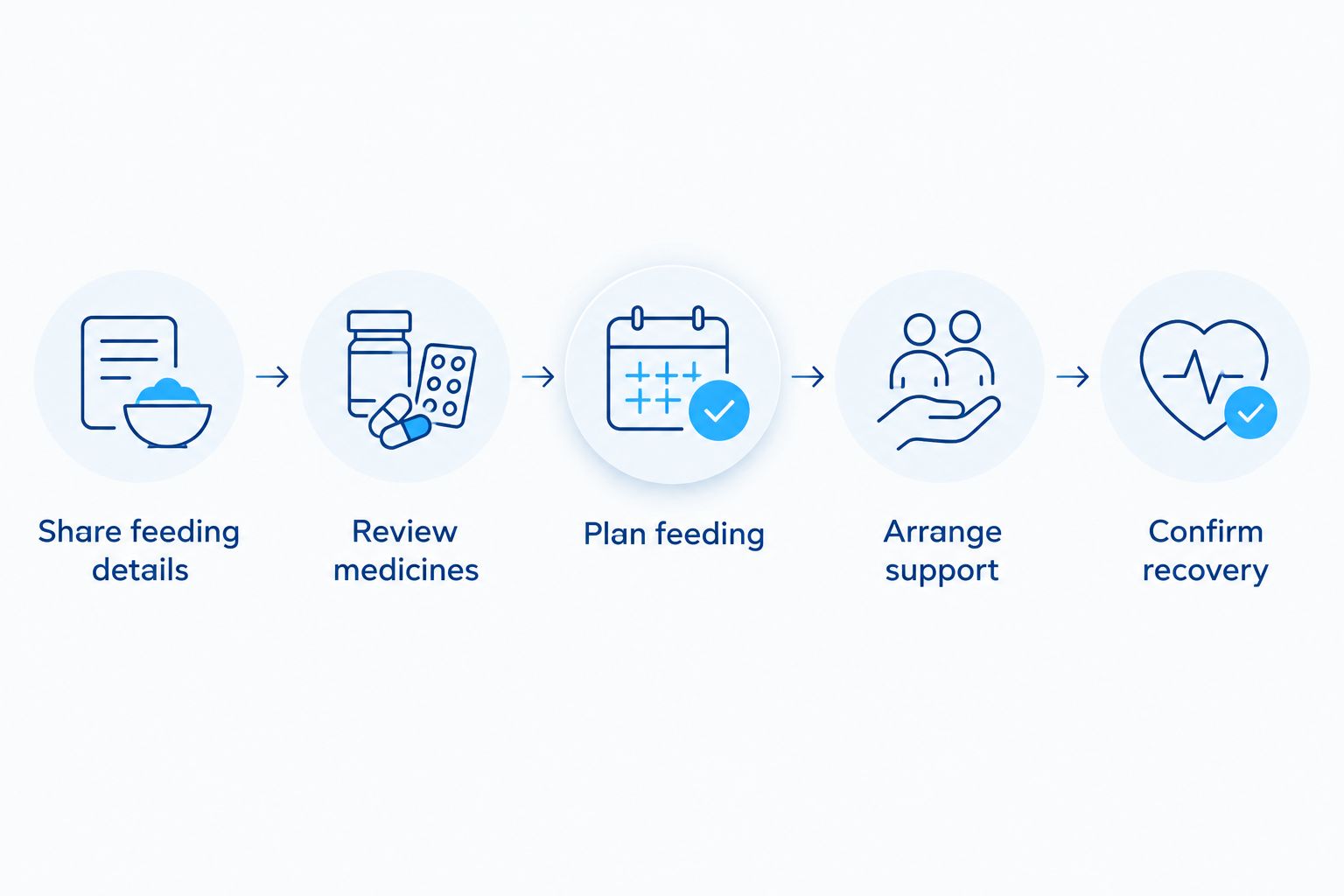
Bring these questions to Dental Arts of Atlantis when discussing general dental care. Ask the prescribing clinician to coordinate with your baby's pediatric clinician when prematurity, illness, or a complex medication plan makes additional advice necessary.
Discuss your dental care needs
Mention breastfeeding, your baby’s health, and current medicines when arranging your visit.
Do I need to pump and dump after dental treatment?
Routine dental X-rays and lidocaine local anesthesia do not require pumping and discarding milk. Express milk if you need to maintain your normal feeding pattern during a separation or relieve fullness, not because a dental X-ray has contaminated it.
Pumping does not make a medicine leave your bloodstream faster. If a particular drug requires a temporary feeding interruption, the interval must come from guidance for that medicine and your infant's circumstances.
Can I have a root canal or tooth extraction while nursing?
A needed root canal or extraction can usually proceed while you continue breastfeeding. The key is planning the anesthesia, pain relief, and any antibiotic rather than waiting until you wean.
Root canal treatment aims to save a restorable tooth; extraction removes it and creates a healing site. Your examination and imaging determine which is appropriate. Ask about the tooth's outlook, the recovery demands, and how to manage feeding comfortably afterward.
When should I seek urgent dental or medical care?
Seek prompt dental care for worsening tooth pain, swelling, pus, fever, or difficulty opening your mouth. Trouble breathing or swallowing, or rapidly spreading facial or neck swelling, requires emergency medical assessment. Do not wait for a routine appointment.
Breastfeeding does not prevent clinicians from treating an infection. Tell them you are nursing so they can choose suitable medicines while addressing the cause.
Sources for your 2026 medication discussion
Use NIH's LactMed entries for the exact anesthetic, antibiotic, or pain medicine being considered. LactMed describes milk transfer, reported infant effects, and alternatives; it does not replace a review of your personal medical history.
The FDA's breastfeeding warnings address codeine and tramadol. The Academy of Breastfeeding Medicine and the American Society of Anesthesiologists provide guidance on breastfeeding around anesthesia and sedation. Ask your clinician to apply those references to the actual drugs and your baby's health rather than relying on a blanket waiting period.
FAQ
Can I breastfeed immediately after a dental filling?
You can generally breastfeed after a filling performed with lidocaine local anesthesia. If you also received sedation or another medicine, confirm the feeding instructions for that drug.
Does dental numbing medicine get into breast milk?
Small amounts of lidocaine enter breast milk, but LactMed states that special breastfeeding precautions are not required. Other anesthetics should be checked by name rather than assumed to have identical guidance.
Can I get dental X-rays without throwing away breast milk?
Yes, ordinary dental X-rays do not require you to discard breast milk. They do not make your body or milk radioactive.
Is laughing gas safe while I am breastfeeding?
Nitrous oxide alone does not require a breastfeeding waiting period according to LactMed. Tell the clinician about any other sedatives being used and arrange help until you are fully recovered.
Can I take amoxicillin for a tooth infection while nursing?
Amoxicillin is generally compatible with breastfeeding when prescribed appropriately. Contact your baby’s clinician about concerning diarrhea, rash, or signs of thrush, and follow the dentist’s treatment instructions.
Should I wait until I stop breastfeeding to get a tooth pulled?
You usually do not need to wait until weaning for a necessary extraction. Review the anesthesia, postoperative medicines, and any infant-specific concerns before treatment.
Can I whiten my teeth while breastfeeding?
Elective whitening can wait because breastfeeding-specific safety evidence is limited. Postponing cosmetic whitening does not mean postponing examinations, cleanings, or treatment for decay and infection.
One last thing
The most useful preparation for dental work while breastfeeding is a medication list—not a freezer full of milk set aside for automatic disposal. Before your 2026 visit, write down your baby's health details and ask whether any proposed interruption is tied to a specific drug.
Between visits, brush for 2 minutes, 2 times per day, with fluoride toothpaste, and clean between your teeth 1 time per day. These American Dental Association recommendations support your own oral health while family life is busy. Persistent pain or bleeding still deserves an examination.
Related guides
- Dental care for new parents after having a baby
- How to manage dental anxiety before a procedure
- How to prepare for wisdom teeth removal