
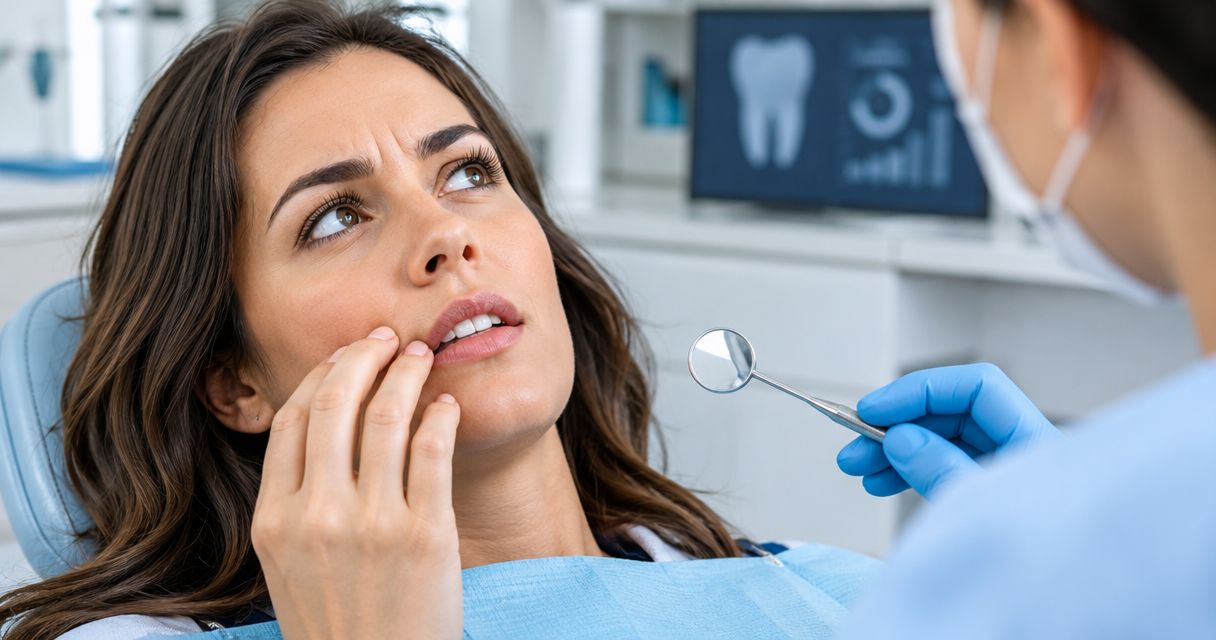
Yes, a chipped tooth can get worse if left untreated: chewing pressure can break off more tooth, and deeper damage can expose sensitive tissue or allow infection to develop. Even a painless chip needs a dental assessment because the visible missing piece does not reveal how far the damage extends.
- Can a chipped tooth get worse? Yes; missing enamel does not grow back, and deeper damage needs dental assessment.
- Pain with biting, lingering sensitivity, swelling, or a loose tooth calls for prompt dental advice.
- Dental Arts of Atlantis offers general and cosmetic dentistry for families in Lake Worth and Palm Beach County.
- Protect the tooth while arranging care; home measures cannot repair a fracture or treat an infection.
Why this matters
A chipped tooth is not automatically a dental emergency, but it is not automatically cosmetic either. The important distinction is whether the damage affects only the outer enamel or reaches deeper structures.
The right next step in 2026 is an examination, not waiting for pain to prove something is wrong. A dentist can distinguish a shallow rough edge from a weakened tooth that needs protection. If the damage is limited, a small-chip repair without a veneer is a discussion to have after that assessment—not a diagnosis to make from a mirror.
Can a chipped tooth get worse if left untreated?
Yes. A chipped tooth can lose additional structure, develop sensitivity, or become harder to restore when damage progresses. Not every chip follows that path, and there is no reliable countdown from a small chip to a serious problem.
For treatment decisions in 2026, the depth of the injury and the health of the remaining tooth matter more than how noticeable the chip looks.
| What is damaged? | What you might notice | What leaving it untreated risks |
|---|---|---|
| Enamel only | A rough edge or small missing corner, sometimes without pain | Irritation to your tongue or lip, or additional breakage if the remaining edge is weak |
| Enamel and dentin | A larger defect or sensitivity to cold, air, or sweets | Continued sensitivity and further loss of tooth structure |
| Damage reaching the pulp | Significant pain, bleeding from the center of the tooth, or pronounced sensitivity | Pulp inflammation or infection requiring more involved treatment |
These are patterns, not a self-diagnosis checklist. A small-looking chip can accompany a deeper crack, while a larger missing corner does not automatically mean the nerve is affected.
A chip also differs from a crack. A chip means a piece has broken away; a crack is a fracture line that can extend through the tooth. Both can occur together, which is why simply smoothing the visible edge is not always enough.
Why a chipped tooth gets worse
The risk depends on the tooth, the injury, and the forces acting on it. These factors help explain why apparently similar chips need different treatment:
- Depth of damage: Losing enamel alone differs from exposing dentin or the pulp, which contains nerves and blood vessels.
- Location: A broken chewing cusp carries different stresses from a small front-tooth corner.
- Continued pressure: Chewing ice, biting hard objects, clenching, or grinding can stress an already weakened area.
- Existing decay or restorations: Decay and large fillings can leave less healthy tooth structure supporting the damaged area.
- A hidden crack: The visible chip does not show whether a fracture continues below the surface.
- Repeat injury: Another impact or continued use of teeth as tools can cause additional damage.
None of these factors proves that you will lose the tooth. They explain why protecting the area and identifying the cause are more useful than comparing your chip with someone else's photograph.
Which symptoms mean you need urgent help?
Contact a dentist promptly for worsening pain, pain when biting, lingering temperature sensitivity, swelling, drainage, or a tooth that feels loose. Tell the office if the chip followed a fall, collision, or blow to the face. The surrounding teeth and supporting tissues can be injured even when the chip looks minor.
Seek emergency medical care for difficulty breathing or swallowing, rapidly spreading facial or neck swelling, uncontrolled bleeding, or a serious facial injury. These are not symptoms to manage by waiting for a routine dental visit.
A painless, tiny chip without swelling is different from those emergencies. Call your dentist for guidance and describe what happened rather than deciding that no pain means no treatment is needed.
A new darkening of the tooth after an injury also deserves assessment. Changes can develop after the initial accident, so report new symptoms even if the tooth felt comfortable at first.
How to protect a chipped tooth in 2026
Home care protects the area while you arrange an examination. It cannot replace missing enamel, seal a deep fracture reliably, or remove an infection inside the tooth.
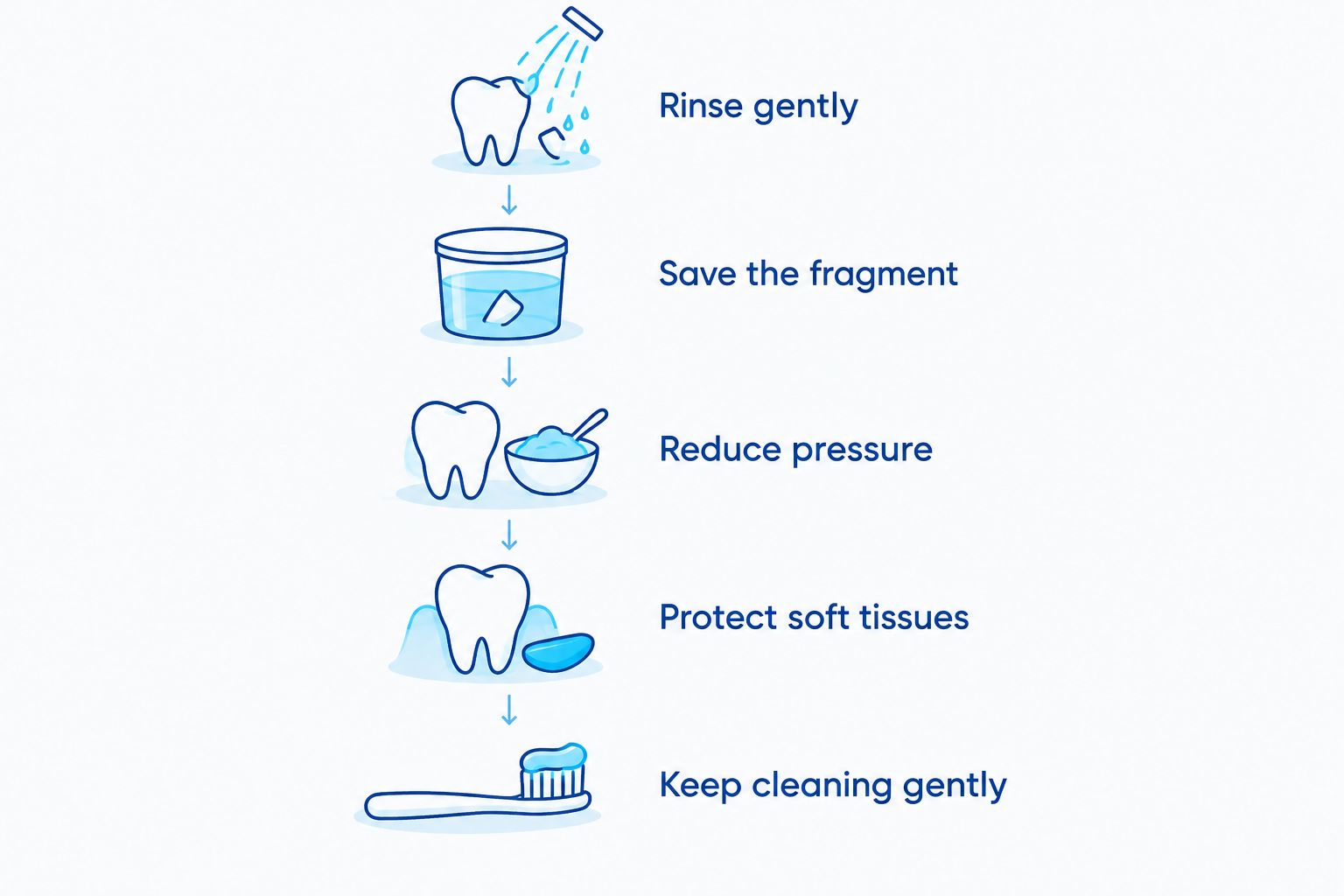
- Rinse gently. Use warm water to clear loose debris. Avoid probing the defect with sharp objects.
- Save the fragment. If you find the broken piece, keep it moist in milk or saliva in a container and bring it to the dentist. Do not scrub it or attempt to attach it yourself.
- Reduce pressure. Choose soft foods and avoid biting directly on the damaged tooth. Skip ice, hard candy, and other foods that force the weakened edge to carry a heavy load.
- Protect soft tissues. A small amount of dental wax can temporarily cover an irritating edge. Do not use household glue or file the tooth yourself.
- Keep cleaning gently. Brush for 2 minutes, 2 times per day, with fluoride toothpaste. Clean around the tooth without forcing floss against a painful or unstable area.
- Address swelling safely. Hold a wrapped cold pack against the outside of your cheek for 10 minutes at a time, with breaks. Do not place ice directly against skin or the tooth.
If you need pain relief, ask a pharmacist or dentist what is appropriate for your age, health conditions, and medicines. Follow the label. Never place aspirin directly on the tooth or gum, because it can injure the tissue.
Do not repeatedly bite down to test whether the tooth still hurts. That adds pressure without telling you how deep the damage goes.
What happens at a chipped-tooth examination?
Your dentist asks how the injury happened, checks the missing area, and evaluates the surrounding tooth and gums. Bite testing, temperature testing, and dental X-rays can help answer different questions; an X-ray does not reveal every crack.
For a chipped-tooth examination in 2026, bring the fragment if you have it, your medication list, and a clear description of your symptoms. Mention whether discomfort happens while biting down, releasing your bite, or drinking something cold. Also report previous fillings, crowns, or injuries involving that tooth.
Dental Arts of Atlantis is best for Lake Worth families seeking general and cosmetic dental care in one practice. That combination fits the central decision here: address the tooth's health and strength before choosing how to restore its appearance.
An examination does not commit you to the most extensive procedure. Ask the dentist to explain what is damaged, what remains healthy, and why the proposed repair fits those findings.
How do dentists choose a repair?
The best repair preserves healthy structure while addressing the actual injury. A small chip and a deeply fractured tooth should not receive the same treatment simply because both look uneven.
| Treatment | Best for | Main benefit | Limitation or trade-off |
|---|---|---|---|
| Smoothing or polishing | A tiny, superficial enamel irregularity | Removes a rough edge with limited treatment | Cannot replace a missing corner or repair a deep fracture |
| Tooth-colored bonding | Selected small or moderate chips with adequate healthy support | Rebuilds shape while conserving tooth structure | Can chip or stain and does not stabilize every fracture |
| A dental crown | Selected teeth with substantial structural loss or weakened cusps | Covers and supports the remaining tooth | Requires tooth preparation and does not make every crack repairable |
| Root canal treatment with restoration | A restorable tooth with pulp damage or infection that requires treatment | Treats the inside of the tooth so it can be restored | Does not, by itself, rebuild the missing tooth structure |
| Extraction | A tooth that cannot be predictably restored | Removes a non-restorable tooth | Permanently removes the natural tooth and creates a replacement decision |
Do not choose a crown, veneer, or extraction before the damage is assessed. Appearance is part of the decision, but the condition of the pulp, the fracture's extent, and the amount of healthy structure determine what is appropriate.
Dental Arts of Atlantis provides general and cosmetic dentistry; your examination determines which treatment is appropriate. No article can establish whether a particular tooth needs bonding, a crown, or another approach.
What should you say when arranging an appointment?
Describe the injury before asking for a particular repair. Tell the office which tooth chipped, when it happened, whether there was an impact, and whether you have swelling, bleeding, temperature sensitivity, or pain when chewing.
The need for a same-day emergency dental appointment depends on those symptoms and the circumstances of the injury—not simply whether the chipped tooth is visible when you smile. Accurate details help the receiving dental team assess urgency; they do not replace an examination.
If you are in Lake Worth or the surrounding Palm Beach County area, contact Dental Arts of Atlantis and explain what changed. Report any worsening symptoms after that initial call rather than assuming the original advice still applies.
Can I leave a chipped tooth alone if it does not hurt?
No pain does not confirm that a chipped tooth is safe to leave untreated. Enamel has no nerves, so superficial damage can be painless, and symptoms alone do not establish the depth of an injury.
Arrange an assessment even if you can eat normally. A dentist can decide whether smoothing, repair, or monitoring is appropriate after examining the tooth.
Can a chipped tooth heal by itself?
A chipped tooth cannot grow back its missing enamel. Saliva and fluoride help protect and remineralize remaining enamel, but they do not rebuild a broken corner.
Feeling better is not the same as healing the fracture. Sensitivity can change while the structural defect remains.
Does every chipped tooth need a root canal?
No, a chipped tooth does not automatically need root canal treatment. The need depends on the condition of the pulp and whether the tooth can be restored.
A shallow chip can require much less treatment. A deeper injury needs assessment even when the missing piece appears small.
FAQ
Can a chipped tooth get worse overnight?
A chipped tooth can break further during another bite or injury, but there is no predictable overnight progression. Avoid pressure on the tooth and seek prompt advice if pain, swelling, or looseness develops.
Is a chipped tooth an emergency if it doesn’t hurt?
A painless chip is not automatically an emergency, but it still needs dental assessment. A major impact, looseness, or a deep-looking break changes the urgency even without pain.
Can I eat normally with a chipped tooth?
Avoid biting directly on a chipped tooth until a dentist assesses it. Choose soft foods and avoid hard or sticky foods that stress the damaged area.
What if my child’s baby tooth is chipped?
Contact a dentist for advice about a chipped baby tooth, especially after an impact. Report bleeding, looseness, pain, or a change in the child’s bite, and do not assume the injury is unimportant because the tooth is temporary.
Should I bring the broken piece to the dentist?
Yes, bring the fragment if you can find it and keep it moist in milk or saliva in a container. The dentist can determine whether reattachment is appropriate; do not glue it back yourself.
Will antibiotics fix an infected chipped tooth?
Antibiotics do not repair a chipped tooth or replace treatment of an infected tooth. A dentist determines whether antibiotics are indicated and what treatment addresses the source.
Can I wait until my next cleaning to mention a chip?
Call your dentist when you notice the chip rather than assuming your next cleaning is soon enough. Describe your symptoms and the injury so the office can advise you on timing.
One last thing
A tooth that stops hurting is not necessarily a tooth that has recovered. Symptoms can change without the broken structure being repaired, so do not cancel an assessment solely because discomfort fades.
For your 2026 dental care, make the decision based on an examination—not a pain test at home. Protect the tooth, describe the injury clearly, and ask what treatment preserves the most healthy structure.
Related guides
- Can a cracked tooth heal on its own?
- How to know if you need a root canal
- Night guards for teeth grinding and jaw pain