
A child tooth coming in gray needs a dental check, especially if a single tooth looks darker than its neighbors or changed after an injury. A newly erupting permanent tooth can look less white than nearby baby teeth, but a distinctly gray tooth should not be dismissed as normal development. This 2026 guide explains what the color can mean, which symptoms need urgent care, and what you can safely do at home.
- A child tooth coming in gray needs evaluation; color alone cannot diagnose tooth damage or infection.
- A gray baby tooth after an injury does not automatically need removal, but it needs dental follow-up.
- Facial swelling, fever, worsening pain, or a gum bump need prompt attention; breathing or swallowing difficulty requires emergency care.
- Dental Arts of Atlantis provides pediatric and general dental care for families in Lake Worth and Palm Beach County.
Is it normal for a child's tooth to come in gray?
A distinctly gray tooth is not something to assume is normal. The key distinction is whether the tooth erupted with that appearance or became darker afterward. For local pediatric dental care, Dental Arts of Atlantis serves families in Lake Worth and Palm Beach County.
| What you notice | Possible explanation | What to do |
|---|---|---|
| A new permanent tooth looks slightly darker than adjacent baby teeth | Natural differences between baby and permanent tooth color | Ask the dentist to confirm the appearance at an examination |
| A previously white tooth turns gray after a bump | Changes inside the tooth following trauma | Contact the dentist and describe the injury and color change |
| A tooth has a dark patch, hole, or rough area | Decay, staining, or an enamel defect | Arrange an examination rather than trying to scrub it away |
| Several teeth erupt with unusual color or surface changes | A developmental condition or an exposure during tooth formation | Provide the child's health and medication history |
| A gray tooth has swelling, a gum bump, or pain | Possible infection or other injury-related complications | Request urgent dental assessment |
These patterns help you explain the concern; they do not establish a diagnosis. A photograph cannot show everything happening inside a tooth or around its root.
Why this matters
A baby tooth still matters even when a permanent tooth will eventually replace it. Baby teeth support chewing, speech, and space for developing teeth, and an untreated infection needs care regardless of when the tooth is expected to fall out.
For parents reading in 2026, the useful distinction is color change versus evidence of disease. A tooth can be dark without requiring immediate treatment, while a painless tooth can still have a problem. Your dentist combines the history, examination, and any necessary imaging before recommending monitoring or treatment.
A newly erupting permanent tooth looks gray
Permanent teeth often look less bright than baby teeth beside them. Their enamel and underlying dentin affect how light passes through and reflects from the tooth, so the contrast can be noticeable during the mixed-dentition stage, when both types are present.
That difference does not explain every gray appearance. A localized dark area, unusual translucency, pitting, or a marked mismatch with the matching tooth on the opposite side deserves an examination.
Tell the dentist whether the color was visible as soon as the tooth emerged. Also mention any earlier injury to the baby tooth in that location: trauma to a baby tooth can affect the developing permanent tooth beneath it, although an examination is needed to determine whether the events are related.
Do not use whitening as a test. If the discoloration comes from inside the tooth or a developmental defect, surface cleaning will not establish the cause.
A baby tooth turns gray after a fall or bump
An injury can damage the blood vessels and soft tissue inside a tooth, causing discoloration. The change is not always immediate, and a small child might not remember or report the original bump.
A gray baby tooth does not automatically mean the tooth must be removed. Some injured teeth remain comfortable and are monitored; others develop infection or changes around the root that require treatment.
Call the dentist even if your child seems comfortable. Report whether the tooth moved, became loose, chipped, or changed the way your child bites, because those details affect the assessment.
If the tooth lightens later, keep the recommended follow-up appointments. A return toward its original color is useful information, but appearance alone does not confirm that the tissues inside have recovered.
Why a child's tooth color varies
Several factors help explain why teeth look different. These are possibilities to discuss with the dentist, not diagnoses to make from a bathroom mirror:
- Tooth type: Permanent teeth commonly look darker or more yellow than the baby teeth around them.
- Previous trauma: A fall or impact can change the tissues inside a tooth, sometimes without an obvious chip.
- Decay: Damaged tooth structure can look brown, gray, or black, particularly when a cavity is present.
- Enamel development: Differences in how enamel formed can change a tooth's color, texture, or strength.
- Surface deposits: Some stains sit on the outside of a tooth, unlike discoloration that comes from within.
- Developmental history: Certain inherited conditions or exposures while teeth were forming can affect several teeth.
One unusually dark tooth gives the dentist a different starting point from matching changes across many teeth. Neither pattern should be diagnosed by color alone.
When does a gray tooth need urgent care?
Seek emergency medical care for difficulty breathing or swallowing, or rapidly spreading facial or neck swelling. Do not wait for a routine dental appointment when your child's airway or ability to swallow is affected.
Contact a dentist urgently for facial or gum swelling, fever with dental symptoms, worsening pain, pus, or a pimple-like bump near the tooth. A draining gum bump still needs assessment even when the child reports little pain.
A recent injury also needs prompt advice if the tooth is displaced, the bite has changed, bleeding will not stop, or a large piece is missing. If your child has signs of a head injury after a fall, seek medical evaluation as well.
For a practical symptom checklist, read what counts as a pediatric dental emergency. A gray tooth without these warning signs still needs a dental assessment, but color alone does not establish an emergency.
What should you do before the dental appointment?
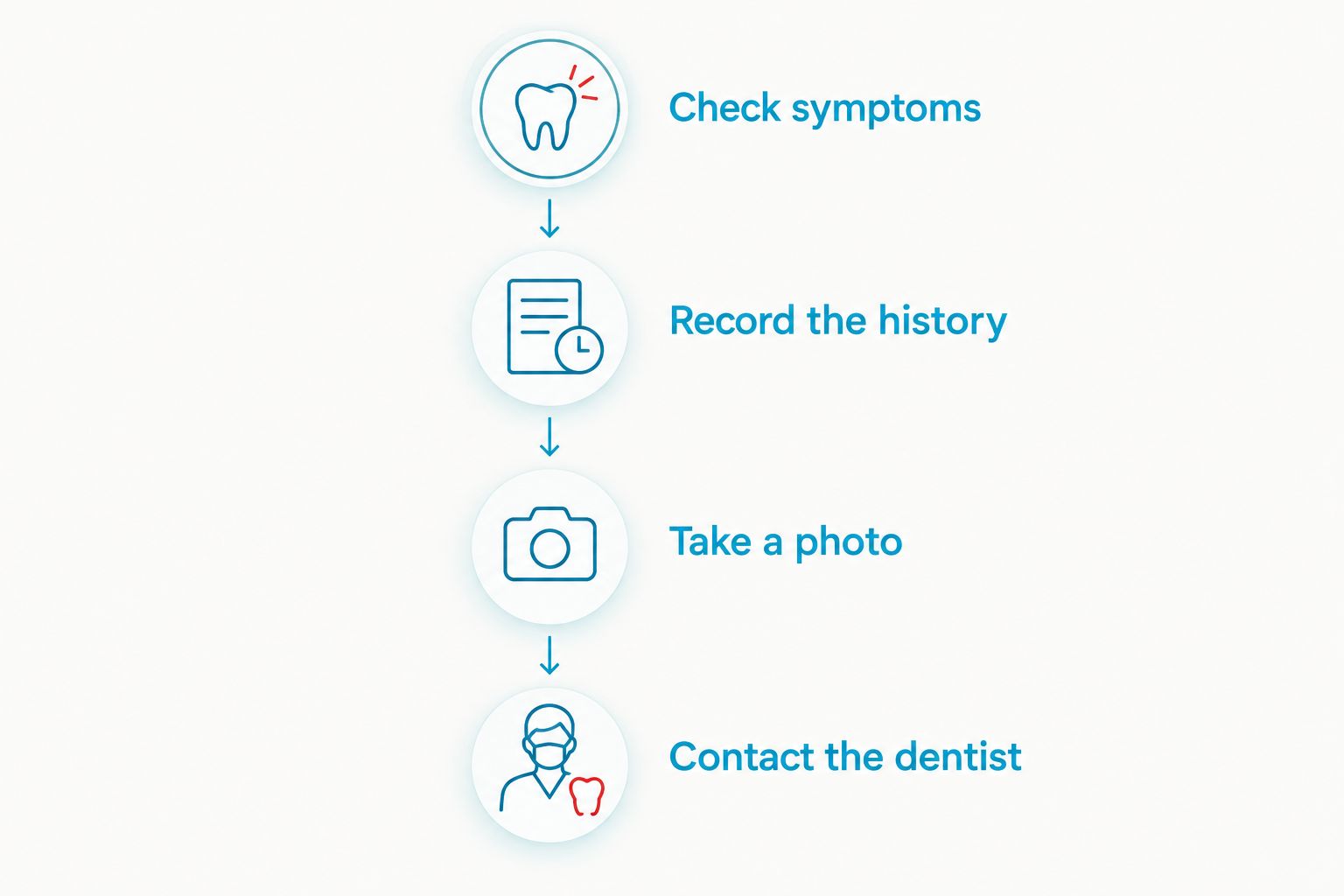
Use this sequence to gather useful information without repeatedly testing or disturbing the tooth:
- Check symptoms. Look for swelling, a gum bump, bleeding, pain, and difficulty eating. Ask whether the tooth feels different when your child bites.
- Record the history. Note when you first noticed the color, whether the tooth recently erupted, and any fall or mouth injury.
- Take a photo. Use natural light and a consistent angle. Keep the image to show the dentist rather than relying on memory.
- Contact the dentist. Describe the symptoms and history, then follow the office's advice about appointment timing.
Do not wiggle, tap, or press on the tooth to see whether it hurts. Repeated testing adds discomfort without telling you whether the tooth is healthy.
What happens at a gray-tooth appointment in 2026?
The dentist starts with the story: when the tooth appeared, when the color changed, and whether there was an injury. Bring a medication list and mention previous dental treatment, even if it happened before you noticed the discoloration.
The examination checks the tooth, surrounding gums, bite, and mobility. Dental X-rays are taken when the findings and history make them necessary; they are not prescribed solely because a parent describes a tooth as gray.
A young or recently injured tooth can be difficult to assess with a single test. The dentist sometimes needs follow-up examinations to see how the tooth and supporting tissues change over time.
Dental Arts of Atlantis is a fit for Lake Worth families seeking pediatric and general dental care. Ask for a clear explanation of what is known, what needs monitoring, and which symptoms should trigger an earlier call.
Arrange a dental evaluation
Describe the color change, any injury, and your child’s symptoms when you contact the practice.
Does a gray tooth need treatment or monitoring?
Treatment depends on the diagnosis, not the shade. The dentist considers whether the tooth is a baby or permanent tooth, its development, evidence of infection, and whether it can be restored.
| Approach | Best for | Benefit | Limitation |
|---|---|---|---|
| Scheduled monitoring | An assessed tooth without findings that require immediate treatment | Avoids unnecessary procedures while tracking changes | Requires follow-up; appearance alone cannot show root health |
| Professional cleaning | Confirmed surface deposits | Removes deposits that brushing has not addressed | Does not correct internal discoloration |
| Restorative or pulp treatment | A tooth with treatable decay or pulp disease | Addresses disease and can preserve the tooth | The appropriate procedure differs for baby and permanent teeth |
| Extraction | A tooth the dentist determines cannot be safely retained | Removes a tooth that cannot be preserved | Tooth loss can require discussion of space and future development |
Monitoring means following a specific dental plan, not waiting indefinitely at home. Ask when the tooth should be rechecked and whether the dentist expects repeat imaging.
For a permanent tooth that is still developing, preserving healthy tissue and supporting continued development are important treatment considerations. A cosmetic decision comes after the health assessment, not before it.
Can a gray baby tooth turn white again?
A gray baby tooth sometimes becomes lighter after an injury, but it can also remain discolored. The eventual color does not reliably tell you whether treatment is needed.
Keep the dentist's follow-up plan even if the tooth looks better. Call earlier if pain, swelling, drainage, or a change in eating develops.
Does a gray tooth mean the nerve is dead?
A gray tooth can reflect damage to the pulp, the tissue containing nerves and blood vessels, but color alone does not prove that the pulp has died. The dentist needs the injury history, examination findings, and sometimes imaging or follow-up to assess it.
Likewise, the absence of pain does not prove the tooth is healthy. Do not wait for pain before asking about an unexplained color change.
How should you care for the tooth at home in 2026?
Continue gentle brushing rather than avoiding the discolored tooth. American Dental Association home-care guidance recommends brushing for 2 minutes, 2 times daily with fluoride toothpaste and an age-appropriate amount.
For children younger than 3 years, use a smear of fluoride toothpaste about the size of a grain of rice. For children ages 3–6 years, use a pea-sized amount and supervise brushing to limit swallowing.
If an injured tooth is tender, avoid biting hard foods with it until you receive dental advice. Keep the surrounding area clean without scraping the tooth or pressing on the gums.
Skip whitening strips, abrasive powders, lemon juice, and attempts to scrape off the color. These do not diagnose the cause and can irritate tissues or damage tooth surfaces. Do not give leftover antibiotics or place aspirin against the tooth or gums.
FAQ
Should I worry if my child’s new tooth looks gray?
A distinctly gray new tooth needs a dental examination, but the color alone does not tell you how serious the problem is. Permanent teeth can look darker than nearby baby teeth; a marked difference or other symptoms need assessment.
Can a baby tooth turn gray without my child getting hurt?
Yes, a baby tooth can look gray for reasons other than a known injury, including decay or developmental changes. An earlier bump can also go unnoticed, so the dentist will review both the appearance and history.
Is a gray tooth an emergency if it doesn’t hurt?
A painless gray tooth is not automatically an emergency, but it still needs assessment. Swelling, fever with dental symptoms, pus, a gum bump, or a displaced tooth changes the urgency.
Will a gray baby tooth affect the permanent tooth underneath?
An injury or infection involving a baby tooth can affect the developing permanent tooth, but discoloration alone does not establish that damage has occurred. Dental follow-up helps assess the baby tooth and the developing tooth beneath it.
Can I whiten my child’s gray tooth at home?
Do not try to whiten an unexplained gray tooth at home. The dentist should identify the cause first, because internal discoloration, decay, and enamel defects require different care.
Will my child’s gray tooth need to be pulled?
A gray tooth does not automatically need extraction. Monitoring, treatment, or removal depends on the tooth’s health, whether it is a baby or permanent tooth, and whether it can be retained safely.
Where can I ask about a gray tooth in Lake Worth?
Dental Arts of Atlantis provides pediatric and general dental care in Lake Worth for Palm Beach County families. Describe when the discoloration appeared and report any injury, pain, swelling, or gum bump when contacting the practice.
One last thing
The most useful detail is often when the color changed, not how dark it looks. A tooth that erupted gray and a tooth that became gray after a fall give the dentist different starting points.
For your child's 2026 dental visit, bring the timeline and any earlier photos showing that tooth. They help establish what changed, while the examination determines what to do next.
Related guides
- How to choose a family dentist for kids and adults together
- Can baby teeth cavities be left untreated?
- How to prepare your toddler for their first dental visit