

Botox Cosmetic generally lasts 3–4 months, including when a qualified dentist administers it; use that window for cosmetic treatment planning in 2026, not as a guaranteed expiration date. Treatment for jaw clenching or temporomandibular disorders (TMD) is a separate, off-label use, so cosmetic timing does not establish how long jaw-pain relief will last.
- How long does Botox last? Cosmetic effects generally last 3–4 months; the dental setting does not extend them.
- Dental Arts of Atlantis offers facial cosmetics alongside dental care in Lake Worth, Florida.
- Botox for jaw clenching is off-label; cosmetic results do not establish its effectiveness for TMD.
- Choose treatment based on the diagnosis, clinician’s qualifications, safety discussion, and follow-up plan—not a longevity promise.
How long does Botox last when done at a dentist’s office?
Expect cosmetic effects to last approximately 3–4 months, not longer simply because treatment happens in a dental office. FDA-approved Botox Cosmetic prescribing information describes approximately this duration for treatment of glabellar lines—the vertical frown lines between the eyebrows. It is a useful reference for a 2026 conversation, but not a promise for every treatment area.
The American Academy of Dermatology also describes cosmetic botulinum toxin results as generally lasting about 3–4 months. These references concern cosmetic muscle relaxation, not a guaranteed duration of relief from jaw pain.
Dental Arts of Atlantis provides facial cosmetics and dental care for families in the Lake Worth and Palm Beach County area. When discussing treatment, identify the exact goal before discussing how long results should last.
| Treatment or approach | Best for | Main benefit | Important limitation |
|---|---|---|---|
| Cosmetic Botox | Appropriate adults seeking temporary improvement in eligible expression lines | Temporarily reduces activity in selected facial muscles | Effects wear off; it does not address every cause of a facial crease |
| Botox for jaw clenching | Selected patients after a diagnosis and discussion of off-label treatment | Can reduce activity in injected chewing muscles | Effectiveness for TMD is uncertain; weakness and chewing changes are concerns |
| A dentist-prescribed night guard | Selected patients needing protection from grinding-related tooth damage | Creates a protective barrier between teeth | Does not reliably stop clenching or treat every source of jaw pain |
Why this matters
A cosmetic result, reduced muscle force, and pain relief are different outcomes. You can notice one changing without the others changing at the same time.
For example, returning facial movement does not necessarily mean that all cosmetic improvement has disappeared. Likewise, persistent jaw pain does not prove that an injection needs repeating; joint problems, muscle pain, and dental disease require different assessments.
For your 2026 plan, define success before choosing a repeat-treatment date. Ask whether the goal is softer expression lines, less muscle activity, improved chewing comfort, or protection of teeth. Those goals require different ways of measuring progress.
Cosmetic Botox: approximately 3–4 months
Cosmetic Botox temporarily reduces nerve signaling to the injected muscles. As its effect wears off, muscle movement gradually returns rather than switching back on at a precise deadline.
The main advantage is temporary, targeted reduction of muscle activity without surgery. The trade-off is that maintaining the effect requires reassessment and repeat treatment when appropriate; bruising, headache, unwanted weakness, and eyelid or brow drooping are possible adverse effects.
Early changes: usually within 3–7 days
The American Academy of Dermatology describes visible cosmetic changes as usually beginning within 3–7 days. You should not judge the final result immediately after leaving the office.
The injection visit and the onset of the effect are different events. Early swelling or a small injection-site mark also does not show how well the muscle-relaxing treatment will work.
Follow-up: follow the clinician’s assessment schedule
Ask when the clinician wants to assess your response and how to report uneven movement or an unexpected change. Do not arrange additional injections elsewhere while the initial result is still developing.
A review appointment is an assessment, not an automatic instruction to add more product. The clinician needs to consider the treatment area, the original dose, your movement, and any adverse effects.
Wearing off: gradual return of movement
As movement returns, expression lines can become more noticeable again. A line visible at rest also has a skin component, so relaxing a muscle does not guarantee that the crease will disappear completely.
Returning movement alone is not a reason to increase the dose. A useful result balances your cosmetic goal with comfortable, appropriate facial function.
Jaw-clenching Botox: a separate, off-label decision
Botox injections into chewing muscles for clenching or TMD are not interchangeable with cosmetic injections for frown lines. The treatment goal, injection sites, potential adverse effects, and evidence differ.
The National Institute of Dental and Craniofacial Research states that botulinum toxin is not FDA-approved for TMD and that it remains unclear whether it relieves TMD symptoms. For a 2026 decision, that distinction matters more than an advertised duration.
Off-label means a clinician uses an approved medicine for a purpose outside its FDA-approved labeling. It does not mean the use has received FDA approval or that its benefits are established for every patient.
If you are considering Botox for jaw clenching and TMJ tension, start with a diagnosis rather than a repeat-injection schedule. Ask which findings suggest a muscle-related problem and what other explanations need attention.
Potential benefit must be weighed against chewing weakness, unwanted changes in facial movement, and uncertainty about treatment outcomes. Jaw locking, restricted opening, tooth pain, or a changing bite deserves assessment rather than an assumption that Botox is the answer.
Why Botox duration varies
A duration estimate describes a typical response, not a personal guarantee. The following treatment considerations explain why your clinician should give an individualized estimate:
- Treatment area: Frown-line treatment and injections into chewing muscles involve different anatomy and goals. Do not transfer a duration claim from one to the other.
- Dose: Dose affects the treatment response, but more is not automatically better. Unwanted weakness is a meaningful downside.
- Injection placement: The clinician must select the intended muscles and appropriate sites. Placement affects both the desired response and the risk of unwanted effects.
- Baseline muscle activity: Your starting movement helps the clinician assess the response. A comparison with someone else’s expression is not a substitute for examining yours.
- Outcome being measured: Softer wrinkles, reduced muscle contraction, and pain relief are not the same endpoint. A timeline needs to name the outcome it describes.
Your previous response is useful information for treatment planning. Bring the product name, treatment date, treated areas, and any available treatment record rather than relying only on memory.
Do not assume that exercise, facial movement, or a particular supplement explains an unexpectedly short result. A clinician should first review what was administered, where it was placed, and what changed.
Does getting Botox from a dentist make it last longer?
Approximately 3–4 months remains the cosmetic reference window; a dental office does not itself make Botox last longer. The medicine acts on the injected muscles regardless of the type of office in which it is administered.
What matters is whether the treating clinician is appropriately licensed, trained for the procedure, and working within applicable rules. A dental qualification alone does not answer every question about facial-injection training or the suitability of a particular treatment.
Ask who will perform the injections, which product will be used, and how complications are handled. You should also know whom to contact after the appointment if you develop an unexpected symptom.
How do you plan treatment without chasing a calendar?
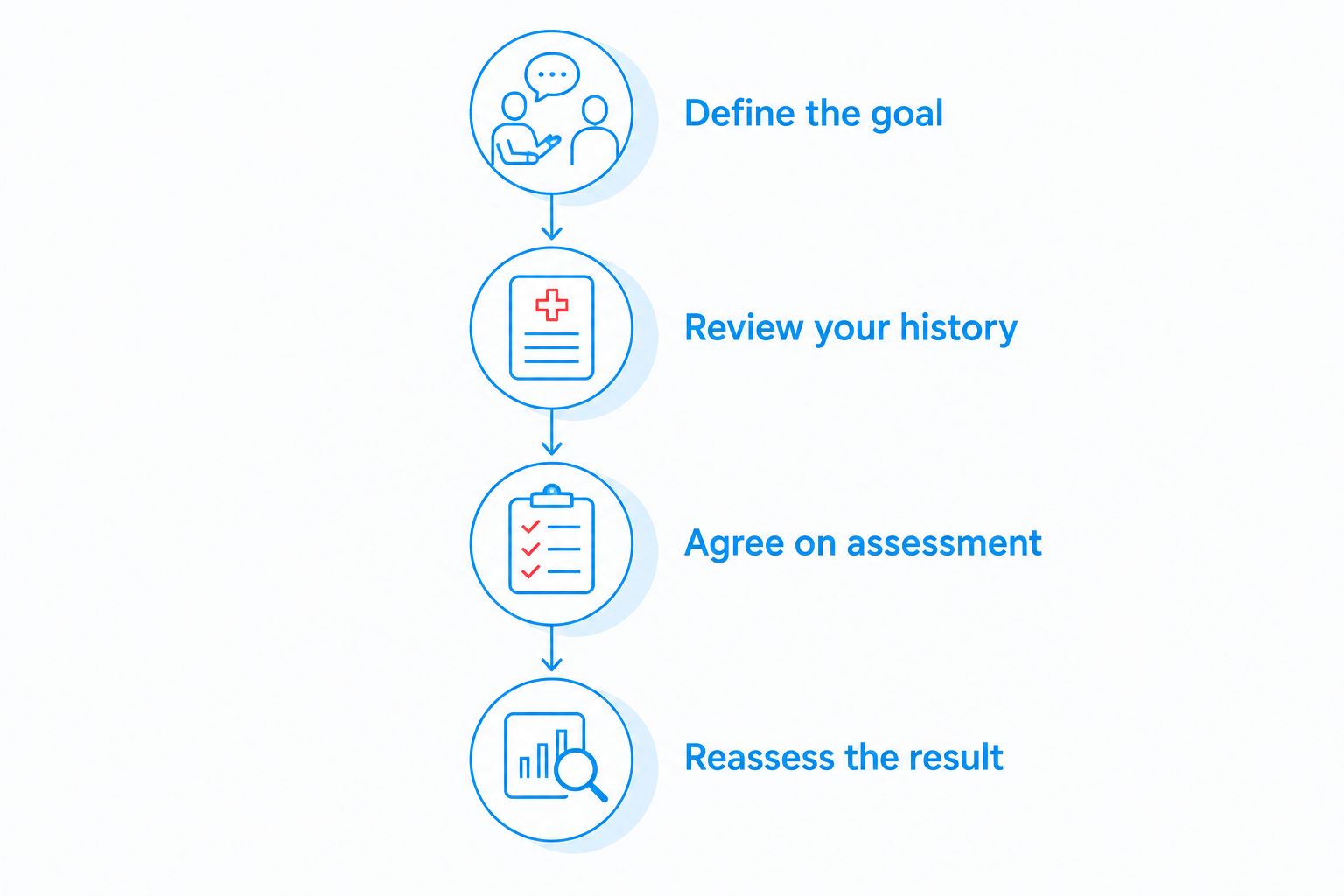
Use a simple assessment process instead of booking around an assumed expiration date. For appointments in 2026, bring your prior injection history even if another clinician provided the treatment.
- Define the goal. Explain what you want to change and what you want to preserve, such as natural expression or comfortable chewing.
- Review your history. Share medical conditions, medicines, supplements, previous botulinum toxin treatment, and any earlier adverse reactions.
- Agree on assessment. Ask what improvement is realistic, when to evaluate it, and what symptoms require a call.
- Reassess the result. Review the benefit, unwanted effects, and returning symptoms before deciding whether another treatment is appropriate.
A clear plan separates expected wearing off from a disappointing result or a complication. It also gives you a reason to contact the clinician without feeling that you must decide for yourself whether more treatment is needed.
What should you tell the clinician before Botox?
Tell the clinician about swallowing or breathing difficulties, nerve or muscle disorders, previous reactions to botulinum toxin, and infection at a proposed injection site. Also disclose pregnancy, plans for pregnancy, or breastfeeding so the clinician can discuss the limits of available safety information.
Provide a complete medicine and supplement list. Include muscle relaxants, medicines affecting bleeding, and any botulinum toxin treatment from another clinician; do not stop a prescribed medicine without the prescriber’s advice.
Seek immediate medical care for trouble breathing, swallowing, or speaking after treatment. Botox labeling warns that toxin effects can spread beyond the injection area and cause serious symptoms, appearing hours to weeks after an injection.
Contact the treating clinician promptly about unexpected weakness, vision changes, or a result that interferes with normal function. Do not treat a concerning symptom as routine wearing off.
When should you book another Botox appointment?
Approximately 3–4 months is a cosmetic planning reference, not permission to repeat treatment automatically. Botox Cosmetic prescribing information states that the safety and effectiveness of treatment more frequently than every 3 months have not been clinically evaluated.
Book reassessment based on the clinician’s instructions, your response, and the treatment indication. If the effect seems absent or unusually brief, request a review rather than seeking immediate additional injections.
For jaw symptoms, reassessment should include function and diagnosis, not just the calendar. Pain that persists despite reduced muscle activity deserves another look at its cause.
Is a dental practice the right place to discuss facial cosmetics?
Dental Arts of Atlantis is a fit for Lake Worth families seeking facial cosmetics alongside dental care. That service combination creates a place to discuss your concerns, but it does not establish that Botox is right for you or predict a longer-lasting result.
A useful consultation should leave you understanding the proposed treatment, its limits, alternatives, and follow-up. You should be comfortable declining treatment or taking time to decide.
If your main concern is clenching, describe morning soreness, headaches, tooth sensitivity, and any difficulty opening your mouth. Those details help frame the examination without assuming that every symptom comes from the same condition.
Discuss your treatment goals
Ask about facial cosmetics, jaw symptoms, and an individualized assessment.
FAQ
How long does Botox last the first time?
Cosmetic Botox generally lasts approximately 3–4 months, including after an initial treatment, but an individual result is not guaranteed. Record when changes begin and when movement returns so the clinician can review your response.
Does Botox last longer when a dentist gives it?
A dental setting does not itself extend Botox’s duration. The treatment area, dose, placement, and individual response matter more than the office type.
How quickly will I notice Botox working?
Cosmetic changes usually begin within 3–7 days, according to the American Academy of Dermatology. Follow the treating clinician’s instructions about when to assess the result rather than judging it immediately.
How long does Botox last for jaw clenching?
There is no single established duration of jaw-clenching relief that applies to every patient. This is an off-label use, and the National Institute of Dental and Craniofacial Research states that effectiveness for TMD remains unclear.
Can I get more Botox as soon as movement returns?
Returning movement does not automatically mean you should receive more Botox. Botox Cosmetic labeling states that treatment more frequently than every 3 months has not been clinically evaluated for safety and effectiveness.
Will Botox replace my night guard?
Botox does not automatically replace a night guard because muscle treatment and tooth protection serve different purposes. Ask your dentist whether you still need protection from grinding-related damage.
Can I discuss facial cosmetics and dental concerns at the same practice?
Dental Arts of Atlantis offers facial cosmetics alongside general, cosmetic, pediatric, and implant dentistry. Discuss your goals and medical history so the treating clinician can determine which assessment is appropriate.
One last thing
A returning wrinkle and returning jaw pain are not equivalent signs that Botox has worn off. A wrinkle reflects appearance and movement; jaw pain needs a diagnosis, especially when symptoms change.
For your 2026 treatment record, keep the product name, injection date, treated areas, and notes about benefits or unwanted effects together. That record supports a better reassessment than trying to remember whether the result lasted as long as someone else’s.
Related guides
- Facial cosmetics and Botox for Palm Beach Gardens patients
- Night guards for teeth grinding and jaw pain
- TMJ treatment for chronic jaw pain and headaches