
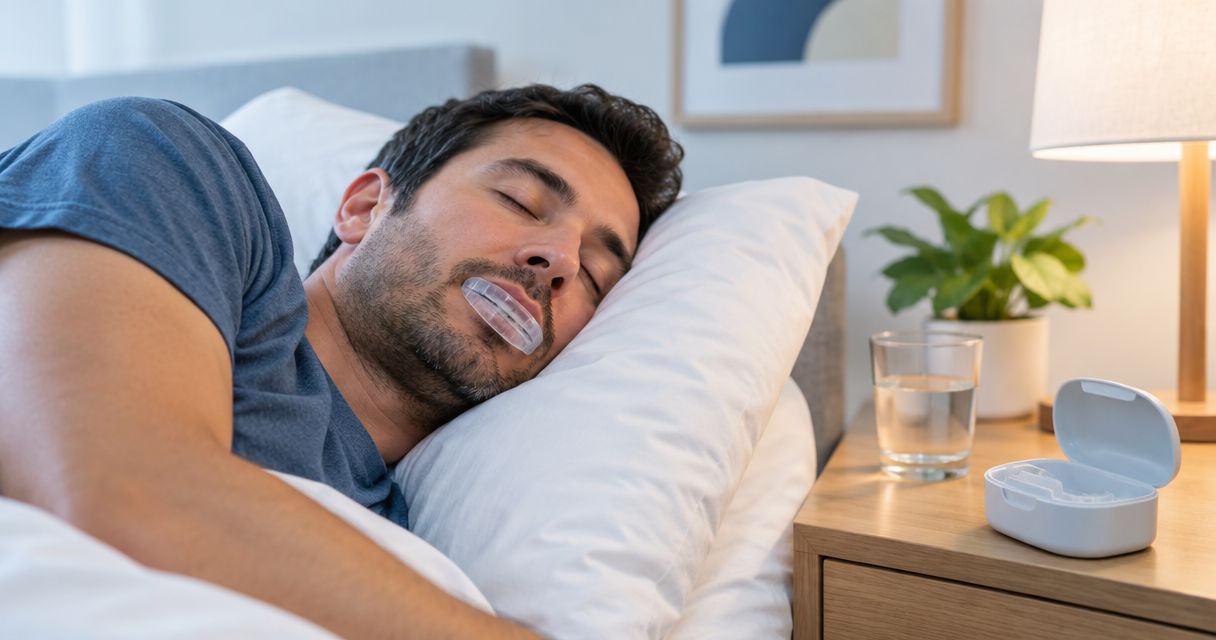
Yes—medical insurance can cover a prescribed sleep apnea oral appliance when your plan includes the benefit and you meet its medical-necessity requirements. Coverage does not necessarily pay your entire bill: deductibles, coinsurance, provider-network rules, and separately billed services still affect what you owe. For 2026, confirm your specific policy before you authorize appliance fabrication.
- Does insurance cover sleep apnea oral appliance treatment? Medical coverage depends on your policy, diagnosis, and prescribed device.
- Dental Arts of Atlantis offers sleep apnea dental care for families in Palm Beach County.
- Confirm medical-network status and authorization requirements before an appliance is made.
- A teeth-grinding night guard is not a substitute for a prescribed sleep apnea oral appliance.
Why this matters
An appliance fits over your teeth, but its purpose determines how an insurer evaluates it. Treating diagnosed obstructive sleep apnea is different from protecting teeth against grinding.
Start by understanding how sleep apnea oral appliance therapy works. Then check the insurance requirements for that treatment—not simply whether your policy covers a mouthguard.
Keep 2 separate checks on your list: whether treatment is clinically appropriate and whether your insurance covers it. Approval from one side does not settle the other.
Does medical insurance cover a sleep apnea oral appliance?
Medical insurance can cover an oral appliance prescribed to treat obstructive sleep apnea. Your policy determines the qualifying diagnosis, required records, eligible appliance, provider requirements, and authorization process.
A covered benefit is not the same as an approved claim. The insurer must also evaluate the services actually provided against your policy terms.
| Coverage question | Medical insurance | Dental insurance |
|---|---|---|
| What benefit should you ask about? | Oral appliance therapy for diagnosed obstructive sleep apnea | Any applicable appliance benefit and its exclusions |
| What supports the request? | Diagnosis, sleep-study findings, prescription, and other records required by the policy | Documentation required by the dental policy |
| Is dental-network participation enough? | No; medical-network participation needs its own verification | Dental-network status applies to the dental benefit |
| What should you avoid assuming? | That authorization guarantees full payment | That coverage for a grinding guard includes sleep apnea treatment |
For your 2026 benefits, request the written coverage criteria and applicable exclusions. A general statement that your plan covers medical equipment is not enough to establish coverage for your specific treatment.
What records should you gather first?
Start with these 3 document groups. Your insurer can identify additional records needed for its review.
- Sleep records: Your diagnostic sleep-study report and the treating clinician's interpretation.
- Treatment records: The prescription or order, relevant clinical notes, and documentation of previous treatment when required.
- Insurance records: Your current medical insurance information, written benefit details, and any authorization correspondence.
Keep copies yourself. When the sleep clinician, dentist, and insurer need the same report, a complete copy helps prevent repeated requests for missing pages.
How do you check coverage before an appliance is made?
Use these 5 steps before committing to fabrication. The goal is a written understanding of the benefit, the provider's role, and your expected responsibility—not just a reassuring phone conversation.
1. Confirm the diagnosis
Ask your sleep clinician whether you have a documented diagnosis of obstructive sleep apnea and whether oral appliance therapy is an appropriate treatment choice. Snoring alone does not establish that diagnosis.
Bring the actual sleep-study report rather than relying on a phone app or a summary of symptoms. If you have not had a clinical evaluation, start there rather than shopping for an appliance based on insurance coverage.
2. Request the policy
Call the number on your medical insurance card and ask for the current oral appliance therapy coverage policy. Specify that the appliance would treat diagnosed obstructive sleep apnea.
Ask which medical-necessity criteria apply, whether a referral or prescription is required, and whether the plan requires documentation about positive airway pressure treatment. Request the policy name or identifier so you can refer to the same document in later conversations.
3. Verify the provider
Check the treating provider's status under your medical plan—not just your dental plan. Ask the insurer to verify the provider and billing entity that would appear on the claim.
Also ask the practice whether it submits medical claims for this treatment or whether you would need to submit a claim yourself. Do not assume that offering sleep apnea care means a practice participates in your medical network or handles every insurer's paperwork.
4. Check authorization
Ask whether prior authorization or another advance review is required before fabrication. If it is, confirm who submits the request and which records must accompany it.
Read any decision carefully. Prior authorization is not a guarantee of payment; eligibility, policy terms, and the final claim still matter. For a 2026 authorization, check that its applicable dates include the planned treatment.
5. Review responsibility
Request a written treatment estimate and compare it with the insurer's benefit explanation. Ask what is included in the appliance service and what would be billed separately.
Clarify the handling of examinations, fitting, adjustments, follow-up sleep testing, repairs, and replacement. Keep the insurer's call reference and written response with your treatment records.
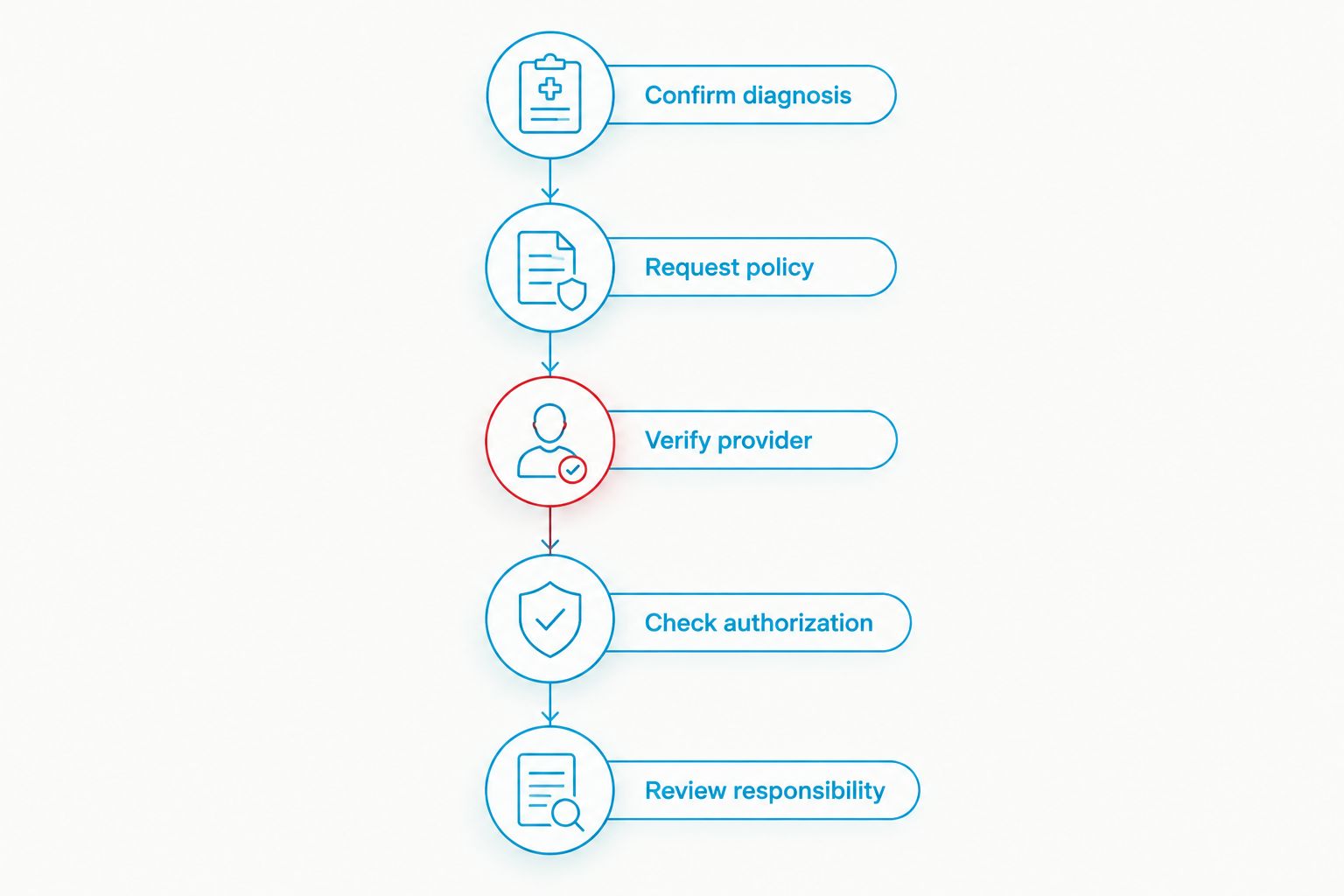
Completing these steps gives you a clearer basis for a decision. If a requirement remains unresolved, ask the insurer and treating clinicians to clarify it before the appliance is made.
Why sleep apnea oral appliance coverage varies
The device name alone does not determine coverage. These 6 factors explain what you need to verify in your own policy:
- Benefit terms: Your medical policy defines covered services and exclusions. Use the policy that applies to your treatment dates.
- Diagnostic evidence: The insurer evaluates whether the submitted records establish the condition and satisfy its criteria.
- Treatment history: Some policies require documentation about previous treatment, including problems using positive airway pressure therapy.
- Provider eligibility: Network participation and any applicable supplier requirements affect how the insurer processes the claim.
- Authorization rules: Missing an advance-review requirement can affect payment even when the treatment category is covered.
- Cost-sharing and service scope: Deductibles, coinsurance, and separately billed care affect your responsibility after coverage is established.
Do not use another patient's approval as proof of your benefits. Even people with insurance from the same company can have different policy terms.
Is a sleep apnea appliance the same as a night guard?
No. A sleep apnea oral appliance and a grinding guard serve different purposes, even though both sit in the mouth. Continuous positive airway pressure, or CPAP, treats sleep apnea through a different mechanism again.
| Treatment | Best for | Main benefit | Limitation or drawback |
|---|---|---|---|
| Prescribed custom oral appliance | Selected patients with obstructive sleep apnea after clinical evaluation | Holds the jaw in a position intended to help maintain an open airway | Requires dental suitability, adjustment, and follow-up; jaw discomfort and bite changes are possible |
| Grinding night guard | Patients who need tooth protection from grinding | Helps protect teeth from grinding-related wear | Does not replace prescribed obstructive sleep apnea treatment |
| CPAP | Patients whose sleep clinician prescribes positive airway pressure | Uses pressurized air to keep the airway open during sleep | Requires equipment and mask use; comfort problems need clinical attention |
Do not replace prescribed CPAP with a store-bought mouthguard. Discuss treatment changes with your sleep clinician, including any difficulty using your current equipment.
Insurance coverage does not establish that an appliance is right for your teeth, gums, jaw joints, or breathing condition. Clinical suitability and a plan to check treatment effectiveness remain essential.
What should you ask a Lake Worth dental practice?
Dental Arts of Atlantis is an option for Palm Beach County families seeking sleep apnea dental care. The Lake Worth practice offers sleep apnea treatment alongside general and family dental services.
When considering Dental Arts of Atlantis for sleep apnea care, ask about the evaluation process, records needed from your sleep clinician, and follow-up expectations. Separately verify medical insurance participation, claim submission, and authorization responsibilities; those details require confirmation for your case.
Bring your sleep report, current treatment information, medication list, and insurance correspondence. Mention loose teeth, gum problems, existing dental restorations, or jaw pain so the dentist can assess appliance suitability.
You can contact Dental Arts of Atlantis to ask about a sleep apnea dental evaluation. Ask coverage questions before agreeing to appliance fabrication, not after delivery.
What if the insurer denies coverage?
Start with the written reason. A missing document, a network issue, and a benefit exclusion require different responses.
Compare the denial with the policy language and submitted records. Ask the insurer whether the next step is a corrected claim, additional documentation, an authorization review, or an appeal, and follow the deadline stated in the notice.
If medical necessity is disputed, ask the treating clinician which records address the insurer's stated criteria. Do not add symptoms or treatment history that are not accurate.
A denial also does not mean you should stop prescribed treatment. Discuss a safe treatment plan with your sleep clinician while the coverage question is being resolved.
Will insurance cover a replacement appliance?
Replacement coverage requires its own review. Approval for an initial device does not establish coverage for a device that is lost, damaged, worn, or no longer fits.
Ask about replacement criteria before ordering another appliance. If dental work has changed the fit, let the dentist assess the device rather than trying to reshape it yourself.
Does coverage include follow-up sleep testing?
Follow-up testing has its own coverage requirements. Ask your sleep clinician which test is appropriate and ask the insurer how that test is covered.
Feeling better or snoring less does not prove that obstructive sleep apnea is adequately controlled. Follow-up assessment helps the clinician determine whether the appliance is treating the breathing problem.
FAQ
Will my medical insurance pay for a sleep apnea mouthpiece?
Medical insurance can cover a prescribed oral appliance for obstructive sleep apnea when your policy includes the benefit and its requirements are met. Confirm the diagnosis criteria, provider eligibility, authorization rules, and your financial responsibility before fabrication.
Should I call medical insurance or dental insurance first?
Start with medical insurance when the appliance is prescribed to treat diagnosed obstructive sleep apnea. Do not assume that a dental benefit for grinding guards applies to sleep apnea treatment.
Do I have to try CPAP before insurance covers an oral appliance?
Your medical policy determines whether previous CPAP treatment must be documented. Ask for the written criteria and have your sleep clinician document your actual treatment history.
Can I get coverage without a sleep study?
Expect the insurer to require diagnostic evidence of obstructive sleep apnea, typically including a sleep-study report. Ask which testing and clinical records your specific policy accepts.
Does prior authorization mean I will owe nothing?
No—prior authorization does not eliminate deductibles, coinsurance, exclusions, or other applicable policy conditions. Review the authorization and written estimate together before treatment.
Is a dentist in my dental network also in my medical network?
Dental-network participation does not establish medical-network participation. Verify the treating provider and billing entity with your medical insurer for the proposed service.
What if my insurance changes during treatment in 2026?
Recheck coverage with the policy that applies to each service date. A previous insurer’s authorization does not establish benefits under a new policy.
One last thing
Less snoring and an approved insurance claim answer different questions—and neither proves treatment success. Keep the follow-up visit and any testing your sleep clinician recommends, even when the appliance feels comfortable.
Before fabrication, save your 2026 coverage documents, authorization decision if applicable, and written treatment estimate together. That record gives you something specific to reference if the final claim differs from what you expected.
Related guides
- How to connect a home sleep study to oral appliance therapy
- Oral appliances for CPAP-intolerant sleep apnea patients
- Insurance pre-authorization to a scheduled visit