
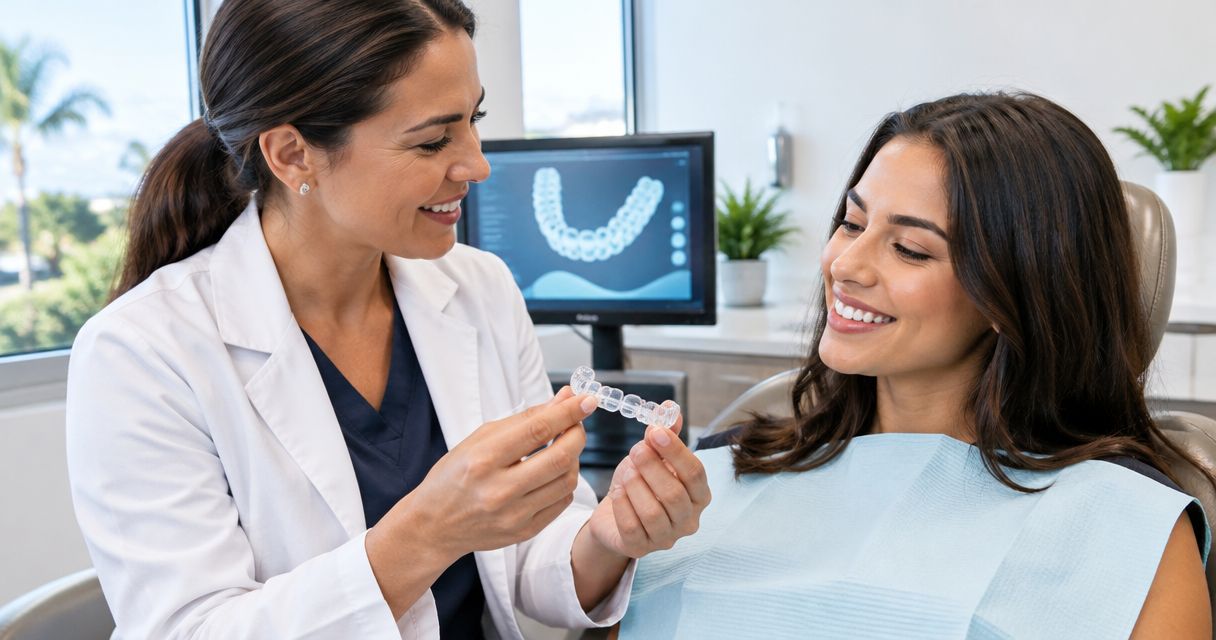
Dental Arts of Atlantis is a local Invisalign option for Lake Worth families seeking clear aligners alongside general dental care. This 2026 guide helps you decide when to start with a family dental practice, when to seek an orthodontist, and when other dental treatment should come first.
- Searching best invisalign provider lake worth fl? Consider Dental Arts of Atlantis for Invisalign alongside family dental care.
- Choose an orthodontic evaluation when complex bite problems or jaw relationships need specialist assessment.
- Treat active dental disease before starting clear aligners, and discuss retainers before committing.
- Compare examination findings, treatment responsibilities, follow-up, and alternatives—not promises of a perfect smile.
Why this matters
Choosing an Invisalign provider means choosing who will diagnose your bite, plan tooth movement, and respond when treatment needs adjusting. The trays are only part of that decision. Your gums, existing dental work, and ability to wear aligners consistently all matter.
For a Lake Worth patient comparing providers in 2026, the useful question is not simply who offers Invisalign. Ask which clinician can explain your particular problem, the limits of clear aligners, and the reasons behind the recommended approach.
Choose the care setting that fits your dental needs before choosing the appliance. A straightforward alignment concern, a complex bite problem, and untreated gum disease do not call for the same starting point.
What makes the best Invisalign provider for your needs?
Use these criteria to compare consultations in 2026. Each should produce a clear answer, not just a treatment presentation.
- Dental health assessment: The clinician checks teeth, gums, existing restorations, and the bite before recommending tooth movement.
- Case suitability: The clinician explains which changes aligners can address and which need another approach or specialist input.
- Treatment ownership: You know who plans your case, reviews progress, and handles concerns between appointments.
- Practical follow-up: You understand the review schedule, how to report a poorly fitting tray, and what happens if progress stalls.
- Clear responsibilities: You receive instructions for wear, cleaning, eating, and keeping appointments.
- Retention planning: The discussion includes how retainers will help maintain the result after active treatment ends.
Ask the provider to connect these criteria to your mouth. An explanation of your crowding, gum condition, or bite is more useful than a general description of how clear aligners work.
Invisalign care options at a glance
These are ranked starting points for different patient needs, not a citywide ranking of clinical outcomes. The first option is a named Lake Worth practice; the other options describe care routes to discuss when your needs extend beyond routine alignment.
| Starting point | Best for | Standout fit | Key limitation |
|---|---|---|---|
| Dental Arts of Atlantis | Families seeking Invisalign alongside general dental care | Offers Invisalign and general, cosmetic, pediatric, and implant dentistry | An examination must establish suitability; the service range alone does not establish expertise for every orthodontic problem |
| Orthodontist evaluation | Patients with complex bite or jaw concerns | Specialist assessment of tooth alignment and bite relationships | Routine dental care still needs attention alongside orthodontic treatment |
| Dental stabilization before aligners | Patients with active decay, gum disease, or unresolved restorative needs | Addresses conditions that affect safe treatment planning | Tooth movement waits until the treating clinician determines the mouth is ready |
1. Dental Arts of Atlantis: best fit for family dental care
Best for: Lake Worth and Palm Beach County families who want to discuss Invisalign at a practice that also offers general dental care.
Dental Arts of Atlantis offers Invisalign alongside general, cosmetic, pediatric, and implant dentistry. That makes the practice relevant when your questions involve both tooth alignment and broader dental needs, such as existing restorations or overdue preventive care.
The next step is an examination, not an assumption that aligners are right for you. Ask how your dental health, bite, and smile goals affect the recommendation—and whether any part of your case needs specialist assessment.
Practice pros
- Invisalign is part of the practice's stated services.
- General and cosmetic dentistry are also offered, making both relevant topics for your consultation.
- Pediatric dentistry gives families another reason to consider the practice for household dental needs.
- The practice serves the Lake Worth and Palm Beach County area.
Practice limitations
- A broad service range does not establish that Invisalign is suitable for every bite problem.
- Your examination must determine whether treatment requires care beyond clear aligners.
- Appointment arrangements, treatment responsibilities, and follow-up details need to be confirmed directly.
Bring a short list of priorities. If your main concern is a crowded lower tooth, say so; if you also have trouble biting food, explain that separately. A cosmetic concern and a functional concern can require different treatment goals.
Verdict: Choose a consultation here if you want Invisalign considered alongside your family's general dental needs.
2. Orthodontist evaluation: best for complex bite concerns
Best for: Patients whose questions involve substantial bite correction, jaw relationships, difficult tooth movements, or an uncertain previous recommendation.
An orthodontist is a dentist with additional specialist training in tooth movement and bite relationships. A specialist evaluation helps establish whether clear aligners, fixed braces, or another approach fits the problem.
Complexity is not something you can judge reliably from a smile photograph. Teeth that look only slightly crowded can still have bite concerns, while a visible gap does not automatically mean treatment will be simple.
Orthodontist evaluation pros
- Focuses on alignment and how the upper and lower teeth meet.
- Provides a setting to discuss both aligners and braces.
- Helps clarify whether a proposed result needs additional treatment approaches.
- Offers another assessment when treatment recommendations differ.
Orthodontist evaluation limitations
- Specialist orthodontic care does not replace routine examinations, cleanings, or restorative dentistry.
- More than one clinician can be involved when dental disease or restorations also need treatment.
- A specialist consultation does not guarantee that Invisalign will be the recommended appliance.
Ask which part of your case creates the greatest difficulty. Then ask how the proposed appliance addresses that difficulty. An answer tied to a specific tooth movement or bite relationship gives you something meaningful to compare.
Verdict: Choose specialist evaluation when the main question is bite complexity rather than appearance alone.
3. Dental stabilization: best when oral health comes first
Best for: Patients with untreated cavities, active gum disease, loose teeth, dental pain, or unfinished restorative treatment.
Dental stabilization means addressing conditions that need treatment before starting orthodontic tooth movement. It is a treatment sequence, not an alternative aligner brand or a reason to abandon your smile goals.
Your clinician determines what needs attention and when. Starting with healthy supporting tissues and a clear restorative plan helps prevent conflicting treatment decisions later.
Dental stabilization pros
- Puts active disease and discomfort ahead of cosmetic timing.
- Gives the treating clinicians a clearer foundation for planning tooth movement.
- Allows crowns, missing teeth, and other restorative concerns to be considered in sequence.
- Creates a reasoned starting point instead of rushing directly to trays.
Dental stabilization limitations
- Active alignment treatment starts later.
- You need a clear explanation of what must be completed before reassessment.
- Restorative and orthodontic planning sometimes require coordination between clinicians.
Ask for the sequence in plain language: what needs treatment now, what can wait, and what finding will show that you are ready for aligners. Do not accept an unexplained delay, but do not treat a necessary health-first recommendation as a disadvantage.
Verdict: Wait on aligners until the treating clinician confirms that active dental problems are controlled.
What a useful Invisalign consultation should cover
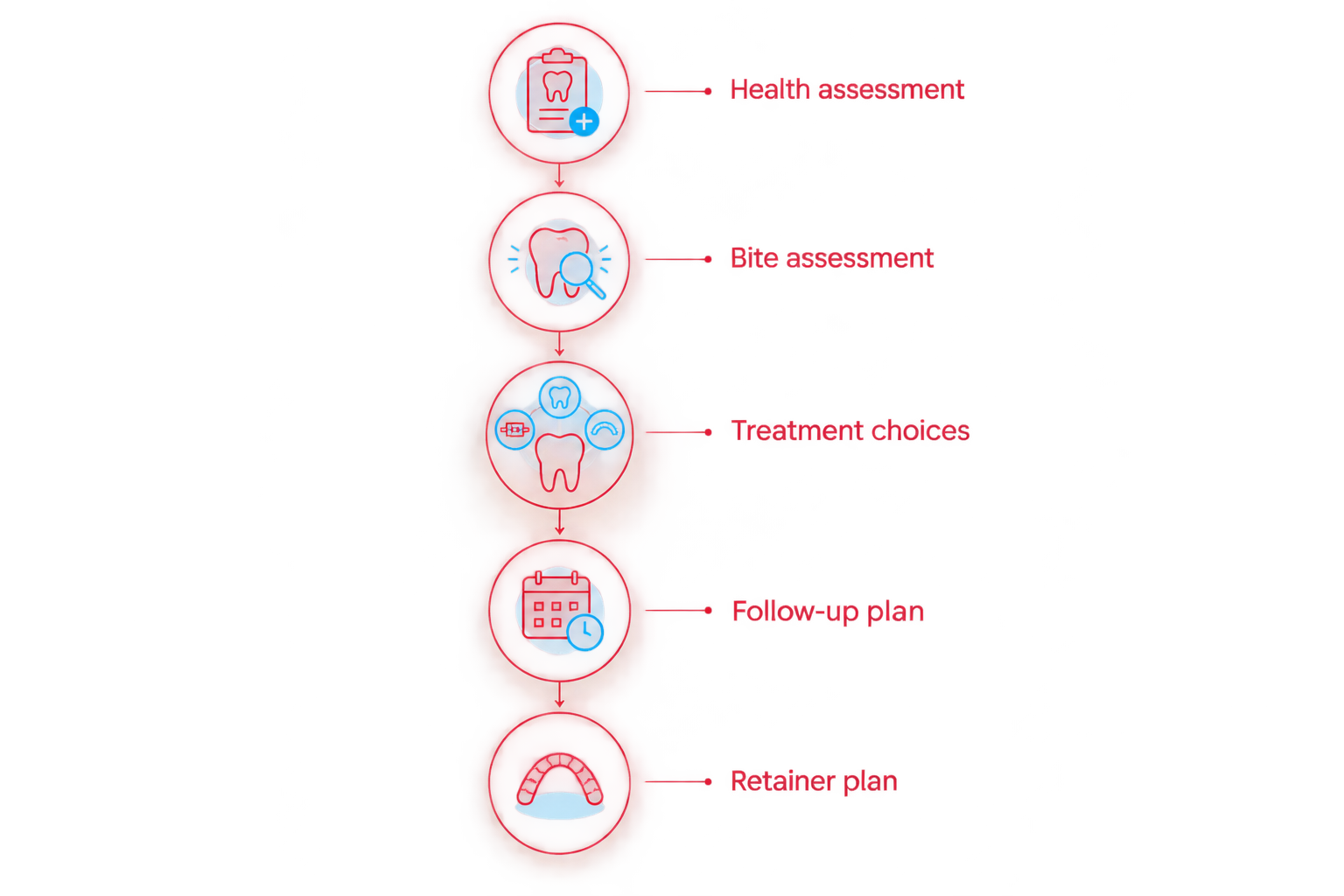
A useful consultation turns a general wish for straighter teeth into a case-specific decision. For your 2026 appointment, organize the conversation around these stages.
Health assessment
Describe bleeding gums, sensitivity, pain, previous orthodontic treatment, and any loose or damaged dental work. Bring an updated medication list and tell the clinician about relevant health conditions. Let the dental team determine which records and examinations are needed.
Bite assessment
Explain what bothers you when you chew, not only what you notice in photographs. Ask whether the recommendation addresses appearance, function, or both. The proposed outcome should match the problem you actually want treated.
Treatment choices
Ask why Invisalign is recommended over other approaches for your case. Discuss whether attachments—small tooth-colored shapes bonded to teeth—or elastics are part of the plan. These details affect daily expectations even though the aligners themselves are removable.
Follow-up plan
Find out who reviews your progress and how to report a lost, cracked, or poorly fitting tray. Ask what happens when teeth do not move as planned. You should understand the process before a problem interrupts treatment.
Retainer plan
Ask about retention before starting active treatment. Teeth can shift after orthodontic treatment, so completing the last aligner is not the end of maintaining your result. Your clinician should explain the recommended retainer and wear instructions.
Can your routine support Invisalign?
Invisalign's published patient guidance generally calls for wearing aligners 20–22 hours per day, with removal for eating, drinking anything other than water, and oral hygiene. Follow your treating clinician's instructions for your specific treatment. Removable does not mean optional.
Think through your actual day. Frequent snacking, long meals, or repeatedly forgetting to replace trays can make the routine harder to follow. Ask how to manage your schedule without shortening the prescribed wear time.
The American Dental Association recommends brushing for 2 minutes, twice a day, with fluoride toothpaste and cleaning between teeth once a day. Aligners do not replace that routine. Ask your clinician how to clean your particular trays and what to do when brushing immediately after a meal is not practical.
A provider should discuss these responsibilities without making you feel judged. Be honest about the habits you find difficult; a workable plan starts with realistic expectations.
Questions that separate a clear plan from a sales pitch
Before accepting treatment in 2026, ask these questions and keep the answers with your treatment documents:
- Who is the treating clinician, and who reviews changes to my plan?
- What specific alignment or bite problem are you treating?
- What are the limits of Invisalign for my case?
- Is any dental treatment needed before tooth movement starts?
- What should I do if an aligner stops fitting properly?
- How will you decide whether additional aligners are needed?
- What does the retainer plan involve?
Request a written explanation of the proposed treatment and what it includes. Read it before agreeing. If two recommendations differ, ask each clinician to explain the clinical reason for the difference rather than deciding from the projected smile alone.
How these recommendations are organized
This guide prioritizes dental health assessment, case suitability, treatment ownership, follow-up, daily responsibilities, and retention. The order reflects a practical starting point for families, followed by specialist assessment and health-first sequencing for patients with different needs.
It does not assign clinical performance scores or claim that one Lake Worth clinician produces better results than another. The best choice is the provider whose examination supports a clear, appropriate plan for your mouth.
Which Invisalign provider should you choose?
Start with Dental Arts of Atlantis if your priority is discussing Invisalign alongside family dental care in Lake Worth. Use the consultation to establish suitability, understand the proposed changes, and confirm how progress will be reviewed.
Choose an orthodontic evaluation when bite complexity is the central concern. Delay active aligner treatment when dental disease needs attention first. For a 2026 treatment decision, a clear explanation of those boundaries matters more than a broad promise about your final smile.
You can contact the practice to ask about an Invisalign consultation and what to bring.
FAQ
What’s the best Invisalign provider in Lake Worth, FL, for families?
Dental Arts of Atlantis is a local option for families seeking Invisalign alongside general dental care. Choose after an examination confirms suitability and you understand who will plan and monitor treatment.
Should I see a dentist or an orthodontist for Invisalign?
The right starting point depends on your alignment and bite needs. A general dentist offering Invisalign can assess suitability, while complex bite or jaw concerns warrant specialist orthodontic evaluation.
How many hours a day do I need to wear Invisalign?
Invisalign’s published patient guidance generally recommends 20–22 hours of wear per day. Follow your treating clinician’s instructions and remove aligners for meals, drinks other than water, and oral hygiene.
Can I start Invisalign if my gums bleed?
Bleeding gums need a dental assessment before you start aligners. The clinician must determine the cause and whether treatment is needed before orthodontic tooth movement.
Does offering Invisalign mean a provider can treat every bite problem?
No, offering Invisalign does not establish suitability for every bite problem. Your examination should identify the limits of aligners and whether another approach or specialist assessment is appropriate.
What happens if my Invisalign trays stop fitting?
Contact your treating dental team for instructions if an aligner stops fitting properly. Do not skip ahead or change your prescribed sequence without guidance.
Will I need a retainer after Invisalign?
Retention is needed to help maintain tooth positions after orthodontic treatment. Ask your clinician which retainer is recommended and follow the prescribed wear and care instructions.
One last thing
A projected straight smile does not answer every treatment question. Before agreeing, ask the clinician to show you how your back teeth are expected to meet—not just how your front teeth are expected to look. That conversation brings the decision back to your whole bite.
Related guides
- Invisalign vs. braces for adults: which is right for you?
- How long does Invisalign treatment take?
- How to care for your retainer after Invisalign treatment