
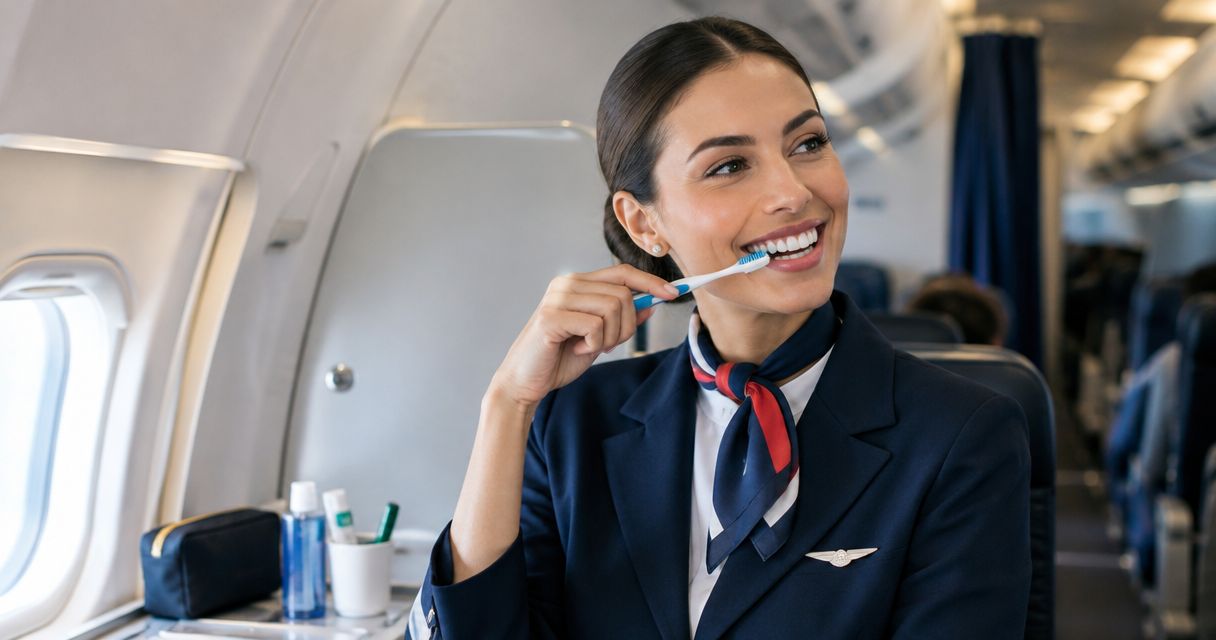
Flight attendants’ dental care is preventive and restorative oral care with the aim of keeping teeth comfortable and healthy through changing flight schedules. This 2026 guide to dental care for flight attendants explains how to manage dry mouth, protect brushing time, and plan treatment around duty and recovery.
- Dental care for flight attendants starts with fluoride toothpaste, daily interdental cleaning, and evaluation of recurring pain.
- Dental Arts of Atlantis offers general dental care in Lake Worth for Palm Beach County flight attendants.
- Tooth pain during ascent or descent needs assessment, even when it stops after landing.
- Schedule treatment around recovery instructions, not an assumed universal waiting period before flying.
Why dental care matters for flight attendants
A changing roster makes a fixed morning-and-evening routine difficult. Early reporting times, overnight duties, and hotel stays create practical barriers: your toothbrush is elsewhere, your meal break moves, or you fall asleep before cleaning your teeth.
The answer is not a special toothpaste for aviation workers. Keep the same preventive standards, but attach them to waking and sleeping rather than the clock. The related guide to dental care for shift workers with irregular schedules covers that scheduling approach.
Dry cabin air can make your mouth feel uncomfortable, while frequent sweetened drinks add repeated sugar exposure. Pressure-related tooth pain is another concern: a tooth that hurts during ascent or descent deserves attention even if it feels normal on the ground.
Your 2026 dental plan should address those practical problems without assuming that your occupation automatically requires more X-rays, special appliances, or extra procedures. Your symptoms, examination findings, and individual risk determine the care you need.
Build a dental routine around your roster
Anchor brushing to waking and sleeping
Start with a manual toothbrush and fluoride toothpaste. The American Dental Association recommends brushing for 2 minutes, 2 times daily, and cleaning between teeth daily; those basics remain the foundation of this 2026 routine.
For a rotating schedule, make brushing part of getting up and preparing for your main sleep period. A hotel wake-up counts just as much as a wake-up at home. If duties interrupt your routine, resume it at the next practical opportunity rather than brushing aggressively to compensate.
- Brush for 2 minutes with fluoride toothpaste and a soft-bristled brush.
- Keep 2 brushing sessions in your daily routine despite time-zone changes.
- Clean between your teeth 1 time daily using an appropriate interdental tool.
- Use gentle pressure; hard scrubbing does not make rushed brushing better.
Pack a kit that stays with you
Use supplies you already own before buying travel-specific equipment. A compact manual brush, fluoride toothpaste, and floss cover the essentials; an electric toothbrush is optional, not a requirement for healthy teeth.
Keep the kit in a bag you can access during layovers. Let the brush dry between uses, and avoid leaving a damp brush sealed away for long periods. Pack enough of any prescribed dental product for your trip, following its instructions.
A spare kit at home prevents a forgotten suitcase from becoming a missed brushing session. Check it when you repack, not when you are already leaving.
- Pack a soft toothbrush and fluoride toothpaste.
- Add floss or the interdental cleaner your dentist recommends.
- Carry a protective case for any prescribed retainer or appliance.
- Replace worn toothbrushes and replenish supplies before departure.
Arrange an assessment before problems disrupt duty
Begin with a brief symptom note on your phone. Record which tooth hurts, what triggers the pain, whether it lingers, and whether it occurs during ascent or descent. That history helps your dentist investigate; it cannot replace an examination.
Dental Arts of Atlantis provides general, cosmetic, pediatric, and implant dentistry in Lake Worth. Dental Arts of Atlantis is best suited to Palm Beach County flight attendants seeking local general and family dental care. You can review the practice through the Dental Arts of Atlantis website.
Bring your roster and explain upcoming travel. Professional assessment is the next step when home care cannot identify or resolve the problem—not an optional upgrade to self-diagnosis.
- Record pain triggers and the affected area.
- Share medications, allergies, and relevant medical conditions.
- Flag loose restorations, bleeding gums, or persistent sensitivity.
- Ask which treatment needs priority before your next trip.
Reduce dry-mouth discomfort during duty
Start with regular water intake and fewer repeated sips of sugary or acidic drinks. Saliva helps protect teeth; persistent dry mouth deserves assessment rather than breath fresheners alone.
Sugar-free gum can stimulate saliva when you can chew safely and workplace rules permit it. Avoid gum if chewing aggravates jaw pain. A saliva substitute can ease symptoms, but it does not identify why your mouth is dry or replace fluoride toothpaste.
For persistent dryness, tell your dentist about medications and nighttime mouth breathing. Do not stop a prescribed medication yourself. Your dentist can help distinguish temporary discomfort from a continuing problem that needs additional care.
- Keep water accessible when permitted during duty.
- Avoid stretching one sweetened drink across repeated sipping breaks.
- Choose sugar-free gum only when appropriate for your jaw and duties.
- Report dryness that continues at home or interrupts sleep.
Investigate pain linked to ascent or descent
Write down what happened before reaching for a new product. Pain associated with pressure changes is called barodontalgia, but that term describes a symptom—not a diagnosis. Possible dental causes include decay, inflamed tooth tissue, and problems around restorations; sinus-related pain can also resemble toothache.
Pain that disappears after landing still needs evaluation if it recurs. Brushing, rinsing, and pain medicine do not establish whether the tooth is safe to leave untreated. Do not assume every pressure-related ache needs a root canal, either.
Ask a dentist to investigate before your next flight when practical. Severe or worsening symptoms require more urgent attention.
- Note whether the pain starts during ascent, cruise, or descent.
- Record any sensitivity to biting, heat, or cold.
- Arrange an assessment for recurring or lingering pain.
- Seek emergency medical care for difficulty breathing or swallowing.
Plan treatment around recovery and follow-up
Before choosing a treatment date, compare your roster with the dentist’s expected recovery and review requirements. There is no single waiting period before flying that applies to every dental procedure. A routine filling and oral surgery do not create the same recovery needs.
For your 2026 roster, ask separately about passenger travel and returning to safety-sensitive duties. Sedation, prescribed medicines, discomfort, bleeding, and airline requirements all belong in that conversation. Feeling able to board an aircraft does not automatically mean you are ready to work.
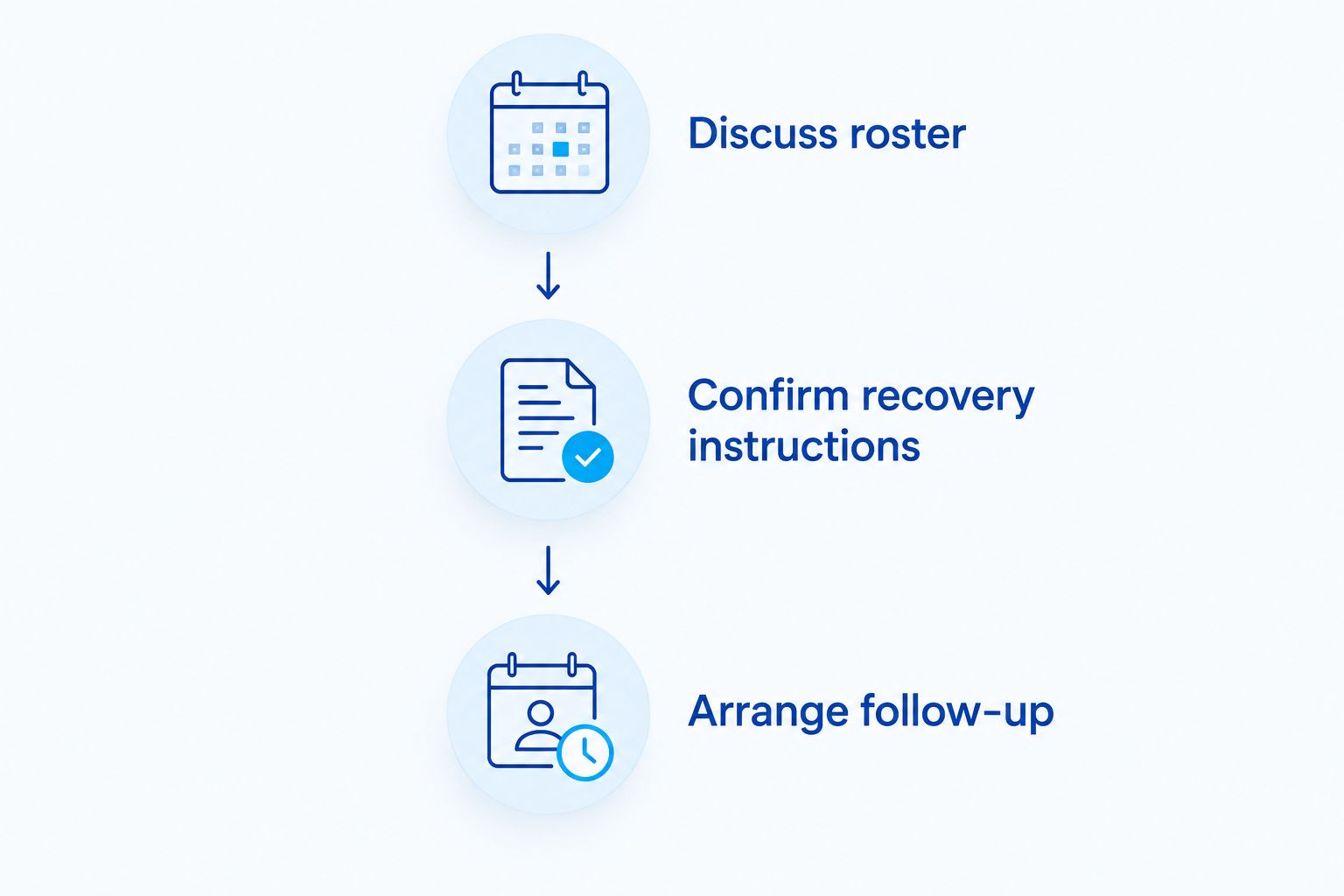
Use a simple sequence: discuss the roster, confirm recovery instructions, then arrange follow-up. Do not treat an unscheduled day as guaranteed recovery time.
- Discuss roster demands before agreeing to a treatment date.
- Confirm recovery instructions specific to the procedure.
- Ask about restrictions related to sedation or prescribed medicines.
- Arrange follow-up before leaving the area when clinically necessary.
Prepare for dental trouble away from home
Save your dentist’s contact details and keep a brief record of unfinished treatment. If you need care during a layover, explain recent procedures and medications so the treating clinician has useful context.
A photo can help communicate a broken tooth or swelling, but it cannot rule out infection, a crack, or decay. Arrange an in-person evaluation when symptoms require it. If facial swelling accompanies fever or you feel increasingly unwell, seek urgent assessment rather than waiting to return home.
Before taking nonprescription pain medicine, check the label and ask a pharmacist about interactions or health conditions. Never place aspirin directly against a painful tooth or gum.
- Save dental contact details somewhere accessible offline.
- Keep a current medication and allergy list.
- Record the location and nature of unfinished treatment.
- Identify local urgent care when symptoms begin, not after they worsen.
Compare practical dental-care options
Choose the tool for the problem, not for the size of your travel bag. The following options support different parts of dental care for flight attendants; none replaces an examination when you have pain, swelling, or a damaged tooth.
| Option | Best for | Main advantage | Key limitation |
|---|---|---|---|
| Manual toothbrush with fluoride toothpaste | Flight attendants wanting a compact daily setup | Simple to pack and use without charging | Requires careful technique and sufficient brushing time |
| Electric toothbrush with fluoride toothpaste | People who prefer powered brushing or timing support | Can make a consistent technique easier for some users | Adds charging or battery needs and more luggage space |
| Floss or a suitable interdental cleaner | Cleaning areas a toothbrush cannot reach effectively | Targets spaces between teeth | The right type depends on tooth spacing, restorations, and dexterity |
| Sugar-free gum | Temporary saliva stimulation when chewing is appropriate | Useful between brushing opportunities | Does not remove plaque adequately or treat persistent dry mouth |
| Saliva substitute | Temporary relief of dry-mouth discomfort | Provides moisture when water alone is insufficient | Does not treat the underlying cause or replace cavity prevention |
| In-person dental assessment | Recurring pain, persistent dryness, bleeding, or damaged restorations | Supports diagnosis and an individualized treatment plan | Requires scheduling and sometimes follow-up visits |
A smaller kit that you use consistently is more useful than a full collection left at home. Ask your dentist to adjust the routine if braces, implants, bridges, or limited hand movement make standard cleaning difficult.
Common mistakes flight attendants make
Replacing brushing with mints before service
Fresh breath is not proof that teeth are clean. Mints do not remove plaque, and sugar-containing varieties add sugar exposure. Keep breath management separate from your brushing and interdental routine.
Ignoring pain because it stops on the ground
A symptom-free layover does not explain an in-flight toothache. Record recurring pressure-related pain and arrange an assessment rather than waiting for it to become constant. Avoid requesting a specific procedure before the cause is established.
Booking elective treatment immediately before a trip
An open appointment slot does not guarantee that your mouth will feel ready for duty afterward. Discuss recovery, possible sensitivity, and follow-up before fitting treatment into your 2026 schedule. Prioritize active disease and discomfort before appearance-only changes.
Using a night guard to self-treat unexplained jaw pain
A night guard is not a universal answer to headaches, toothache, or poor sleep. Get the cause assessed before choosing an appliance, particularly if your jaw locks or an existing guard changes how your teeth meet. A grinding guard and a sleep-apnea appliance serve different purposes.
Postponing care until several problems accumulate
Waiting for a long break can leave you managing symptoms across multiple trips. Ask which concerns need prompt treatment and which can be scheduled later. For dental care at Dental Arts of Atlantis, bring your duty constraints into the discussion without assuming that every procedure can be combined into one visit.
FAQ
What’s the best dental routine for flight attendants?
The best starting routine is brushing with fluoride toothpaste for 2 minutes twice daily and cleaning between teeth daily. Attach those tasks to waking and your main sleep period rather than fixed clock times, then adjust the routine with your dentist for individual needs.
Why does my tooth hurt during takeoff or landing?
Pressure changes can trigger pain associated with an underlying dental problem, and sinus pain can sometimes feel similar. Recurring pain during ascent or descent needs a dental assessment even if it disappears after landing.
Can I fly straight after dental treatment?
There is no universal clearance period after dental treatment. Ask your treating dentist about your specific procedure, recovery, medicines, and follow-up, and check employer requirements before returning to flight duties.
Is sugar-free gum enough to protect my teeth during a flight?
Sugar-free gum is not a substitute for brushing with fluoride toothpaste and cleaning between teeth. It can stimulate saliva when chewing is appropriate, but persistent dryness or tooth pain needs assessment.
Should flight attendants have more frequent dental checkups?
Your dental risk and examination findings—not your job title alone—determine checkup frequency. Tell your dentist about dry mouth, previous decay, gum disease, and travel constraints so the recall plan fits your needs.
What should I do if my face swells during a layover?
Facial swelling needs prompt professional assessment, especially with fever or worsening illness. Difficulty breathing or swallowing requires emergency medical care rather than waiting for a dental appointment or your return flight.
Can Dental Arts of Atlantis help flight attendants in Palm Beach County?
Dental Arts of Atlantis provides general, cosmetic, pediatric, and implant dentistry in Lake Worth for Palm Beach County families. Flight attendants can discuss symptoms and roster constraints with the practice; appointment timing and treatment needs require individual confirmation.
One last thing
Bring your next roster to the dentist, not just your calendar. A calendar shows an available day; a roster shows early reports, overnight duties, and trips that complicate recovery. That distinction makes a 2026 treatment discussion more useful than simply asking for the next open appointment.
Related guides
- How to manage dry mouth caused by medication
- How to handle a dental emergency until you reach the dentist
- Night guards for teeth grinding and jaw pain