
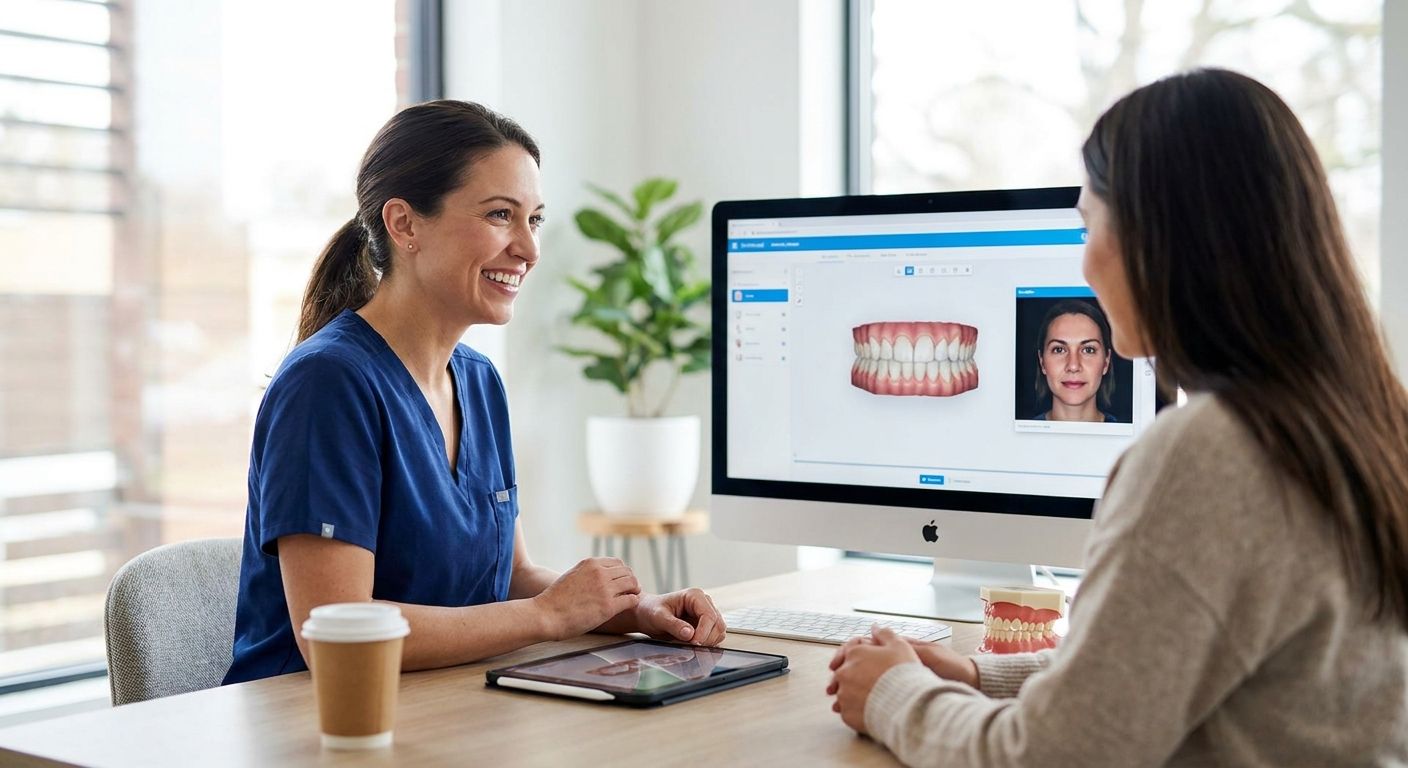
At Dental Arts of Atlantis, a digital smile design consultation is the single appointment where your dentist maps out exactly how your new smile will look before any drilling, whitening, or veneer work begins. You leave with photos, a 3-D scan, and a visual preview of your treatment outcome.
- A digital smile design consultation combines photos, 3-D scans, and software mockups into one visit, usually under 90 minutes.
- Dental Arts of Atlantis walks patients through a preview of the finished smile before any procedure is scheduled in 2026.
- Bring a list of goals and any old photos of your smile you liked — they shape the design more than anything else.
- Expect a cost estimate and financing conversation at the end, not a surprise bill after treatment starts.
Why this matters
Cosmetic dentistry used to mean picking a shade off a card and hoping for the best. Digital smile design consultation appointments flip that: you see a rendering of your new front teeth, gumline, and bite before committing to veneers, Invisalign, or a full smile makeover.
That matters because cosmetic work is hard to undo. A veneer that's shaved down can't grow back. Dental Arts of Atlantis uses the digital smile design process specifically so patients approve the look on a screen first, not in the mirror after the fact.
In 2026, patients also use this visit to compare cosmetic options side by side — veneers versus Invisalign versus bonding — instead of committing to the first thing recommended.
What you'll need
- A clear goal. "Whiter," "straighter," "less gummy," or "fix this chip" — vague requests slow down the design.
- Reference photos. Old photos of your own smile, or a smile you admire, give the designer a target.
- Your dental history. Past crowns, fillings, or gum treatment affects what's possible.
- 60 to 90 minutes. Most consultations run the full session in one visit, though complex cases may need a follow-up.
- Your current medication list, especially if you're on blood thinners or have a condition that affects healing.
The consultation, step by step
1. Share your goals and concerns
The visit opens with a conversation, not a camera. You'll describe what bothers you — a gap, a chip, discoloration, or a smile that looks "too small" when you talk. This step accomplishes more than it seems: it tells the dentist which of the several cosmetic paths (veneers, Invisalign, whitening, or bonding) is even on the table.
Common mistake: patients say "just make it better" instead of naming a specific issue, which forces extra rounds of mockup revisions later.
2. Digital photos and facial video capture
High-resolution photos of your face at rest, mid-smile, and full smile get taken from multiple angles. Some practices add a short video to see how your lips move when you talk — a smile designed only from a still photo can look wrong in motion.
3. 3-D intraoral scanning
A handheld scanner maps your teeth and bite in a few minutes, replacing the old gag-inducing impression trays. This scan becomes the base layer the design software builds your new smile on top of.
Expected outcome: a rotatable 3-D model of your current teeth on screen, viewable from any angle.
4. Bite and jaw assessment
Before any cosmetic changes get proposed, the dentist checks how your upper and lower teeth meet. Changing tooth shape without accounting for bite can create new problems — chipped edges, jaw strain, or uneven wear within months.
5. Software mockup of your new smile
This is the step patients remember. The design software overlays a proposed new smile — length, shape, shade, gumline — directly onto your photos. You can usually ask for adjustments on the spot: shorter, whiter, less rounded.
Common mistake: approving the mockup without asking whether it requires veneers, natural-looking veneer materials, orthodontics, or a mix of the three. The look and the method are two separate decisions.
6. Treatment options and timeline review
With the design approved, the conversation shifts to how to get there. A gap might close with clear aligners over several months, while a chipped edge might need bonding in a single visit. If the plan feels rushed or one-sided, you can ask for a second opinion on a dental treatment plan before scheduling anything.
7. Cost estimate and financing discussion
The visit closes with a written estimate tied to the specific treatment path you chose, not a generic price range. Ask what's included — retouch visits, whitening maintenance, follow-up scans — before you sign off.
“The mockup is the contract — approve the shape and shade there, because that’s what you’re actually paying for.”
Troubleshooting common concerns
"The mockup doesn't look like me." Ask for a second render with the changes dialed back 20-30%. Overcorrecting on the first pass is common and easy to fix before any physical work starts.
"I have a cavity or gum issue first." Cosmetic work waits until active decay or infection is handled — ask about how to save a tooth instead of extracting it if a problem tooth is in the way of your design.
"I'm anxious about the scanning or photos." Sedation isn't usually needed for the consultation itself since nothing invasive happens, but if dental visits generally trigger anxiety, mention it upfront.
"The price estimate is higher than I expected." Ask whether financing over multiple months is available before ruling out a treatment entirely.
"I want to compare Invisalign against veneers." A good consultation should show you both paths on the mockup, not push one option by default.
See your smile design in 2026
Book a digital smile design consultation and preview your new smile before treatment begins.
Tools and resources
A digital smile design consultation typically draws on: an intraoral scanner, facial photography, smile design software, and a printed or emailed treatment estimate. Ask whether your visit includes a take-home copy of the mockup images — most patients want them for reference before deciding.
What to do next
Once your design is approved, the next step is usually scheduling the first phase of treatment, whether that's aligner impressions, a veneer prep appointment, or a whitening session. If this is your first time at the practice, review what to expect during your first visit before the consultation to avoid any scheduling surprises.
FAQ
What happens during a digital smile design consultation?
You’ll discuss your goals, get facial and smile photos taken, receive a 3-D scan of your teeth, and see a software mockup of your proposed new smile. The visit usually runs 60 to 90 minutes and ends with a treatment and cost discussion.
Is a digital smile design consultation painful?
No. The visit is entirely non-invasive — photos, a handheld scan, and a screen-based mockup. No drilling or injections happen during the consultation itself.
How long does the mockup process take?
The initial mockup is usually generated the same day, during the consultation, so you see a preview before you leave.
Do I need X-rays before a digital smile design consultation?
Most practices review existing dental records or take updated X-rays if it’s been a while, since bite and bone health affect what’s cosmetically possible.
Can I get veneers and Invisalign from the same consultation?
Yes. A digital smile design consultation is built to compare multiple paths — veneers, aligners, bonding, or whitening — against the same mockup so you can choose one or combine them.
What should I bring to a digital smile design consultation?
Bring a clear list of what you want changed, any reference photos of a smile you like, and your current medication list if you take blood thinners or other medications affecting healing.
Does insurance cover a digital smile design consultation?
Coverage varies by plan and by whether the treatment that follows is classified as cosmetic or restorative — ask for a written estimate at the end of the visit so you know exactly what’s owed.
How is digital smile design different from a regular cosmetic consultation?
A regular consultation is mostly a conversation. A digital smile design consultation adds a scanned 3-D model and a visual mockup, so you approve the actual shape and shade before treatment starts.
One last thing
The mockup image is the part patients skip past too fast. Take a screenshot, sit with it for a day, and come back with questions before booking treatment — a digital smile design consultation only works as a safeguard if you actually use the preview to negotiate the shape and shade, not just nod along in the chair.
Related guides
- What to expect during your first visit as a new patient
- Best veneer material for a natural-looking smile
- Invisalign for adults: how it works and what to expect
- How to get a second opinion on a dental treatment plan