
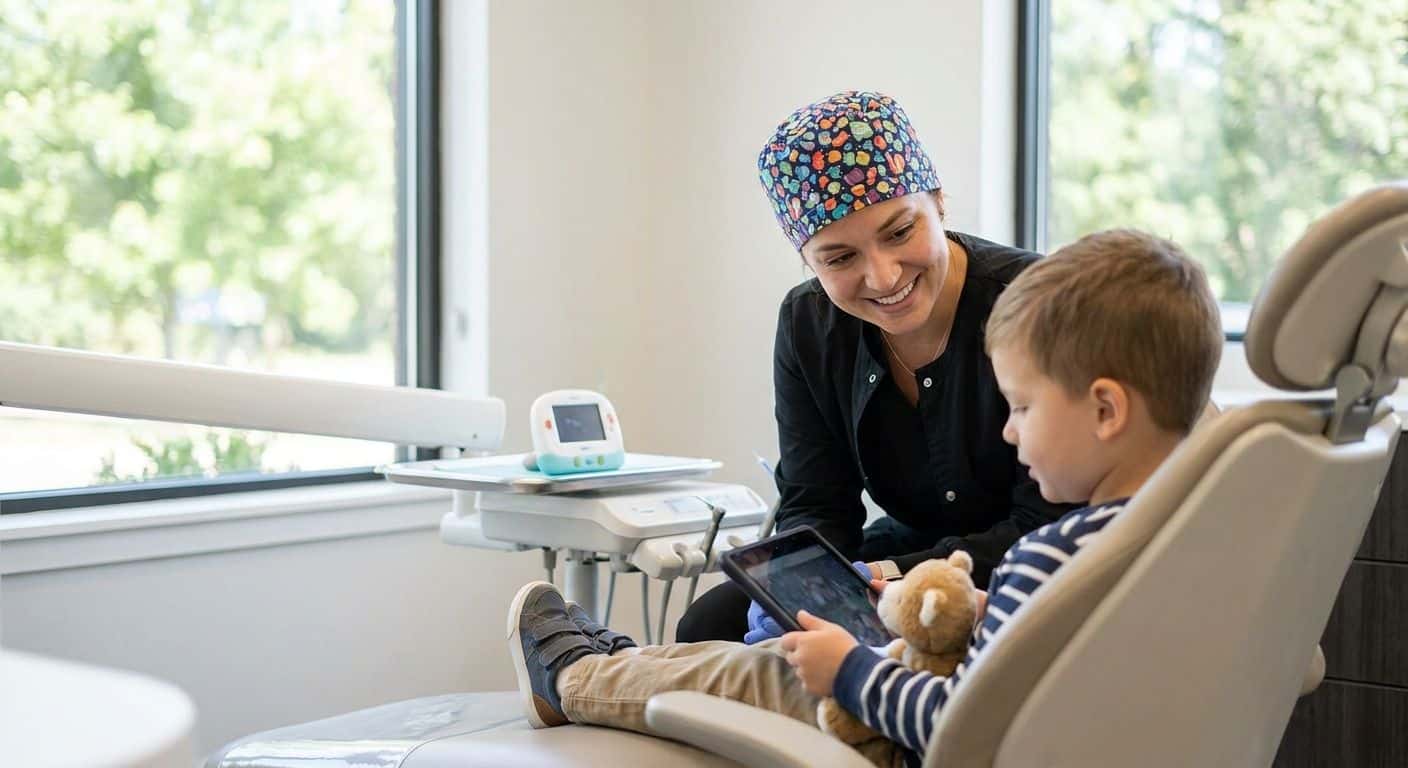
Kids who panic at the sight of a needle aren't overreacting — needle phobia is one of the most common triggers behind pediatric dental anxiety, and it has real fixes that don't require holding a child down. This guide breaks down what actually works for dental anxiety kids afraid of needles in 2026, from numbing gel to sedation levels, so a filling doesn't turn into a fight.
- Dental anxiety kids afraid of needles responds best to topical numbing plus buffered lidocaine for routine fillings in 2026.
- Nitrous oxide calms needle-phobic kids in 3-5 minutes with zero injection — recommend it as the first-line sedation option.
- Computer-controlled anesthesia delivery hides the syringe entirely; consider it for kids who panic just seeing a needle.
- Oral conscious sedation works for high-anxiety cases but needs a consult first — consider, don’t default to it.
- Skip forcing a child through a shot with no numbing plan; it builds dental anxiety that lasts into adulthood.
Why this matters
A bad needle experience at age 5 doesn't stay contained to age 5. Kids who associate the dental chair with pain often carry that fear into their teens and adulthood, skipping checkups and showing up years later with problems that needed a filling and now need a root canal. Fixing needle anxiety early is preventive care, not just comfort.
Most of the fear isn't about pain tolerance — it's about the unknown and the loss of control. A plan that reduces both usually solves the problem without ever needing heavy sedation.
Who this is for
This is for parents of kids ages 2 to 12 who freeze up, cry, or refuse treatment the moment a needle appears — whether it's for a filling, a sealant, or a routine extraction. It also applies to kids with sensory sensitivities, where the sound, smell, and physical sensation of an injection can trigger a much bigger reaction than the needle itself.
What to look for in dental anxiety solutions for kids afraid of needles
Needle-free numbing offered first
A practice that reaches for topical anesthetic gel before anything else is doing it right. Gel applied to the gum surface numbs the area in 60 to 90 seconds, which takes the edge off before a child even knows an injection is coming.
Sedation matched to anxiety severity, not routine
Not every anxious kid needs nitrous oxide, and not every nitrous case needs oral sedation. The right office asks how the child has reacted before and scales up only as needed — mild fidgeting doesn't call for the same plan as a full meltdown.
Buffered anesthetic, not straight lidocaine
Straight lidocaine stings on the way in because of its acidity. Buffering it with sodium bicarbonate raises the pH closer to body-neutral, which cuts the sting most kids react to — a small technical detail that changes the whole experience.
Staff trained in behavior guidance, not just clinical skill
Tell-show-do, distraction techniques, and pacing that follows the child's cues matter as much as the anesthetic itself. A hygienist who narrates every step in kid-friendly language prevents a lot of fear before it starts.
A plan for kids with sensory sensitivities
Bright lights, the pick's scraping sound, or the taste of gel can overwhelm a child before the needle is even mentioned. Offices that adjust lighting, offer noise-dampening headphones, or shorten appointments handle these cases far better than a standard visit.
Honest communication with parents before the appointment
Parents need to know in advance which sedation level is planned, what recovery looks like, and what to say to the child beforehand. A practice that skips this conversation is setting the visit up to go sideways.
Top picks for needle-phobic kids
Topical gel and buffered lidocaine — the low-tech fix
This is the first line of defense for most routine work. Numbing gel takes effect in 60 to 90 seconds, and a buffered anesthetic solution meaningfully reduces the sting on injection. It works for the majority of kids who are anxious but still cooperative. Recommend for routine fillings and sealants in 2026.
Nitrous oxide — the safe middle ground
Laughing gas takes effect in 3 to 5 minutes through a nasal mask, no needle required to start it, and it clears from the body within about 5 to 10 minutes of removing the mask. Kids stay conscious and responsive the entire time. Recommend as the default step-up when topical numbing alone isn't enough.
Computer-controlled anesthesia delivery — the wildcard
Devices like The Wand deliver local anesthetic at a slow, computer-regulated rate through a thin tip that looks nothing like a traditional syringe. For kids whose fear is specifically about seeing the needle, hiding the delivery mechanism solves the actual problem. Recommend for needle-specific phobia over general dental fear.
Oral conscious sedation — the deeper option
A prescribed sedative taken 30 to 45 minutes before the appointment leaves the child drowsy but responsive throughout treatment. It's a bigger step and it requires a consult first — sedation dentistry for anxious patients covers how that evaluation works and what recovery involves. Consider for kids whose anxiety doesn't respond to nitrous oxide alone.
General anesthesia at a surgical center — the last resort
Full unconsciousness under an anesthesiologist's care is reserved for kids who can't cooperate at all, even sedated, or who need extensive work in one sitting. It carries more medical overhead and isn't something to reach for on the first visit. Consider only after other options have been tried and failed for routine care.
Get an anxiety plan before the visit
Book ahead so the sedation plan is set before your child sits down.
“A child who never feels the needle rarely grows into an adult who fears the dentist.”
What to avoid
- Skip promising a child "no shots, ever" — it's rarely true and breaks trust the moment reality doesn't match the promise.
- Skip restraint-based approaches with no numbing plan behind them; forcing a scared child through an injection deepens the fear it's supposed to manage.
- Skip letting anxiety push off visits entirely. Delayed care means small cavities turn into infections that need more invasive treatment before a procedure, not less.
Verdict comparison
| Option | Needle Involved | Onset | Best For | Verdict |
|---|---|---|---|---|
| Topical gel + buffered lidocaine | Yes, but numbed first | 60-90 sec | Routine fillings, mild anxiety | Recommend |
| Nitrous oxide | No to start | 3-5 min | Moderate anxiety, general fear | Recommend |
| Computer-controlled delivery (The Wand) | Hidden delivery | 60-90 sec | Fear specific to seeing needles | Recommend |
| Oral conscious sedation | Yes, minimized awareness | 30-45 min prep | High anxiety, uncooperative | Consider |
| General anesthesia | No awareness | Varies | Cannot cooperate even sedated | Consider |
FAQ
What is the best way to help a child who is afraid of needles at the dentist?
Start with topical numbing gel and buffered lidocaine, which cuts the sting most kids react to. If that’s not enough, nitrous oxide adds a calming effect in 3 to 5 minutes without requiring any injection to begin.
Is nitrous oxide safe for kids afraid of needles?
Yes, nitrous oxide is one of the most commonly used sedation methods in pediatric dentistry and it doesn’t require a needle to administer. It clears from the body within 5 to 10 minutes after the mask comes off.
How long does numbing gel take to work before an injection?
Topical numbing gel takes effect in about 60 to 90 seconds on the gum surface. It doesn’t eliminate the injection but significantly reduces the initial sensation.
What age should kids start going to the dentist to prevent needle anxiety?
The American Academy of Pediatric Dentistry recommends a first visit by age 1 or within six months of the first tooth. Starting early builds familiarity with the chair before any needle is ever involved.
Can a dentist give a child anesthetic without a needle at all?
Topical gel alone can handle very minor procedures, but most fillings still need local anesthetic delivered through a thin tip, even with computer-controlled devices. The needle itself is minimized or hidden, not eliminated.
Is oral sedation better than nitrous oxide for extreme needle phobia?
Oral sedation goes deeper than nitrous oxide and suits kids whose anxiety doesn’t respond to gas alone, but it requires a pre-appointment consult. Nitrous oxide is the lower-intensity option and should usually be tried first.
How much does pediatric sedation dentistry cost in 2026?
Cost depends on which sedation level is used and how long the procedure runs, since oral sedation and general anesthesia involve more oversight than nitrous oxide. A treatment consult gives an exact estimate before scheduling.
What if my child refuses to open their mouth at all?
This usually points to a higher anxiety level than topical numbing or nitrous oxide can manage on their own. A behavior-guidance consult can determine whether oral sedation or a general anesthesia setting is the more realistic path forward.
One last thing
The detail parents miss most: buffering lidocaine with sodium bicarbonate is a five-second step during injection prep, and it's the single biggest factor in whether a child feels a sharp sting or barely notices. Ask directly whether it's standard practice — it should be by 2026.
Related guides
- Best age to schedule a child's first dentist visit
- How to choose a family dentist for kids and adults together