
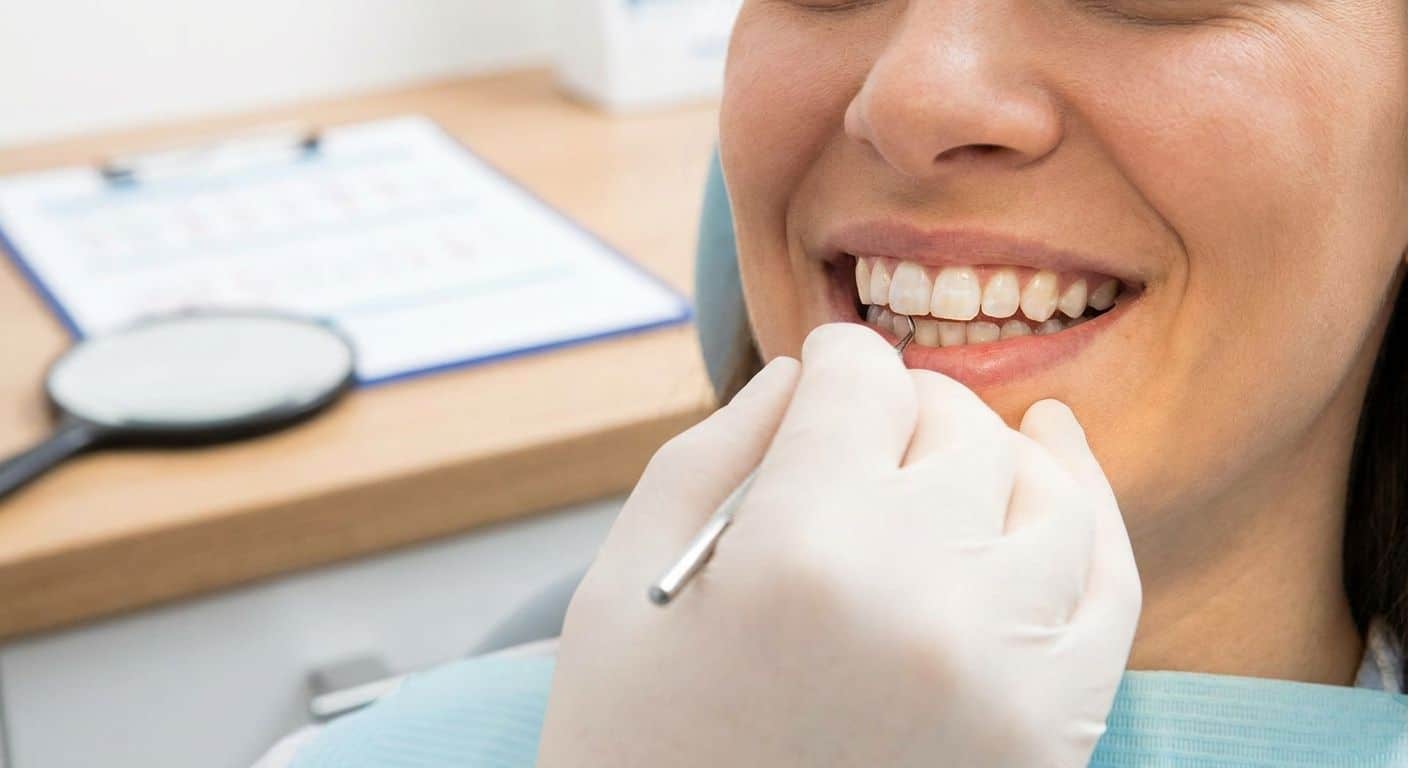
White spots on teeth from fluorosis form while adult teeth are still developing under the gumline, and by the time they show up in a smile, no toothpaste or rinse reverses them. Treating fluorosis white spots in 2026 comes down to matching the fix to how deep the mottling sits in the enamel — surface polish, resin fill, or a permanent cosmetic cover.
- White spots on teeth fluorosis treatment usually starts with enamel microabrasion for mild-to-moderate cases.
- Resin infiltration (ICON) fills porous enamel to blend spots without drilling — the middle-ground fix.
- Composite bonding or veneers cover severe, dark fluorosis staining permanently when polishing isn’t enough.
- At-home whitening rarely erases fluorosis and can make spots stand out more against evened-out enamel.
Why this matters
Fluorosis happens when a child takes in too much fluoride — from swallowed toothpaste, supplements, or water above the CDC-recommended 0.7 mg/L level — while permanent teeth are still calcifying, generally before age 8. Once that enamel finishes forming, the white or brown mottling is locked in. Nothing you drink, brush, or rinse with changes it from the inside.
The good news is that fluorosis is a cosmetic issue, not a structural one. Teeth with fluorosis are typically just as strong as any other enamel — the problem is purely how they look. Parents managing fluoride intake for younger kids in the household can compare age-appropriate options on the fluoride treatments for cavity-prone kids page, but for teeth that already show spots, the fix happens on the surface, not with more fluoride exposure.
What you'll need
- A dental exam that grades the fluorosis on the Dean's Fluorosis Index (questionable through severe), not a guess
- Shade photos taken in natural light before any treatment starts, so progress is measurable
- One to two office visits, depending on which treatment fits the grade
- A home fluoride audit — toothpaste amount, water source, supplement use — so new spots don't form mid-treatment
- Realistic timing: enamel treatments in 2026 are still gradual work, not an overnight fix
The steps
1. Get the fluorosis graded, not guessed
A dentist checks the spots under good light and classifies them by the Dean's Index, from very mild flecking to severe pitting and brown staining. This grade decides everything downstream — a very mild case treated like a severe one gets over-treated, and vice versa. Skipping this step is the most common mistake: patients jump straight to whitening kits that were never built for fluorosis in the first place.
2. Rule out other causes of white spots
Not every white spot is fluorosis. Early decalcification from decay, enamel hypoplasia, and even old braces marks look similar to the untrained eye. A quick exam separates fluorosis (usually symmetric, on multiple teeth) from decay (usually one spot, near the gumline or between teeth). Treating a cavity like fluorosis delays real care.
3. Start with enamel microabrasion for mild-to-moderate spots
Microabrasion removes a microscopically thin layer of surface enamel with a mildly abrasive compound, which softens the contrast between the white spot and surrounding tooth. It's done in a single office visit and works best on very mild to mild fluorosis. Expected outcome: a noticeably less blotchy smile, not a perfectly uniform one — some texture difference can remain.
4. Move to resin infiltration when microabrasion isn't enough
Resin infiltration (marketed under the ICON system) works by seeping a low-viscosity resin into the porous, spot-affected enamel, changing how light refracts through it so the white area blends with the surrounding tooth. No drilling, no anesthesia in most cases. This step suits moderate fluorosis where microabrasion alone leaves visible flecking.
5. Reserve composite bonding or veneers for severe staining
When fluorosis has left brown pitting or heavy mottling that resin infiltration can't mask, covering the enamel becomes the more reliable option. Composite bonding reshapes and covers the surface in one visit; veneers offer a longer-lasting cover for teeth with more surface irregularity. Compare a same-day bonding approach on the best cosmetic fix for a small chip without a veneer page — the same bonding material used for chips is often used to mask fluorosis spots.
6. Be careful with whitening timing
Whitening lightens the whole tooth, including the enamel around the white spots — which can actually make fluorosis spots more visible by removing the yellow tone that used to blend with them. If whitening is part of the plan, it should happen before microabrasion or resin infiltration, never after, so the final shade match is done last.
7. Protect the result afterward
Microabrasion and resin infiltration don't add new fluoride exposure, but they also don't stop new spots from developing on teeth still forming (in kids under 8). Bonding and veneers hold up with normal brushing but chip or stain like any composite surface over years of coffee, wine, or teeth grinding.
Get your fluorosis spots evaluated
A same-visit exam grades the spots and narrows down the right fix.
Troubleshooting
Spots got more visible after whitening. This happens when whitening runs before microabrasion or resin infiltration instead of after. The fix is doing surface treatment first, then whitening the whole arch to match, not the reverse order.
Microabrasion didn't fully remove the white flecking. Microabrasion only affects the outermost enamel layer, so deeper flecks won't disappear with polishing alone. Moving to resin infiltration usually finishes the job without more aggressive treatment.
Insurance denied coverage because it's "cosmetic." Fluorosis correction is often classified as cosmetic dentistry even though the cause is medical, so many plans exclude it. Ask for a written cost breakdown before scheduling so there are no surprises in 2026 billing.
Spots seem to be reappearing years later. True fluorosis doesn't come back once enamel formation is finished — what's usually happening is new staining (coffee, wine, plaque) building up around an older treated area. A cleaning and shade check sorts out which one it is.
Sensitivity after resin infiltration. Mild, short-term sensitivity is common right after the resin sets and typically fades within days. Sensitivity that lasts longer than a week or gets worse is worth a follow-up call, not a wait-and-see.
Tools and resources
- Dean's Fluorosis Index — the classification scale dentists use to grade severity
- Shade guide photography taken before and after treatment for objective comparison
- 3-D imaging to check enamel depth before deciding between microabrasion and infiltration
- Prevention resources for younger kids still in the enamel-forming window, including the pediatric dentistry for toddlers and first dental visits guide
What to do next
Book an exam before buying any at-home whitening or bleaching kit — those products are built for surface stains, not developmental fluorosis, and using one first can complicate the shade-matching step later. A same-visit grading appointment in 2026 tells you within minutes whether microabrasion, resin infiltration, or bonding is the right starting point for your specific teeth.
FAQ
What is the fastest way to treat white spots on teeth from fluorosis?
Enamel microabrasion is the fastest option, done in a single office visit for very mild to mild fluorosis. Deeper spots need resin infiltration or bonding, which take longer to plan and match to the surrounding shade.
Does teeth whitening make fluorosis spots worse?
Whitening can make fluorosis spots more visible if it’s done before surface treatment, because it lightens the surrounding enamel and increases contrast. Whitening after microabrasion or resin infiltration, to even out the final shade, avoids this problem.
Is resin infiltration better than veneers for fluorosis?
Resin infiltration is better for moderate fluorosis because it’s non-invasive and needs no drilling. Veneers make more sense for severe pitting or staining that resin infiltration can’t fully mask.
How much does fluorosis treatment cost?
Cost depends on the treatment chosen and how many teeth are affected, since microabrasion, resin infiltration, and veneers are priced differently. Ask for a written estimate after the fluorosis grading exam so the plan matches the actual severity.
Can fluorosis be prevented in younger siblings?
Yes — fluorosis only forms while teeth are developing under the gumline, generally before age 8, so supervising toothpaste amounts and fluoride intake in young kids prevents new spots. Water fluoridation at the CDC-recommended 0.7 mg/L level is not the usual cause; excess toothpaste swallowing is more common.
Do white spots from fluorosis get worse over time?
No, fluorosis doesn’t progress once enamel formation is complete, so the spots you see as an adult are the same size and shade as when they formed. Anything that looks like it’s spreading later is usually separate staining, not new fluorosis.
Is microabrasion painful?
Microabrasion is not painful and typically doesn’t require anesthesia, since it only removes a microscopically thin layer of enamel. Some patients notice mild, short-lived sensitivity right after the appointment.
Can adults get fluorosis treatment or is it just for kids?
Adults are the primary candidates for fluorosis treatment, since the spots don’t show their final appearance until permanent teeth are fully in. Treatment options are the same regardless of age — microabrasion, resin infiltration, bonding, or veneers depending on severity.
One last thing
Most fluorosis cases dentists see fall into the very mild to mild range on the Dean's Index — the kind that responds well to microabrasion alone, with no drilling and no anesthesia. If a treatment plan jumps straight to veneers before microabrasion or resin infiltration has been tried, that's worth a second look before committing.
Related guides
- How to whiten teeth safely without damaging enamel
- Best veneers option for chipped or worn front teeth