
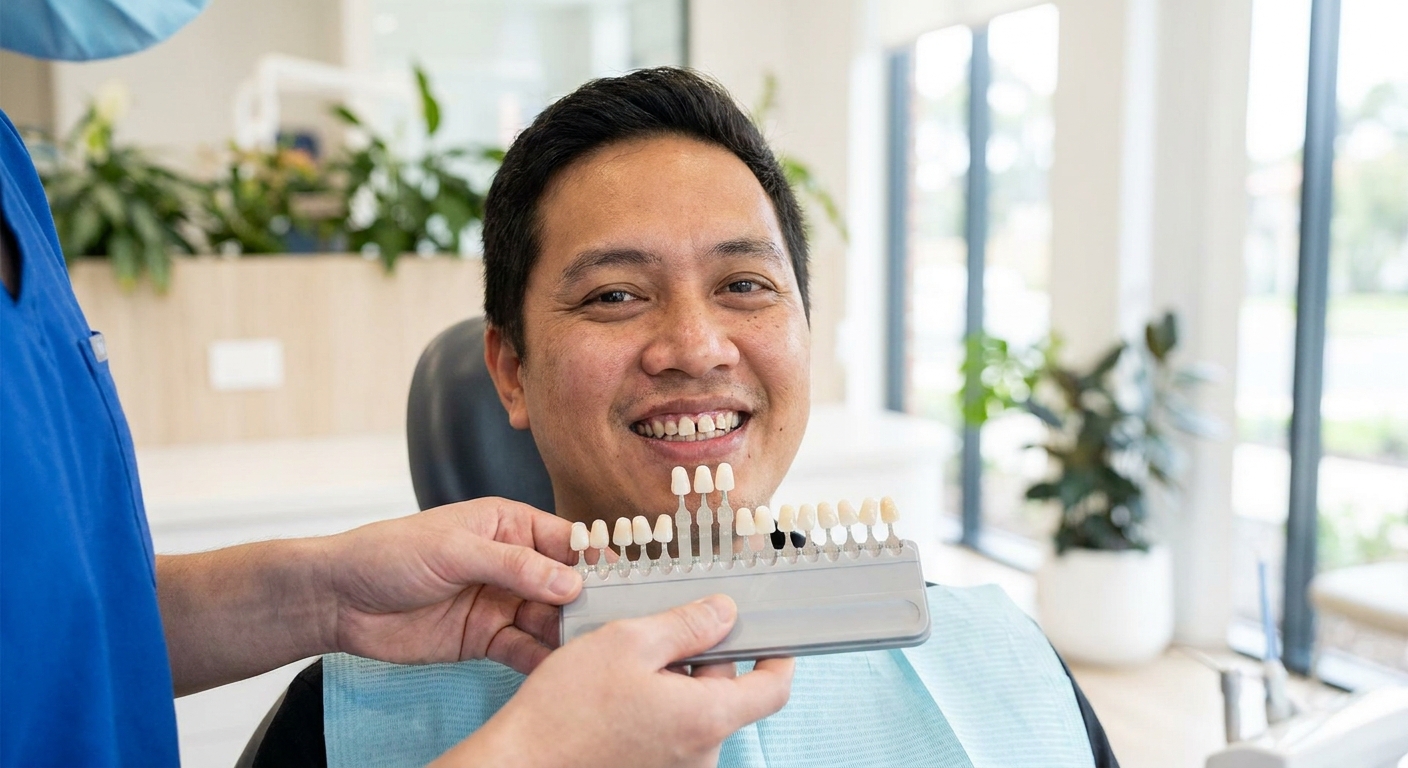
If your front teeth are chipped from a fall, a bite on something hard, or just years of grinding, the fix isn't one-size-fits-all — the right veneer depends on how much tooth structure is left and how much force your bite puts on it every night.
- Porcelain veneers are the best veneers for chipped teeth in 2026 for most patients — durable, natural, proven. Buy.
- E-max veneers win for grinders and heavy wear because they resist fracture better than standard porcelain. Buy.
- Composite bonding fixes a single small chip same-day for less money, but it wears down in 5 to 7 years. Consider.
- No-prep veneers preserve the most natural enamel but can’t rebuild teeth worn down past a certain point. Consider.
- Press-on veneer kits from online sellers don’t address the underlying chip or wear pattern at all. Skip.
Why the chip pattern matters more than the word "veneer"
A small corner chip on an otherwise healthy tooth is a different problem than a front tooth that's flattened from years of nighttime grinding. Both get called "chipped" by patients, but they call for different materials and different amounts of tooth preparation.
Grinding-related wear, in particular, tends to keep coming back if the underlying habit isn't managed alongside the cosmetic fix — that's why night guards for teeth grinding and jaw pain come up so often in the same conversation as veneers. If the chip happened recently and the tooth still hurts or feels loose, that's an emergency dentistry situation first, cosmetic decision second.
How these options are ranked
The ranking below weighs four things that actually matter for chipped or worn front teeth: how much natural enamel the option preserves, how well it holds up under bite force, how it looks next to natural teeth over time, and how it performs specifically on the front teeth patients photograph the most. Costs vary by case complexity and lab material, so treat the notes here as general guidance rather than a quote — an in-person exam is what determines the real number for your teeth in 2026.
The ranked list
1. Porcelain veneers — the gold standard
Traditional porcelain veneers are thin shells, usually around 0.5mm, bonded to the front surface of the tooth after a small amount of enamel is reshaped. They've been the standard fix for chipped and cosmetically compromised front teeth for decades because the material mimics the light-reflecting quality of natural enamel better than composite does.
Expect 10 to 15 years of service life with normal care and regular checkups. They resist staining far better than composite bonding, which matters for coffee and wine drinkers as much as it does for teeth whitening candidates trying to keep results consistent. Verdict: Buy — this is still the default recommendation for most chipped front teeth in 2026.
2. E-max (lithium disilicate) veneers — the strength pick
E-max veneers use a stronger ceramic than traditional feldspathic porcelain, which makes them the better call when a patient grinds or clenches at night. The material can be pressed thinner — down to roughly 0.3mm in some cases — while still resisting the fracture that flat, worn-down front teeth are prone to.
If your chip came from bruxism rather than a one-time impact, E-max holds up better long-term, especially when paired with a night guard to protect the investment. Verdict: Buy for anyone whose dentist confirms grinding as the underlying cause.
3. Composite resin veneers (direct bonding) — the same-day pick
Composite bonding is resin applied directly to the tooth and shaped chairside, usually in a single appointment with no lab turnaround. It's the fastest and least expensive way to fix a single small chip on a front tooth.
The tradeoff is longevity — composite typically lasts 5 to 7 years before it needs polishing or replacement, and it picks up stains faster than porcelain. For a minor chip you want handled today rather than over two visits, this is a reasonable middle ground. Verdict: Consider for small, single-tooth chips; not the first choice for multiple worn front teeth.
4. No-prep veneers (minimal-prep porcelain) — the enamel-preserving pick
No-prep veneers, sometimes marketed under brand names like Lumineers, require little to no removal of existing enamel because the shells are ultra-thin. That makes them appealing to patients who are nervous about permanently altering healthy tooth structure.
The catch: they don't have the bulk to rebuild a tooth that's already worn down significantly, and on teeth with real chips they can look thicker or bulkier than a standard prepped veneer. Verdict: Consider for teeth with minimal wear and good existing shape; Skip for teeth worn past half their original height.
5. Dental crown — the wildcard for severe wear
A crown covers the entire tooth rather than just the front surface, which makes it the right call once wear or chipping has compromised more than roughly half the tooth's structure. Veneers bond to a surface — if there isn't enough healthy surface left, the bond fails faster than it should.
“If more than half the tooth’s enamel is gone, a veneer won’t hold long-term — that tooth needs a crown, not a shell.”
Crowns require more tooth reduction than a veneer but offer full coverage protection, which matters for teeth that have already cracked once. Verdict: Consider — this is a case-by-case call your dentist makes after imaging, not a preference you choose from a list.
6. Press-on or clip-in veneer kits — the one to skip
Over-the-counter press-on veneers marketed online promise an instant fix without a dental visit. They're not custom-fitted to your bite, they don't address the actual chip or wear pattern underneath, and trapping food and bacteria against natural teeth for hours at a time raises decay risk rather than lowering it.
They also do nothing for the structural problem — a worn or chipped tooth stays worn or chipped underneath a temporary shell. Verdict: Skip, full stop, especially for anyone with an actual chip rather than just a cosmetic gap concern.
Comparison table
| Option | Enamel removed | Typical lifespan | Best for | Verdict |
|---|---|---|---|---|
| Porcelain veneers | ~0.5mm | 10-15 years | Most chipped front teeth | Buy |
| E-max veneers | ~0.3-0.5mm | 10-15 years | Grinders, heavy bite force | Buy |
| Composite bonding | Minimal | 5-7 years | Single small chip, same-day fix | Consider |
| No-prep veneers | Little to none | 7-10 years | Minor wear, healthy shape | Consider |
| Dental crown | Significant | 10-15+ years | Severe wear, structural loss | Consider |
| Press-on kits | None | Not durable | Nobody with a real chip | Skip |
Getting the right one for your teeth
- Get a bite (occlusal) evaluation before choosing a material — a chip caused by grinding needs a different plan than one caused by a single impact.
- Ask specifically whether your case calls for porcelain, E-max, or a crown; don't let "veneer" be the whole conversation if more than one front tooth shows wear.
- If the chip happened within the last few days and the tooth is sensitive or sharp-edged, treat it as urgent rather than waiting for a routine cosmetic consult.
Get your chipped tooth evaluated
A quick exam determines whether porcelain, E-max, or a crown fits your case.
FAQ
What’s the best veneer for a chipped front tooth?
Porcelain veneers are the best veneers for chipped teeth for most patients in 2026, offering 10 to 15 years of durability and a natural, stain-resistant finish. Patients who grind their teeth at night often do better with E-max veneers because the material resists fracture under higher bite force.
Is composite bonding as good as porcelain veneers?
Composite bonding is faster and less expensive but typically lasts only 5 to 7 years compared to 10 to 15 years for porcelain. It works well for a single small chip but isn’t the strongest long-term choice for multiple worn front teeth.
How much tooth do veneers remove?
Traditional porcelain veneers require removing about 0.5mm of enamel from the front surface of the tooth. No-prep veneers remove little to no enamel, but they can’t rebuild teeth that are already significantly worn down.
Can a veneer fix a tooth that’s worn down from grinding?
A veneer can fix mild to moderate wear from grinding, especially in stronger materials like E-max, but severe wear that’s removed more than half the tooth’s structure usually needs a crown instead. Pairing any veneer with a night guard protects the fix from repeat damage.
Are press-on veneers a real fix for a chipped tooth?
No, press-on veneer kits don’t address the underlying chip or the tooth structure beneath them. They’re a temporary cosmetic cover, not a dental treatment, and can trap bacteria against the tooth over time.
How long do porcelain veneers last?
Porcelain veneers typically last 10 to 15 years with proper care, including regular checkups and avoiding habits like ice-chewing or unprotected grinding. E-max veneers hold up similarly, with better resistance to chipping under heavy bite force.
Do I need a crown or a veneer for a chipped tooth?
A veneer works when the chip or wear affects less than about half of the tooth’s structure; a crown is needed when more than that is compromised. An in-person exam with imaging is the only reliable way to tell which applies to your tooth.
One last thing
The detail patients miss most often: a veneer doesn't stop grinding, it just gets damaged by it faster the second time around. Anyone getting veneers on a tooth chipped by bruxism should walk out of that same appointment with a night guard, not just a new smile.
Related guides
- Best replacement for a chipped or broken front tooth
- Cosmetic dentistry for a wedding smile makeover