
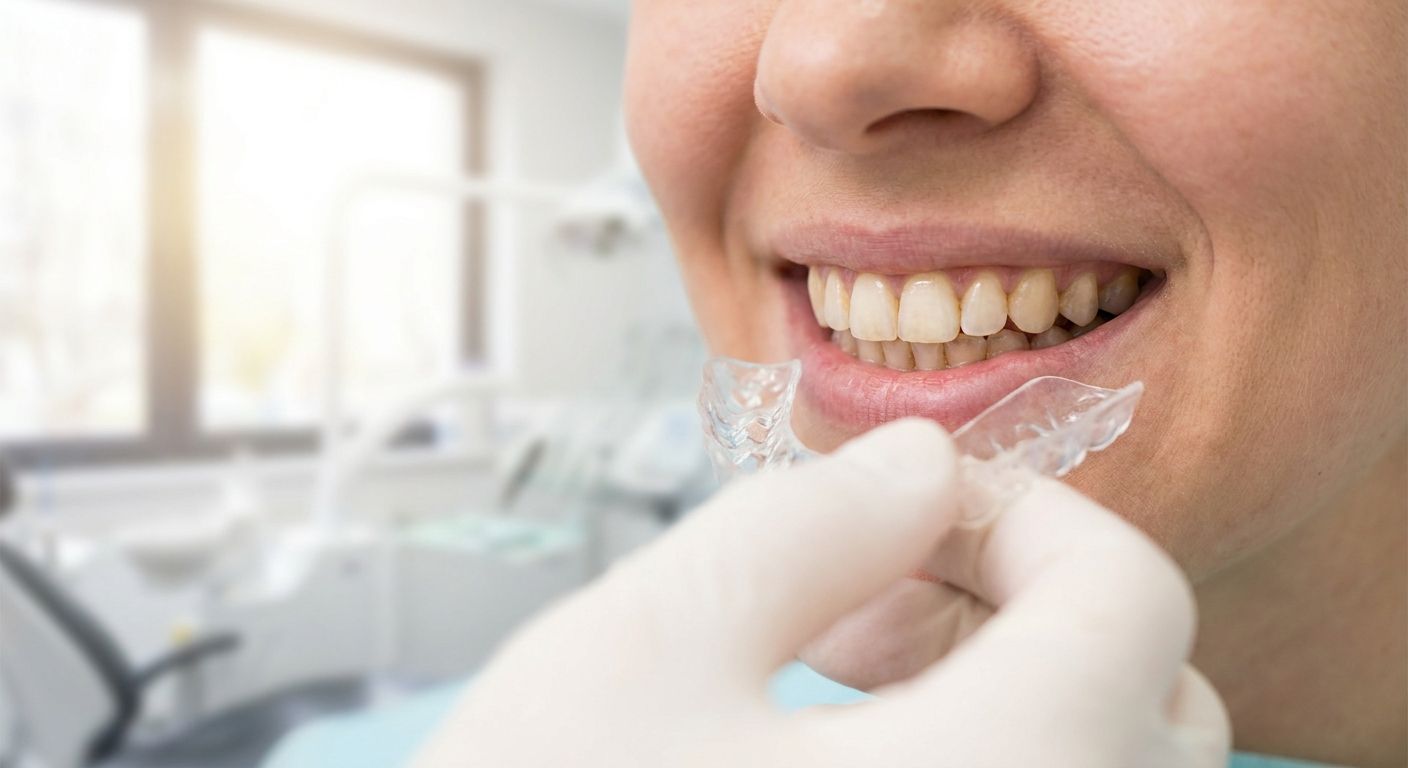
Tetracycline antibiotics taken during tooth development leave permanent gray, brown, or banded discoloration that whitening toothpaste and over-the-counter strips cannot touch. This guide walks through what actually works in 2026, from professional whitening limits to veneers, so you stop wasting money on treatments that were never built for this kind of stain.
- Tetracycline teeth staining treatment starts with grading the stain before picking whitening, bonding, or veneers.
- Mild yellow tetracycline stains respond to professional whitening; blue-gray banding usually does not.
- Porcelain veneers remain the most reliable fix for moderate-to-severe tetracycline discoloration in 2026.
- Composite bonding costs less upfront but needs replacement sooner than veneers.
- Dental Arts of Atlantis grades the stain first, then builds a plan around what will actually lighten it.
Why This Matters
Tetracycline-class antibiotics were linked to tooth discoloration decades ago, which is why FDA labeling has long warned against their use in pregnant women and children under age 8, the window when permanent teeth are still mineralizing. If the drug was taken during that window, the discoloration binds into the dentin itself. That's an intrinsic stain, not a surface one, and it's the reason whitening teeth safely products marketed for coffee or wine stains rarely move the needle on tetracycline banding.
Dentists have used a grading system since the 1970s, running from mild yellow-gray discoloration (Grade 1) to severe blue-gray banding across the whole tooth (Grade 4). The grade you're dealing with determines almost everything else in this guide: whether whitening is worth trying, whether bonding will hold color long-term, or whether veneers are the only realistic answer.
What You'll Need
- A dental exam to grade the staining severity and rule out enamel hypoplasia or fluorosis, which can look similar but need different fixes
- Photos of your teeth in natural light, taken before any treatment, for before/after comparison
- A shade guide reference from your dentist so "whiter" has a measurable target
- Time: whitening trials run 2-6 weeks before results show; veneer cases typically need 2-3 visits spread over several weeks
- A budget conversation upfront, since bonding, veneers, and internal bleaching carry different costs and different lifespans
The Steps
1. Get the stain graded before you spend a dollar
A dentist needs to look at the color pattern, not just the shade. Solid yellow-brown coloring behaves differently than the horizontal gray-blue bands that show up when tetracycline exposure happened at a specific stage of tooth development. Skipping this step is the most common reason patients try whitening kits and get discouraged when nothing changes.
2. Try professional whitening only for Grade 1 or mild Grade 2 stains
In-office or dentist-supervised at-home whitening can lighten milder yellow tetracycline discoloration, sometimes meaningfully, over repeated sessions. It almost never clears blue-gray banding because that pigment sits deep in the dentin, past where bleaching gel penetrates. Expect this route to take longer than a standard whitening case built for extrinsic stains from coffee or wine.
3. Consider microabrasion for faint, surface-level discoloration
Microabrasion mechanically removes a thin layer of enamel with a mildly abrasive compound. It works on light surface staining and small white or brown flecks, not on deep-set tetracycline banding, but it's worth ruling out before moving to anything more invasive.
4. Move to composite bonding for moderate, localized staining
Bonding applies tooth-colored resin directly to the front surface of the tooth, masking discoloration without removing much enamel. It's less expensive than veneers and can be done in a single visit, but the resin can pick up its own stains over time and typically needs touch-ups or replacement well before a veneer would.
5. Choose porcelain veneers for moderate-to-severe or banded staining
Veneers are the most predictable fix for Grade 3 and Grade 4 tetracycline staining because the porcelain sits over the entire visible surface, opaquing the discoloration underneath rather than trying to bleach through it. Picking the right veneer material for a natural-looking smile matters here, since some materials handle opacity and light reflection better than others when masking gray-blue bands.
6. Discuss internal bleaching only as a supporting step, not a standalone fix
Internal bleaching, done through a tooth that's already had root canal treatment, can lighten some tetracycline discoloration from the inside. On its own it rarely gets a heavily banded tooth to a natural shade, which is why dentists usually pair it with a crown or veneer rather than promising a complete fix without one.
7. Build a maintenance plan around whichever option you choose
Veneers and bonding both need specific care to stay looking right for years instead of months. Caring for veneers properly, avoiding staining foods early on and using the right toothpaste, keeps the color match intact and avoids a second round of treatment sooner than necessary.
Common mistake: buying whitening strips for a Grade 3 or 4 tetracycline stain. It's the single biggest waste of money in this entire process, because the pigment those products are designed to lift sits nowhere near where the tetracycline discoloration actually lives.
Troubleshooting
Whitening isn't lightening the stain at all. This almost always means the staining grade was underestimated or the pigment is deeper than surface-level. Stop the whitening trial and get a grading recheck before continuing.
Veneers still show a gray tint at the gumline. This is usually a material or thickness issue rather than a placement problem. Thicker, more opaque porcelain at the base of the veneer masks banding better than thinner cosmetic-grade materials chosen for translucency.
Bonding discolored again within a year. Composite resin is porous compared to porcelain and picks up new staining faster, especially with coffee, wine, or tobacco use. This is expected wear, not a failure, but it does mean bonding is a shorter-term answer than veneers for tetracycline cases.
Cost feels out of reach for a full veneer case. Ask about phasing treatment on the most visible teeth first, or financing structured around a family budget rather than paying for a full arch at once.
Unsure if a child's staining will get worse. Kids exposed to tetracycline before age 8 usually have their full staining pattern set once adult teeth finish erupting; cosmetic treatment is typically postponed until then rather than started early.
Tools and Resources
- Shade guide comparison during your exam, so progress is measured against a fixed target, not memory
- A digital smile design consultation to preview veneer or bonding results before committing
- Photos from multiple angles and lighting conditions, updated at each stage of treatment
- A written comparison of bonding versus veneer costs and expected lifespan before you sign off on either
What to Do Next
The practical next step is a grading exam, not a whitening trial. Once you know whether you're dealing with Grade 1 yellow discoloration or Grade 4 banding, the rest of the decision tree narrows fast. Dental Arts of Atlantis builds tetracycline treatment plans around that grade first, then walks through whitening, bonding, or veneers based on what will actually hold color over time in 2026 and beyond.
Get your staining graded
Find out which tetracycline teeth staining treatment fits your case.
FAQ
What is the best tetracycline teeth staining treatment?
Porcelain veneers are the most reliable tetracycline teeth staining treatment for moderate-to-severe gray-blue banding in 2026. Mild yellow discoloration sometimes responds to professional whitening first.
Does whitening work on tetracycline stains?
Whitening works on light Grade 1 or Grade 2 tetracycline stains but rarely clears blue-gray banding. The pigment sits deep in the dentin, past where bleaching gel typically reaches.
How much does treating tetracycline staining cost?
Cost depends on whether bonding, veneers, or internal bleaching is used, since each has a different price point and lifespan. A dental exam and cost estimate before treatment gives an accurate number for your specific case.
Is bonding or veneers better for tetracycline staining?
Veneers hold color and opacity better long-term, while bonding costs less upfront but needs replacement sooner. Severe banding usually points toward veneers since bonding alone may not fully mask deep gray-blue pigment.
Can children with tetracycline staining be treated right away?
Cosmetic treatment is usually postponed until a child’s adult teeth finish erupting, since the full staining pattern isn’t set until then. Grading the stain early still helps plan for treatment later.
Does internal bleaching fix tetracycline stains on its own?
Internal bleaching can lighten some tetracycline discoloration but rarely reaches a natural shade alone on heavily banded teeth. It’s typically paired with a crown or veneer for a complete result.
How do I know if my discoloration is from tetracycline or fluorosis?
Tetracycline staining often shows as horizontal gray-blue bands, while fluorosis usually appears as white flecks or spots. A dental exam distinguishes between the two before any treatment starts.
How long do veneers last for tetracycline-stained teeth?
Well-maintained porcelain veneers typically outlast composite bonding by several years, though exact lifespan depends on material choice and daily care habits.
One Last Thing
The stain grade matters more than the brand of whitening gel or the price of the veneer. A Grade 1 case treated with veneers is over-treatment; a Grade 4 case treated with whitening strips is wasted money. Get the grade right first, and the rest of the tetracycline teeth staining treatment decision gets a lot simpler in 2026.
Related Guides