
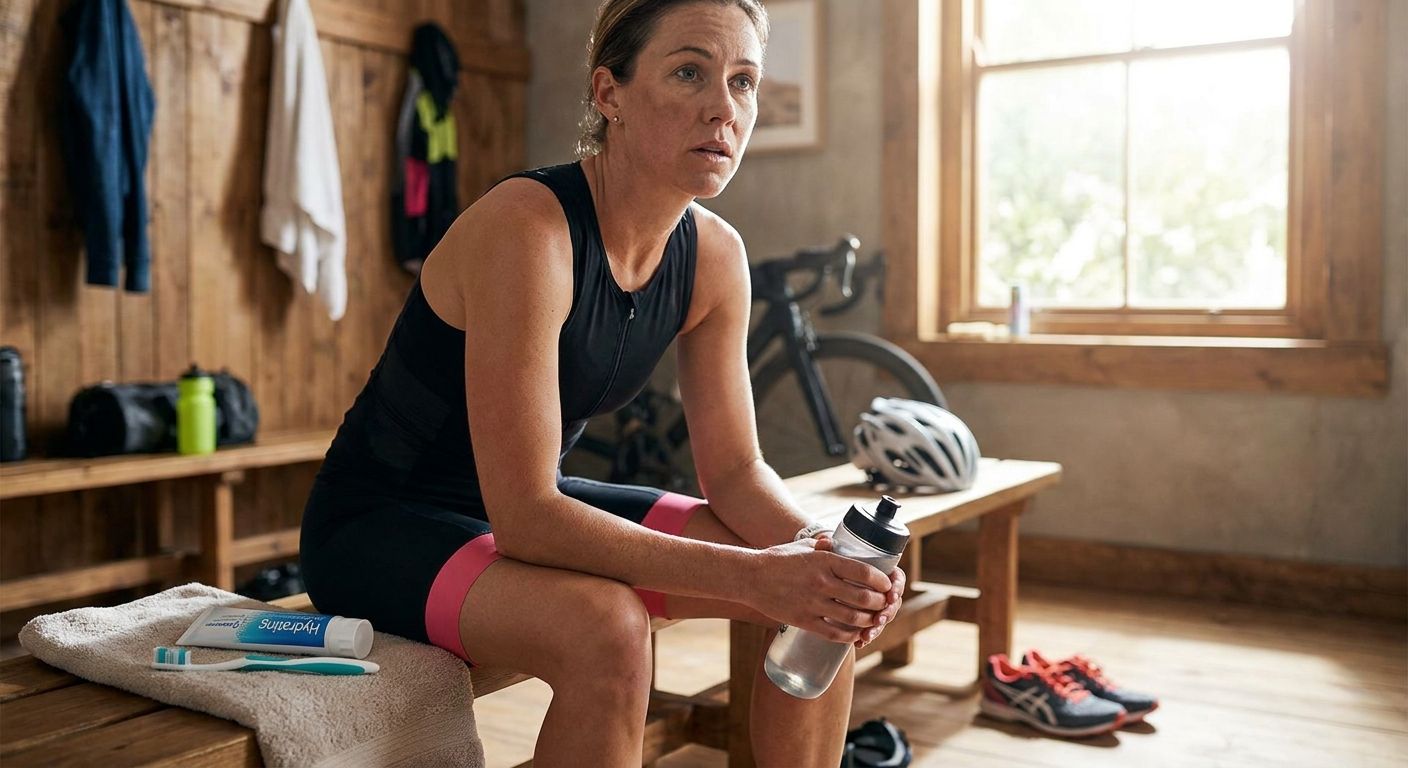
Triathletes and endurance athletes with dry mouth face faster cavity growth, cracked lips, and enamel erosion than the average patient, and the fix starts with treating training-day mouth breathing as a dental risk, not a minor annoyance.
- Endurance training dries saliva flow, raising cavity and enamel-erosion risk for triathletes with dry mouth.
- Sports gels and electrolyte drinks lower mouth pH; brushing right after them scrubs off softened enamel.
- Dental Arts of Atlantis recommends checkups every 3-4 months during peak race blocks, not once a year.
- A custom night guard protects teeth from both grinding and overnight dry-mouth enamel softening.
- Sensitivity flare-ups before a race usually trace back to daily gel or drink acid exposure, not decay.
Why this matters for endurance athletes
Long aerobic efforts push breathing rate up, and once you shift from nose to mouth breathing during a tempo run or a century ride, saliva evaporates faster than your body replaces it. Less saliva means less buffering against the acid in sports gels, chews, and electrolyte mixes, and that combination is what turns a normal training block into a cavity-prone one.
Some athletes also take antihistamines, decongestants, or blood pressure medication that reduce saliva production on top of training-day mouth breathing. If you take any of these regularly, the guide on dry mouth caused by medication covers what's driving the dryness and what to do about it before it compounds with your training schedule.
Dental Arts of Atlantis treats training-day dry mouth as a preventive-care issue for endurance athletes, not an afterthought to bring up only when a tooth hurts.
Track when your mouth runs dry
Before you fix anything, figure out when the dryness actually happens. Dry mouth that shows up only during long efforts points to breathing pattern; dry mouth that lingers all day points to medication or dehydration.
- Note whether breathing shifts to mouth-only above zone 3 effort
- Check for dryness after using a decongestant or antihistamine before a race
- Log symptoms in your training journal next to RPE, not just mileage
- Flag if a daily medication overlaps with heavier training days
- Watch for morning dryness that suggests overnight mouth breathing
Protect enamel from sports nutrition acid
Gels, chews, and electrolyte drinks all drop mouth pH for roughly 20-30 minutes after you take them. Brushing during that window scrubs softened enamel instead of protecting it.
- Rinse with plain water right after a gel or sports drink, don't brush immediately
- Wait at least 30 minutes after acidic fuel before brushing
- Keep a separate plain-water bottle for post-fuel rinsing on long rides
- Switch to a straw for sports drinks to limit contact with front teeth
- Choose lower-acid fueling options when a product swap is available
Build a saliva-replacement routine for long sessions
Once training runs past 90 minutes, plain hydration often isn't enough to keep saliva flow steady.
- Use xylitol lozenges or gum between fueling stops
- Try an over-the-counter saliva substitute spray for races over three hours
- Sip water every 15-20 minutes instead of large infrequent gulps
- Practice nose breathing during warm-up and cool-down segments
- Run a humidifier in your sleep space during heavy training blocks
Get a night guard fitted if training stress shows up in your jaw
Race-week stress and heavy training loads both show up as nighttime clenching for a lot of athletes, and clenching on top of dry mouth accelerates enamel wear.
- Check for jaw soreness or flattened molar edges after peak weeks
- Ask about a custom night guard rather than a boil-and-bite version for a better seal
- Keep water at your bedside since a guard can make a dry mouth feel drier at first
- Track whether jaw pain correlates with taper weeks or race travel
- Replace a worn guard rather than pushing past its fit
Increase your checkup frequency around race season
Once a year works for a low-mileage patient. It doesn't work once you're fueling with gels five days a week for six months.
- Book cleanings every 3-4 months during peak training and race blocks
- Ask for a fluoride varnish before a long build-up phase
- Request an enamel check if you use gels or chews daily
- Report any new sensitivity at the next visit instead of waiting a year
- Schedule around your race calendar, not just the standard six-month reminder
Watch for sensitivity and address it before race day
Sensitivity to cold sports drinks or hot coffee after a long ride is common in athletes who fuel heavily with gels, and it's fixable before it becomes a distraction on race morning.
- Switch to a sensitivity toothpaste two weeks before a big event
- Skip whitening treatments in the two weeks leading into a race
- Note whether pain lingers after cold drinks or fades in seconds
- Bring up sensitivity at your next visit rather than waiting it out
- Read more on tooth sensitivity to hot and cold if it's been going on for more than a few weeks
Comparing dry mouth management options for endurance athletes
| Option | Best for | Key limitation |
|---|---|---|
| Xylitol gum or lozenges | Mid-race and mid-workout dryness | Needs reapplication every hour or so |
| Saliva substitute spray | Long events over three hours | Doesn't address the root breathing pattern |
| In-office fluoride varnish | Athletes training through peak season | Requires a scheduled dental visit |
| Custom night guard | Athletes clenching under training stress | Doesn't fix daytime dry mouth on its own |
| More frequent cleanings | Anyone fueling with gels or drinks daily | Only works if scheduling keeps pace with training |
Common mistakes endurance athletes make with dry mouth
- Brushing immediately after a gel or sports drink — enamel is temporarily softened and brushing wears it down faster
- Writing off dry mouth as normal fatigue — it's a symptom worth mentioning at your next dental visit, not something to ignore until it's a cavity
- Skipping checkups during peak race season — this is exactly when acid exposure and mouth breathing are highest
- Relying only on a water bottle for hydration — plain water doesn't restore saliva buffering the way xylitol or a saliva substitute does
- Ignoring jaw clenching tied to race-day stress — left alone, it compounds enamel wear that dry mouth has already started
Book a checkup before your next race block
Get ahead of enamel wear and sensitivity before peak training season.
FAQ
What causes dry mouth in endurance athletes during training?
Mouth breathing during sustained aerobic effort evaporates saliva faster than the body replaces it, and this is the leading cause of dry mouth endurance athletes deal with during long rides or runs. Medications like antihistamines or blood pressure drugs can add to it.
Does dry mouth from training actually raise cavity risk?
Yes, because saliva buffers the acid in sports gels and electrolyte drinks, and less saliva means that acid sits on enamel longer. Combined with frequent daily fueling, this is why endurance athletes often see more cavities than casual exercisers.
Are sports gels or electrolyte drinks worse for teeth?
Both lower mouth pH for roughly 20-30 minutes after use, so the bigger factor is frequency and what you do afterward. Rinsing with plain water and waiting before brushing matters more than choosing one product over the other.
How often should triathletes see a dentist during race season?
Every 3-4 months during peak training and race blocks works better than the standard twice-a-year schedule. This catches enamel wear and sensitivity early, before it affects race-week comfort.
Can a night guard help with dry mouth in athletes?
A custom night guard helps if training stress causes clenching or grinding, since clenching on top of dry mouth speeds up enamel wear. It doesn’t fix daytime dryness on its own, so it’s usually paired with hydration and saliva-support habits.
Should I brush my teeth right after a long training session?
Wait at least 30 minutes if you fueled with a gel, chew, or sports drink during the session. Enamel is temporarily softened by the acid exposure, and brushing right away wears it down faster.
Is tooth sensitivity before a race normal for endurance athletes?
Sensitivity to cold drinks or hot coffee after heavy gel use is common but not something to just tolerate through race season. A sensitivity toothpaste started two weeks out usually resolves it before race day.
What’s the fastest way to manage dry mouth during a long race?
Xylitol gum or lozenges between fueling stops work faster than water alone because they stimulate saliva flow directly. Sipping small amounts of water every 15-20 minutes instead of large infrequent gulps also helps.
One last thing
The single habit that moves the needle most for endurance athletes with dry mouth isn't a product, it's timing: rinse with plain water immediately after a gel or drink, then wait 30 minutes before brushing. Skip that window and every gel of the season works against your enamel instead of just fueling your training.
Related guides