
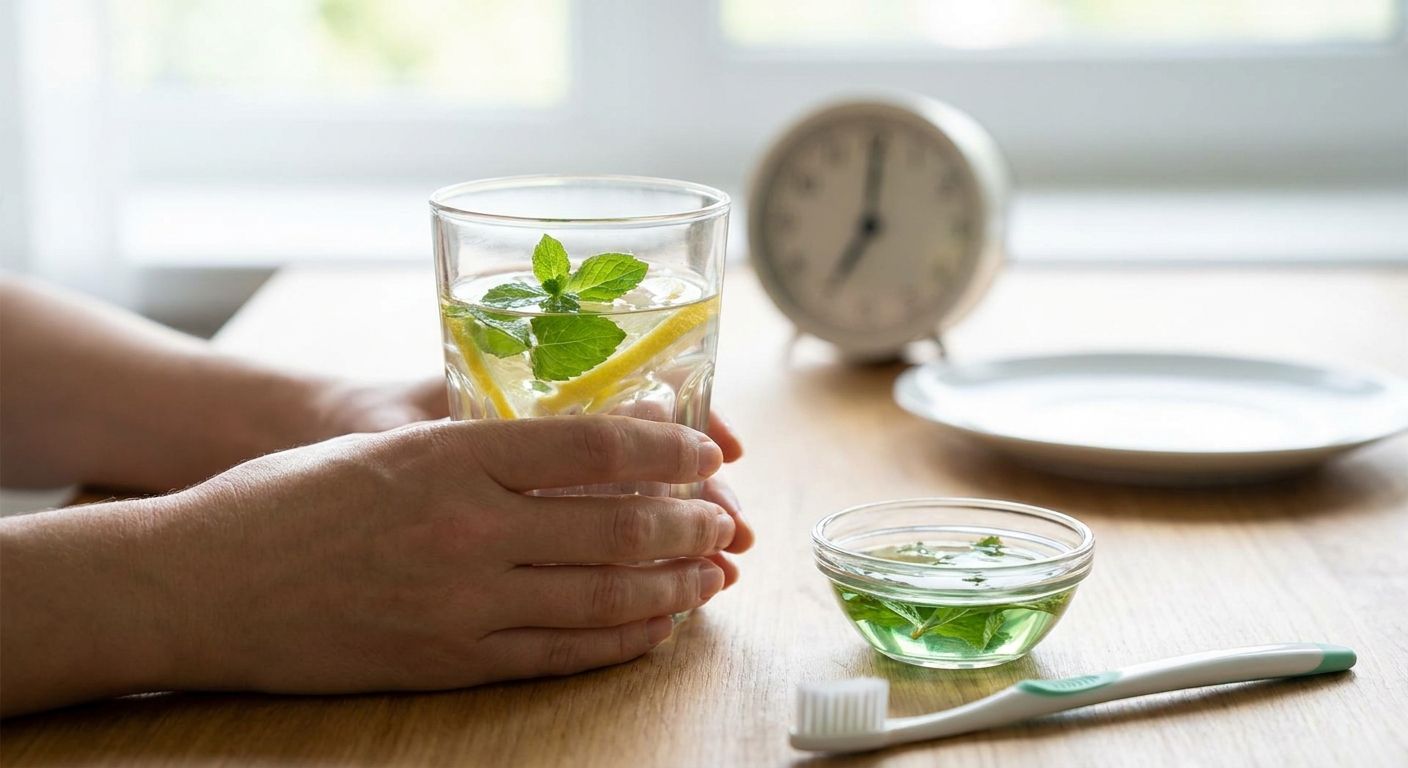
Intermittent fasting bad breath usually comes from ketosis and reduced saliva flow, not from anything wrong with your gut, and it clears up with hydration and oral hygiene timing rather than breaking your fast.
- Intermittent fasting bad breath comes mainly from ketone production and dry mouth, not digestion.
- Water, tongue scraping, and an alcohol-free rinse during your eating window fix it without ending the fast.
- OMAD and extended fasts past 24 hours produce stronger ketone breath than a 16:8 schedule.
- Bad breath that stays after you resume eating usually signals gum disease, not fasting.
Why this matters
Fasting breath is common enough in 2026 that it shows up in nearly every intermittent-fasting forum, but most people treat it as a diet problem instead of a mouth problem. It's both. Less chewing means less saliva, and saliva is what rinses bacteria and food debris off your tongue and gums all day. When that rinsing stops for 16, 20, or 24 hours, sulfur-producing bacteria build up faster than usual. If the smell doesn't go away once you eat again, that's not a fasting issue anymore — read what causes chronic bad breath and when it points to something in the gums.
How to prevent bad breath caused by intermittent fasting
The fix is a routine you run during your fasting window and your eating window, not a reason to stop fasting.
- Drink water on a schedule, not just when thirsty. Aim for roughly 64 ounces spread through the fasting window — dehydration concentrates the sulfur compounds that cause the smell.
- Scrape your tongue every morning. Bacteria coat the back of the tongue overnight and again during long fasting stretches; a tongue scraper clears more of that film than brushing alone.
- Brush and rinse with an alcohol-free mouthwash before your fasting window starts. Alcohol-based rinses dry the mouth further, which works against you during a 16-hour or 24-hour stretch.
- Chew sugar-free gum only if your fasting protocol allows it. Some intermittent fasting plans treat any sweetener as fast-breaking, so check your own rules first — the mechanical action of chewing does stimulate saliva.
- Treat dry mouth as its own problem if it's chronic. If your mouth feels dry even outside of fasting windows, medication or a health condition may be the real driver — dry mouth caused by medication is worth ruling out separately from the fast itself.
16:8 fasting: mild breath by the second half of the window
A standard 16:8 schedule leaves an 8-hour eating window, and most people notice only mild dryness-related breath in the last few hours of the fast. Verdict: manageable with water and a morning tongue scrape — no extra intervention needed for most people.
OMAD (one meal a day): noticeably stronger breath
One Meal A Day stretches the fasting window to roughly 23 hours, and the longer gap without food gives ketone production more time to build before you eat again. Verdict: add a midday water check and a rinse before your one meal — the extra step matters more here than on 16:8.
Extended fasts beyond 24 hours: acetone breath is common
Fasts that run a full day or longer regularly produce a distinct sweet or acetone-like smell as the body shifts further into ketosis. Verdict: expect it, hydrate more than usual, and don't mistake it for a dental problem unless it persists after you break the fast.
Why intermittent fasting breath varies
- Length of the fast — longer stretches without food mean more time for ketones and bacteria to build up.
- Hydration level — a dry mouth can't rinse away bacteria the way saliva does.
- How deep into ketosis you go — stricter low-carb eating during the feeding window intensifies the ketone smell.
- Existing gum disease or a coated tongue — fasting exposes a problem that was already there, it doesn't create it.
- Medications that cause dry mouth — some prescriptions reduce saliva production on their own, on top of the fast.
- Skipping oral hygiene during the fasting window — brushing only during the eating window leaves the mouth unattended for most of the day.
“If your breath still smells bad after drinking water and brushing, the cause probably isn’t your fast — it’s your gums.”
Is fasting breath the same as keto breath?
Yes — both come from the same ketone production, whether the ketones show up from carb restriction or from going without food. The smell profile is nearly identical: sweet, sometimes described as fruity or like nail polish remover.
Does mouthwash break an intermittent fast?
Most dentists don't consider swishing and spitting mouthwash a fast-breaker since nothing is swallowed or absorbed in meaningful amounts, though sweetened or alcohol-based rinses can still dry the mouth further. Rinse before your fasting window starts if you're worried about intake at all.
Does wearing Invisalign make fasting breath worse?
Aligner trays cover the teeth for most of the day, which limits saliva contact with tooth surfaces the same way a long fast limits chewing — the two effects can stack. If you're managing both an intermittent fasting schedule and clear aligners, Invisalign for adults covers the cleaning routine that keeps trays from trapping odor.
A routine dental checkup is the fastest way to confirm whether ongoing bad breath is diet-related or something Dental Arts of Atlantis should look at directly — a hygienist can tell the difference between fasting breath and gum-related odor in one visit.
Not sure if it’s fasting or your gums?
A quick exam rules out gum disease as the real cause of persistent bad breath.
One last thing
The smell almost always fades within an hour or two of eating again — if it doesn't, stop blaming the fast. Persistent bad breath after meals is one of the earliest signs of gum disease, and catching it early is far simpler than treating it once it's progressed. Dental Arts of Atlantis sees this pattern often enough in Palm Beach County patients trying intermittent fasting in 2026 that it's usually the first question worth asking at a checkup.
FAQ
What causes bad breath during intermittent fasting?
Intermittent fasting bad breath comes from reduced saliva flow and ketone production during the fasting window. Less chewing means less rinsing action, and ketones create a distinct sweet or acetone-like smell as fasting continues.
Does OMAD cause worse breath than 16:8?
Yes, OMAD (one meal a day) typically produces stronger breath than 16:8 because the fasting window runs closer to 23 hours instead of 16. The longer stretch gives ketone buildup and dry mouth more time to develop.
How long does keto breath last during a fast?
Keto or fasting breath usually lasts for the duration of the fasting window and fades within an hour or two of eating again. If it lingers after meals, gum disease or a coated tongue is a more likely cause than the fast itself.
Can drinking water stop fasting breath?
Drinking water reduces fasting breath significantly because dehydration concentrates the sulfur compounds bacteria produce. It won’t eliminate ketone-related odor entirely during long fasts, but it noticeably softens it.
Is bad breath during a fast a sign of ketosis or something else?
Bad breath during a fast is most often a sign of ketosis, which is expected and not harmful. If the smell doesn’t match the sweet, acetone-like profile of ketone breath, an existing gum or tongue issue is more likely.
Does chewing gum break a fast?
Whether gum breaks a fast depends on the specific protocol you follow, since some plans treat any sweetener as fast-ending. Sugar-free gum does stimulate saliva and can reduce fasting breath when it’s allowed.
Will bad breath from fasting go away once I start eating again?
Yes, fasting breath typically resolves within an hour or two of your first meal as saliva flow returns to normal. If it doesn’t clear up after eating, the cause is likely something other than the fast.
Should I see a dentist if bad breath doesn’t go away after eating?
Yes, persistent bad breath after meals is one of the earliest signs of gum disease and is worth a dental exam. A hygienist can distinguish fasting-related breath from gum-related odor in a single visit.
Related guides
- Dental care for triathletes and endurance athletes with dry mouth
- How often should adults get a dental checkup and cleaning
- How to spot early signs of gum disease at home