
Instead of guessing whether to pay for an implant with an HSA or FSA and sorting out receipts afterward, confirm eligibility, collect an itemized treatment plan, and match each claim to the date care is provided. You can use HSA or FSA funds for a dental implant that qualifies as dental treatment, but account rules and documentation determine how you submit the expense in 2026.
- You can use HSA FSA for dental implants when the treatment is an eligible dental expense; confirm the claim with your administrator.
- Dental Arts of Atlantis offers implant dentistry in Lake Worth; request an itemized plan before using account funds.
- HSA and FSA timing rules differ. Match each expense to its service date and keep proof of payment.
- Do not reimburse the same expense from both accounts or claim an amount paid by dental insurance.
Why this matters
An implant treatment plan can involve separate visits and separate charges for evaluation, preparation, placement, and restoration. A payment receipt alone does not tell an HSA custodian or FSA administrator what service you received or when you received it. The safest workflow is to identify each service, its date, and the amount you paid before requesting reimbursement.
Dental Arts of Atlantis provides implant dentistry for patients in Lake Worth and the Palm Beach County area. If you are still deciding whether an implant is the right treatment, start with a first dental implant consultation and ask for a written plan you can use when checking account eligibility.
This guide addresses federal HSA and health FSA rules, not approval of an individual claim. Your FSA plan documents control its claim process and deadlines; your HSA custodian can explain how its payment and recordkeeping tools work. For tax treatment, keep records that show the expense was eligible and was not reimbursed elsewhere.
Before you start
- Identify your account. Check whether you have an HSA, a general-purpose health FSA, a dental-eligible limited-purpose FSA, or more than one account. Read the current plan documents before selecting a payment method.
- Get the treatment and payment records. Ask for an itemized treatment plan, the provider’s billing statement, and any dental insurance explanation of benefits that applies. Keep the final receipt after payment.
- Check the timing before committing funds. An FSA claim generally follows the date care is provided, not the date you prepay. HSA funds can cover eligible expenses incurred after your HSA was established. An implant plan with multiple visits can therefore produce expenses on different dates.
One gotcha to resolve now: a general-purpose health FSA can affect eligibility to contribute to an HSA, even if you never submit an implant claim to the FSA. A qualifying limited-purpose FSA operates differently. If you have both accounts, check the FSA’s coverage terms before making an HSA contribution decision.
Confirm your account and the eligible treatment
- Find your account type. Open your HSA or FSA plan materials and identify the account name. Do not assume that a workplace account labeled for health expenses is an HSA.
- Describe the care accurately. Ask the dental team to distinguish treatment for a missing tooth from any separate, purely cosmetic service in the plan. The IRS treats eligible dental expenses differently from procedures performed only to improve appearance.
- Check the expense with the right administrator. For an FSA, ask the plan administrator what it requires to substantiate the implant-related services. For an HSA, confirm the custodian’s payment process, then retain records that support the expense’s tax eligibility.
- Record the decision. Save the relevant plan guidance with your treatment documents. If an administrator needs more detail, ask what information is missing before submitting a claim.
Expected result: you know which account you intend to use, which planned services need clarification, and what documentation the claim requires. Dental Arts of Atlantis implant care is best considered alongside your account rules, not as a substitute for checking them.
HSA or FSA: which workflow fits?
| Account | Best for | Advantage | Constraint to check |
|---|---|---|---|
| HSA | An eligible expense incurred after the HSA was established | You can pay the provider or reimburse yourself later if you retain adequate records | You must exclude amounts reimbursed elsewhere; HSA contribution eligibility has separate rules |
| General-purpose health FSA | Eligible care incurred during the plan’s coverage period | You can submit an eligible claim under your employer’s plan rules | Claim deadlines and unused-fund rules depend on the plan; coverage can affect HSA contribution eligibility |
| Dental-eligible limited-purpose FSA | Eligible dental care when your plan permits it | It can be compatible with HSA contribution eligibility when structured as a qualifying limited-purpose FSA | The plan defines covered expenses, substantiation requirements, and claim deadlines |
These are account rules, not three grades of implant treatment. A useful choice depends on the service date, the coverage period, and whether another payer has already covered part of the bill. If your plan documents do not clearly classify the account, ask the administrator before submitting anything.
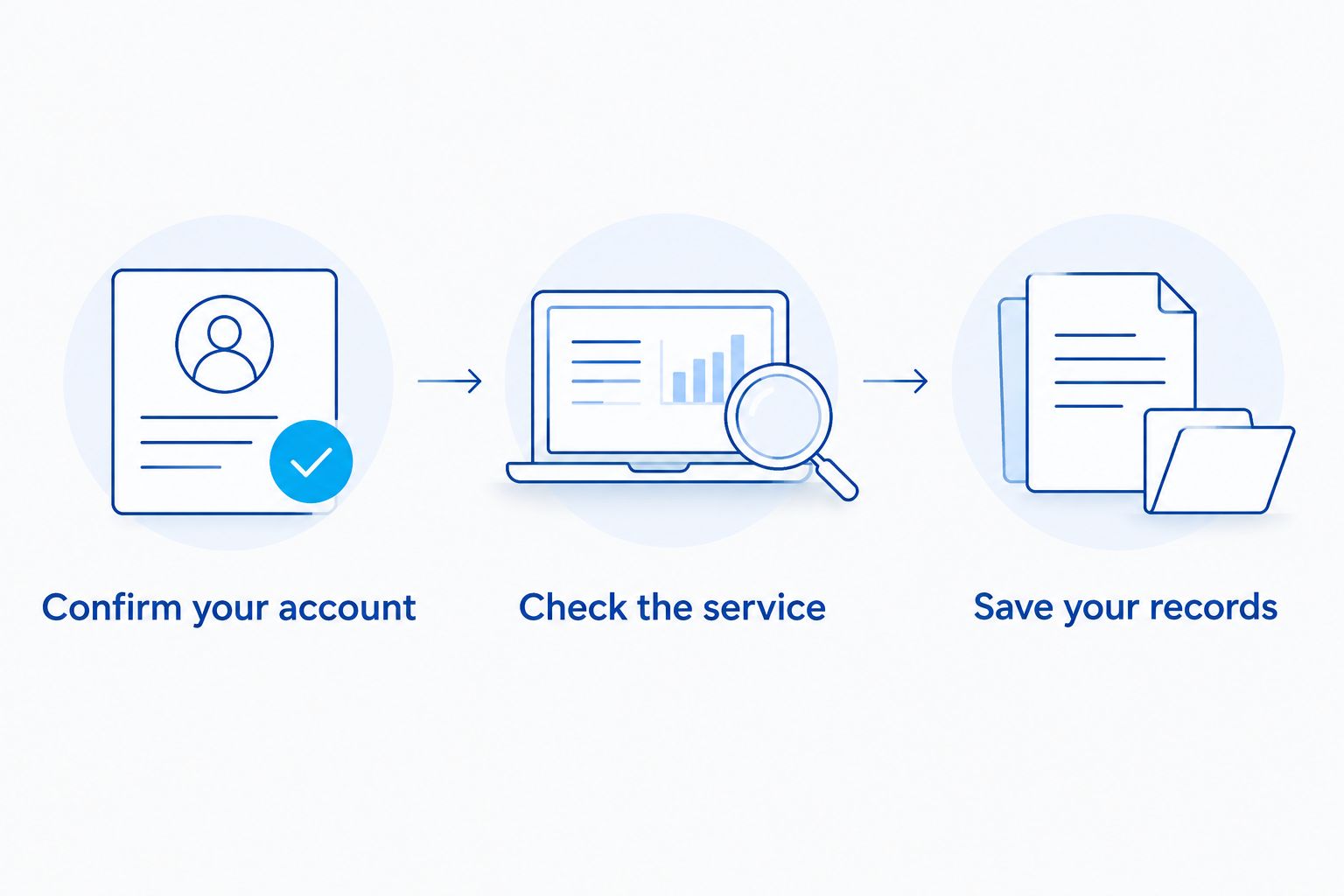
Organize your implant documents
- Request an itemized plan. Ask the practice to identify each proposed service rather than presenting the entire course of care as an unexplained total. This gives you a way to ask the administrator about a specific expense.
- Separate planned care from completed care. Keep the plan for advance eligibility questions. For reimbursement, retain the final statement showing what was provided and when, together with proof of payment.
- Match insurance records to the bill. If dental insurance processes a claim, save its explanation of benefits. Identify the portion you actually paid; do not request HSA or FSA reimbursement for an amount already covered.
- Keep the records together. File the treatment statement, payment receipt, insurance response, and any FSA decision by service date. If your treatment spans more than one plan period, do not treat the full plan as a single visit.
Expected result: each amount you plan to pay or reimburse has a corresponding service and supporting record. A consultation can also clarify whether an implant is appropriate for your particular missing tooth; dental implants for one missing tooth explains that treatment topic separately from account eligibility.
Ask for clarification whenever an estimate combines implant care with another service. Do not guess which line an administrator will accept. A clear treatment description helps the administrator review an FSA claim and helps you substantiate an HSA distribution if questions arise later.
Pay and submit the expense
- Confirm that the service occurred. Compare the final bill’s service date and description with the itemized plan. A scheduled appointment or advance payment is not, by itself, proof that care was provided.
- Check other payments. Use the insurance response and your receipt to identify your unreimbursed eligible expense. If another account has already reimbursed it, do not submit it again.
- Choose the HSA payment route. You can use an available HSA payment method for an eligible expense or pay another way and reimburse yourself from the HSA afterward. In either case, retain the documentation; a successful card transaction does not establish tax eligibility.
- Follow your FSA’s claim instructions. Submit the statement and any other documents the administrator requires through its stated process. Check the plan’s submission deadline rather than assuming it matches the treatment date or the end of the calendar year.
- Reconcile the outcome. Save the claim decision or HSA distribution record with the receipt. If an FSA administrator requests additional information, obtain the specific missing detail from the billing statement rather than resubmitting the same incomplete claim.
Expected result: your records connect one eligible, unreimbursed expense to one payment or reimbursement. If the treatment has later stages, repeat the check when those services occur. This keeps a 2026 claim tied to actual care rather than the date the full implant plan was proposed.
Reimburse yourself after paying out of pocket
The same documentation workflow applies if you pay the dental practice first. The difference is the final transaction: you request reimbursement to yourself instead of paying the provider with account funds at the visit.
For an HSA, verify that the expense was incurred after the account was established, that it qualifies, and that nobody else reimbursed it. Keep the dated dental statement and proof that you paid. Federal HSA rules do not require reimbursement in the same year as the eligible expense, but the records must establish the connection between the distribution and that expense.
For an FSA, submit the claim within your plan’s rules for the coverage period in which care was incurred. Paying out of pocket does not extend the plan’s deadline. If you are unsure which date applies to a stage of implant treatment, ask the FSA administrator before filing a claim for it.
Do not use both accounts for the same expense. If you have an HSA and a qualifying limited-purpose FSA, you can consider which account to use for an eligible dental charge, but keep each reimbursed amount distinct. Dental Arts of Atlantis patients with a treatment plan spanning several visits should keep those visit records separate.
Troubleshooting a claim
- The FSA rejects a card transaction. A declined card does not settle whether the treatment is eligible. Ask the administrator whether you can pay another way and submit an itemized claim under the plan’s rules.
- The administrator asks for more detail. A payment receipt can omit the service description or date. Request a statement identifying the care provided, its date, and the amount charged, then follow the administrator’s instructions for the outstanding claim.
- The estimate and final bill do not match. Submit records for the service actually provided and the expense actually paid. Keep the earlier estimate for context, but do not use it in place of the final billing record.
- Insurance processes the charge later. Reconcile the insurance response with any account reimbursement. If you received HSA or FSA funds for an amount insurance subsequently covered, contact the account administrator or a qualified tax professional about the applicable correction process.
- Treatment crosses an FSA plan boundary. Check each service date against the applicable coverage period and deadline. Do not assign every stage to 2026 simply because the consultation or first visit took place in 2026.
A denied claim needs a specific fix, not a new guess about the whole treatment. Ask which document or eligibility rule caused the decision. Keep the response with your 2026 account records so the next submission addresses the stated problem.
Customize your workflow
Build one record for each completed stage of care: the service description, service date, amount you paid, insurance response if applicable, and the account used. This is more useful than a folder containing only the original treatment estimate. It also makes it easier to see which stage still needs a claim decision.
If you are deciding between treatment options, settle that clinical question before assigning account funds. Dental Arts of Atlantis offers implant dentistry, but an HSA or FSA does not determine whether an implant is appropriate for you. Your examination and treatment plan address that decision; the account check addresses how an eligible expense is paid.
For 2026 planning, revisit your FSA’s written deadline and coverage rules before each scheduled stage, especially when care extends across plan periods. If you need an explanation of a billing line, request one before the filing deadline. A usable claim starts with a completed service and a clear record, not an estimate alone.
FAQ
Can I use HSA FSA for dental implants in 2026?
Yes, you can use HSA or eligible FSA funds for qualifying dental implant treatment in 2026. Confirm the specific services and keep records showing when care occurred and what you paid.
Does a dental implant qualify if I want it to look natural?
An implant that treats a missing tooth can qualify as dental treatment; wanting a natural appearance does not by itself turn treatment into a purely cosmetic procedure. Ask the account administrator about any separately billed cosmetic services.
Can I use both an HSA and FSA for the same implant?
You cannot reimburse the same expense from both accounts. If you have both, check whether your FSA is HSA-compatible and track each eligible, unreimbursed charge separately.
Can I reimburse myself from an HSA after paying the dentist?
Yes, you can reimburse yourself for an eligible expense incurred after your HSA was established. Retain the dated treatment statement and proof of payment, and do not reimburse an amount covered elsewhere.
Can I use FSA funds for an implant scheduled after my plan year ends?
An FSA claim generally depends on when care is provided and on the plan’s coverage rules. Prepaying for a later service does not automatically make it an expense incurred in the earlier plan period.
What documents do I need for an implant FSA claim?
Keep an itemized statement showing the service and date, plus proof of payment and any applicable insurance response. Your FSA administrator can identify any additional documents its plan requires.
Does an HSA card approval mean my implant expense qualifies?
No. A completed card transaction does not establish that an expense meets tax rules. Keep documentation of the eligible care and the amount that was not reimbursed elsewhere.
One last thing
Check the service date before you check the account balance. An available balance does not make a future appointment an incurred FSA expense, and it does not replace the records needed for an HSA distribution. For implant care extending beyond one visit in 2026, that distinction prevents the easiest documentation mistake.
Related guides
- How to use 3D imaging to plan a dental implant
- How to get a dental cost estimate before treatment
- How to care for dental implants after surgery