
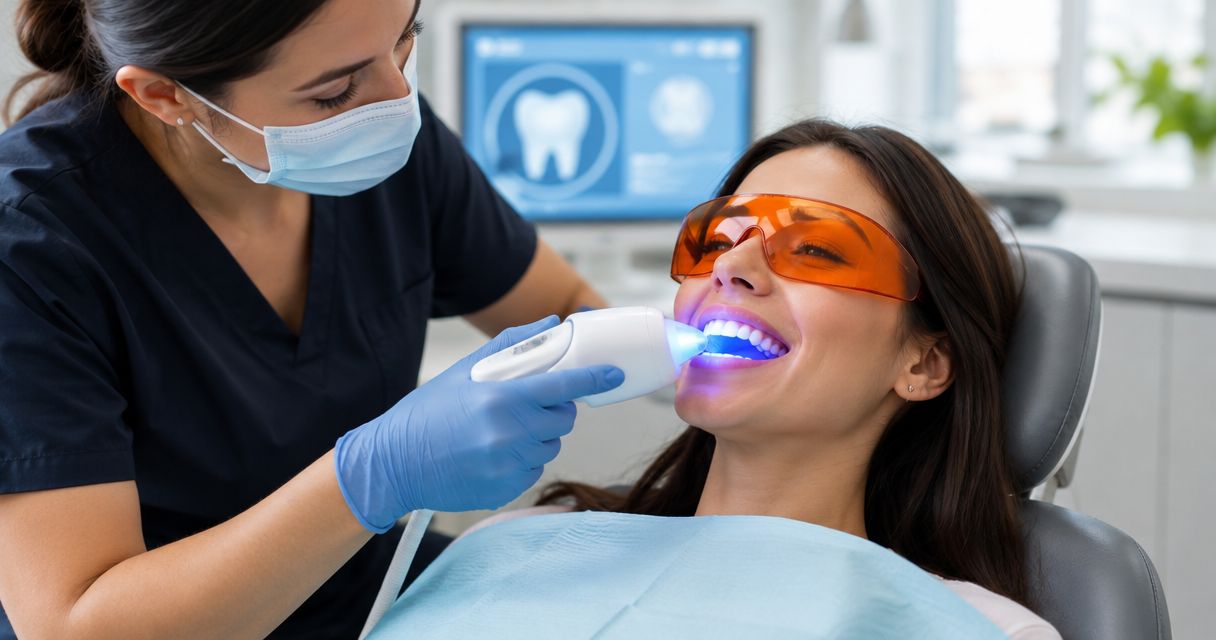
Professional teeth whitening is worth it in 2026 if you want lighter natural teeth and a dentist confirms that your discoloration is likely to respond. The main trade-offs are temporary tooth sensitivity, possible gum irritation, and the fact that whitening does not change the color of crowns, veneers, or fillings.
- Is professional teeth whitening worth it? Yes, for suitable natural teeth—not for changing crowns, veneers, or fillings.
- Dentist-supervised teeth whitening adds an oral health assessment and guidance on sensitivity, treatment, and maintenance.
- Dental Arts of Atlantis offers general and cosmetic dentistry for families in Lake Worth and Palm Beach County.
- Choose a realistic shade goal; whitening cannot promise identical results for every tooth.
Is professional teeth whitening worth it in 2026?
Professional whitening earns its value through treatment selection and supervision, not a guaranteed shade change. A dentist can distinguish surface staining from discoloration inside a tooth, check for problems that need treatment first, and explain whether bleaching fits your smile.
The American Dental Association's MouthHealthy guidance on tooth whitening identifies sensitivity as a possible side effect and explains that restorations do not whiten like natural teeth. Those are useful starting points for your 2026 decision. Read more about how to whiten teeth safely without damaging enamel before choosing a treatment.
| Option | Best for | Main advantage | Main limitation |
|---|---|---|---|
| In-office professional whitening | Adults who want treatment administered by a dental team | The dental team controls application and protects surrounding tissues | Sensitivity remains possible; results vary |
| Dentist-supervised home whitening | Adults who prefer whitening at home with professional guidance | Your dentist can guide the treatment schedule and response to sensitivity | You must follow the prescribed instructions consistently |
| Over-the-counter whitening | Adults with healthy teeth seeking a self-directed approach after dental advice | Treatment takes place at home | Product fit, application, and suitability are not individually assessed |
| Professional cleaning | People whose main concern is removable surface stain or buildup | Removes plaque, tartar, and some external staining | Does not bleach the underlying tooth color |
These are general treatment categories, not a list of services confirmed at a particular practice. Ask which approach is available and appropriate for your teeth.
Why this matters
A brighter smile is a personal preference, not a requirement for a healthy mouth. You do not need whitening simply because your teeth are darker than a photograph or advertisement.
The useful question is whether whitening addresses what bothers you. If the concern is tooth color, bleaching deserves consideration; if the concern is a chip, a gap, or a mismatched crown, whitening alone will not solve it.
For your 2026 treatment decision, separate appearance goals from oral health needs. Treating a cavity or investigating a painful tooth comes before an elective color change.
When professional whitening is a good fit
Best for discoloration in natural teeth
Professional whitening is a reasonable choice when your natural teeth have discoloration that responds to bleaching. Yellow-toned teeth generally respond more readily than some brown or gray discoloration, but your dentist must assess the cause rather than judge from color alone.
Bring a clear goal to the appointment. Saying you want your teeth to look less yellow is more useful than asking for the whitest possible result.
Recommendation: choose dentist-supervised whitening when the stain assessment supports it and the expected improvement matches your goal. Do not treat someone else's before-and-after photograph as a prediction for your mouth.
Best for people who want guidance on sensitivity
Professional supervision is useful when you already worry about discomfort or have had sensitivity with whitening products. It gives you a place to discuss symptoms and ask how treatment should change if discomfort develops.
Supervision does not make whitening sensitivity-free. A dentist can assess whether existing sensitivity needs investigation and advise whether a different schedule or another approach makes sense.
Recommendation: disclose sensitivity before treatment, rather than waiting until whitening makes it harder to ignore. Sharp pain, persistent pain, or pain confined to one tooth needs assessment, not a stronger whitening product.
Best for a planned cosmetic change
Whitening deserves consideration when you want to improve color without changing the shape of otherwise suitable natural teeth. It does not require the same tooth preparation as a veneer or crown, although those treatments address different problems.
A realistic plan includes the starting shade, visible restorations, and your willingness to maintain the result. If you are preparing for an event in 2026, share the date before choosing treatment rather than increasing applications on your own.
When whitening is not the next move
Whitening is not a treatment for decay, gum disease, or tooth damage. An examination helps determine whether the discoloration is cosmetic or connected to a problem that needs care.
Pause and ask for an assessment if you have:
- A tooth that has become darker than its neighbors, especially after an injury.
- Ongoing tooth pain or sensitivity that has not been explained.
- Bleeding, swollen, or irritated gums.
- Visible damage, suspected decay, or an uncomfortable restoration.
- A color concern centered on crowns, veneers, or tooth-colored fillings.
A single dark tooth is not the same situation as generalized yellowing. Depending on the cause, that tooth needs its own treatment plan rather than routine whole-mouth whitening.
Visible restorations also change the decision. Bleaching natural teeth around an existing crown can make a color mismatch more noticeable, so discuss the finished appearance before starting.
Why professional whitening results vary
The label on the whitening treatment does not explain the whole result. Your teeth, stain pattern, and treatment instructions all matter.
- Stain source: Surface staining and discoloration within tooth structure are different problems. Medication-related discoloration requires a more specific assessment.
- Starting tooth color: Natural teeth have different baseline shades. The same whitening approach does not produce an identical endpoint for everyone.
- Visible restorations: Crowns, veneers, and fillings retain their existing color, which affects how even the finished smile looks.
- Oral health and sensitivity: Cavities, exposed roots, and irritated gums can affect whether whitening is appropriate and how comfortably you tolerate it.
- Treatment use and maintenance: Following instructions matters. Continued exposure to staining substances also affects how the result looks over time.
For a 2026 comparison, ask what result is realistic for your starting condition—not how white an example photograph appears. A useful treatment plan explains the limits as clearly as the expected benefit.
How do you decide whether whitening is worth it for you?
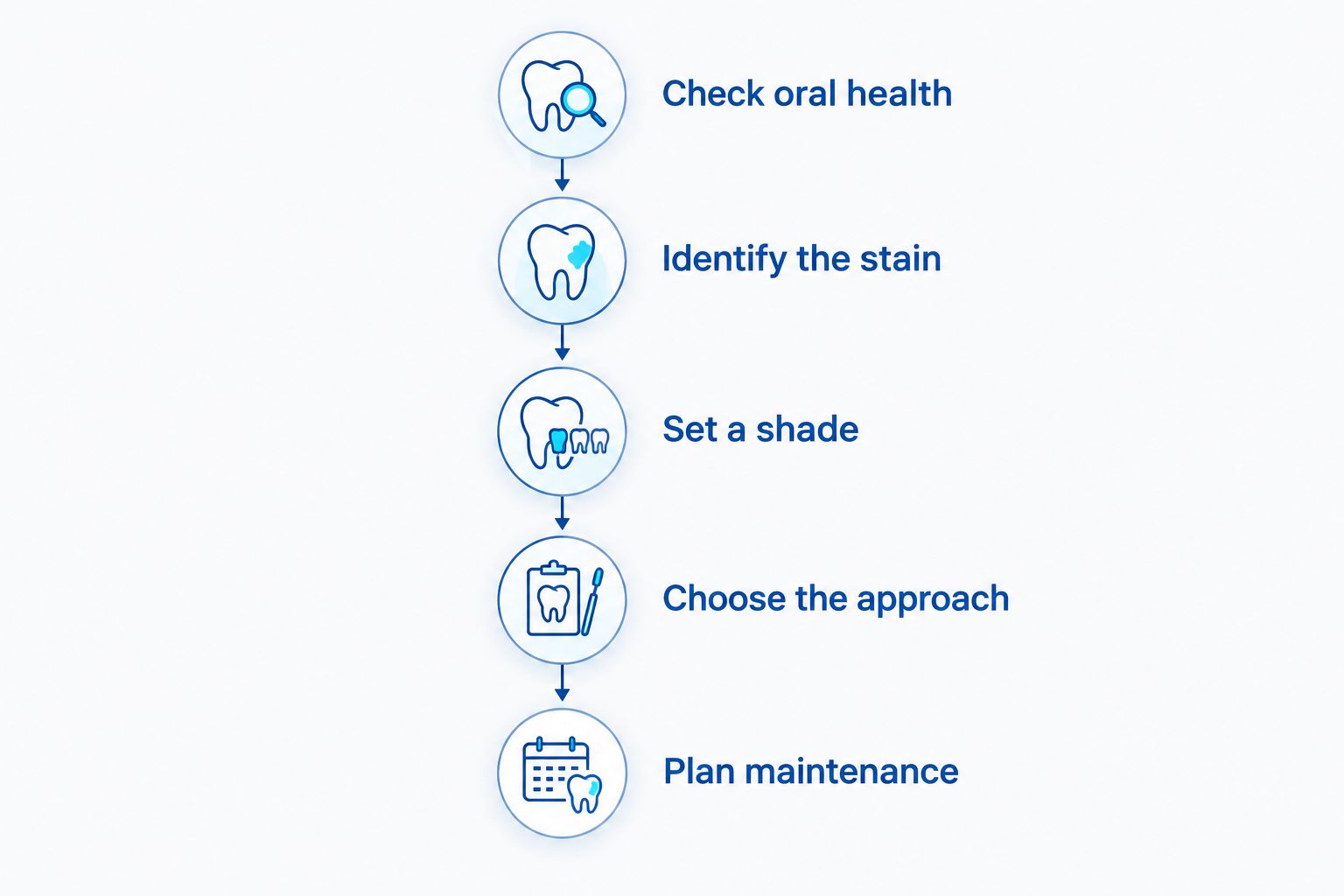
Use this sequence before committing. It keeps the decision focused on your teeth rather than a promised result.
- Check oral health. Tell your dentist about pain, sensitivity, previous dental injuries, and recent changes in tooth color. Ask whether anything needs treatment before whitening.
- Identify the stain. Ask whether the concern is removable surface staining, discoloration within natural teeth, or the color of an existing restoration.
- Set a shade goal. Explain the change you want and ask whether it is realistic. Agree on what counts as a worthwhile improvement for you.
- Choose the approach. Discuss the suitable treatment categories, what you must do at home, and what to do if sensitivity develops.
- Plan maintenance. Ask how to care for your teeth afterward and how to decide whether a future touch-up is appropriate.
The most useful answer is not simply that your teeth can be whitened. It is an explanation of what is likely to change, what will stay the same, and how the plan protects your comfort.
Is professional whitening better than whitening strips?
Professional whitening is better for people who need individualized assessment and guidance; strips offer a self-directed approach. Both use bleaching ingredients in many formulations, so the distinction is not that one category works and the other never does.
The professional advantage is the assessment around treatment: stain type, oral health, restorations, and sensitivity. The limitation is that professional treatment still cannot guarantee a specific shade or eliminate every side effect.
Do not combine strips with another whitening treatment unless your dentist advises it. More frequent exposure is not a substitute for a suitable plan.
Will professional whitening damage my enamel?
Dentist-supervised whitening, used as directed, is generally considered safe for suitable teeth. That does not make every whitening product, homemade mixture, or application schedule safe.
Temporary sensitivity and gum irritation are recognized side effects. They are different from proof that enamel has been damaged, but discomfort still deserves attention and instructions from your dentist.
Avoid trying to bleach with household chemicals or scrub stains away with abrasive homemade mixtures. Tell your dentist what you already use, including products you consider natural.
How long does professional whitening last?
Professional whitening is not permanent, and there is no single duration that applies to every patient. Starting color, stain exposure, oral hygiene, and any appropriate maintenance treatment affect how the result changes.
Coffee, tea, red wine, and tobacco can contribute to staining. Keeping your teeth clean helps, but routine brushing does not guarantee that a whitened shade will remain unchanged.
Do not schedule repeated bleaching solely because a calendar says it is time. Ask whether the change you see is surface stain that needs cleaning or a reason to consider another whitening treatment.
What should you ask at a cosmetic consultation?
Dental Arts of Atlantis is best for Lake Worth families seeking general and cosmetic dentistry in one practice. The practice serves the Palm Beach County area; a consultation is the place to discuss whether whitening fits your oral health and appearance goals.
Before choosing cosmetic care at Dental Arts of Atlantis, bring a short list of questions:
- What is causing the discoloration in my teeth?
- Which visible restorations will keep their current color?
- Does my sensitivity need assessment before whitening?
- What improvement is realistic, and what remains uncertain?
- What should I do if treatment causes discomfort?
- What maintenance does the proposed approach require?
Dental Arts of Atlantis offers cosmetic dentistry, but your whitening method and expected result belong in an individual treatment discussion. A good decision accounts for both the benefit you want and the limitations you can accept.
How can you maintain a brighter smile?
Keep basic oral care at the center of your plan. Brush for 2 minutes per session, complete 2 brushing sessions per day with fluoride toothpaste, and clean between your teeth in 1 daily session with floss or another appropriate interdental cleaner.
These habits support oral health; they are not a promise that whitening will last a set length of time. Keep dental visits on the schedule recommended for your needs and ask about removing surface stains before adding more bleaching.
For your 2026 maintenance plan, follow the instructions for the treatment actually prescribed to you. Do not borrow another person's trays, extend application times, or stack whitening products because the result seems slow.
FAQ
Is professional teeth whitening worth it if my teeth are only slightly yellow?
Professional teeth whitening is worth considering if the yellow color bothers you and your natural teeth are suitable for bleaching. A dental assessment can help you decide whether whitening or removal of surface stains better matches your goal.
Can professional whitening change the color of my crowns?
Professional whitening does not change the color of crowns, veneers, or fillings. Whitening nearby natural teeth can make an existing color mismatch more noticeable.
What’s the best whitening approach if I have sensitive teeth?
The best whitening approach for sensitive teeth starts with identifying the cause of the sensitivity. A dentist can assess suitability and discuss how the treatment plan should respond to discomfort.
Can I whiten my teeth right before a wedding?
Plan whitening before your wedding with a dentist rather than choosing a last-minute application schedule. Explain your event date, existing restorations, and sensitivity history so the plan fits your situation.
Does a dental cleaning do the same thing as whitening?
A dental cleaning removes plaque, tartar, and some surface staining; whitening changes the color of natural teeth through bleaching. A cleaning can improve appearance without producing the same effect as bleaching.
Should I keep whitening if one tooth hurts?
Stop whitening and contact your dentist if one tooth hurts. Localized or persistent pain needs assessment rather than additional bleaching.
Does Dental Arts of Atlantis provide cosmetic dentistry in Lake Worth?
Dental Arts of Atlantis provides general and cosmetic dentistry in Lake Worth, Florida, for families in the Palm Beach County area. Discuss whitening suitability, available approaches, and treatment expectations during your dental consultation.
One last thing
Whiter teeth do not automatically mean a more even-looking smile. If a front crown already matches your natural teeth, bleaching those teeth can leave the crown looking darker by comparison.
Before whitening, ask your dentist to identify the restorations visible when you smile. That simple check helps you judge the finished appearance—not just the color change in individual teeth.
Related guides
- Teeth whitening methods for coffee and wine stains
- Teeth whitening options for people with sensitive teeth
- Whitening touch-up kits for maintaining results at home