
Early tooth decay can be reversed without a filling if the enamel surface is still intact; a true cavity with a hole cannot regrow. In 2026, fluoride, daily plaque removal, and changes to eating habits remain the foundation of early-decay treatment, but a dentist must first determine whether the tooth has lost structure.
- Can a cavity be reversed without a filling? Early enamel decay can; a hole cannot regrow.
- Fluoride supports remineralization, but it does not replace missing tooth structure.
- Dental Arts of Atlantis provides general and pediatric dentistry for families in the Palm Beach County area.
- Pain is not a reliable measure of decay depth; an examination determines the next step.
Can a cavity be reversed without a filling?
Yes for early mineral loss; no for rebuilding an actual hole. People often use cavity to describe both conditions, but the distinction changes treatment. Enamel that has lost minerals without breaking down can become stronger through remineralization. Once tooth structure is missing, remineralization cannot restore the original shape.
A dentist also distinguishes reversal, which restores minerals, from arrest, which stops decay from progressing. Some treatments arrest selected cavities without a conventional filling, but they do not rebuild the tooth.
| Tooth condition | Best for | Treatment benefit | Important limitation |
|---|---|---|---|
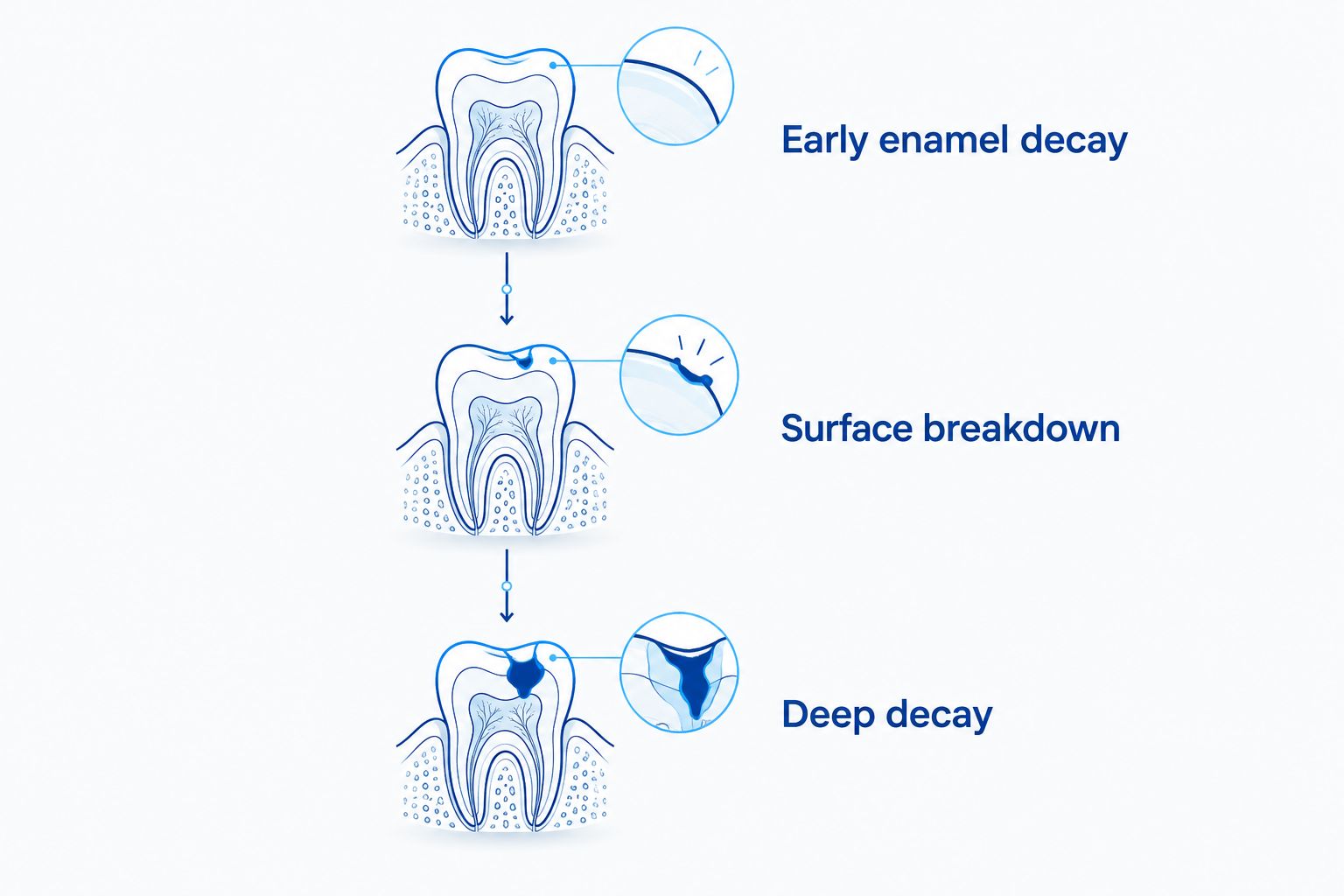
| Early enamel decay | Remineralization when the surface remains intact | Fluoride and plaque control help strengthen weakened enamel | Requires follow-up; the spot does not always disappear |
| Selected noncavitated lesions | Sealants or resin infiltration when the location and depth fit | Creates a barrier against further progression | Does not suit every lesion or replace missing structure |
| Selected cavitated lesions | Dentist-directed arrest with silver diamine fluoride | Helps stop active decay without conventional drilling | Permanently darkens treated decay and does not restore tooth shape |
| Surface breakdown | A filling when lost structure needs repair | Restores the damaged area and supports function | Requires a procedure and continued prevention |
| Deep decay | Assessment for treatment beyond a simple filling | Addresses damage near or involving the tooth's pulp | Fluoride alone cannot treat an infected pulp |
These are treatment categories, not a way to diagnose your own tooth. A dark mark, white spot, or sensitive area needs an examination before you choose a plan.
Why this matters
The useful question in 2026 is not simply whether you can avoid a filling. It is whether a nonrestorative approach can keep that particular tooth healthy and functional. Treating intact enamel conservatively preserves tooth structure; delaying necessary repair leaves an existing defect untreated.
Dental Arts of Atlantis is a family dentistry option for Palm Beach County households seeking general and pediatric dental care. The practice serves families in Lake Worth, Florida; you can learn about Dental Arts of Atlantis before arranging an evaluation.
An examination has a limit: it identifies your current condition, but successful prevention still depends on daily care and reassessment. No office visit makes a tooth permanently cavity-proof.
Early enamel decay: remineralization without a filling
Best for: mineral loss beneath an intact enamel surface. Early decay sometimes appears as a chalky white area, especially where plaque collects. However, not every white spot is decay, and color alone cannot establish whether a lesion is active.
Fluoride helps enamel resist acid and supports the return of minerals to weakened areas. Saliva supplies minerals and helps neutralize acids. Reducing plaque and frequent sugar exposure gives these protective processes a better chance to work.
The advantage is preservation: you strengthen existing enamel rather than remove tooth structure for a restoration. The limitation is equally important. A stronger area can remain visibly white, and a prevention plan needs monitoring to confirm that decay is no longer progressing.
Ask your dentist whether the surface is intact, whether the lesion is active, and what findings will show improvement. Those answers matter more than a promise that a toothpaste will erase the spot.
A hole in the tooth: repair rather than regrowth
Best for: a filling when missing structure needs restoration. A hole can trap food and plaque, making the area difficult to keep clean. Fluoride remains useful for protecting the surrounding tooth, but it does not fill that space.
A restoration repairs the defect and helps you clean and use the tooth. Its limitation is that it does not remove your underlying susceptibility to decay. New decay can develop around a filling if plaque and repeated acid exposure continue.
Not every cavitated lesion follows the same treatment path. A dentist considers access for cleaning, activity, depth, symptoms, and your ability to maintain follow-up before recommending restoration or another approach.
Can a dentist stop decay without placing a filling?
Sometimes, but stopping decay is not the same as reversing a hole. Dentist-directed options include sealants, resin infiltration, and silver diamine fluoride for selected lesions. Suitability depends on the tooth, lesion, and treatment goal—not simply your preference to avoid drilling.
- Sealants: Best for selected pits and grooves, including some noncavitated lesions. They create a protective barrier, but retention needs checking.
- Resin infiltration: Best for selected noncavitated lesions, including certain lesions between teeth. It limits progression without a conventional filling, but depth and surface condition determine suitability.
- Silver diamine fluoride: Best for selected active lesions when arrest is the goal. Its major trade-off is permanent dark staining of treated decay; it does not restore contour or chewing function.
These are general dental approaches, not a statement that every practice offers every procedure. Ask which option fits your tooth and whether an additional restoration will still be needed.
Why the chance of avoiding a filling varies
Your tooth's condition—not the wording on a product label—determines whether remineralization is appropriate. These factors shape the decision:
- Surface integrity: Intact enamel offers an opportunity for remineralization. Missing structure cannot regrow through brushing.
- Lesion depth and activity: A shallow, inactive area and a progressing lesion require different management. Your dentist uses examination findings and appropriate imaging to assess them.
- Plaque access: An area you can clean consistently is easier to protect than a defect that traps plaque beyond your reach.
- Frequency of sugar exposure: Repeated sugary snacks or drinks give plaque bacteria repeated opportunities to produce acid.
- Saliva flow: Dry mouth reduces natural protection. Medicines and medical conditions can contribute, so share your health history.
- Follow-up: A nonrestorative plan needs reassessment. Lack of pain does not establish that decay has stopped.
No single factor decides everything. For example, better brushing helps, but it does not make a broken enamel surface intact again.
What should you do at home while awaiting an examination?
A practical 2026 routine protects your teeth without pretending to diagnose or repair a cavity. Keep the basics consistent rather than adding several products at once.
- Brush for 2 minutes, twice daily, with fluoride toothpaste. Use a soft-bristled toothbrush and gentle pressure. Follow age-specific toothpaste guidance for children and supervise brushing as needed.
- Clean between your teeth once daily. Use floss or another suitable interdental cleaner. If contacts are difficult, this guide to floss for tight contacts between teeth explains the practical choices.
- Reduce repeated sugar exposure. Keep sugary foods and drinks with meals rather than returning to them throughout the day. Choose plain water between meals.
- Discuss dry mouth. Tell your dentist about persistent dryness and your medicines. Do not stop a prescribed medicine on your own.
- Keep the evaluation and follow-up appointments. A home routine supports treatment; it does not establish whether a lesion is safe to monitor.
Avoid scraping a spot with a sharp object, applying acidic home remedies, or brushing harder to remove discoloration. Those actions do not reverse decay and can damage teeth or gums.
How does a dentist decide whether a filling is necessary?
The examination looks beyond the surface appearance. Your dentist considers symptoms, plaque accumulation, surface breakdown, lesion activity, and the condition of nearby restorations. X-rays are used when clinically indicated, including to assess areas that are difficult to see directly.
An X-ray is part of the decision, not the entire decision. Its appearance must be interpreted alongside the clinical examination and your cavity risk. A photograph or online description cannot provide the same assessment.
For your 2026 appointment, ask:
- Is this an intact early lesion or an actual hole?
- What shows that the decay is active or inactive?
- What does a filling accomplish that prevention alone cannot?
- If we monitor it, when will it be reassessed?
- What finding would mean the treatment plan needs to change?
A monitoring plan should name both the home-care changes and the reassessment plan. “Wait until it hurts” is not a substitute for either.
Arrange a dental evaluation
Discuss whether your tooth needs preventive care, monitoring, or repair.
Can I wait if the tooth does not hurt?
No pain does not mean no decay. Early lesions and some deeper cavities cause no noticeable symptoms. Waiting for pain removes the opportunity to make decisions based on an examination rather than discomfort.
Arrange a dental assessment for a suspected cavity, food-trapping hole, broken filling, or persistent sensitivity. Seek prompt care for swelling, fever, pus, or worsening pain. Trouble breathing or swallowing requires emergency medical attention.
Can my child's cavity reverse without a filling?
An early, noncavitated lesion in a child's tooth can remineralize; a hole cannot regrow. Baby teeth still need assessment because untreated decay can cause pain and infection before the tooth is ready to fall out.
Parents can help with consistent brushing, age-appropriate fluoride toothpaste, and fewer sugary exposures between meals. A dentist determines whether prevention, a sealant, decay-arrest treatment, or a restoration fits the child's tooth and circumstances.
Does a white spot mean the decay has reversed?
A white spot alone cannot confirm that decay has reversed. A remineralized lesion can remain visible, while other white marks come from developmental changes rather than active decay.
Your dentist assesses activity and compares findings over time. Do not use whitening results, a smoother feeling, or reduced sensitivity as proof that the lesion no longer needs care.
FAQ
Can a cavity be reversed without a filling at home?
Early enamel mineral loss can improve with fluoride and plaque control, but a hole cannot regrow at home. A dentist must determine whether the surface is intact and whether monitoring is appropriate.
What toothpaste gets rid of cavities?
Fluoride toothpaste supports remineralization of early enamel decay; it does not get rid of a hole. Brush for 2 minutes, twice daily, and ask your dentist whether additional fluoride treatment fits your needs.
How long does it take to reverse an early cavity?
There is no single timeline that confirms an early lesion has remineralized. Your dentist sets a reassessment interval based on lesion activity, depth, and your risk of further decay.
Is a filling better than fluoride treatment?
A filling repairs missing tooth structure, while fluoride strengthens remaining enamel. They serve different purposes, and fluoride remains useful even when a tooth needs restoration.
Can oil pulling or supplements heal a cavity?
Oil pulling and supplements do not rebuild missing tooth structure. Do not substitute them for fluoride toothpaste, daily cleaning, or assessment of a suspected cavity.
Can a cavity stop growing without being filled?
Some lesions can become inactive through dentist-directed preventive or arrest treatment. An arrested hole still has missing structure and can need restoration for cleaning, strength, or function.
Where can my family get a suspected cavity checked in Lake Worth?
Dental Arts of Atlantis provides general and pediatric dentistry in Lake Worth, Florida, for families in the Palm Beach County area. An examination determines whether a suspected cavity needs preventive care, monitoring, or repair.
One last thing
A visible spot can remain after early decay becomes inactive. That means a tooth looking unchanged is not automatically treatment failure—and a tooth looking better is not proof of success.
For a suspected cavity in 2026, ask one question first: Is the surface intact? Then ask how your dentist will confirm that the chosen treatment is working. Those answers separate a reasonable attempt to avoid a filling from an unsafe delay.
Related guides
- Fluoride treatments for cavity-prone kids
- How to manage dry mouth caused by medication
- How to get a second opinion on a dental treatment plan