

Early gum disease, called gingivitis, can be reversed with effective daily cleaning, often alongside a professional dental cleaning; periodontitis cannot be reversed at home. Brushing and cleaning between your teeth remove soft plaque, but they cannot remove hardened tartar or rebuild bone lost around teeth. This 2026 guide explains what you can do safely at home, what requires treatment, and when to get help.
- Can gum disease be reversed at home? Gingivitis can improve; periodontitis needs professional treatment, not home remedies alone.
- Brush for 2 minutes, 2 times daily, and clean between teeth once daily to control plaque.
- Tartar and lost tooth-supporting bone cannot be removed or restored with brushing, flossing, or mouthwash.
- Dental Arts of Atlantis offers general dental care for Lake Worth families; persistent bleeding needs an examination.
Can gum disease be reversed at home?
You can reverse gingivitis, but you cannot diagnose its stage or treat periodontitis by looking in a mirror. The distinction is whether inflammation remains limited to your gums or has damaged the tissues and bone supporting your teeth.
| Condition | What home care does | What home care cannot do | Appropriate next step |
|---|---|---|---|
| Gingivitis | Removes plaque and helps inflamed gums recover | Removes hardened tartar or confirms that bone support is healthy | Improve daily cleaning and arrange a dental assessment |
| Periodontitis | Supports treatment and helps limit new plaque buildup | Reverses established attachment or bone loss | Get professional periodontal assessment and treatment |
| Gum recession | Helps keep exposed roots and remaining gums clean | Regrows a receded gumline | Have the cause and treatment needs evaluated |
Bleeding, redness, and swelling are reasons to pay attention, not proof of a particular stage. Review these early signs of gum disease at home, then use an examination—not symptoms alone—to decide what care you need.
Why this matters
Gum disease does not always hurt. Waiting for pain gives you an unreliable signal about whether the tissues supporting your teeth are healthy.
The useful question in 2026 is not simply whether your gums look better after switching toothpaste. It is whether you have removed the cause of inflammation and whether the supporting tissues remain intact. Less bleeding is encouraging, but it does not prove that deeper disease has resolved.
You do not need to feel embarrassed about bleeding gums or returning after a long gap in care. Start gentle daily cleaning now and arrange an examination rather than waiting to achieve perfect gums first.
Gingivitis: inflammation that can be reversed
Gingivitis develops when plaque at the gumline triggers inflammation. Your gums can look red or puffy, feel tender, or bleed during brushing or cleaning between teeth. At this stage, the disease has not caused the attachment and bone loss that defines periodontitis.
Removing plaque consistently allows inflamed gums to recover. However, if plaque has hardened into tartar, professional cleaning is needed to remove those deposits. A better routine cannot brush them away.
Best for gingivitis: consistent plaque removal plus professional cleaning when needed. The benefit is that early inflammation is reversible; the limitation is that you cannot confirm the stage or remove tartar yourself.
Avoid treating every episode of bleeding as a reason to stop flossing. Gentle cleaning helps address plaque-related inflammation, while forceful scrubbing or snapping floss into your gums adds injury. Ask your dentist to check your technique if cleaning stays uncomfortable.
Periodontitis: damage that needs professional treatment
Periodontitis affects the tissues that attach your teeth to the surrounding bone. Pockets can form between teeth and gums, creating areas that ordinary brushing cannot adequately clean. Teeth can eventually loosen as support is lost.
Professional treatment often includes cleaning below the gumline, called scaling and root planing. Further treatment or referral to a periodontist depends on the extent of disease and how your tissues respond.
Best for periodontitis: professional treatment supported by daily home care. Treatment aims to control disease and preserve teeth, but it does not promise that every area of lost support will return. Selected defects can be candidates for regenerative procedures after assessment; no home remedy provides that result.
Do not assume a loose tooth is automatically beyond saving. Equally, do not try to stabilize it with a different mouthwash. A dentist needs to assess its remaining support, infection, and other possible causes of movement.
A home-care routine that supports healthier gums
For your 2026 routine, focus on thorough cleaning rather than buying more products. The American Dental Association's patient guidance recommends brushing for 2 minutes, 2 times daily, with fluoride toothpaste and cleaning between teeth daily. These are general prevention recommendations, not a substitute for treating established periodontitis.
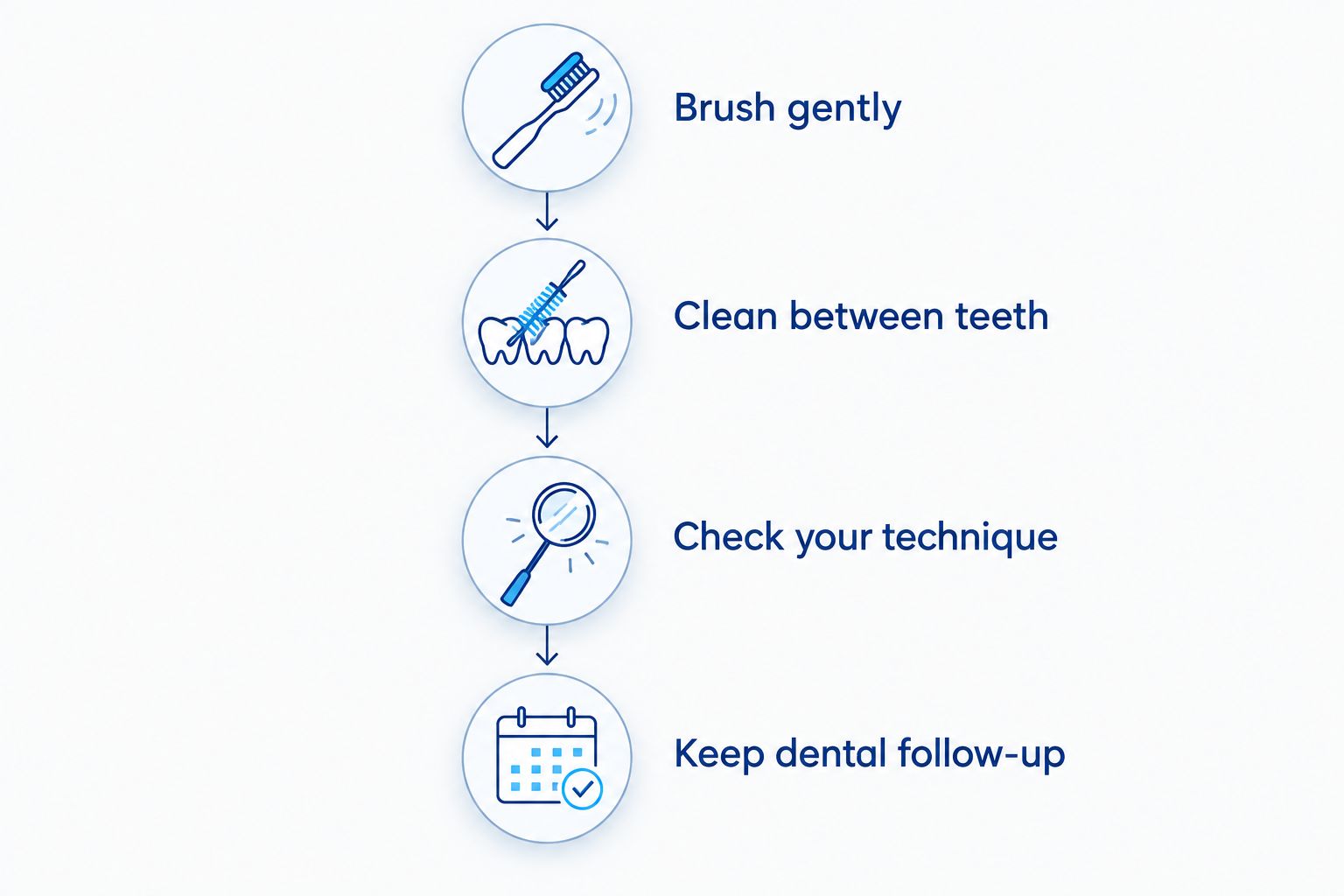
- Brush gently. Use a soft-bristled toothbrush with fluoride toothpaste. Clean the outside, inside, and chewing surfaces, paying attention to where teeth meet gums. Gentle, controlled movements are better than pressing harder.
- Clean between teeth. Clean these spaces 1 time daily with floss or another suitable interdental cleaner. Curve floss against the tooth instead of snapping it down. Ask for help choosing a tool if tight contacts, bridges, or limited hand movement make cleaning difficult.
- Check your technique. Notice which areas repeatedly bleed or collect food. Tell your dentist about these locations so the examination and cleaning advice address the places you struggle to reach.
- Keep dental follow-up. Attend the visits recommended for your findings. After periodontal treatment, your maintenance schedule should reflect your disease history and response, not a generic calendar rule.
Choose tools you can use comfortably and consistently. A manual toothbrush can clean effectively with good technique; an electric toothbrush can help you maintain a consistent routine. Neither removes hardened tartar, and pressing harder with either brush can injure your gums.
Which home-care tools help, and where do they fall short?
Choose a tool for the space you need to clean, not for a promise to cure gum disease. Ask your dental team to demonstrate the fit and technique before forcing a cleaner into a difficult area.
| Tool | Best for | Main benefit | Main limitation |
|---|---|---|---|
| Dental floss | Tight contacts you can reach comfortably | Cleans against tooth surfaces between teeth | Requires controlled technique and hand coordination |
| Interdental brushes | Spaces large enough for a correctly sized brush | Helps clean open spaces between teeth | The wrong size can injure tissue or fail to clean effectively |
| Water flosser | People who find string floss difficult to use | Offers another way to clean between teeth | Does not remove tartar or replace periodontal treatment |
| Antimicrobial mouthwash | Selected patients using it as an adjunct | Helps reduce plaque or gingivitis with an appropriate formulation | Does not replace brushing, interdental cleaning, or necessary treatment |
You do not need every tool in the table. A manageable routine performed well is more useful than a crowded bathroom shelf that leaves the same gumline areas untouched.
Why gum improvement varies
There is no single home-treatment deadline that proves your gums are healthy. The following factors affect what happens after you improve cleaning:
- Disease stage: Gingivitis is reversible; periodontitis involves attachment or bone loss that home care cannot restore.
- Tartar deposits: Hardened deposits keep plaque-retaining surfaces in place until a dental professional removes them.
- Cleaning access: Crowded teeth, bridges, and other hard-to-reach areas require a technique and tool that fit.
- Tobacco use: Smoking increases periodontal risk and can make bleeding a less reliable warning sign.
- Diabetes: Diabetes and periodontal health affect one another; share your medical history and current management with your dentist.
- Dry mouth or medication effects: Reduced saliva and some medication-related gum changes can complicate oral care. Do not stop prescribed medicine without your prescriber's advice.
For a 2026 dental visit, bring an updated medication list and explain any changes in your health. Mention nicotine use honestly; it helps your clinician interpret findings and plan care without relying on visible bleeding alone.
Can mouthwash or salt water reverse gum disease?
Mouthwash and salt water cannot reverse periodontitis or remove tartar. An appropriate antimicrobial rinse can support plaque control, while a salt-water rinse can offer temporary comfort in some situations. Neither replaces physical cleaning or a diagnosis.
Avoid putting concentrated essential oils, undiluted peroxide, bleach, or other harsh substances on inflamed gums. Do not use household mixtures as substitutes for dental treatment. Prescription rinses also need professional direction because some cause staining, taste changes, or other unwanted effects.
Will my gums grow back if I floss more?
Flossing does not regrow receded gums or replace lost bone. It helps remove plaque between teeth and supports the health of the tissues you still have. Gum recession requires an assessment because periodontal disease, brushing injury, and other factors can contribute.
How do I know when home care is not enough?
Persistent or recurring bleeding needs a dental assessment, even without pain. Arrange care for recession, persistent bad breath, a changed bite, or teeth that feel loose. Seek prompt dental attention for pus, significant swelling, or worsening pain; trouble breathing or swallowing requires emergency medical care.
What should you ask at a gum examination?
Ask your dentist to explain whether the findings show gingivitis or periodontitis and what supports that conclusion. Assessment can include measuring gum pockets, checking bleeding and attachment levels, and taking appropriate X-rays to evaluate bone support. These findings provide information a photograph cannot.
Useful questions for your 2026 appointment include:
- Is the inflammation limited to my gums, or is there attachment or bone loss?
- Do I need routine cleaning, deeper cleaning, or a periodontal referral?
- Which areas am I missing, and which cleaning tool fits them?
- How will you check whether treatment has worked?
- What follow-up schedule matches my findings?
Dental Arts of Atlantis is a fit for Lake Worth families seeking general dental care. You can learn about the practice through Dental Arts of Atlantis. For gum disease concerns, an examination determines whether home-care changes are enough or professional treatment is necessary; a website cannot establish that diagnosis.
FAQ
Can gum disease be reversed at home without seeing a dentist?
Gingivitis can be reversed with effective plaque removal, but home care alone cannot remove tartar or establish whether you have periodontitis. An examination identifies the stage and whether professional cleaning or further treatment is needed.
Should I stop flossing if my gums bleed?
Do not stop gentle interdental cleaning solely because your gums bleed. Avoid snapping floss or forcing a tool, and arrange an examination if bleeding persists, recurs, or comes with swelling or pain.
How long should I brush if my gums are inflamed?
Brush for 2 minutes, 2 times daily, using a soft-bristled toothbrush and fluoride toothpaste. Clean gently along the gumline rather than brushing harder or extending brushing to the point of irritation.
Can I scrape tartar off my teeth myself?
Do not scrape tartar off your teeth yourself. Home scaling tools can injure gums and tooth surfaces, and they cannot substitute for professional assessment and cleaning below the gumline.
Does less bleeding mean my gum disease is cured?
Less bleeding does not prove that gum disease is cured. It can reflect reduced inflammation, but professional measurements are needed to assess deeper pockets and the stability of tooth-supporting tissues.
Can antibiotics cure gum disease without cleaning?
Antibiotics do not replace the removal of plaque and tartar in periodontal treatment. A dentist decides whether medication is appropriate alongside other care; do not take leftover antibiotics for bleeding gums.
Can Dental Arts of Atlantis help me decide what my gums need?
Dental Arts of Atlantis offers general dental care for families in Lake Worth and the Palm Beach County area. A dental examination is the appropriate next step for distinguishing reversible gingivitis from disease that needs professional treatment.
One last thing
Judge your routine by how gently and thoroughly it cleans—not by how strongly a rinse tingles. A fresh taste does not show whether plaque remains between teeth, tartar sits below the gumline, or tooth support has changed.
Start with careful daily cleaning, then have persistent symptoms assessed. You do not have to solve the diagnosis yourself before asking for help.
Related guides
- How to treat gum recession before it gets worse
- Gum disease treatment for early-stage periodontitis
- Best floss type for tight contacts between teeth