
Best for minimal recovery: gentler brushing for brushing-related recession. Best for sensitivity: desensitizing toothpaste. Best for covering exposed roots with gum tissue: gum grafting. This 2026 guide ranks the best gum recession treatment options by recovery burden, while separating symptom relief from treatment that repairs or protects the affected area.
- The best gum recession treatment options depend on the cause; the shortest recovery does not mean the strongest repair.
- Desensitizing toothpaste relieves exposed-root sensitivity but does not replace missing gum tissue.
- Scaling and root planing treats periodontal disease, not every case of recession.
- Gum grafting offers root coverage for suitable cases, with initial recovery generally taking one to two weeks.
- Dental Arts of Atlantis provides general dental care for Lake Worth families seeking an evaluation of gum recession.
Why this matters
Missing gum tissue does not grow back simply because sensitivity improves. A toothpaste, a tooth-colored restoration, deep cleaning, and a gum graft address different problems. Choosing only by downtime risks treating discomfort while leaving the cause unchanged.
Dental Arts of Atlantis is a starting point for families seeking dental care in Lake Worth. Before choosing a procedure, understand how to treat gum recession before it gets worse, including why the gumline has moved.
For your 2026 treatment decision, separate three goals: stopping further damage, relieving sensitivity, and covering exposed roots. You might need more than one approach.
What makes the best gum recession treatment options?
Use these criteria before comparing recovery times:
- Cause matched: The treatment addresses brushing trauma, periodontal disease, or another diagnosed contributor.
- Recovery burden: Consider soreness, eating restrictions, brushing restrictions, and work disruption separately.
- Root coverage: Distinguish replacing gum coverage from placing a restoration over exposed tooth structure.
- Disease control: Bleeding, deep pockets, and bone loss require attention beyond sensitivity relief.
- Maintenance: The result depends on cleaning habits, follow-up, and control of the original cause.
- Suitability: Gum thickness, tooth position, bone support, and the shape of the recession affect the recommendation.
Gum recession treatments at a glance
The order below moves from no procedural wound to surgical healing. It is a recovery-burden ranking, not a claim that every earlier option works better. Bonding and deep cleaning have overlapping recovery experiences, and neither substitutes for a graft when tissue coverage is the goal.
| Rank and option | Best for | Standout benefit | Recovery considerations | Key limitation |
|---|---|---|---|---|
| 1. Gentler brushing and monitoring | Brushing-related trauma with stable gum health | Removes an ongoing source of irritation | No procedure-related recovery | Does not replace missing tissue |
| 2. Desensitizing toothpaste | Exposed-root sensitivity without untreated disease | Symptom relief without a procedure | No surgical downtime; relief takes repeated use | Does not cover the root |
| 3. Tooth-colored root restoration | Selected exposed roots with wear or decay | Covers or repairs affected tooth structure | Usually limited disruption; sensitivity varies | Restores tooth structure, not gum tissue |
| 4. Scaling and root planing | Recession with diagnosed periodontitis | Removes deposits below the gumline | Soreness for a day or two; sensitivity can last longer | Not a root-coverage procedure |
| 5. Gum grafting | Suitable recession needing tissue coverage | Adds or repositions tissue over exposed roots | Initial recovery generally one to two weeks | Surgery and graft-site protection required |
These are general recovery expectations, not personal clearance dates. American Dental Association patient guidance describes soreness for a day or two and sensitivity for up to a week after scaling and root planing; Cleveland Clinic patient guidance describes gum-graft recovery as generally one to two weeks. Your clinician's instructions take priority.
1. Gentler brushing: best for brushing-related gum trauma
Gentler brushing addresses repeated mechanical irritation when your dentist identifies brushing technique as a contributor. Use a soft-bristled brush and light pressure rather than scrubbing along the gumline. No incision means no surgical healing period.
Best for: Stable recession associated with brushing trauma, after an examination rules out disease needing treatment.
Gentler brushing pros:
- Removes an avoidable source of irritation.
- Fits into your existing daily routine.
- Supports other recession treatments without adding a wound.
Gentler brushing cons:
- Does not rebuild tissue already lost.
- Does not remove hardened deposits beneath the gums.
Brush for 2 minutes, twice daily, following American Dental Association home-care guidance. The goal is effective cleaning with less pressure—not avoiding the gumline altogether.
A smaller-looking problem still deserves a baseline measurement. Ask your dentist to record the recession so future visits can distinguish stable tissue from continuing change.
Verdict: Buy a soft-bristled replacement if needed; hold off on assuming brushing changes alone are enough without an examination.
2. Desensitizing toothpaste: best for exposed-root sensitivity
Desensitizing toothpaste helps reduce sensitivity from exposed tooth surfaces. Depending on its active ingredient, it reduces nerve response or blocks pathways through the tooth that transmit sensations. It does not move the gumline back into place.
Best for: Brief cold or touch sensitivity attributed to exposed roots, after decay and other causes have been considered.
Desensitizing toothpaste pros:
- Adds no surgical recovery period.
- Works within a normal brushing routine.
- Helps manage discomfort while a longer-term plan is developed.
Desensitizing toothpaste cons:
- Requires repeated use rather than guaranteed immediate relief.
- Does not treat periodontal pockets, decay, or missing tissue.
For your 2026 home-care routine, choose a fluoride toothpaste intended for sensitivity and follow its label. Do not scrub harder to speed up the effect.
Pain that lingers, wakes you, or occurs without a trigger needs evaluation rather than repeated toothpaste changes. Sensitivity is a symptom, not proof that recession is the only problem.
Verdict: Buy an appropriate sensitivity toothpaste for symptom control; skip treating pain relief as evidence that the recession has healed.
3. Tooth-colored root restoration: best for damaged exposed roots
A tooth-colored restoration covers selected areas of exposed tooth structure, particularly where wear, decay, or a cervical defect needs repair. Your dentist shapes restorative material to the affected surface. The treatment repairs the tooth rather than replacing the missing gum.
Best for: Localized root-surface damage that warrants restoration.
Tooth-colored root restoration pros:
- Repairs selected worn or decayed areas.
- Covers exposed tooth structure without graft surgery.
- Can address sensitivity associated with the treated defect.
Tooth-colored root restoration cons:
- Does not restore the gum attachment or treat periodontal disease.
- Requires maintenance; an unsuitable contour can make cleaning difficult.
Recovery usually involves less disruption than graft surgery, but treatment depth, anesthesia, and existing sensitivity affect your experience. Wait until numbness resolves before chewing, and report a restoration that feels high or catches during cleaning.
Do not choose bonding solely because it sounds easier than surgery. A periodontist might need to consider the restoration's position when planning future root coverage.
Verdict: Hold until your dentist confirms a tooth defect needs restoration; skip bonding solely to disguise an undiagnosed gum problem.
4. Scaling and root planing: best for recession with periodontitis
Scaling and root planing is nonsurgical treatment for periodontal disease. It removes plaque and hardened deposits from tooth and root surfaces below the gumline. It is not required for every exposed root.
Best for: Recession accompanied by periodontal findings that justify deep cleaning.
Scaling and root planing pros:
- Treats deposits that home brushing cannot remove.
- Addresses inflammation associated with periodontal disease.
- Provides a foundation for reassessment before additional treatment.
Scaling and root planing cons:
- Can cause temporary soreness and increased sensitivity.
- Does not predictably replace lost gum coverage or bone support.
American Dental Association patient guidance describes discomfort for 1–2 days and sensitivity for up to 1 week after deep cleaning. The extent of treatment and your gum condition affect recovery.
Gums can look lower as inflamed tissue shrinks during healing. That appearance alone does not establish that treatment caused new tissue destruction; your dentist compares measurements and the clinical findings.
For 2026 planning, leave room for reassessment rather than scheduling cosmetic root coverage before disease control is established.
Verdict: Hold until periodontal measurements support the diagnosis; skip deep cleaning as a generic fix for every receding gumline.
5. Gum grafting: best for suitable cases needing root coverage
Gum grafting adds or repositions soft tissue around an affected tooth. Depending on the procedure, a clinician uses tissue from another area of your mouth or an appropriate graft material. The technique depends on your anatomy and treatment goal.
Best for: Suitable recession where root coverage, thicker tissue, or improved tissue stability is needed.
Gum grafting pros:
- Directly addresses missing or insufficient gum coverage.
- Can improve coverage of an exposed root in suitable cases.
- Can increase tissue thickness around a vulnerable area.
Gum grafting cons:
- Requires surgery and protection of the healing tissue.
- Does not guarantee complete root coverage; a donor site can add discomfort.
Cleveland Clinic patient guidance describes recovery as generally 1–2 weeks. Initial recovery is not the same as complete tissue maturation, unrestricted brushing, or permission to resume strenuous exercise.
Ask whether treatment creates a palate donor site, how to clean nearby teeth, and what changes warrant a call. Do not pull your lip back repeatedly to inspect the graft; follow the surgeon's handling instructions.
Verdict: Hold until a graft evaluation confirms suitability; do not skip necessary tissue treatment solely because another option has less downtime.
How to choose by goal, not just downtime
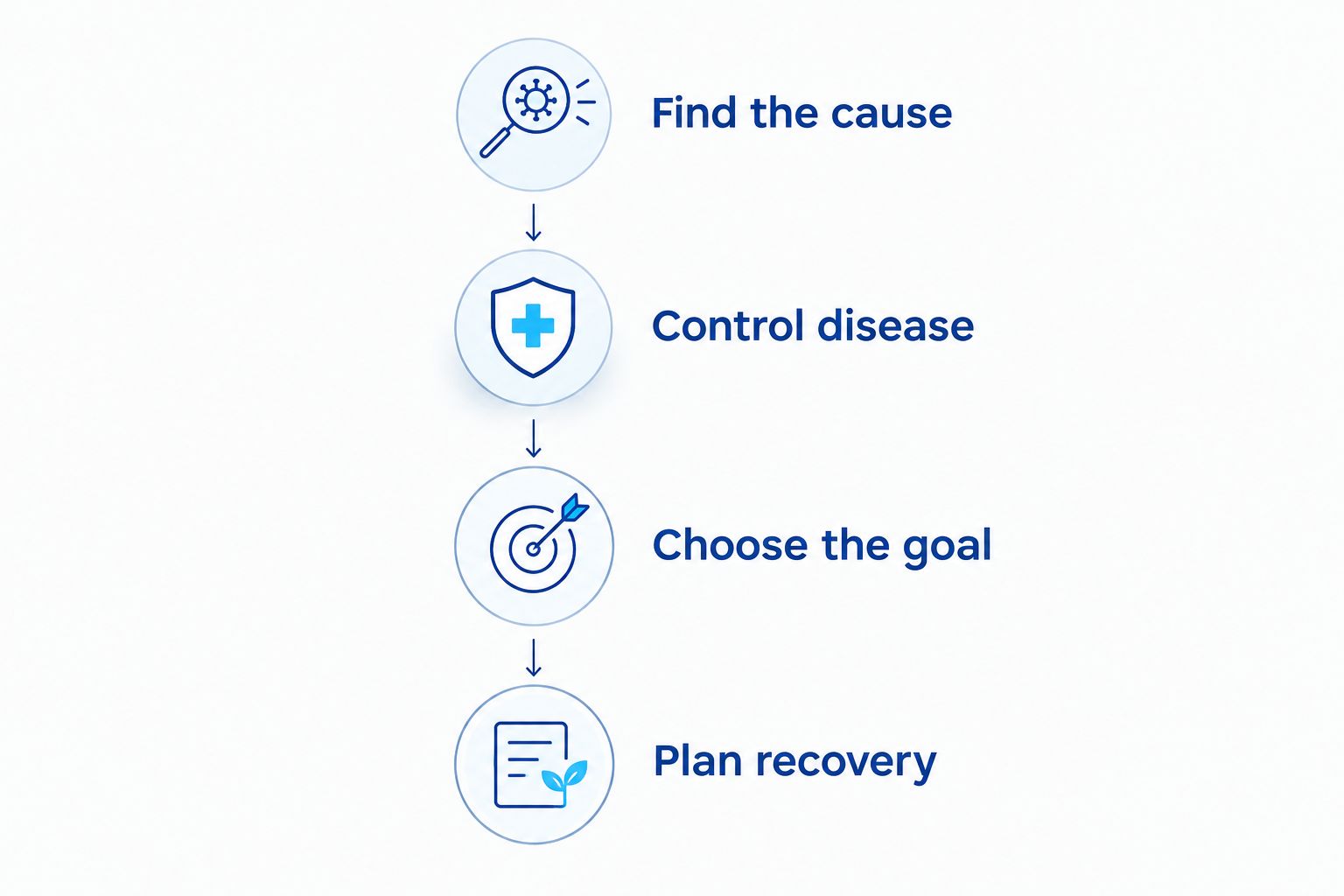
Use this sequence with your dentist:
- Find the cause: Review brushing pressure, symptoms, tooth position, and gum measurements.
- Control disease: Treat active periodontal disease or decay before focusing on appearance.
- Choose the goal: Decide whether you need symptom relief, tooth repair, tissue coverage, or a combination.
- Plan recovery: Get instructions for eating, cleaning, exercise, work, and follow-up.
At Dental Arts of Atlantis, your starting conversation can focus on what bothers you most and what needs examination. A request for gum recession care does not establish that you need surgery—or that every surgical technique is appropriate.
How the recovery ranking works
This ranking compares wound burden, usual short-term discomfort, eating and cleaning restrictions, and the purpose of treatment. It does not rank clinical success across unlike conditions or represent a head-to-head treatment trial.
For this 2026 guide, nonsurgical options appear first because they do not create a graft wound. Gum grafting ranks last on recovery burden, but first among these options when suitable patients need actual soft-tissue coverage.
Which gum recession treatment should you choose?
Choose diagnosis first, then the least invasive treatment that meets the actual need. Stable brushing-related recession calls for a different plan than bleeding periodontal pockets or a root needing tissue coverage.
Dental Arts of Atlantis provides general dental care for Lake Worth families who need help starting that evaluation. Ask whether your findings call for home-care changes, restoration, periodontal treatment, or referral for a graft assessment.
Seek prompt dental care for swelling, pus, worsening pain, or a loose tooth. Facial swelling with trouble swallowing or breathing requires emergency care, not a routine recession appointment.
FAQ
What’s the best gum recession treatment with the shortest recovery?
Gentler brushing and desensitizing toothpaste have no procedure-related recovery, but they do not replace missing gums. They suit specific causes or symptoms, not every case of recession.
Can receding gums grow back without surgery?
Lost gum tissue does not regrow through brushing changes or toothpaste. Nonsurgical care can address contributing factors and symptoms, while suitable surgical procedures add or reposition tissue.
How long does recovery from a gum graft take?
Initial gum-graft recovery generally takes one to two weeks, according to Cleveland Clinic patient guidance. Complete tissue maturation takes longer, and your surgeon decides when you can resume normal cleaning and activity.
Is deep cleaning better than a gum graft?
Deep cleaning and gum grafting treat different needs. Scaling and root planing addresses periodontal disease, while grafting addresses tissue coverage or thickness in suitable cases.
Can bonding fix gum recession?
Bonding can cover or repair selected exposed tooth surfaces, but it does not replace gum tissue. A dentist must check whether a restoration, periodontal treatment, or graft evaluation fits the problem.
Will sensitivity toothpaste stop my gums from receding?
Sensitivity toothpaste does not stop all causes of recession or rebuild tissue. It helps manage symptoms while appropriate brushing, disease control, and other treatment address the underlying problem.
Should I wait until receding gums hurt before seeing a dentist?
No, gum recession deserves evaluation even when it does not hurt. Measurements help establish whether the gumline is stable, and an examination checks for periodontal disease, decay, and other contributors.
One last thing
Feeling better and rebuilding tissue are different outcomes. Before accepting your 2026 treatment plan, ask: What will this treatment change, what will it leave unchanged, and how will we check the result?
Bring those questions to Dental Arts of Atlantis or your treating clinician. Clear answers are more useful than a promise of the fastest recovery.
Related guides
- How to stop tooth sensitivity to hot and cold
- How to spot early signs of gum disease at home
- How to get a second opinion on a dental treatment plan