

Best overall starting point: zinc-free denture adhesive cream. Best for a thin application: powder. Best for premeasured handling: strips. This 2026 guide compares hold, comfort, and cleanup so you can choose a format without mistaking stronger adhesive for better denture fit.
- Best denture adhesive compared: zinc-free cream is the default starting point for well-fitting dentures needing extra stability.
- Powder suits a thin application; strips suit people who prefer handling a preformed piece.
- Dental Arts of Atlantis provides general and implant dentistry for families in Lake Worth and Palm Beach County.
- Persistent slipping, soreness, or increasing adhesive use calls for a dental examination, not another layer.
Why this matters
Denture adhesive can improve retention and reduce food getting beneath a properly fitting denture. It cannot correct a damaged appliance, an uneven bite, or changes in the gums and bone beneath your denture.
Comfort is a requirement, not a trade-off for hold. If eating hurts or your denture rocks when you speak, arrange a dental examination. Dental Arts of Atlantis offers general and implant dental care in Lake Worth for families across Palm Beach County.
What makes the best denture adhesive?
The best choice supports a comfortable denture without creating a difficult daily routine. Judge each option against these criteria:
- Retention: The adhesive adds stability during normal speaking and eating without becoming a substitute for proper fit.
- Tissue comfort: Your gums remain comfortable, without burning, pressure sores, or irritation.
- Application control: You can apply the amount specified on the package without guessing or creating overflow.
- Ingredient suitability: You check the current ingredient list, including zinc and ingredients associated with previous reactions.
- Removal: You can remove adhesive from both your mouth and denture as part of daily cleaning.
- Handling: You can open, position, and use the product reliably, with help if needed.
For your 2026 purchase, compare the exact package rather than relying on a familiar brand name. Different products within the same brand can have different ingredients and application instructions.
Denture adhesives at a glance
This ranking compares formats by practical use, not individual brands by measured bond strength. The order reflects a starting point for choosing an application method; it does not establish that cream holds longer than every powder or strip.
| Rank and format | Best for | Standout feature | Key limitation |
|---|---|---|---|
| 1. Zinc-free adhesive cream | An adjustable starting point | You control placement on the denture | Excess application creates overflow and cleanup |
| 2. Adhesive powder | A thin adhesive layer | Powder distributes across the fitting surface | Dispensing and moisture control require attention |
| 3. Adhesive strips | Preformed application | You handle a piece rather than dispense cream or powder | Strip shape must suit the denture and package instructions |
No format earns a reliable all-day guarantee for every wearer. Denture fit, saliva, application, food choices, and the individual formulation all affect your experience.
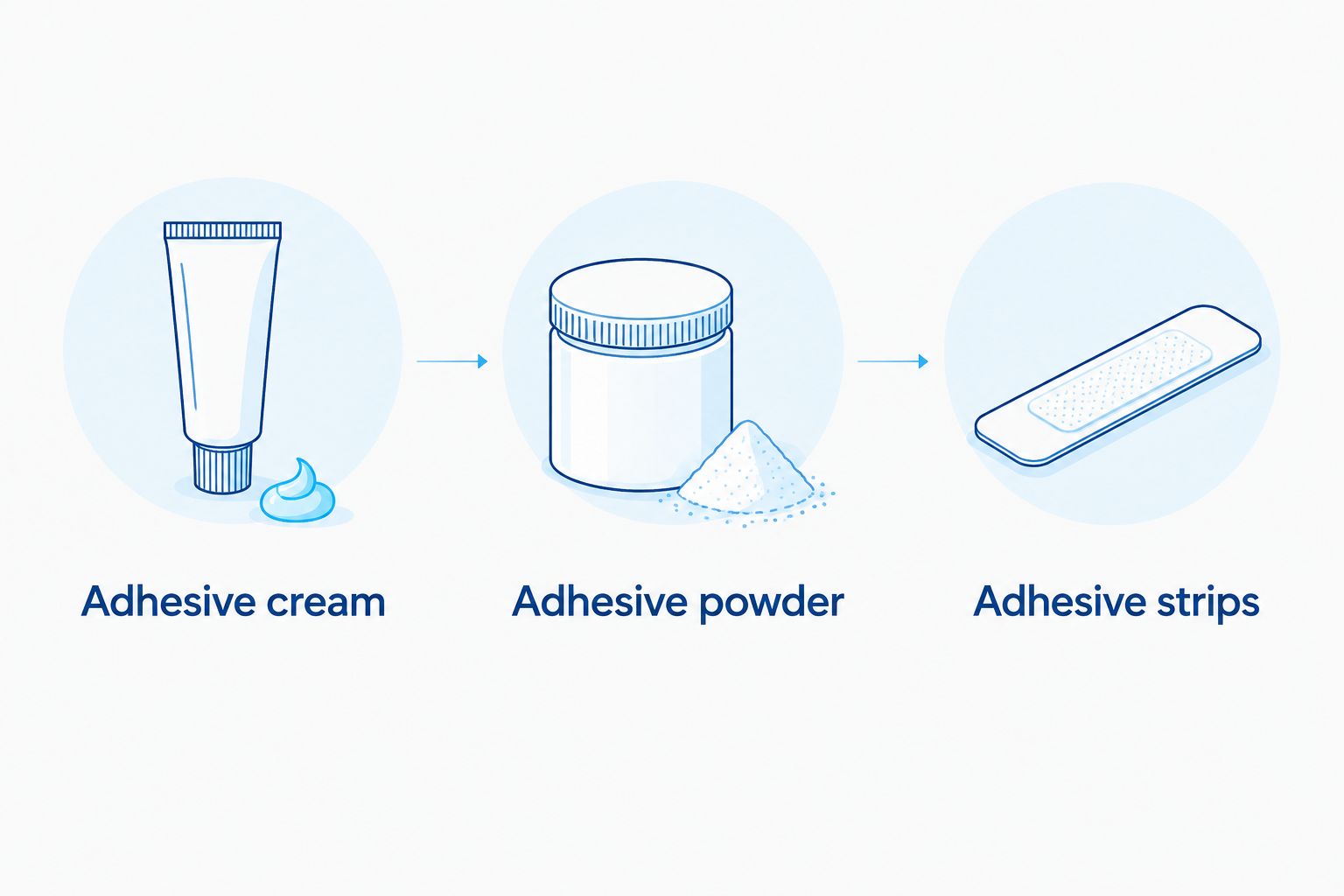
1. Zinc-free adhesive cream: best for adjustable application
Denture adhesive cream is applied to the fitting surface of a denture according to the product instructions. You control where it goes, making cream a practical starting point when a well-fitting denture needs extra stability.
Choosing a zinc-free formulation avoids zinc exposure from the adhesive. It does not guarantee freedom from irritation, so you still need to check the full ingredient list.
Adhesive cream pros:
- You can control placement rather than position a fixed-shape piece.
- You can follow a visible application pattern specified by the manufacturer.
- A zinc-free formulation removes zinc from this part of your routine.
Adhesive cream cons:
- Applying too much creates residue around the denture edges.
- Cream must be removed from the denture and oral tissues.
- Squeezing and controlling a tube presents a handling challenge for some wearers.
Start with the amount directed on the label. Adhesive squeezing into your mouth is a reason to reassess the amount, not proof that the denture needs more.
Best for: You want control over adhesive placement and can manage tube application and daily removal.
Verdict: Buy a zinc-free cream as a starting option if your denture fits comfortably and your dentist has not advised otherwise.
2. Adhesive powder: best for a thin application
Denture adhesive powder forms an adhesive layer when used with moisture according to the package directions. It suits wearers who prefer distributing powder over the fitting surface instead of placing cream in selected areas.
The application method matters. Follow the label for wetting, sprinkling, removing excess powder, and seating the denture; do not borrow instructions from a cream product.
Adhesive powder pros:
- It supports a thin application across the fitting surface.
- You do not need to squeeze a tube.
- You can remove excess powder before seating when the instructions direct you to do so.
Adhesive powder cons:
- Loose powder can spill during application.
- Dispensing an even layer requires control.
- It still requires daily removal and cleaning.
Powder is not automatically weaker or stronger than cream. The exact formulation and your denture fit matter more than the fact that the product comes in a shaker.
Best for: You prefer a thin layer and can manage powder dispensing without repeatedly overapplying it.
Verdict: Buy powder if its application method suits your hands and routine better than cream.
3. Adhesive strips: best for preformed handling
Denture adhesive strips provide adhesive in a preformed piece. You position the strip according to the manufacturer's instructions instead of dispensing a cream or sprinkling powder.
A preformed piece removes one application decision, but it does not remove the need to check suitability. Follow the package directions for denture type, positioning, moistening, and trimming, if trimming is permitted.
Adhesive strips pros:
- You handle a defined piece rather than judge a squeezed amount.
- There is no loose powder to distribute.
- Placement is visible before you seat the denture.
Adhesive strips cons:
- The piece must fit the intended area of your denture.
- Opening packaging and positioning strips still require dexterity.
- A preformed strip cannot correct a poor denture fit.
Do not confuse adhesive strips with home reline materials. Products intended to change the denture's fitting surface serve a different purpose and need separate guidance.
Best for: You prefer positioning a preformed piece and can follow its placement instructions reliably.
Verdict: Buy strips when their shape and handling suit your denture; skip them if they create uncomfortable bulk.
How this ranking works
This 2026 ranking prioritizes application control, tissue comfort, ingredient review, handling, and cleanup. Cream comes first as an adjustable starting point; powder and strips serve distinct application preferences rather than lower levels of quality.
The ranking does not assign wear-time scores or claim a laboratory-tested winner. The strongest-feeling adhesive is not the best choice if it causes soreness or makes daily removal unmanageable.
Dental Arts of Atlantis is a dental care option for Lake Worth families seeking general or implant dentistry, not a denture adhesive manufacturer. A dental examination addresses questions about tissue health and fit that a product comparison cannot answer.
How to compare hold and comfort at home
Compare your experience during normal use rather than testing how firmly you can pull on the denture. Keep the application consistent with the label and change only one product at a time.
Check hold during ordinary activities
Notice whether the denture stays stable when you speak and eat foods appropriate for your denture. Repeated lifting, rocking, or food collecting underneath deserves attention.
Do not keep adding adhesive to get through a meal. If movement persists despite correct use, review the best solution for a denture that keeps slipping and arrange an examination.
Check comfort after removal
Look for sore areas, redness, or irritation when you clean your mouth. Stop using a product that causes burning or a suspected reaction, and ask your dentist for guidance.
Do not place adhesive over a sore area to cushion it. That approach leaves the cause unaddressed and can delay treatment.
Check whether cleanup is realistic
A product that feels secure but leaves you unable to clean your mouth properly is a poor match. Your evening routine matters as much as your lunchtime confidence.
Use the removal method recommended for your adhesive and denture. Avoid sharp tools, forceful scraping, and hot water that can damage the appliance.
Safe denture adhesive use in 2026
The FDA's denture adhesive guidance warns that excessive use of zinc-containing adhesives can contribute to harmful zinc exposure. Check the current label and use the directed amount; zinc-free does not mean unlimited use is appropriate.
For everyday care:
- Remove old adhesive before a fresh application.
- Follow the product instructions for a clean, wet, or dry fitting surface.
- Keep adhesive away from areas where your dentist has told you not to apply it.
- Remove dentures overnight unless your dentist gives different instructions, including after extractions.
- Clean your gums, tongue, and any remaining teeth as part of your routine.
If you have natural teeth, the American Dental Association recommends brushing for 2 minutes, 2 times daily, with fluoride toothpaste. Denture cleaning is a separate task; ordinary toothpaste can be too abrasive for denture surfaces.
A mouth sore that lasts more than 2 weeks needs evaluation. Seek care sooner for significant pain, swelling, bleeding, or a worsening lesion rather than waiting for that threshold.
When adhesive is not the next step
A denture that used to fit comfortably but now moves needs a fit assessment. Gums and the supporting jawbone change over time, while dentures also experience wear and damage.
Your dentist can examine the denture, bite, and oral tissues before discussing an adjustment, reline, replacement, or implant-related treatment. These options are not interchangeable: each addresses a different problem and requires an individual assessment.
Bring the adhesive package and your denture to the appointment. Explain where movement happens, when soreness begins, and whether you have started using more adhesive than before.
Do not glue a broken denture together with household adhesive. Stop wearing an appliance that is sharp, broken, or injuring your mouth and contact a dentist for repair guidance.
Which denture adhesive should you choose?
Choose zinc-free cream first if your denture fits comfortably and you want adjustable placement. Choose powder for a thin application or strips for preformed handling. None replaces an examination when the denture hurts or repeatedly slips.
For 2026, make your final decision from the current package instructions and your own comfort—not an old advertisement promising the longest hold. Keep the product only if you can apply it correctly, eat and speak comfortably, and remove it fully.
FAQ
What’s the best denture adhesive compared for hold and comfort?
Zinc-free cream is a practical default for adjustable application, while powder suits a thin layer and strips suit preformed handling. No format is the strongest or most comfortable for every denture wearer.
Is denture adhesive cream better than powder?
Cream is better for controlling placement; powder suits wearers who prefer distributing a thin layer. The exact formulation, denture fit, and correct application determine your experience.
Are denture adhesive strips easier to use?
Strips simplify dispensing because you handle a preformed piece. Positioning them still requires dexterity, and the strip must suit your denture and the package instructions.
Is zinc-free denture adhesive safer?
Zinc-free adhesive avoids zinc exposure from that product. Other ingredients can still cause irritation, and all adhesive must be used according to its label.
Can I use adhesive with new dentures after extractions?
Use adhesive after extractions only when your dentist approves it and explains where to apply it. Healing tissues and extraction sites need specific instructions rather than a general product recommendation.
Why does my lower denture still move with adhesive?
Persistent lower-denture movement needs a fit assessment rather than repeated adhesive application. Your dentist can assess the appliance, supporting tissues, bite, and appropriate treatment options.
Can I sleep with denture adhesive in?
Remove dentures overnight and clean away adhesive unless your dentist has given different instructions. Immediate dentures after extractions can require a different initial wearing schedule.
Can Dental Arts of Atlantis help me discuss denture concerns?
Dental Arts of Atlantis offers general and implant dentistry in Lake Worth. A dental visit is the appropriate setting to discuss denture discomfort, movement, and questions about replacement options.
One last thing
Bring your adhesive to your next dental visit—not just your denture. Showing the package and explaining how you apply it gives your dentist a clearer picture than saying the hold is not strong enough.
An increasing need for adhesive is a reason to check the fit, not increase the dose.
Related guides
- How to clean and maintain dentures at home
- Denture relines for long-term denture wearers
- Implant-supported dentures for a secure fit