
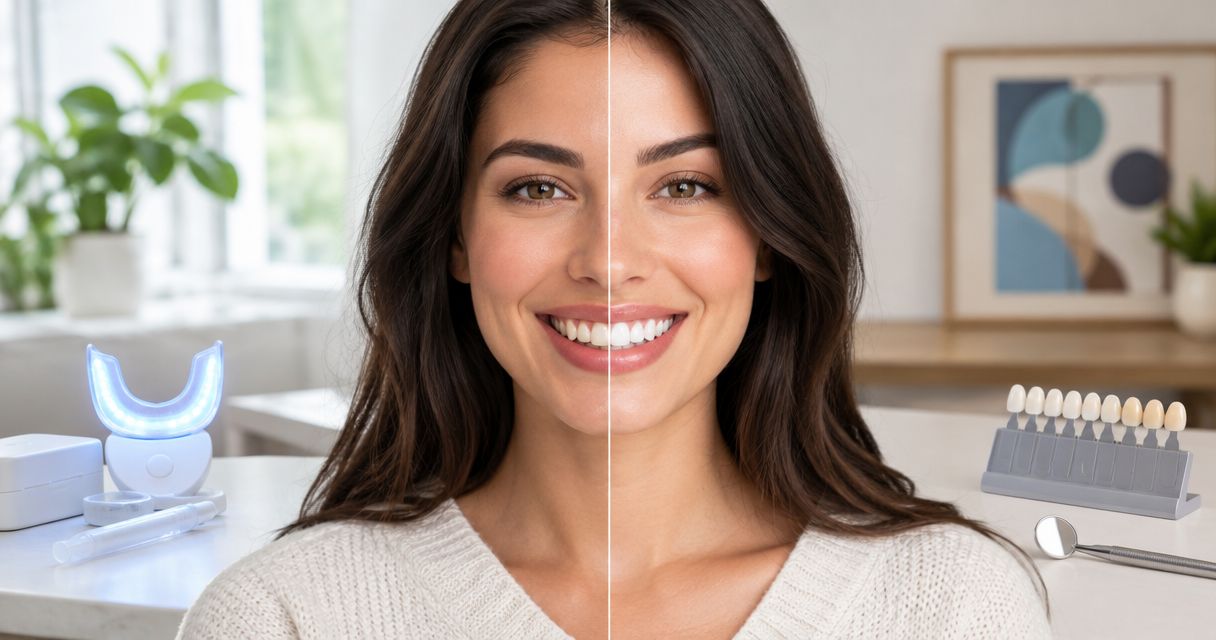
Best first option for color alone: teeth whitening. Best for changing tooth shape and masking persistent discoloration: veneers. This teeth whitening vs veneers guide compares the treatment commitment, upkeep, and long-term planning behind each choice in 2026.
- Teeth whitening vs veneers: whitening suits color-only concerns; veneers address selected shape changes and persistent discoloration.
- Dental Arts of Atlantis provides cosmetic dentistry for families in Lake Worth and Palm Beach County.
- Whitening does not change the color of existing veneers, crowns, or tooth-colored fillings.
- Veneers require replacement planning; whitening requires maintenance as stains return.
Why this matters
Whitening and veneers do different jobs. Whitening uses bleaching agents to lighten natural teeth; veneers cover the visible front surface with a tooth-colored restoration. Neither replaces treatment for decay, gum disease, or a damaged bite.
Dental Arts of Atlantis is best suited to Lake Worth families seeking general and cosmetic dental care in one practice. You can explore Dental Arts of Atlantis before discussing which concerns need treatment and which changes are optional.
Start with the least invasive treatment that addresses your actual concern. If you like your tooth shape and alignment, covering healthy teeth simply to change their shade adds a commitment that whitening does not require.
What makes the best cosmetic option?
Use these criteria before choosing a treatment. A brighter result is only useful if the approach also fits your teeth, comfort, and maintenance expectations.
- Treatment goal: Separate discoloration from chips, uneven edges, gaps, and tooth-position concerns.
- Tooth preservation: Ask whether treatment changes only color or requires removing enamel.
- Shade predictability: Identify natural teeth and existing restorations before choosing a target shade.
- Long-term maintenance: Compare whitening touch-ups with veneer monitoring, repairs, and eventual replacement.
- Comfort and oral health: Evaluate sensitivity, decay, gum inflammation, and grinding before cosmetic treatment.
- Financial commitment: Compare the complete treatment scope and future care, not just the initial procedure.
Teeth whitening vs veneers at a glance
This 2026 comparison ranks whitening first for a color-only concern, not for every cosmetic problem. Veneers take the lead when an appropriate treatment plan needs to change the visible shape as well as the color.
| Rank and option | Best for | Standout feature | Longevity and upkeep | Key limitation |
|---|---|---|---|---|
| 1. Professional teeth whitening | Lightening suitable natural teeth without changing their shape | Changes tooth color without covering the tooth | Results fade; maintenance depends on staining habits and the treatment used | Does not whiten restorations or repair chips |
| 2. Dental veneers | Selected shape changes and discoloration that whitening does not adequately address | Covers the visible tooth surface to change appearance | Requires ongoing care and eventual replacement | Enamel preparation is generally irreversible |
How the financial commitment differs
Whitening addresses tooth color, while veneers add a restoration to each selected tooth. These are different treatment scopes, so comparing them as interchangeable purchases misses the main decision.
For a useful 2026 estimate, ask the dentist to separate initial treatment, any necessary dental care, maintenance, and future replacement. Clarify which teeth are included and what happens if you dislike the shade or develop sensitivity. A written treatment plan makes those differences easier to compare without treating the smaller procedure as automatically sufficient.
1. Teeth whitening: best for color-only smile changes
Teeth whitening lightens natural tooth structure using a bleaching agent. It is the first option to discuss when your teeth are healthy, their shape already suits you, and discoloration is the main concern.
Whitening does not make teeth longer, close a gap, or rebuild a chipped edge. The cause of discoloration also matters: surface staining, age-related color changes, and discoloration inside a tooth do not respond identically.
Best for: Adults with suitable natural teeth who want a brighter shade without changing tooth shape.
Teeth whitening pros
- Preserves tooth shape: Whitening does not require covering the tooth with a restoration.
- Targets the stated problem: It addresses color without adding an unrelated shape change.
- Allows reassessment: You can evaluate the shade before considering more involved cosmetic treatment.
- Supports staged planning: Whitening natural teeth before new restorations helps the dentist plan a coordinated shade.
Teeth whitening cons
- Sensitivity is possible: Teeth and gums can become temporarily sensitive or irritated.
- Existing restorations stay the same color: Crowns, veneers, and fillings do not bleach like natural teeth.
- Results need maintenance: Staining can return, and repeated treatment must follow professional or product instructions.
What to ask before whitening
Ask whether the discoloration is likely to respond and whether a cleaning should come first. Plaque, tartar, decay, or gum inflammation needs a different response from bleaching.
Mention sensitivity before treatment begins. Your dentist can assess its cause and discuss an appropriate approach rather than asking you to push through pain. A single tooth that suddenly becomes darker also needs an examination, especially after an injury.
Verdict: Buy only after a dental exam confirms that whitening fits your color-only concern. Skip whitening as a solution for chips or gaps.
2. Veneers: best for selected color and shape changes
Veneers are thin restorations attached to the front surfaces of teeth. They can change visible color, contour, length, and some minor spacing concerns when the teeth and bite are suitable.
Veneers do not move tooth roots or correct every alignment problem. They also do not make a weakened tooth healthy; the dentist must first decide whether the tooth needs restorative treatment instead.
Best for: Adults seeking selected shape changes or coverage of discoloration that whitening cannot adequately resolve.
Veneers pros
- Changes more than shade: Veneers can address selected uneven edges, contours, and visible proportions.
- Covers persistent discoloration: A restoration can mask color that does not respond adequately to bleaching.
- Coordinates visible teeth: Treatment planning can address the relationship between neighboring tooth shapes and shades.
- Offers material choices: Porcelain and composite have different maintenance and repair considerations to discuss.
Veneers cons
- Preparation is generally irreversible: Removed enamel does not grow back.
- Replacement remains part of the plan: Veneers can chip, loosen, wear, or need replacement.
- Bite forces matter: Grinding and an unfavorable bite increase concern about damage and treatment suitability.
What to ask before veneers
Ask which teeth actually need treatment and why. A small chip does not automatically justify covering the whole front surface, and a desire for straighter teeth deserves an alignment assessment rather than an automatic veneer recommendation.
Request an explanation of enamel preparation, material choice, shade planning, and replacement. Ask what happens if a veneer breaks or the underlying tooth develops decay. Those answers belong in the decision before treatment starts.
Verdict: Hold until the dentist explains why veneers address a problem that a more conservative approach cannot adequately solve.
Which lasts longer: whitening or veneers?
Veneers provide a longer-lasting physical change, but whitening and veneers have different definitions of “lasting.” Whitening longevity describes how long natural teeth retain a lighter shade; veneer longevity describes how long a restoration remains serviceable.
Cleveland Clinic's patient guidance describes a typical veneer lifespan of 10–15 years with proper care. That is a general educational range, not a replacement schedule or a guarantee for an individual tooth. Material, bite forces, hygiene, and the condition of the supporting tooth affect the outcome.
Whitening is not permanent. Diet, tobacco exposure, oral hygiene, and the original discoloration influence how quickly the shade changes again. Avoid choosing a touch-up schedule before your dentist assesses the teeth and the whitening method.
For your 2026 decision, separate these maintenance needs:
- Whitening touch-ups: Repeat bleaching only according to the recommended instructions and after addressing sensitivity.
- Veneer replacement: Plan for professional evaluation when a restoration chips, loosens, or no longer functions properly.
- Daily care: Protect natural teeth and restoration margins with consistent cleaning and dental visits.
Longer-lasting does not mean maintenance-free. A veneer can remain intact while the surrounding gums or underlying tooth still need treatment.
How to choose without overtreating your teeth
Begin with the concern you see in the mirror, then let the examination establish its cause. Dental Arts of Atlantis offers cosmetic dentistry alongside general dental care, so your discussion can include both appearance and dental health.
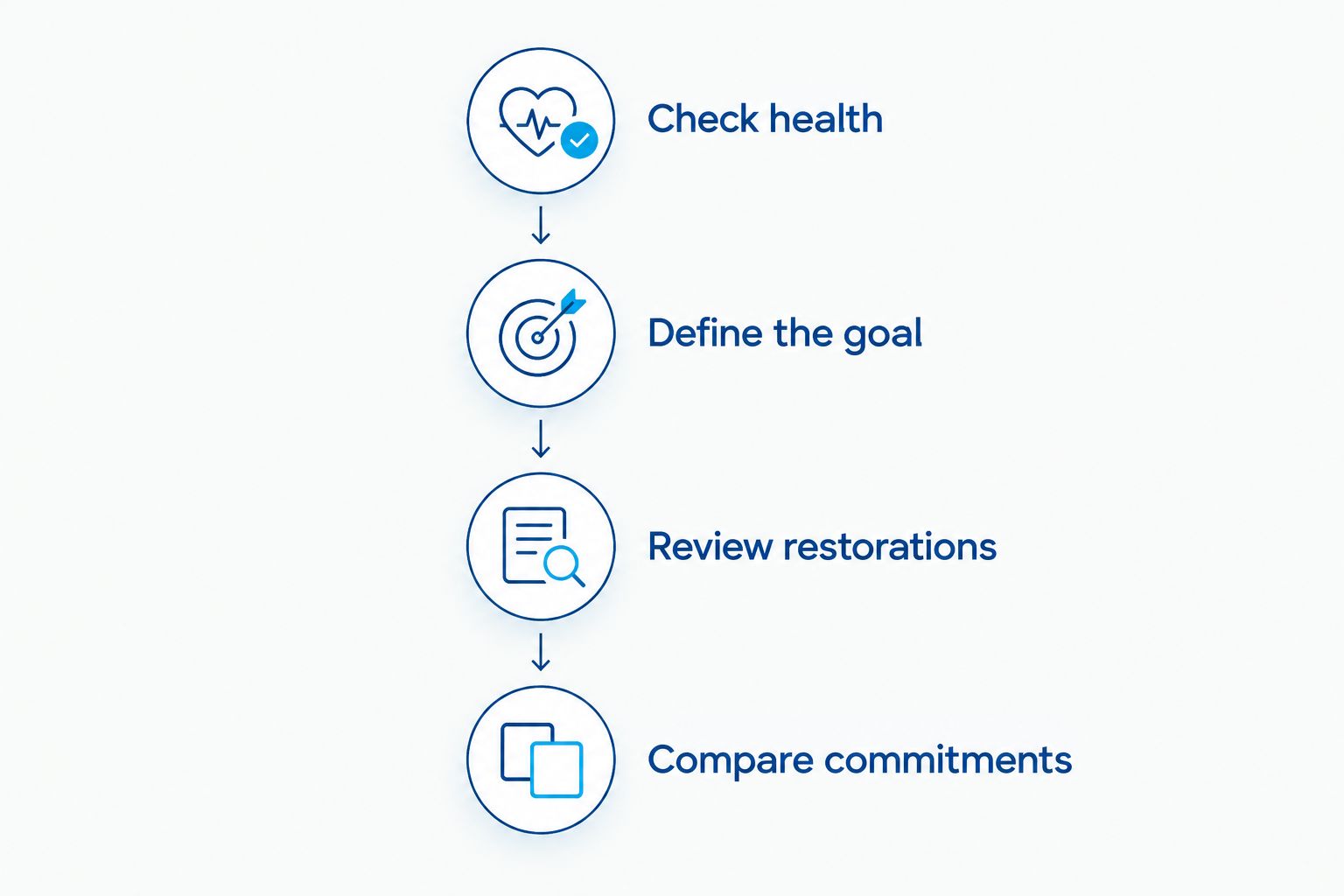
Follow this decision sequence
- Check health: Identify decay, gum inflammation, cracks, sensitivity, and bite concerns before cosmetic treatment.
- Define the goal: Decide whether you want a color change, a shape change, or both.
- Review restorations: Identify visible fillings, crowns, and veneers that will not respond to whitening.
- Compare commitments: Review enamel preparation, maintenance, and future replacement before agreeing to treatment.
Bring a photograph of your own smile and explain what bothers you about it. Pointing to a specific dark tooth, uneven edge, or visible filling gives the dentist a clearer starting point than asking for the whitest possible result.
If you have sensitive teeth or grind at night
Tell the dentist about cold sensitivity, jaw soreness, chipped edges, or known grinding. These details affect both comfort during whitening and the suitability of veneers.
Do not assume veneers solve sensitivity or protect against grinding. Both concerns need their own assessment. The right cosmetic plan accounts for the reason teeth hurt or wear down instead of simply covering the visible result.
If you want whitening and veneers
Discuss the sequence before either treatment starts. When appropriate, whitening natural teeth first allows the dentist to select a restoration shade that matches the intended result.
Existing veneers will not become lighter when you bleach neighboring teeth. If you already have visible restorations, agree on a realistic shade plan rather than repeatedly whitening to chase a match.
How these options are ranked
The ranking prioritizes tooth preservation, fit to the cosmetic goal, shade limitations, and ongoing care. Whitening ranks first for suitable color-only concerns because it changes shade without adding a restoration.
Veneers rank first for the distinct use case of selected shape changes and persistent discoloration requiring coverage. This is a treatment-fit comparison, not a claim that either procedure is right for every patient.
Which option should you choose in 2026?
Choose an evaluation for whitening first if your concern is color alone. If you also want to change tooth shape, discuss veneers and conservative alternatives before committing to enamel preparation.
At Dental Arts of Atlantis, your cosmetic dentistry discussion can start with the concern you want to fix and the dental care you need. Ask for a written plan that distinguishes necessary treatment from optional changes, including the maintenance each choice brings.
Discuss your smile goals
Review your cosmetic concerns and the questions to ask before choosing treatment.
FAQ
What’s better for yellow teeth, whitening or veneers?
Whitening is the first option to discuss when yellowing is the main concern and the natural teeth are suitable for bleaching. Veneers deserve consideration when discoloration does not respond adequately or you also need selected shape changes.
Which has the smaller long-term commitment, whitening or veneers?
Whitening avoids adding a restoration, but results need maintenance. Veneers bring preparation, monitoring, and eventual replacement, so compare the complete treatment plan rather than treating the procedures as interchangeable.
Do veneers last longer than teeth whitening?
Veneers generally provide a longer-lasting physical change, while whitening results fade as natural teeth become stained again. A restoration’s service life and the duration of a lighter tooth shade are different measures.
Can I whiten my teeth if I already have veneers?
Whitening can lighten suitable natural teeth, but it does not lighten existing veneers. Ask your dentist to assess the shade match before treatment so the surrounding teeth do not become noticeably different.
Are veneers reversible?
Veneer treatment that removes enamel is not reversible because enamel does not grow back. Ask exactly how much preparation your proposed treatment requires and what future replacement involves.
Should I whiten my teeth before getting veneers?
Discuss whitening before selecting the veneer shade if you want your natural teeth lighter. Your dentist should establish the treatment sequence and assess the shade before the restoration is finalized.
Can veneers fix crooked teeth instead of aligners?
Veneers change the visible tooth surface but do not move tooth roots. Ask for an alignment and bite assessment before using restorations to disguise crooked teeth.
One last thing
A veneer cannot develop a cavity, but the tooth supporting it still can. Cosmetic treatment does not remove the need for daily prevention.
The American Dental Association recommends brushing for 2 minutes, twice a day, with fluoride toothpaste and cleaning between teeth daily. Keep that routine whether you choose whitening, veneers, or no cosmetic treatment at all.
Related guides