
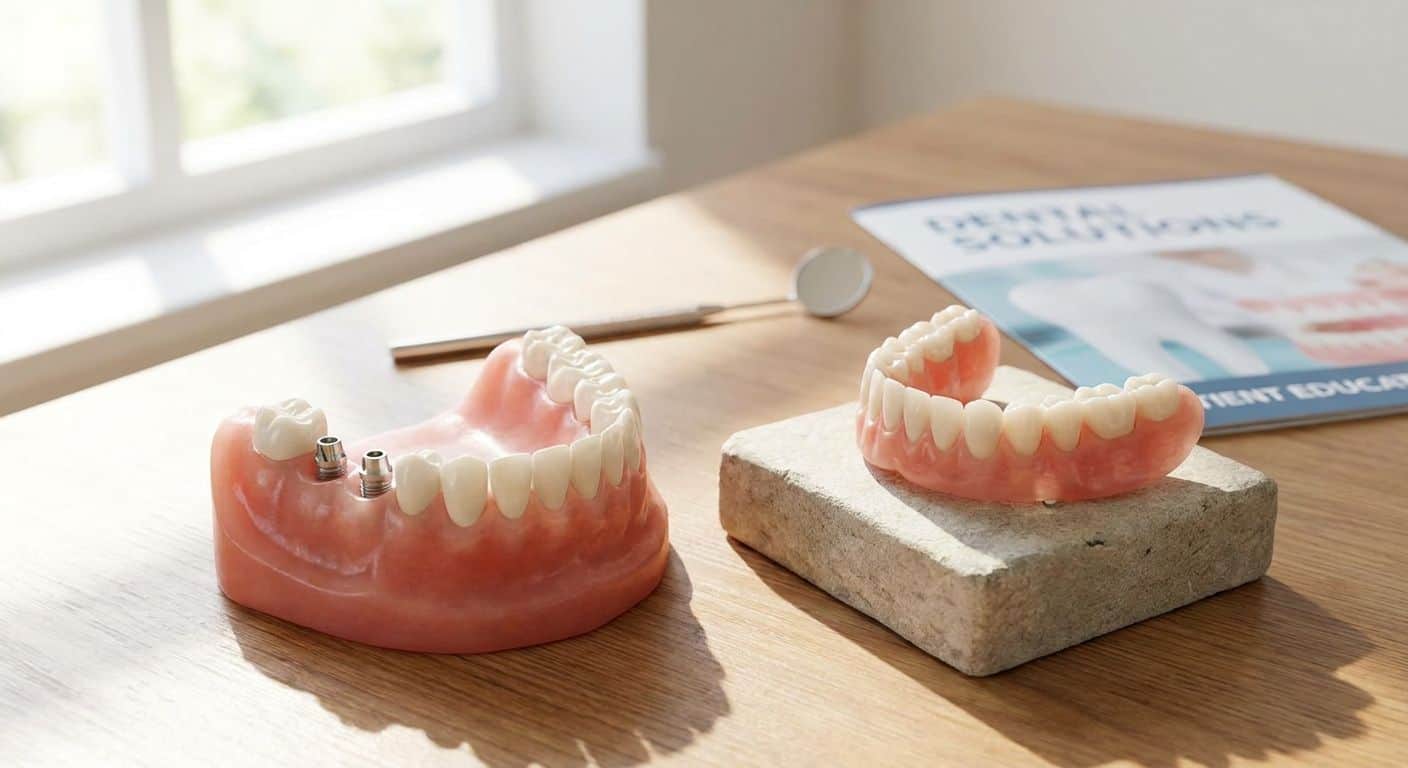
Missing all or most of your teeth changes how you eat, speak, and smile — and traditional dentures don't always solve the slipping, sore-spot, and diet-limiting problems that come with it. This guide breaks down which implant supported dentures option actually fits your jaw, budget, and lifestyle in 2026.
- All-on-4 implant supported dentures use just 4 implants per arch and skip grafting for most candidates — Buy for full-arch replacement.
- 2-implant snap-in overdentures cost less upfront but need annual clip replacement — Consider for lower-jaw stability on a budget.
- Bar-retained overdentures with 6-8 implants give the strongest bite force but need more healing time — Consider for heavy chewers.
- Traditional loose dentures paired with implants without proper imaging are a Skip — bone loss makes the fit unpredictable within a year.
Why this matters
A denture that isn't implant-anchored moves every time you bite into something firmer than pasta. That's not a comfort complaint — it's a bone health problem, because an unsupported jaw keeps losing density once teeth are gone.
Implant supported dentures solve this by transferring chewing force into the jawbone the way natural tooth roots did. The difference between the right option and the wrong one for your mouth shows up in the first six months: sore spots, clicking, or a denture that finally stays put through a full meal.
Dentures for patients missing all their teeth fall into a handful of implant-supported categories, and each one trades cost against stability differently. Get the match wrong and you're looking at a redo in 18-24 months.
Who this is for
This guide is built for adults missing most or all of their natural teeth in one or both arches — whether from decades of decay, advanced gum disease, or a full-arch extraction already scheduled. It's for people tired of adhesive creams, clicking plates, and menus they've had to shrink down to soft foods. If you're missing a single tooth instead, a standalone implant is a simpler fix and a different decision entirely.
What to look for in implant supported dentures
Bone density in the jaw
Implants need bone to anchor into, and years without teeth thin that bone out. A 2026 imaging consult (CT scan, not just a panoramic X-ray) tells you whether you qualify for standard implants or need an angled, graft-free approach like All-on-4.
Number of implants per arch
More implants generally mean more stability, but also more surgery time and cost. Two implants can stabilize a lower denture against tipping; four to six implants support a full fixed arch; six to eight implants on a bar-retained design distribute bite force across more points.
Fixed versus removable design
Some implant supported dentures snap out for cleaning every night; others are fixed in place and only your dentist removes them. Removable designs are easier to clean around; fixed designs feel closer to natural teeth when chewing steak or corn on the cob.
Bite force and chewing power
A traditional denture delivers roughly 10-20% of natural bite force. Implant-supported designs recover a meaningfully larger share of that force because the load transfers into bone instead of gum tissue — which is why patients on implants report going back to foods they'd avoided for years.
Maintenance routine
Snap-in overdentures need the retention clips replaced periodically as they wear down. Fixed hybrid bridges need water flossers and specific brush angles to clean under the bridge. Neither is high-maintenance, but each demands a different daily habit.
Cost and financing flexibility
Implant supported dentures cost more upfront than a standard denture plate, and most insurance plans cover only a portion. Financing terms and monthly payment structure often matter more than the sticker price when you're comparing options.
Top picks for 2026
All-on-4 implant dentures — the anchor pick
Four implants per arch, angled to use the densest available bone, support a full fixed denture without grafting for most patients. Same-day provisional teeth are standard with this protocol, so you're not walking around toothless during healing.
The best implant type for a full arch of missing teeth is usually this design when bone volume is limited and you want to avoid a separate grafting surgery. Verdict: Buy for most patients missing an entire arch who want a fixed result without extra procedures.
2-implant snap-in overdenture — the budget-conscious pick
Two implants placed in the lower jaw with locator attachments turn a loose lower denture into one that clicks into place and stays there through meals. It's the lowest-cost implant supported option and the shortest surgical appointment of the group.
The tradeoff: retention clips wear down and typically need replacing on a recurring schedule, and it remains a removable appliance you take out nightly. Verdict: Consider if budget is the deciding factor and you're comfortable removing the denture for cleaning.
Bar-retained overdenture — the stability upgrade
Six to eight implants connected by a metal bar give a denture near-fixed stability while remaining removable for cleaning. This design handles heavier bite forces better than a 2-implant snap-in and suits patients who want maximum chew strength without going fully fixed.
Healing time runs longer because more implants need to integrate before the bar attaches. Verdict: Consider for patients prioritizing bite force who don't mind a longer treatment timeline.
Fixed hybrid zirconia bridge — the no-removal pick
This design bolts a full-arch bridge permanently onto 4-6 implants, so nothing comes out except when your dentist services it. Zirconia's wear resistance holds up well against years of daily chewing, and patients describe the feel as closest to natural teeth among all implant supported dentures.
Deep cleaning under the bridge takes more effort — a water flosser becomes non-negotiable. Verdict: Buy for patients who never want to remove their denture and are diligent about at-home hygiene.
dental implants for seniors missing multiple teeth walks through how age and existing bone loss factor into which of these four designs makes sense first.
Find out which design fits your jaw
A consultation with imaging shows exactly which implant supported denture works for you.
What to avoid
- Same-day teeth marketed without a CT scan first. Bone density estimates from a panoramic X-ray alone miss thin spots that cause implant failure within the first year.
- Mini implants sold as a full-arch fix. Mini implants work for stabilizing a small denture segment, not for carrying the load of a full fixed arch — undersized implants under heavy bite force loosen faster.
- Discount overseas implant packages with no local follow-up. Implant surgery needs in-person healing checks over months; a package deal that skips local aftercare leaves you without support if something goes wrong.
How the picks compare
| Option | Implants per arch | Removable? | Best for | Verdict |
|---|---|---|---|---|
| All-on-4 | 4 | No (fixed) | Full arch, limited bone | Buy |
| 2-implant overdenture | 2 | Yes | Lower jaw, tighter budget | Consider |
| Bar-retained overdenture | 6-8 | Yes | Higher bite force needs | Consider |
| Fixed hybrid zirconia | 4-6 | No (fixed) | Zero-removal preference | Buy |
FAQ
What’s the best implant supported denture for a full arch?
All-on-4 implant dentures are the most common full-arch pick for 2026 because they use just 4 angled implants and usually avoid bone grafting. Fixed hybrid zirconia bridges are the alternative when a patient wants a permanently attached result.
Is implant supported better than a traditional denture?
Yes, implant supported dentures transfer chewing force into the jawbone instead of gum tissue, recovering meaningfully more bite force than a loose plate. They also help slow the bone loss that continues under an unsupported denture.
How much does implant supported dentures treatment cost?
Cost depends on how many implants and which design you need, and it runs higher than a standard removable denture. Financing plans that spread payments over months are common for patients without dental coverage for implants.
How many implants do you need for a full denture?
As few as 2 implants can stabilize a lower denture, while 4 implants typically support a full fixed arch and 6-8 implants support a bar-retained design. The right number depends on bone density and bite force needs.
Can you get implant supported dentures with bone loss?
Often yes — designs like All-on-4 place implants at angles that reach denser bone and frequently avoid the need for a grafting procedure first. A CT scan during consultation confirms whether grafting is needed in your specific case.
Do implant supported dentures need special cleaning?
Removable designs like snap-in and bar-retained overdentures come out nightly for cleaning around the attachments. Fixed hybrid bridges stay in place permanently and need a water flosser to clean underneath.
How long do implant supported dentures last?
The implants themselves are built to last decades when properly cared for, while the denture or bridge attached to them typically needs replacement or relining after several years of wear. Regular checkups catch wear before it becomes a bigger repair.
Are implant supported dentures painful to get?
Surgery involves standard local anesthesia or sedation, and most patients describe recovery as manageable with prescribed pain management over the first several days. Swelling typically peaks around day two or three and steadily improves after.
One last thing
The biggest mistake patients make isn't picking the wrong implant design — it's skipping the CT scan that decides which design even qualifies. Two patients with the exact same missing teeth can need completely different treatment plans depending on how much bone remains, and that only shows up on imaging, not on a visual exam.
Related guides