
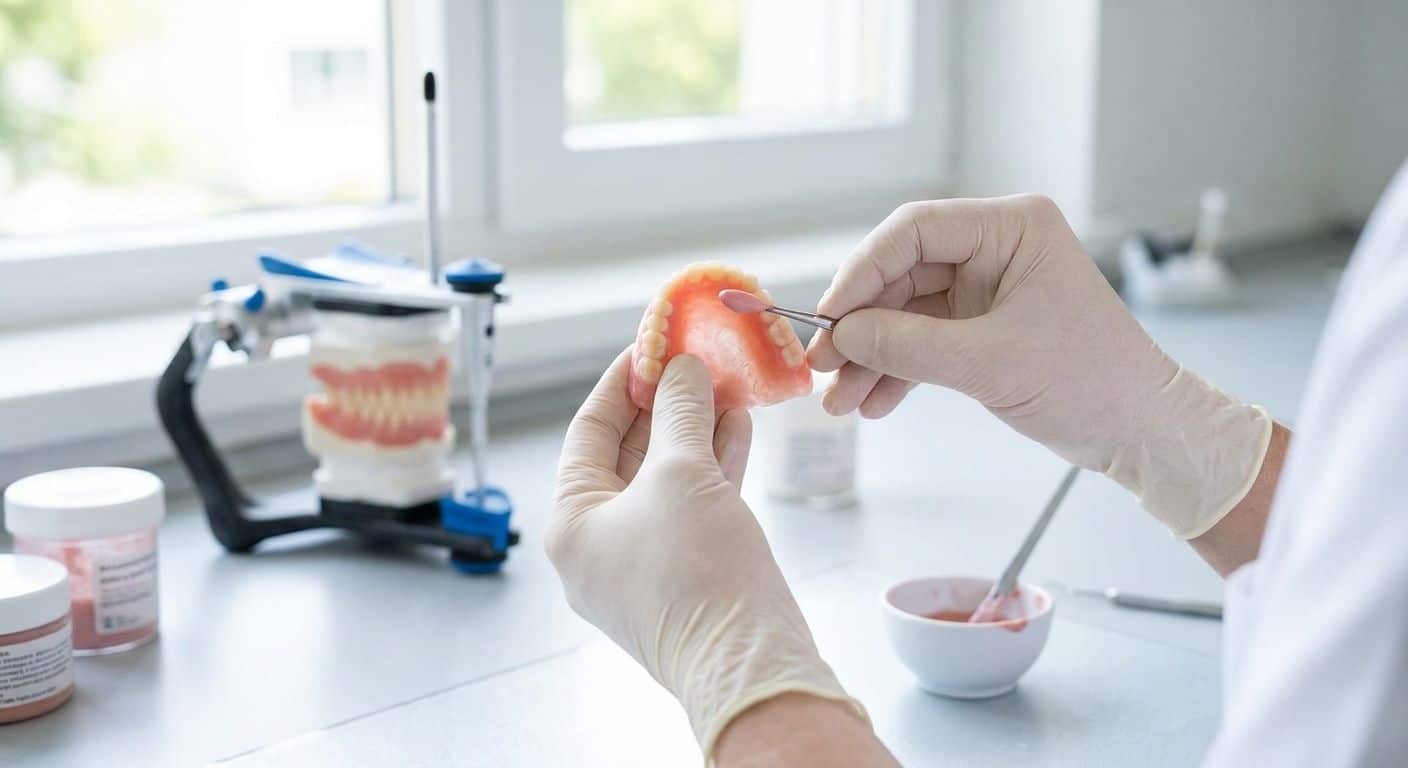
Dentures don't fit the same at year eight as they did at year one — gums shrink, bone remodels, and a plate that once felt locked in starts rocking on the ridge. A denture reline rebuilds the fit without replacing the whole appliance, and for long-term wearers in 2026 it's usually the difference between sore spots and a denture that actually stays put.
- A hard acrylic denture reline is the default fix for wearers 2+ years past their last adjustment — Buy.
- Soft chairside relines buy time in a single visit but only last 1-2 years — Consider, not a long-term answer.
- Three or more relines on a base older than 7-8 years means it’s time to talk about new dentures, not another reline.
- Frequent relines are often a sign bone loss has progressed enough to consider implant-supported dentures instead.
Why this matters
A loose denture doesn't just feel wrong — it changes how you chew, how food breaks down, and eventually how much bone is left to support anything you wear next. Palm Beach County patients who've worn the same set for 5, 8, or 10 years often assume soreness or slipping is just part of aging into dentures. It isn't. Most of the time it's a fit problem with a fix, and ignoring it accelerates the bone loss that made the denture loose in the first place.
Who this is for
This guide is for adults who've worn a complete or partial denture for two years or more and have noticed slipping, clicking, sore spots, or a change in how their face looks when the denture is out. If you're missing all your teeth and considering your first set, start with the basics on dentures for patients missing all their teeth instead — this page is about maintaining and re-fitting a denture you already have.
What to look for in a denture reline for long-term wearers
How long you've worn the current base
Denture acrylic itself doesn't wear out quickly, but the ridge underneath it does. If it's been 2 years or more since your last reline or adjustment, your gum tissue has almost certainly changed shape enough to leave gaps under the plate — gaps that trap food and cause the rocking you're feeling.
Bone ridge changes since your last fitting
Bone under a denture resorbs faster in the first year after tooth loss, then keeps shrinking slowly for decades. A dentist checking for a reline should assess ridge height and shape, not just ask if the denture feels loose — visible flattening of the ridge is the clearest sign a reline (or something more) is due.
Soft reline vs. hard reline material
Soft liners cushion pressure points and work well for wearers with thin, fragile gum tissue or a history of sore spots. Hard acrylic relines hold their shape longer and handle chewing forces better, which matters if you eat a varied diet and want the fit to last past a year.
Whether a reline or a rebase is the right call
A reline adds material to the tissue side of an existing denture base. A rebase replaces the entire base while keeping the existing teeth — the right move when the base itself has cracked, warped, or worn thin after years of use, not just when the fit has loosened.
Timing tied to how you actually chew and speak
If you're avoiding certain foods, noticing a whistle when you talk, or biting your cheek more than you used to, those are functional signs the fit has drifted — not just cosmetic ones. A reline evaluation should look at function, not only how the denture looks sitting in your hand.
When a reline means it's time to consider implants instead
If you're relining the same denture every 12-18 months, the problem usually isn't the reline — it's ongoing bone loss that a removable plate can't stop. At that point, implant-supported dentures for a secure fit address the cause instead of the symptom.
Top picks for long-term denture wearers
Chairside soft reline — the quick fix. Done in a single visit at Dental Arts of Atlantis using a resilient liner material, this option cushions sore spots fast. It typically holds up for 1-2 years before it needs replacing. Verdict: Consider if you need relief now and aren't ready for a lab-processed option.
Lab-processed hard reline — the workhorse. This is the standard denture reline for most long-term wearers: an impression is taken, the lab adds new acrylic to the tissue surface, and the denture returns fitting the current ridge shape. It generally lasts 2-4 years depending on how much the bone continues to change. Verdict: Buy — this is the default recommendation for wearers whose base is otherwise sound.
Full rebase — the deep repair. When the denture base itself is thin, discolored, or has hairline cracks after 5+ years of wear, a rebase replaces the base material entirely while reusing the existing teeth. It costs more than a standard reline but avoids paying for an entirely new denture. Verdict: Consider if your teeth still look and fit well but the base is failing.
Implant-supported conversion — the long-term fix. For wearers who've needed a reline every year or so, converting to an implant-retained denture stops the cycle by anchoring the plate to fixtures instead of shifting gum tissue. Review implant-supported dentures for a secure fit before committing to another reline. Verdict: Buy if relines keep failing within a year.
New denture set — the reset. After three or more relines on a base older than 7-8 years, the acrylic itself has usually absorbed enough stains, odor, and micro-fractures that another reline is a patch, not a fix. Verdict: Skip the reline — a new set built to the current ridge shape outperforms a fourth reline on old acrylic.
Get your denture fit checked
A quick evaluation shows whether a reline, rebase, or implant option fits your situation.
What to avoid
- DIY reline kits from the drugstore. These over-the-counter cushioning kits don't account for actual ridge shape and often trap bacteria against gum tissue — they mask a problem instead of fixing it.
- Relining a denture with a cracked or fractured base. Adding new acrylic to a compromised base is a temporary patch; the crack will propagate and the reline fails early.
- Skipping the bone and ridge check before a reline. A reline that ignores active bone loss just delays the harder conversation about implants — and the delay usually costs more bone in the meantime.
Reline options compared
| Option | Best for | Typical lifespan | Verdict |
|---|---|---|---|
| Chairside soft reline | Immediate sore-spot relief | 1-2 years | Consider |
| Lab-processed hard reline | Standard long-term wearers | 2-4 years | Buy |
| Full rebase | Sound teeth, failing base | 3-5 years | Consider |
| Implant-supported conversion | Repeated annual relines | Long-term, fixture-based | Buy |
| New denture set | Base past 7-8 years, 3+ relines | Full replacement | Skip reline |
Keeping a reline healthy in between visits also depends on daily habits — see how to clean and maintain dentures at home for the routine that extends the life of whichever option you choose.
FAQ
How often should a long-term denture wearer get a reline?
Most long-term wearers need a denture reline every 2-4 years, though ridge changes can push that timeline shorter or longer. If you’re relining every year or less, that pattern itself is a signal worth discussing with your dentist in 2026.
Is a soft reline or hard reline better for older dentures?
A hard reline holds shape longer and suits most long-term wearers with stable gum tissue. A soft reline works better for thin, fragile tissue prone to sore spots, but it needs replacing sooner.
How much does a denture reline cost?
Reline costs vary by whether it’s a chairside soft reline, a lab-processed hard reline, or a full rebase. Ask for a written estimate before treatment so you know exactly what’s included.
Can a denture reline fix a denture that clicks or slips?
Yes, in most cases — clicking and slipping usually mean the tissue-side fit has drifted from bone changes, which a reline corrects directly. If slipping returns within months of a reline, that points toward more significant bone loss.
How do I know if I need a rebase instead of a reline?
A rebase is needed when the denture base itself is cracked, discolored, or worn thin, not just loose. A dentist checks the base condition during the same visit where fit is evaluated.
Should I get implants instead of another denture reline?
If you’ve needed a reline every 12-18 months, implants address the underlying bone loss that keeps causing the looseness. Removable dentures alone can’t stop that process the way an implant-supported denture can.
How long does a denture reline appointment take?
A chairside soft reline is typically completed in one visit. A lab-processed hard reline or rebase usually takes an impression visit plus a return visit once the lab finishes the piece.
Can old dentures always be relined, or do they sometimes need replacing?
Dentures older than 7-8 years, or ones that have already been relined three or more times, usually do better with full replacement than another reline. The acrylic itself degrades in ways a reline can’t reverse.
One last thing
The detail most long-term wearers miss: a reline treats the denture, but it's the jawbone underneath that's actually changing every year. If your dentist isn't checking ridge shape at each reline visit, ask — because a fourth reline on the same aging base is usually more expensive over time than switching to an implant-supported option once.
Related guides
- Dentures for patients missing all their teeth
- Implant-supported dentures for a secure fit
- How to clean and maintain dentures at home
- Dental implants for seniors missing multiple teeth
- How to prepare for your first dental implant consultation