
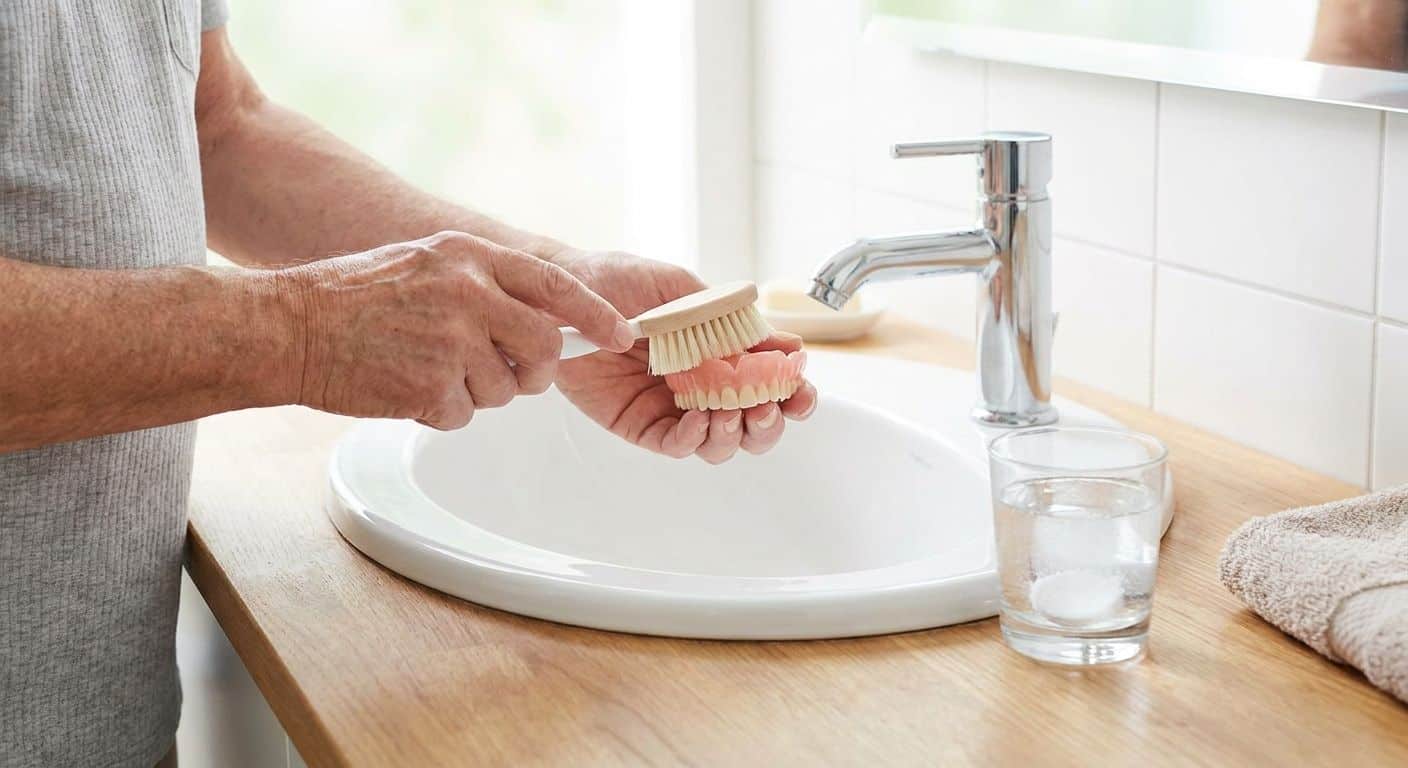
Dentures need a daily cleaning routine that's different from brushing natural teeth, and getting it wrong shortens the life of the appliance and irritates your gums. This guide walks through the exact steps, tools, and mistakes that matter for keeping dentures clean and comfortable in 2026.
- Clean dentures at home daily with a soft brush and non-abrasive denture cleanser, never regular toothpaste.
- Soak dentures overnight in a denture-specific soaking solution to keep the acrylic from drying out and cracking.
- Hot water warps denture bases within minutes — rinse and soak with lukewarm water only.
- See a dentist yearly for a fit check since a loose denture speeds up bone loss under the gums.
Why this matters
Dentures are porous acrylic and metal, and they collect plaque, bacteria, and food particles just like natural teeth do. Skip a night of cleaning and the buildup starts to smell, stain, and irritate the gum tissue underneath.
Poor at-home care is also the most common reason dentures need early replacement. A denture that's scrubbed with the wrong products or left dry too long can crack, warp, or lose its fit well before the typical 5-to-7-year replacement window most dentists cite for 2026.
If you're missing all your teeth and weighing options beyond a removable plate, it's worth reading about dentures for patients missing all their teeth before you settle into a maintenance routine — some patients switch to a more secure option later and the daily care changes.
What you'll need
- A soft-bristled denture brush (not a regular toothbrush — the bristles are too stiff)
- A denture cleanser tablet or non-abrasive denture paste (never whitening toothpaste)
- A denture soaking cup or a clean bowl with a lid
- Lukewarm water, never hot
- A soft towel or washcloth to line the sink while handling the denture
- A separate soft brush for your gums, tongue, and any remaining natural teeth
The steps
1. Rinse immediately after eating
Food particles trapped under a denture cause irritation fast, so rinse the appliance under lukewarm running water right after meals. This single habit cuts down on the plaque that hardens into tartar overnight. Skipping it is the most common mistake denture wearers make in the first year.
2. Brush with a soft denture brush, not toothpaste
Use a denture-specific brush and a non-abrasive cleanser or mild dish soap, brushing all surfaces including the parts that touch your gums. Regular toothpaste contains abrasives that scratch acrylic, and those scratches trap bacteria and stain over time. Brush for about two minutes, morning and night, holding the denture over a folded towel or a sink partly filled with water so a drop doesn't crack it.
3. Soak overnight in a denture solution
Dentures need moisture to hold their shape, so soak them overnight in a denture-cleansing solution or plain water with a soaking tablet. Letting a denture dry out overnight is one of the fastest ways to warp the acrylic base, and a warped base changes your bite by the next morning. In the morning, rinse thoroughly before putting it back in your mouth since some solutions are not safe to swallow.
4. Clean your gums and mouth every day
Use a soft brush or damp gauze to clean your gums, tongue, and palate before reinserting the denture. This removes bacteria that would otherwise transfer straight back onto a freshly cleaned appliance. Patients dealing with dry mouth from medication often notice more plaque buildup here — if that's you, the guide on managing dry mouth caused by medication covers what actually helps.
5. Check the fit weekly
Run a finger along the edges of the denture and note any looseness, rocking, or sore spots. A shift in fit usually means bone or gum changes underneath, not a cleaning problem, and it's not something a home adjustment fixes safely. Ignoring a loose fit for months is how minor irritation turns into sores that won't heal.
6. Avoid bleach, boiling water, and abrasive cleaners
Bleach discolors the pink acrylic that mimics gum tissue and can corrode metal clasps on partial dentures. Boiling water deforms the base within seconds. Stick to products labeled specifically for dentures — the label matters more than the price in 2026's crowded denture-care aisle.
7. Store dry-mouth-friendly overnight, wet-mouth-friendly during the day
Some patients with certain metal frameworks are told by their dentist to store dentures dry rather than in liquid overnight. If you weren't given specific instructions at your last fitting, default to soaking in water or solution — it's the safer default for acrylic-based dentures.
Not sure your denture still fits right?
A quick fit check catches bone loss and sore spots early.
Troubleshooting
Denture smells even after cleaning. Bacteria trapped in scratches from an old toothbrush or abrasive paste is the usual cause — switch to a denture-specific brush and soak nightly in a cleanser tablet for two weeks to see if the odor clears.
White or yellow film that won't brush off. This is usually tartar buildup, which needs a professional ultrasonic cleaning rather than harder scrubbing at home — scrubbing harder just scratches the acrylic further.
Denture feels loose after months of a good fit. This points to bone remodeling under the gums, which happens naturally after tooth loss. Patients in this situation sometimes look into implant-supported dentures for a secure fit instead of repeated relines.
Sore spots that don't heal in a few days. Stop wearing the denture for a day if possible and call your dentist — a persistent sore under a denture needs an adjustment, not more soaking or rinsing.
Cracked or chipped denture. Don't use super glue or a home repair kit; over-the-counter adhesives are often toxic if swallowed and rarely hold under normal chewing force. A dentist can typically repair a hairline crack same-week.
Denture keeps slipping while eating or talking. Adhesive can mask a fit problem temporarily, but if you're reapplying adhesive multiple times a day, the denture itself needs evaluation — some patients switch to implant-supported dentures for a secure fit at this point, though that link should only be used once elsewhere in a full article.
Tools and resources
- Soft-bristled denture brush and a separate brush for gums and any natural teeth
- Denture-specific cleanser tablets, not whitening toothpaste or bleach
- A soaking cup or lidded container reserved only for the denture
- Annual dental exam to check fit, bone levels, and oral tissue health
- If cost is the barrier to regular checkups, the dental membership plan for uninsured families covers routine visits without needing insurance
What to do next
If your denture has needed three or more relines in the past two years, or if you're tired of adhesive, ask about full-arch implant options at your next visit. The guide on the best implant type for a full arch of missing teeth breaks down what candidates look like and how the fit compares to a traditional denture.
FAQ
How often should I clean my dentures at home?
Clean dentures at least twice a day, plus a rinse after every meal. Skipping a night of soaking lets plaque harden into tartar within about 48 hours.
Can I use regular toothpaste on dentures?
No, regular toothpaste is too abrasive for denture acrylic and leaves microscopic scratches that trap bacteria. Use a denture-specific paste or a mild non-abrasive cleanser instead.
Is it safe to soak dentures in hot water?
Hot water warps denture bases and changes the fit almost immediately. Always use lukewarm or room-temperature water for rinsing and soaking.
How do I get rid of denture odor?
Odor usually comes from bacteria trapped in scratches or missed spots along the gum-facing surface. Switch to a soft denture brush, soak nightly in a cleanser tablet, and clean your gums and tongue before reinserting the denture.
Can dentures be cleaned with vinegar or bleach?
Bleach discolors the pink acrylic and can corrode metal clasps, and vinegar is too acidic for daily use, though a very diluted soak occasionally can loosen tartar. Stick to products labeled for dentures as your default.
How long do dentures usually last?
Most dentures last 5 to 7 years before the fit changes enough to need a reline or replacement. Bone loss under the gums, not the acrylic itself, is usually what ends a denture’s useful life first.
Why does my denture feel loose even though I clean it properly?
A loose fit almost always means bone or gum changes underneath the appliance, not a cleaning issue. A dentist can reline the denture or discuss implant-supported options for a more secure fit.
Do I need to remove dentures at night?
Most dentists recommend taking dentures out overnight so gum tissue can rest and air out. Soaking them in solution while they’re out keeps the acrylic from drying and cracking.
One last thing
The detail most patients miss in 2026 isn't the brushing routine — it's the annual fit check. Bone under a denture reshapes gradually and painlessly, so the appliance can loosen for months before you notice, and by the time it feels obviously wrong, the gum tissue has usually already taken some irritation. A yearly exam catches that shift before it turns into sore spots or a diet full of soft foods.
Related guides
- Implant-supported dentures for a secure fit
- Best implant type for a full arch of missing teeth
- How to manage dry mouth caused by medication
- Best dental membership plan for uninsured families