
Best overall: orthodontic wax. Best for an accessible, slightly protruding wire: a gentle cotton-swab adjustment. Best for irritated tissue: a warm saltwater rinse. A loose braces wire fix protects your mouth temporarily; it does not replace repair by your orthodontist. This 2026 guide explains what to try, what to avoid, and when to get help.
- Orthodontic wax is the best temporary loose braces wire fix for a sharp end rubbing your cheek.
- A clean cotton swab can gently flatten an accessible wire tip; stop if it resists or hurts.
- Saltwater rinses soothe irritated tissue but do not repair loose braces or replace orthodontic wax.
- Contact your orthodontist about displaced wires or loose brackets, even when temporary relief works.
- Trouble breathing or swallowing requires emergency medical help, not another home remedy.
Why this matters
A poking wire can turn speaking and eating into repeated irritation. Covering the sharp point interrupts that rubbing, but a wire that has slipped out of position still needs your treating orthodontist's attention.
Dental Arts of Atlantis provides general, cosmetic, pediatric, and implant dental care for families in the Lake Worth area. For braces hardware, contact the orthodontist managing your treatment first; that office knows your appliance and planned tooth movements.
Comfort is not proof that a loose wire is fixed. In 2026, use home care as a bridge to professional advice, not permission to leave damaged hardware unchecked.
What makes the best loose braces wire fix?
Choose a temporary measure by what it accomplishes, not by how firmly it changes the wire.
- Tissue protection: It separates the sharp metal from your cheek, lip, or tongue.
- Minimal handling: It avoids pulling, twisting, or repeatedly bending the appliance.
- Problem matching: It addresses a sharp tip, an irritated spot, or difficult chewing without confusing those problems.
- Clear stopping point: You stop if the wire resists, pain increases, or you cannot see clearly.
- Professional follow-up: It lets you stay comfortable while arranging the repair your orthodontist recommends.
No home method safely replaces a detached bracket, reattaches a loose band, or restores the intended orthodontic forces. Those are repair tasks.
Temporary fixes at a glance
These 2026 options serve different purposes. Wax is the default for rubbing; the other choices have narrower roles or support comfort alongside it.
| Rank and option | Best for | Standout feature | Key limitation |
|---|---|---|---|
| 1. Orthodontic wax | Covering a sharp wire end | Creates a barrier without repositioning metal | Does not repair the appliance |
| 2. Gentle cotton-swab adjustment | An accessible tip that moves easily toward the tooth | Moves the irritating end away from soft tissue | Unsuitable for resistant, embedded, or poorly visible wires |
| 3. Warm saltwater rinse | An irritated cheek or lip | Soothes tissue after rubbing | Cannot stop continued contact with metal |
| 4. Soft-food changes | Eating while awaiting advice | Reduces demanding chewing around damaged hardware | Does not cover or reposition the wire |
1. Orthodontic wax: best temporary fix for a sharp wire
Orthodontic wax covers the spot that catches your cheek or lip. It is the best first choice when you can reach the irritating area without moving the wire.
Wash your hands, look in a mirror, and gently dry the bracket or wire with clean gauze. Soften a small piece of orthodontic wax between your fingers, then press it over the sharp point so the metal no longer contacts your cheek.
Orthodontic wax pros:
- Creates a protective barrier over the irritating point.
- Requires no cutting or deliberate bending of the wire.
- Works over an irritating bracket as well as a wire tip.
- Is removable for cleaning and replacement.
Orthodontic wax cons:
- Does not reconnect or stabilize damaged hardware.
- Can come loose and need replacing.
- Is harder to secure on a wet surface.
Best for: A reachable sharp end or bracket that rubs but is not embedded in tissue.
Follow the product directions for eating, cleaning, and replacement. If wax will not stay in place or the wire keeps cutting through the covering, tell your orthodontist rather than adding pressure to the appliance.
Verdict: Buy orthodontic wax for temporary protection; arrange advice about the underlying problem.
2. Gentle cotton-swab adjustment: best for a movable tip
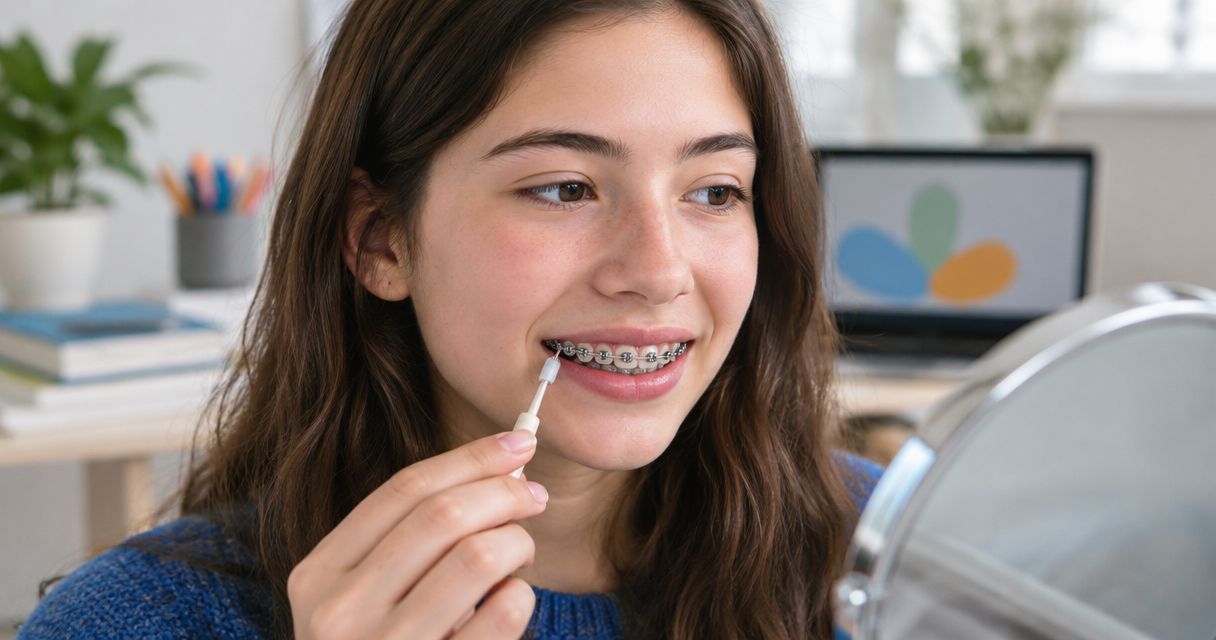
A clean cotton swab can gently press a slightly protruding wire toward the tooth, away from the cheek. This is only for a clearly visible, accessible tip that moves with light pressure—not a wire buried in tissue or hanging loose across your mouth.
Use good lighting and a mirror. Touch the tip with the swab and gently guide it toward the tooth; stop immediately if it resists, hurts, or requires bending beyond a small repositioning.
Gentle cotton-swab adjustment pros:
- Addresses the point making contact with your cheek.
- Uses a soft contact surface rather than a sharp tool.
- Can be followed with wax for additional protection.
Gentle cotton-swab adjustment cons:
- Requires a clear view and steady control.
- Cannot repair a displaced archwire or detached bracket.
- Repeated attempts can worsen irritation or distort the wire.
Best for: A minor protruding tip that moves easily with gentle pressure.
Do not push a wire back through a bracket or rear tube unless your orthodontist specifically guides you. If a child is upset or cannot stay still, skip manipulation and use wax if it can be applied safely.
Verdict: Hold off if visibility or movement is uncertain; use only a gentle, easily controlled adjustment.
3. Warm saltwater rinse: best for irritated tissue
A warm saltwater rinse helps soothe a cheek or lip irritated by braces. It is supportive care, not a mechanical loose braces wire fix: if metal keeps scraping the area, cover that point as well.
Mix 1/2 teaspoon of salt into 8 ounces of warm water. Swish gently and spit it out; use warm, not hot, water, and do not swallow the rinse.
Warm saltwater rinse pros:
- Reaches irritated tissue without touching the wire.
- Supports comfort alongside orthodontic wax.
- Does not require handling brackets or bands.
Warm saltwater rinse cons:
- Leaves the sharp edge exposed unless you also cover it.
- Does not correct a shifted wire or loose attachment.
- Is unsuitable for children who cannot reliably rinse and spit.
Best for: A sore spot after you have stopped the metal from rubbing.
A sore that worsens, develops swelling or drainage, or does not improve needs dental assessment. Avoid putting aspirin directly on your gum or cheek; direct contact can injure oral tissue.
Verdict: Buy into rinsing as comfort care, not as a substitute for covering or repairing the wire.
4. Soft-food changes: best for eating before repair
Soft foods reduce the need for hard biting while you wait for instructions. Choose foods such as scrambled eggs, yogurt, mashed potatoes, or tender pasta, and avoid chewing against the damaged area.
Cut food into manageable pieces rather than biting into firm foods with your front teeth. Avoid hard, sticky, or chewy foods that can pull on brackets or bend a loose wire.
Soft-food changes pros:
- Make eating less demanding on an irritated area.
- Avoid hard biting around damaged hardware.
- Work alongside wax and your orthodontist's instructions.
Soft-food changes cons:
- Do not prevent rubbing during speech or rest.
- Do not secure a loose bracket or band.
- Cannot make an unsafe appliance safe to use.
Best for: Temporary meal adjustments when chewing aggravates the area.
Continue gentle cleaning rather than avoiding the area entirely. Brush for 2 minutes twice daily with fluoride toothpaste, taking care around the loose component; do not scrub or tug at it.
Verdict: Buy into softer meals temporarily; skip hard and sticky foods until your orthodontist advises otherwise.
Match the problem before touching the wire
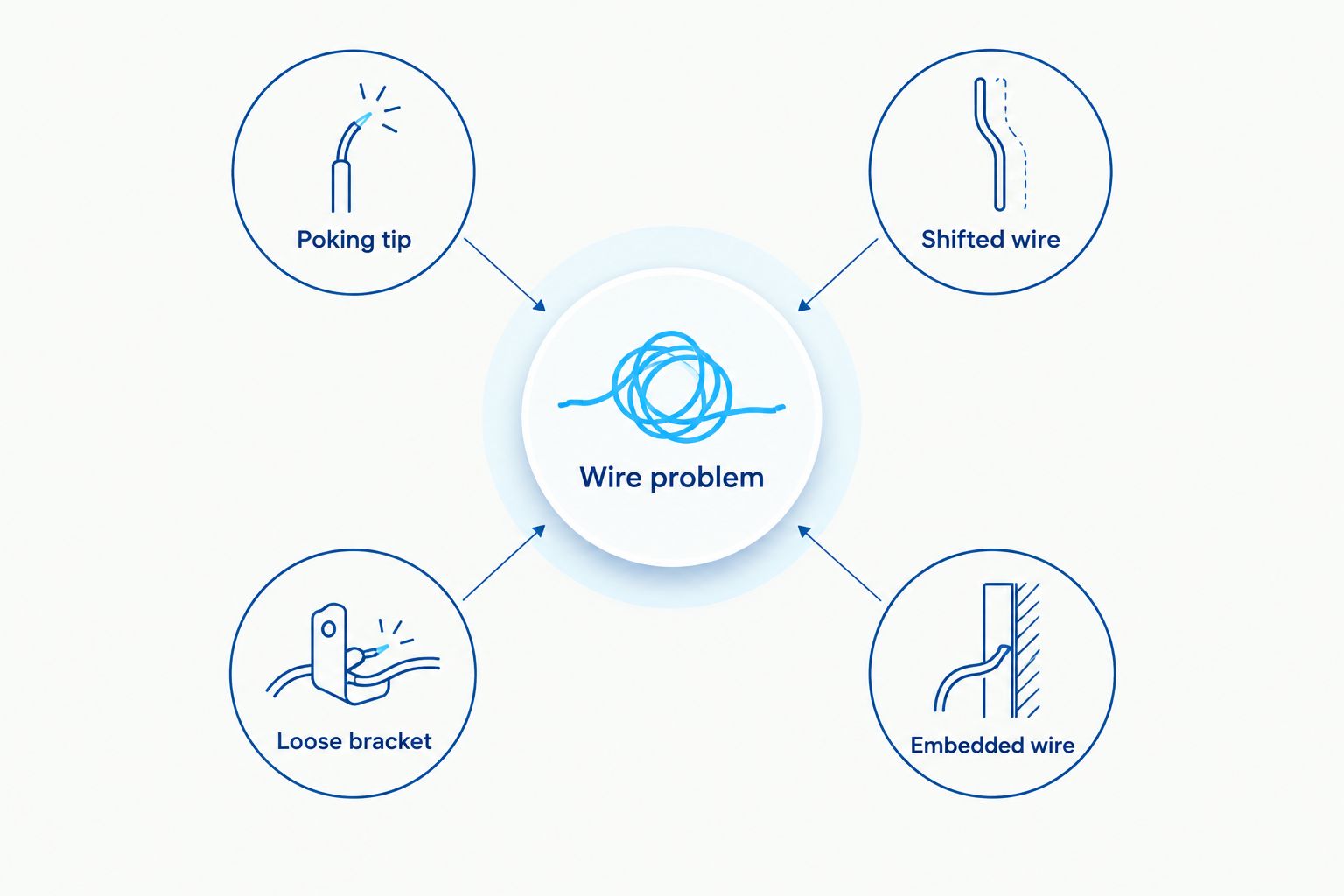
A poking end, a shifted archwire, and a loose bracket are different problems. Your 2026 home-care decision should start with what you can see—not with a tool you happen to have.
- Poking tip: Cover the reachable sharp point with orthodontic wax.
- Shifted wire: Contact your orthodontist; do not pull it sideways to center it.
- Loose bracket: Leave an attached bracket in place and report it; cover it if it rubs.
- Embedded wire: Stop home manipulation and seek urgent professional assessment.
A bracket that remains on the wire is not the same as a completely detached piece. Do not pull attached parts free; if a piece is already completely loose in your mouth and you can safely spit it out, save it for the clinician.
What to avoid during a home repair attempt
Do not cut a braces wire as your first home response. A cut fragment can be swallowed or inhaled, and cutting can leave another sharp end. Ask your orthodontist for case-specific instructions if wax does not control the irritation.
Do not use household glue, nail glue, or improvised adhesives to attach a bracket. Avoid pulling the wire with pliers, repeatedly bending it, or probing tissue with tweezers.
Do not pack tissue or cotton into your mouth and leave it there as a lasting cover. Use a product intended for orthodontic protection rather than an improvised loose object.
When a poking wire needs urgent help
A reachable tip causing mild rubbing is different from breathing trouble or a wire lodged in tissue. Escalate based on symptoms, even if you have already tried wax.
- Call 911: Trouble breathing, choking, or inability to swallow requires emergency medical help.
- Seek urgent medical assessment: Suspected inhalation of a wire fragment or swallowing a sharp piece needs prompt evaluation.
- Seek urgent dental care: A wire embedded in tissue, significant injury, uncontrolled bleeding, or severe worsening pain needs professional attention.
- Contact your orthodontist promptly: A slipped wire, detached bracket, loose band, or irritation not controlled by wax needs advice about repair timing.
Fever with facial swelling or rapidly increasing swelling also needs urgent assessment. Do not wait for a routine orthodontic appointment when symptoms are escalating.
For a broader first-aid reference, see how to handle a dental emergency until you reach the dentist.
What to tell your orthodontist
Describe where the wire is poking, whether a bracket or band has moved, and whether you can eat and close your mouth normally. Mention any bleeding, swelling, injury, or missing fragment.
Take a clear photograph if the office requests one. A photo supports triage but does not replace an examination when the wire is embedded or the extent of damage is unclear.
Ask whether to keep wax in place and how soon to attend. Do not assume your next scheduled adjustment is soon enough simply because the pain settles.
How these temporary fixes were ranked
This 2026 ranking prioritizes tissue protection, minimal hardware handling, and a clear limit on home care. Wax ranks first because it separates metal from tissue without intentionally changing the appliance; rinsing and food changes rank lower because they cannot stop the sharp contact themselves.
Dental Arts of Atlantis provides family dental care, but this ranking does not imply the practice supplies or repairs fixed braces. Your treating orthodontist remains the first contact for appliance-specific instructions.
Which temporary fix should you choose?
Choose orthodontic wax for a reachable poking point, then contact your orthodontist about the loose wire. Add a saltwater rinse for irritated tissue and softer meals if chewing hurts.
Dental Arts of Atlantis is a family dental care option for Lake Worth households. For a loose braces wire, the best repair provider is the orthodontist directing your treatment—not a home tool kit.
FAQ
What’s the best loose braces wire fix at home?
Orthodontic wax is the best first option for covering a reachable sharp wire end. It protects your cheek or lip temporarily but does not repair displaced hardware; contact your treating orthodontist.
Can I push a poking braces wire back myself?
You can gently press a clearly visible, slightly protruding tip toward the tooth with a clean cotton swab if it moves easily. Stop if it resists or hurts, and do not try to thread a displaced wire through brackets yourself.
Can I cut a braces wire with nail clippers?
Do not cut a braces wire without case-specific instructions from your orthodontist. A fragment can be swallowed or inhaled, and the remaining wire can still be sharp.
Is a loose braces wire a dental emergency?
A loose wire needs prompt orthodontic advice, but mild rubbing alone does not always require emergency treatment. Embedded metal, severe pain, uncontrolled bleeding, or swelling needs urgent assessment; breathing or swallowing difficulty requires emergency medical help.
Can I sleep with orthodontic wax on my braces?
Orthodontic wax is commonly used overnight; follow the product directions and your orthodontist’s advice. Covering the wire does not make it safe to postpone a needed repair.
What should I do if I swallow a braces wire?
Seek prompt medical advice after swallowing a sharp wire fragment rather than assuming it will pass safely. Call 911 for choking or trouble breathing, and do not induce vomiting.
Will saltwater fix a loose braces wire?
Saltwater will not fix a loose braces wire. A warm rinse can soothe irritated tissue, but the sharp point still needs protection and the damaged appliance needs orthodontic advice.
One last thing
The useful detail is not just where your mouth hurts—it is where the metal touches. Before applying wax, gently move your cheek aside and identify that contact point without pulling the appliance.
Dental Arts of Atlantis serves families with different dental needs; braces repair still belongs with the clinician managing the appliance. In 2026, the right temporary fix makes you comfortable while you arrange care, not confident enough to skip it.
Related guides
- Best oral care routine for kids with braces
- Best snacks for kids with braces
- How to choose a mouthguard for kids who wear braces