
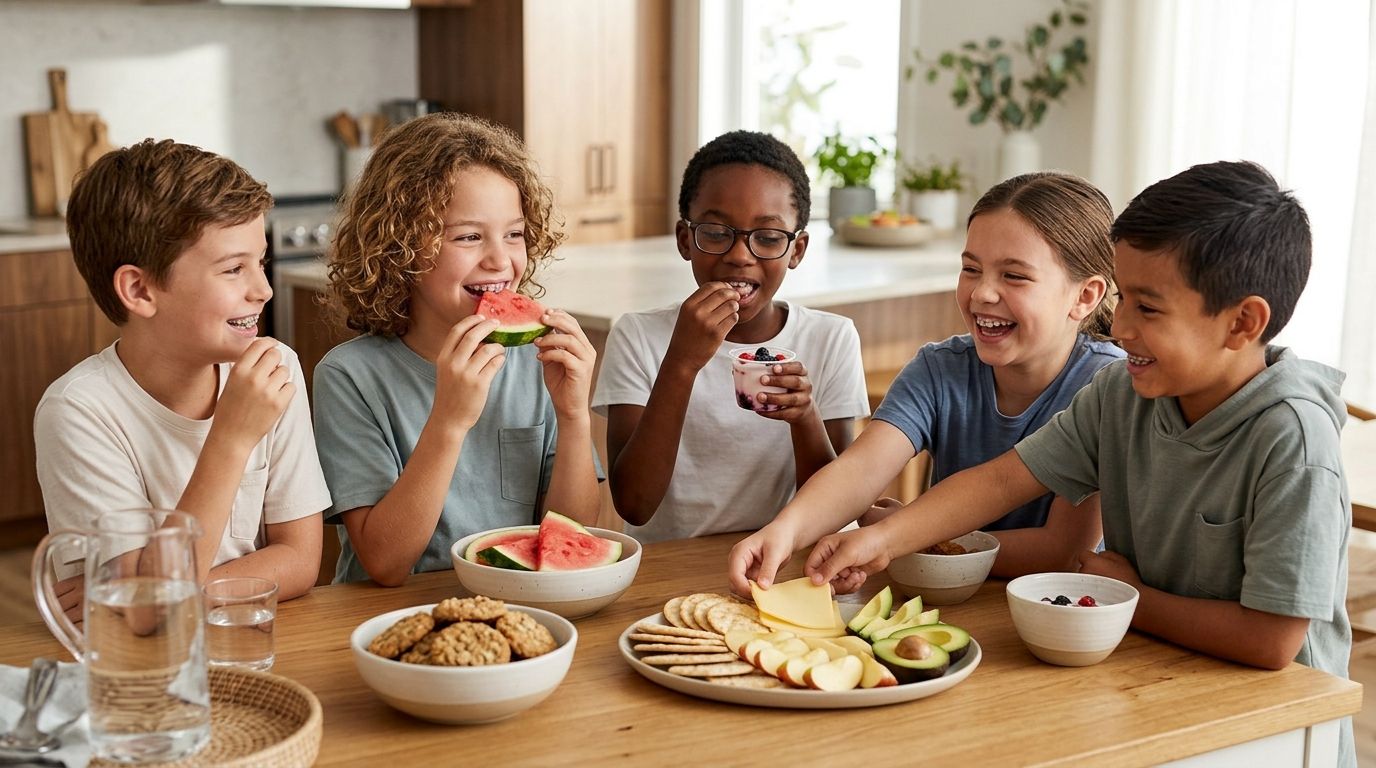
Braces don't have to mean bland snacking. The right choices protect brackets and wires while still satisfying a hungry kid between meals, and this list ranks the snacks that hold up best for kids with braces in 2026 — from the first sore week after tightening to routine after-school grazing.
- Applesauce and soft ripe fruit win for the first week after a new set of braces or a wire adjustment.
- Greek yogurt and smoothies deliver protein without risking a broken bracket.
- String cheese and soft cheese cubes are the best low-sugar grab-and-go option.
- Sticky candy, popcorn, and hard nuts stay on the skip list for the full 18-24 months of treatment.
- Pudding and soft-baked treats satisfy a sweet craving without the enamel and bracket risk of hard candy.
Why this matters
A broken bracket or a popped wire means an unplanned trip to the orthodontist and, often, a delay in the treatment timeline. Kids in braces already deal with soreness for 3-5 days after each adjustment, which happens roughly every 4-6 weeks. Snack choice during that window decides whether a child eats comfortably or avoids food altogether.
Dental Arts of Atlantis sees the same pattern in families across Palm Beach County: kids do fine with the hardware itself, but sticky, hard, or crunchy snacks are what send them back in for an emergency repair. Getting the snack list right also matters for daily hygiene — food trapped around brackets is the leading cause of the white-spot decay orthodontic patients develop if they skip the how to get kids to floss without a fight routine.
What makes the best snacks for kids with braces
- Soft texture — no biting force needed to break it apart
- Low stickiness — nothing that pulls on brackets or wires
- No hard shell or seed risk — popcorn hulls and nut fragments are the top cause of broken brackets
- Reasonable sugar content — sugar left sitting against enamel around brackets accelerates decay
- Easy cleanup — a snack that rinses out with water is safer than one that lodges in wire gaps
- Kid appeal — a snack nobody wants to eat gets swapped for the candy in the pantry
Braces-friendly snacks at a glance
| Snack | Best For | Standout Feature | Key Limitation |
|---|---|---|---|
| Applesauce & soft fruit | First week after adjustment | Zero chewing force required | Gets old fast if it's the only option |
| Greek yogurt & smoothies | Protein between meals | Portable, no chewing needed | Added-sugar versions undercut the benefit |
| String cheese & soft cheese cubes | Quick low-sugar snack | Neutral pH, doesn't feed decay | Not filling enough as a stand-alone snack |
| Mashed potatoes & soft-cooked vegetables | Filling snack before bed | High volume, low bracket risk | Needs prep — not grab-and-go |
| Soft sandwiches & wraps | School lunches on the go | Balances carbs and protein | Crusty bread and hard rolls defeat the purpose |
| Pudding, soft-baked treats, frozen yogurt | Sweet treat without damage risk | Satisfies a craving safely | Still sugar — rinse or brush afterward |
1. Applesauce & soft fruit: best for the first week after adjustment
Applesauce, ripe bananas, and canned or very soft cooked pears require no chewing pressure, which matters most in the 3-5 days after wires get tightened. These fruits also carry natural sugars in a form that doesn't sit trapped against a bracket the way caramel or gummy candy does.
Applesauce & soft fruit pros:
- Zero risk to brackets or wires
- Available in single-serve cups for lunchboxes
- Familiar and easy for younger kids to accept
Applesauce & soft fruit cons:
- Gets boring within days if it's the only rotation
- Unsweetened versions matter — added sugar versions offset the benefit
Applesauce & soft fruit verdict: eat freely, especially during the soreness window right after an appointment.
2. Greek yogurt & smoothies: best for protein between meals
Greek yogurt and blended smoothies pack protein and calcium into a texture that never touches a bracket with force. A fruit-and-yogurt smoothie also works as a full snack replacement on days when a child doesn't want to chew anything at all — common after the first adjustment of a new phase of treatment.
Greek yogurt & smoothies pros:
- High protein without chewing
- Easy to blend in extra nutrition (spinach, seeds ground fine)
- Works cold, which numbs soreness after a tightening visit
Greek yogurt & smoothies cons:
- Flavored yogurt cups often carry more added sugar than plain
- Smoothies with whole seeds or granola toppings reintroduce bracket risk
Greek yogurt & smoothies verdict: eat freely, plain or lightly sweetened.
3. String cheese & soft cheese cubes: best for a quick low-sugar snack
Cheese is one of the few snacks that's both low-sugar and neutral for enamel pH, which makes it a genuinely braces-friendly staple rather than a compromise. String cheese needs almost no chewing force to pull apart, and cubed soft cheese works the same way.
String cheese & soft cheese cubes pros:
- Minimal sugar, good for enamel
- Portable and doesn't need refrigeration for short windows
- Neutral flavor pairs with fruit or crackers
String cheese & soft cheese cubes cons:
- Low in fiber and volume — not filling alone
- Hard aged cheeses (parmesan rinds) don't belong on this list
String cheese & soft cheese cubes verdict: eat freely, best paired with a fruit or a soft cracker for a fuller snack.
4. Mashed potatoes & soft-cooked vegetables: best for a filling snack before bed
Mashed potatoes, soft-steamed carrots, and roasted squash give a child real volume without any bite force. This is the snack that works when a kid says they're hungry an hour before bed but chewing anything crunchy sounds painful.
Mashed potatoes & soft-cooked vegetables pros:
- Filling without chewing effort
- Flexible — works savory or with a little butter and cinnamon
- Good option during flare-ups of soreness mid-treatment
Mashed potatoes & soft-cooked vegetables cons:
- Requires prep time, not a pantry-shelf snack
- Not lunchbox-friendly without a thermos
Mashed potatoes & soft-cooked vegetables verdict: eat freely, best used at home rather than for school.
5. Soft sandwiches & wraps: best for school lunches on the go
A soft wrap or sandwich on sliced (not crusty) bread with deli meat, egg salad, or nut-free spread balances protein and carbs in a format that survives a lunchbox. This is the practical pick for the daily grind, not just the soreness window.
Soft sandwiches & wraps pros:
- Balances protein, carbs, and fat in one snack
- Customizable to whatever a picky kid will actually eat
- No prep beyond assembly
Soft sandwiches & wraps cons:
- Crusty artisan bread or hard rolls undo the benefit
- Crunchy add-ins (raw carrots, chips on the side) need to stay separate
Soft sandwiches & wraps verdict: eat freely, with soft bread specifically.
6. Pudding, soft-baked treats & frozen yogurt: best for a sweet treat without damage risk
Kids in braces still want dessert, and pudding, soft-baked cookies, and frozen yogurt satisfy that without the bracket risk of caramel, gummy candy, or hard toffee — all of which stay firmly on the skip list for the full course of treatment.
Pudding & soft-baked treats pros:
- Satisfies a sweet craving safely
- Widely available and kid-approved
- No bracket or wire risk
Pudding & soft-baked treats cons:
- Still sugar-heavy — brushing or at least rinsing after is worth the reminder
- Easy to over-serve since it feels like "safe" dessert
Pudding & soft-baked treats verdict: occasional treat, not a daily habit.
How this list was ranked
Each snack was scored against the same six criteria: texture softness, stickiness, hard-shell or seed risk, sugar load, cleanup ease, and whether a kid will actually eat it. Applesauce and yogurt score highest because they clear every column with no caveats; pudding and baked treats rank lowest of the group because sugar content pulls the score down even though texture is safe.
Get a braces care check for your child
A pediatric visit catches loose wires and bracket wear before they turn into an emergency.
Which snack should you choose?
For the first week after any adjustment, applesauce and soft fruit win — no chewing force, no bracket risk. For daily protein between meals, Greek yogurt and smoothies are the default. For school lunches, soft sandwiches on non-crusty bread carry a full meal's worth of nutrition without the risk. Popcorn, caramel, gummy candy, ice cubes, and hard nuts stay off the list entirely for the duration of treatment, which typically runs 18-24 months depending on the case.
Parents managing a full household with multiple kids in different phases of treatment often find it easier to standardize the pantry around this list rather than track separate rules per child — worth reviewing alongside the household's family dental plans for kids in braces to keep checkups and adjustments on one schedule.
FAQ
What’s the best snack for kids right after getting braces put on?
Applesauce, mashed potatoes, and soft fruit are best right after braces go on, since the mouth is sore and any chewing force is uncomfortable for the first 3-5 days.
Can kids with braces eat popcorn?
No. Popcorn hulls get trapped under wires and around brackets and are one of the most common causes of broken brackets in orthodontic patients.
Is ice cream safe for kids with braces?
Soft-serve ice cream and frozen yogurt are fine in moderation since they require no biting force, but avoid ice cream with nuts, caramel swirls, or hard candy mix-ins.
How much sugar is too much for a kid wearing braces?
There’s no hard cutoff, but sugar sitting against a bracket for longer periods raises decay risk more than the sugar itself, so rinsing or brushing after a sweet snack matters more than avoiding sugar entirely.
What snacks should be avoided completely with braces?
Hard candy, caramel, gum, whole nuts, ice cubes, and popcorn should be avoided for the entire course of treatment since they risk breaking brackets or bending wires.
Are smoothies a good meal replacement for kids in braces?
Yes, a smoothie with fruit, yogurt, and no whole seeds or granola works as a full snack or light meal replacement, especially during the sore days after an adjustment.
Do kids need different snacks depending on how long they’ve had braces?
The first week after any adjustment calls for the softest options like applesauce or yogurt; once soreness fades, most kids can handle the full list of braces-safe snacks until the next tightening.
How often do kids with braces need adjustment appointments?
Most orthodontic patients come in every 4-6 weeks for wire adjustments, and snack choice matters most in the days immediately following each visit.
One last thing
The snack that causes the most emergency visits isn't candy — it's ice. Chewing ice cubes is a habit a lot of kids pick up outside of snack time, and it's responsible for a steady share of broken brackets seen in orthodontic patients, braces or not. If a child chews ice, that's the first habit to break before worrying about anything else on this list.
A loose or broken retainer often shows up around the same time as a snacking mishap — if that happens, replacing a lost or broken retainer quickly keeps treatment on schedule. And if the household is also managing a mouthguard for sports alongside braces, choosing a mouthguard for kids who wear braces is worth reading before the next practice.
Related guides
- How to get kids to floss without a fight
- Family dental plans for households with kids in braces
- How to choose a mouthguard for kids who wear braces
- Best way to replace a lost or broken retainer
- Invisalign for teens: what parents should know