
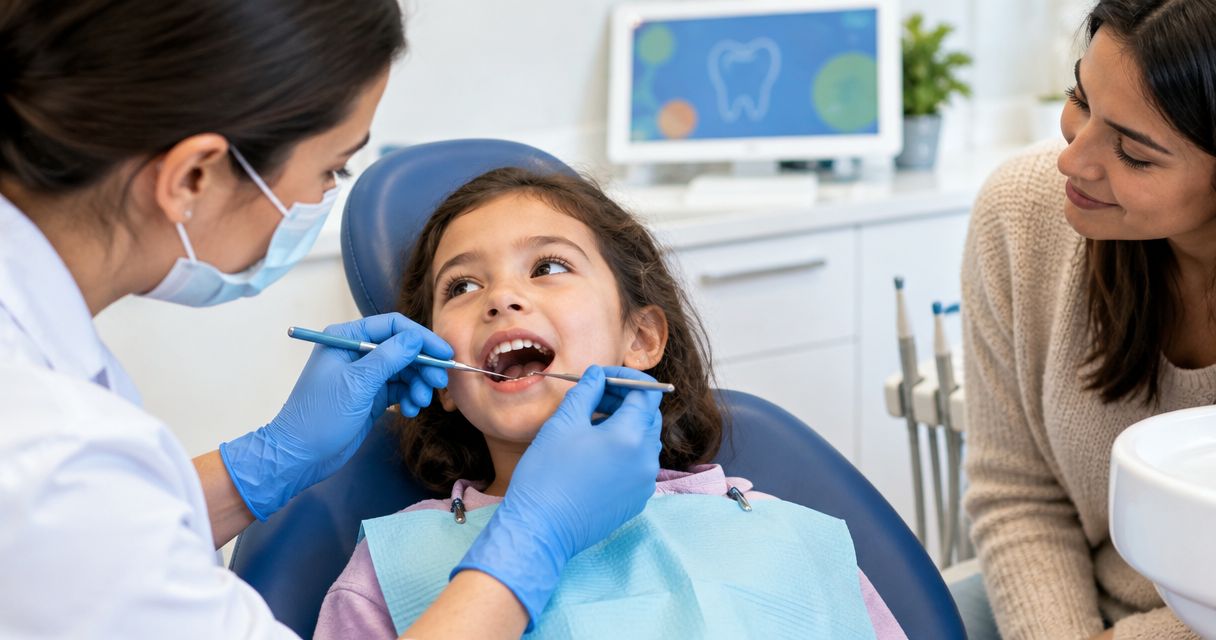
A pediatric dental emergency includes a knocked-out permanent tooth, a displaced tooth, severe or persistent toothache, dental swelling, or bleeding that does not stop with pressure. Trouble breathing or swallowing, rapidly spreading facial swelling, or a serious head injury requires emergency medical care—not a wait for a dental appointment.
- A pediatric dental emergency needs prompt assessment when pain, swelling, bleeding, or tooth displacement occurs.
- Never put a knocked-out baby tooth back into its socket.
- A knocked-out permanent tooth needs immediate dental attention; keep it moist while arranging care.
- Dental Arts of Atlantis offers pediatric dental care for Lake Worth and Palm Beach County families.
Why this matters
Your child does not need to be crying for an injury to need attention. A tooth can move out of position or suffer damage below the gum without an obvious large break.
Choose care based on breathing, bleeding, swelling, and the injury—not just the pain level. This 2026 parent guide separates medical emergencies from urgent dental problems and minor concerns that still need a call.
Dental Arts of Atlantis provides pediatric dental care for families in Lake Worth and Palm Beach County. Emergency medical services remain the right destination when a child's breathing or overall safety is at risk.
What counts as a pediatric dental emergency?
A pediatric dental emergency is a tooth or mouth problem that needs prompt professional assessment to control pain, address infection, stop bleeding, or protect an injured tooth. Use the signs below to choose your next action; a dentist must examine the child to determine treatment.
| Care setting | Best for | What to do | Important limitation |
|---|---|---|---|
| Emergency medical care | Breathing difficulty, swallowing difficulty, uncontrolled heavy bleeding, serious facial or head injury | Call 911 for life-threatening symptoms or seek emergency department care | Medical stabilization does not replace follow-up dental treatment |
| Urgent dental assessment | Knocked-out permanent tooth, displaced tooth, severe toothache, localized dental swelling, significant tooth fracture | Contact a dentist immediately and describe the symptoms | A dental office is not the destination for an airway emergency |
| Prompt dental advice | Small painless chip, mild sensitivity, loose filling without severe symptoms | Call for guidance and protect the area | A minor-looking problem still needs assessment if symptoms develop |
If symptoms worsen while you are arranging care, reassess the destination. New breathing difficulty or spreading swelling changes the situation immediately.
What should I do if a permanent tooth gets knocked out?
A knocked-out permanent tooth needs immediate dental attention. The American Association of Endodontists' patient guidance emphasizes acting quickly, ideally reaching a dentist within 30 minutes; do not treat that window as permission to wait or as a cutoff after which help is pointless.
Pick up the tooth by its white chewing surface, called the crown. Do not touch, scrub, or scrape the root, and do not wrap the tooth in a dry tissue.
If it is dirty, rinse it briefly and gently with milk or saline. Do not use soap, alcohol, or disinfectant. If you are certain it is a permanent tooth and your child is alert and cooperative, gently replacing it in the socket can protect it while you seek immediate care; never force it.
If you cannot replace it safely, place it in milk or a tooth-preservation solution. Do not leave it dry, and do not place it inside a young child's mouth because of the choking risk.
Tell the dental team when the injury happened and how the tooth has been stored. If you cannot tell whether it is a baby or permanent tooth, keep it moist and get immediate professional instructions rather than guessing.
What if a baby tooth is knocked out or pushed into the gum?
Never put a knocked-out baby tooth back into the socket. Replanting it can damage the developing permanent tooth underneath. Contact a dentist promptly to assess the injury and the surrounding tissues.
A tooth that looks missing might instead have been pushed into the gum. Do not probe the socket or try to pull a submerged tooth into position yourself.
If the tooth is unaccounted for, tell the clinician. Coughing, wheezing, or breathing difficulty after a missing tooth raises concern that it entered the airway and requires emergency medical assessment.
A displaced baby tooth also needs prompt dental advice, especially if your child cannot close their mouth normally. Keep your child from biting on the injured area, and do not repeatedly wiggle the tooth to test it.
When are toothache and swelling emergencies?
A severe toothache, pain that wakes your child, pain that prevents eating, or swelling around a tooth needs urgent dental assessment. Fever with dental pain or facial swelling increases the concern for infection.
Swelling that affects breathing, swallowing, the neck, or the area around an eye requires emergency medical evaluation. Do not wait for an online reply or a routine appointment when those signs appear.
For temporary comfort, ask a dentist, pediatrician, or pharmacist about a pain medicine appropriate for your child's age, weight, health conditions, and other medicines. Follow the label or clinician's instructions; this guide does not provide a dosing schedule.
Never place aspirin directly against a tooth or gum, and do not give a child leftover antibiotics. Pain relief does not treat the source of an infection, and antibiotics alone do not necessarily remove the need for dental treatment.
When does mouth bleeding need urgent care?
Apply steady pressure with clean gauze or a clean cloth to a bleeding lip, gum, or accessible mouth wound. Keep the pressure continuous rather than lifting the cloth repeatedly to inspect it.
For a small wound, maintain pressure for 10 minutes before checking. Seek urgent care if bleeding continues despite firm pressure; heavy bleeding, breathing difficulty, or a serious injury warrants immediate emergency help rather than waiting through a timed trial.
Deep cuts, wounds that gape open, and injuries extending through the lip need professional assessment. Tell the clinician if your child has a bleeding disorder or takes medicine that affects bleeding.
A cold pack wrapped in cloth can help with swelling on the outside of the face. Do not put ice directly on skin, and supervise your child throughout first aid.
Why the urgency varies
For a 2026 dental-emergency checklist, these features matter more than whether the injury looks dramatic:
- Tooth type: A knocked-out permanent tooth and a knocked-out baby tooth require different first aid.
- Tooth position: A tooth pushed inward, sideways, or out of its socket needs prompt assessment.
- Swelling location: Swelling near the eye, neck, or airway changes the level of concern.
- Bleeding control: Persistent or heavy bleeding needs escalation.
- Your child's condition: Unusual drowsiness, vomiting after a head injury, or breathing problems require medical assessment.
- Ability to function: Trouble swallowing, closing the mouth, drinking, or eating helps the clinician judge urgency.
Do not use the absence of fever as proof that a dental problem is harmless. Describe the full pattern of symptoms when you call.
What should I do before reaching care?
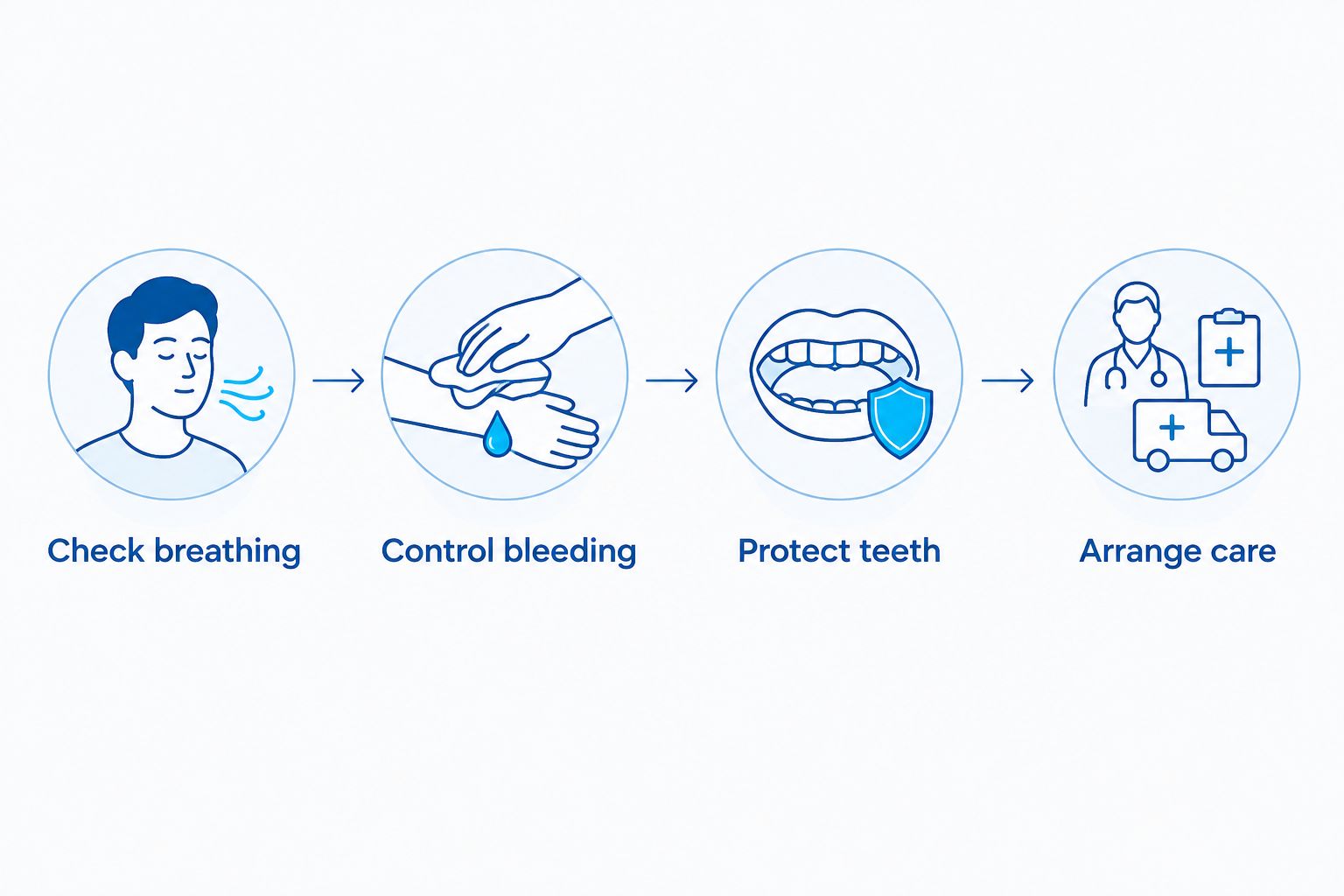
Use this 2026 first-aid sequence while another adult contacts the appropriate care team, if someone is available:
- Check breathing. Look for airway difficulty, major bleeding, and signs of a serious head or facial injury. Call 911 when symptoms are life-threatening.
- Control bleeding. Use steady pressure with clean gauze or cloth on an accessible wound. Do not reach blindly into your child's mouth.
- Protect teeth. Keep a knocked-out permanent tooth moist, save any tooth fragments, and prevent chewing on the injured side.
- Arrange care. Explain the symptoms, the injury time, and whether the tooth is baby or permanent. Follow the clinician's instructions.
Do not spend time taking photographs or searching for fragments if doing so delays emergency help. Your child's safety comes before saving a tooth.
Does every chipped tooth need emergency treatment?
A small chip without pain, bleeding, swelling, or tooth movement does not usually require emergency medical care. Call a dentist for assessment, because the visible chip does not reveal everything about the injury.
A deep break, a pink or red area inside the fracture, significant sensitivity, or a loose tooth needs urgent dental attention. Save any fragments in milk and bring them with you; the dentist will decide whether they can be used.
The distinction matters with chipped baby tooth repair: treatment depends on the depth of the fracture, symptoms, and the tooth's condition—not simply whether the tooth will eventually fall out. Do not file the tooth or use household glue to cover or attach a fragment.
Until the dentist advises otherwise, offer soft foods and avoid biting on the damaged tooth. Tell the team if the bite feels different, even if your child says the pain has settled.
What should I tell the dental office?
A clear description helps the team direct you safely. For your 2026 family emergency notes, keep these details together:
- When the pain or injury started and how it happened.
- Which tooth or part of the mouth is affected.
- Whether there is swelling, fever, bleeding, or tooth movement.
- Whether your child can breathe, swallow, drink, and close their mouth normally.
- Any medicines already given, allergies, and relevant medical conditions.
- Whether a missing tooth or fragment has been found and how it is stored.
For dental assessment, use the contact page to reach Dental Arts of Atlantis and describe the situation. Confirm the next step directly; do not assume that sending a message secures an urgent appointment.
Dental Arts of Atlantis is a family dental practice for Lake Worth households seeking pediatric dental care. A child with a medical emergency needs emergency medical services instead of an office inquiry.
Can my child's toothache wait until morning?
Severe or persistent toothache needs prompt dental advice, particularly with swelling, fever, or difficulty eating. Contact a dentist for triage rather than deciding from pain intensity alone.
Do not wait until morning for breathing difficulty, trouble swallowing, rapidly spreading swelling, uncontrolled heavy bleeding, or a serious head injury. Seek emergency medical help.
Is a loose tooth always a pediatric dental emergency?
A baby tooth loosening naturally is not usually an emergency. A tooth loosened by a fall or blow needs dental assessment, whether it is a baby or permanent tooth.
Do not pull an injured tooth or repeatedly move it to see how loose it is. Report changes in the bite and any bleeding or swelling.
FAQ
What counts as a pediatric dental emergency in 2026?
A pediatric dental emergency includes a knocked-out permanent tooth, a displaced tooth, severe or persistent toothache, dental swelling, or bleeding that does not stop with pressure. Breathing difficulty, trouble swallowing, or serious head injury requires emergency medical care.
Should I put my child’s knocked-out baby tooth back in?
No—never put a knocked-out baby tooth back into its socket. Contact a dentist promptly because the injury needs assessment and replanting can harm the developing permanent tooth.
How quickly should a knocked-out adult tooth be treated?
Seek dental care immediately, ideally within 30 minutes. Keep the permanent tooth moist, handle it by the crown, and continue seeking help even if more time has passed.
Can a child have a dental infection without a fever?
Yes, a child can have a dental infection without a fever. Tooth pain, gum swelling, facial swelling, or drainage still needs prompt dental assessment.
Should I go to the emergency room for my child’s swollen face?
Seek emergency medical evaluation for facial swelling with breathing or swallowing difficulty, swelling toward the eye or neck, or rapid worsening. Localized dental swelling without those signs still needs urgent dental advice.
Can I give my child something for tooth pain?
Ask a dentist, pediatrician, or pharmacist about an age- and weight-appropriate pain medicine, then follow the label or clinician’s directions. Never place aspirin on the gum or use leftover antibiotics.
Does a chipped baby tooth need a dentist if it doesn’t hurt?
Yes, call a dentist about a chipped baby tooth even if it does not hurt. Tooth movement, a deep break, bleeding, or a changed bite increases the urgency.
One last thing
A tooth can need follow-up even after your child feels better. Injury-related changes can appear later, so keep the dentist's recommended review appointments and report new pain, swelling, or discoloration.
Keep a simple 2026 emergency note on your phone with your child's medicines, allergies, and dental contact details. During an injury, having those facts ready lets you focus on comforting your child and getting the right help.
Related guides
- First-aid steps for a child's dental emergency
- Can baby teeth cavities be left untreated?
- Mouthguards for young athletes and contact sports