
There is no single waiting time before you brush teeth after whitening: follow the directions for your exact whitening product or the instructions your dentist gave you. Brushing too firmly can aggravate sensitive teeth or irritated gums, so the right timing also needs a gentle technique—not a longer wait followed by harder scrubbing.
- To brush teeth after whitening, follow your product’s directions rather than a universal waiting period.
- Whitening strips, trays, and professional treatments have different aftercare instructions; do not interchange them.
- Use a soft-bristled toothbrush and fluoride toothpaste when brushing resumes; stop whitening if irritation develops.
- Dental Arts of Atlantis provides general and cosmetic dentistry for families in Lake Worth and Palm Beach County.
Why this matters
Whitening aftercare should protect your comfort without disrupting everyday plaque removal. A sensitive mouth needs gentler care, not a break from oral hygiene for an unspecified length of time.
Start with how to whiten teeth safely without damaging enamel if you are still choosing a treatment. The instructions that belong to your treatment take priority over a generic timer you find online.
For your 2026 whitening routine, keep the packaging or written aftercare instructions where you brush. That makes it easier to check the actual directions instead of relying on a remembered rule from a different product.
How long should you wait to brush your teeth after whitening?
Wait for the interval specified by your whitening product or treating dentist; there is no universal interval that applies to every method. Some whitening instructions allow gentle brushing after treatment, while others specify a different cleanup routine. Do not substitute directions from another kit, even if the packaging looks similar.
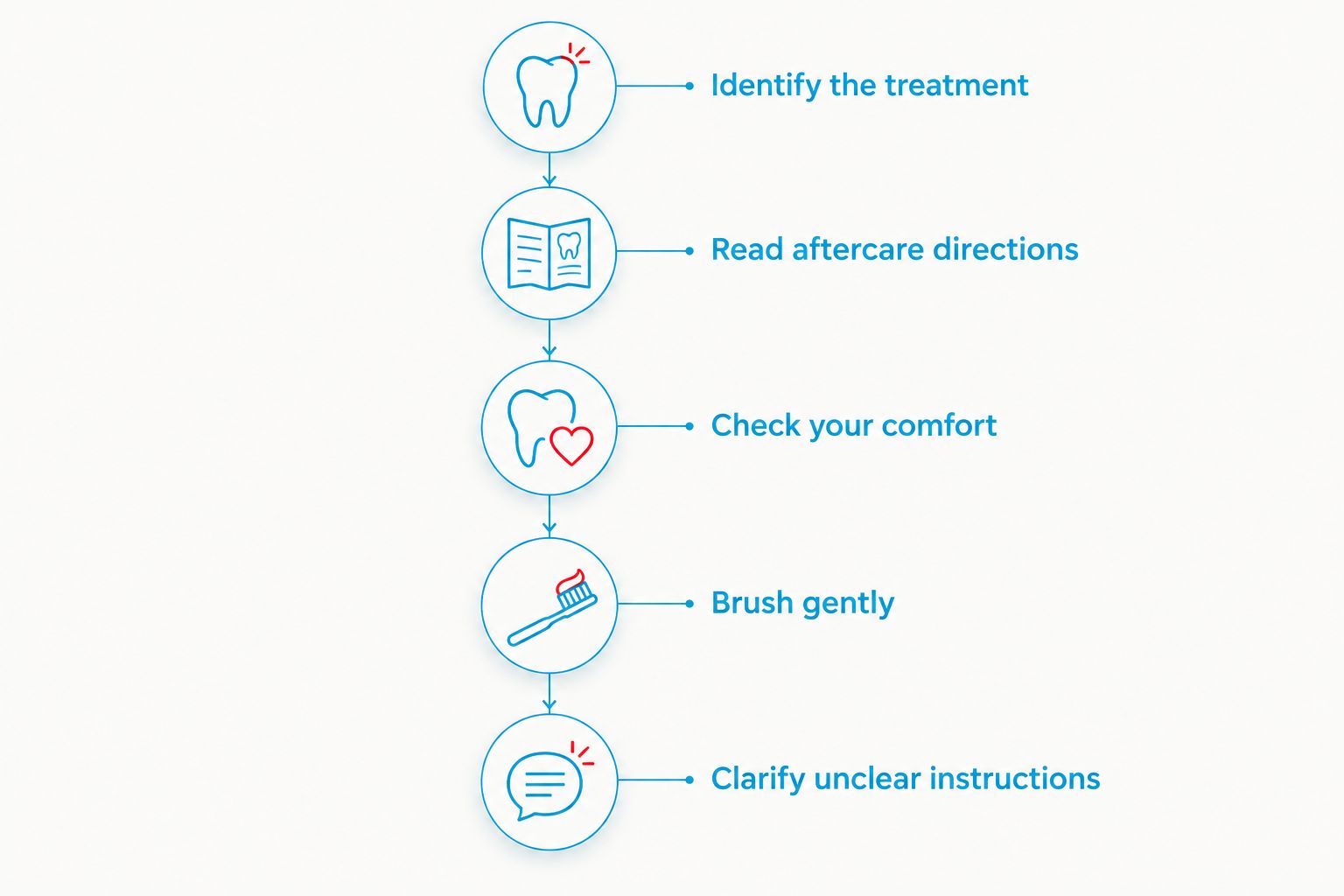
Use this sequence before your next brushing session:
- Identify the treatment. Check whether you used strips, a take-home tray, or a treatment administered by a dental professional.
- Read the aftercare directions. Look specifically for instructions about removing gel, rinsing, brushing, and any additional products.
- Check your comfort. Notice whether your teeth feel sensitive or your gums look irritated. Do not scrub through pain.
- Brush gently when instructed. Use a soft-bristled toothbrush and fluoride toothpaste rather than trying to polish away the whitening gel.
- Clarify unclear instructions. Contact the treating office or product manufacturer before your next whitening session if the directions conflict or are missing.
A search result promising one exact waiting period cannot account for your product’s formulation, application method, or additional treatment. In 2026, the useful question is still: what does this treatment require after removal?
Whitening strips: follow the package cleanup directions
Whitening strips place a whitening gel against your teeth for a specified application period. After removing the strips, follow the package directions for any gel left behind; do not assume you must leave it on longer to improve the result.
Best for: People using a strip product who need aftercare instructions for that exact product. The advantage is a written, product-specific routine; the limitation is that those instructions do not apply to another strip or tray system.
If the package permits brushing afterward, brush gently. If it specifies a waiting period or another cleanup method, follow that instead. Do not extend the application time or add an extra session because your teeth have not reached the shade you wanted.
Keep the outer box or instruction leaflet until you finish the treatment course. An individual strip packet does not always carry all the information you need about frequency, precautions, and aftercare.
Take-home whitening trays: separate tooth care from tray care
After removing a whitening tray, follow the prescribed instructions for cleaning your mouth and cleaning the tray. These are separate tasks: the directions for rinsing an appliance do not automatically tell you when to brush your teeth.
Best for: People already using a dentist-directed tray treatment who need an individualized aftercare routine. Professional instructions help coordinate treatment, but you still need to follow the specified gel amount and wear schedule.
Do not add extra gel to compensate for a missed treatment. Excess whitening gel can contact the gums and cause irritation rather than improve the result.
If your tray repeatedly pushes gel onto your gums, pause whitening and ask the prescribing dentist about the fit and amount you are using. Changing the brushing time does not solve a tray that overflows or irritates tissue.
Professional whitening: use your written discharge instructions
After an office-administered whitening treatment, use the aftercare instructions provided for that visit. Ask about brushing before leaving, especially if a fluoride or desensitizing treatment was also applied.
Best for: Patients who need treatment-specific guidance from the dental professional supervising whitening. The advantage is direct advice about the procedure performed; the limitation is that generic online directions cannot replace that information.
Write down any instructions about the first brushing session, toothpaste, and the next whitening application. If the spoken advice and printed handout differ, ask the treating office to clarify rather than choosing the shorter waiting period.
How do the aftercare routines compare?
| Whitening method | Best for | What determines brushing timing | Main caution |
|---|---|---|---|
| Whitening strips | Following a specific packaged treatment | That product’s package directions | Do not transfer instructions between products |
| Dentist-directed trays | Following an individualized home routine | The prescribing dentist’s gel and tray instructions | Extra gel can irritate gums |
| Professional whitening | Receiving procedure-specific aftercare | Instructions from the treating dental professional | Additional treatments can change aftercare |
These methods are not ranked by whitening strength or results. The comparison answers a narrower question: which instructions should control your brushing routine?
Why brushing instructions vary
Differences in aftercare reflect differences in treatment—not evidence that every whitening session leaves teeth needing the same recovery period.
- Product formulation. Whitening products differ in their ingredients and concentration. Use the directions written for the formulation you actually applied.
- Application method. Strips, trays, and professional treatments deliver whitening agents differently and have different removal procedures.
- Your symptoms. Tooth sensitivity and gum irritation require attention; pushing through discomfort is not a useful treatment goal.
- Additional dental products. Fluoride or desensitizing products can have their own directions that affect the order of your routine.
- Existing dental conditions. Cavities, exposed roots, and damaged restorations need assessment rather than a longer waiting period before brushing.
For a treatment started in 2026, check the directions supplied with your current package. Do not assume instructions saved from a previous treatment still apply.
How should you brush once it is time?
Use light pressure and keep your regular cavity-prevention routine. Whitening does not replace brushing, and brushing harder does not make whitening work better.
The American Dental Association recommends brushing for 2 minutes, 2 times a day, using fluoride toothpaste and a soft-bristled toothbrush. Its brushing guidance also describes placing the bristles at a 45-degree angle to the gums and using gentle, short strokes. These are everyday cleaning recommendations, not a whitening-specific waiting schedule.
Use the following approach when your treatment instructions allow brushing:
- Choose soft bristles. Avoid treating sensitivity as a reason to scrub with a firmer brush.
- Clean all surfaces. Include the inner, outer, and chewing surfaces rather than focusing only on the newly whitened front teeth.
- Keep pressure light. Guide the brush instead of pressing the bristles flat against your teeth.
- Use fluoride toothpaste. Ask your dentist whether a sensitivity toothpaste fits your symptoms and treatment.
- Avoid extra polishing. Do not add charcoal, acidic mixtures, or abrasive home remedies to speed up the result.
For daily care in 2026, consistency matters more than adding extra brushing sessions after whitening. If normal brushing hurts, stop whitening and ask a dentist how to maintain cleaning comfortably while the cause is assessed.
Can you brush immediately after whitening strips?
Immediate brushing is appropriate only when the instructions for your whitening strips allow it. Follow any specified waiting period or cleanup method, and use gentle pressure.
If you already brushed immediately, do not assume you damaged your teeth. Stop additional whitening if irritation develops, and seek dental advice for significant or persistent symptoms.
Should you brush before or after whitening?
The timing before and after whitening comes from the directions for your specific treatment. Do not assume that brushing immediately before application is required simply because you want the gel to reach clean teeth.
Plan your regular brushing around the treatment instructions rather than adding repeated sessions. If the directions leave the sequence unclear, ask the manufacturer or your treating dentist to explain it before applying more whitener.
Does sensitivity mean you waited too little before brushing?
Sensitivity alone does not establish that you brushed too soon. Whitening itself can cause temporary sensitivity, and brushing pressure, exposed roots, or another dental problem can also contribute to discomfort.
Pause whitening rather than trying to push through pain. Tell your dentist whether discomfort affects several teeth or one specific tooth, whether it occurs without a trigger, and whether it is getting worse.
Do not assume sharp pain in one tooth, pain when biting, swelling, or ongoing gum injury is normal whitening aftercare. Those symptoms need a dental assessment rather than another whitening session or a different toothbrush timer.
When should you ask a dentist for help?
Ask for advice before continuing if you cannot identify the product, no longer have its directions, or develop symptoms that interfere with normal cleaning. Bring the packaging or a clear photo of its ingredient list and instructions.
Dental Arts of Atlantis is a fit for Lake Worth families seeking general and cosmetic dentistry. For whitening-related concerns, describe what you used and what changed; an assessment is more useful than guessing whether to wait longer.
A dental visit also helps separate cosmetic goals from conditions that need treatment first. The limitation of any general guide is that it cannot examine a painful tooth or identify the cause of gum irritation.
Ask about your whitening aftercare
Share your whitening product and symptoms when requesting a dental appointment.
FAQ
How long should I wait to brush teeth after whitening?
Follow the waiting period or cleanup directions for your exact whitening product or professional treatment. No single brushing interval applies to every whitening method.
Can I brush my teeth right after taking off whitening strips?
Brush right after removing whitening strips only if that product’s instructions allow it. Use a soft-bristled toothbrush and gentle pressure rather than scrubbing away residue.
What should I do if I already brushed immediately after whitening?
Do not assume immediate brushing caused damage. Pause further whitening if irritation develops, and contact a dentist for significant or persistent pain or gum injury.
Should I skip brushing tonight if whitening made my teeth sensitive?
Do not make skipping oral hygiene your whitening aftercare plan. Pause whitening and ask your dentist how to continue gentle cleaning if sensitivity makes brushing painful.
Can I use whitening toothpaste after a whitening treatment?
Check your treatment instructions before adding whitening toothpaste. A fluoride toothpaste supports routine cleaning; ask your dentist whether a sensitivity toothpaste is more appropriate if your teeth hurt.
Will brushing remove the whitening result?
Gentle brushing does not scrub away the internal color change produced by peroxide whitening. Continue routine oral hygiene while following any immediate aftercare restrictions for your treatment.
Can Dental Arts of Atlantis help with dental concerns after whitening?
Dental Arts of Atlantis provides general and cosmetic dental care in Lake Worth. When requesting an appointment, describe the whitening product, your symptoms, and when they began.
One last thing
Waiting longer is not a substitute for using whitening correctly. A longer delay before brushing cannot correct excessive gel, an extended application, or a painful tooth that needs treatment.
Before your next 2026 whitening session, save a photo of the product directions on your phone. If discomfort develops, Dental Arts of Atlantis can use that information alongside your symptom history during a dental assessment.
Related guides
- How to stop tooth sensitivity to hot and cold
- How long after teeth whitening can you drink coffee?
- Best toothpaste for sensitive teeth