

You can chew normally after a dental implant once your dentist confirms that the implant has healed enough to support biting forces and your replacement tooth is ready for use. That usually means a healing process measured in months, not just the few days it takes for early soreness to improve. A temporary tooth, comfortable gums, or pain-free chewing does not by itself mean the implant is ready for your usual diet.
- To chew normally after dental implant surgery, wait for your dentist’s clearance—not just relief from soreness.
- Soft foods protect the surgical site; temporary implant teeth can still require chewing restrictions.
- Bone healing and gum healing follow different timelines, so comfort alone cannot confirm readiness.
- Dental Arts of Atlantis offers implant dentistry for families in Lake Worth and Palm Beach County.
Why this matters
Feeling better is not the same as being ready to bite harder. The gum surface can look settled while the bone around an implant is still healing. Your diet needs to protect both the surgical site and the developing connection between bone and implant.
Dental Arts of Atlantis provides implant dentistry in Lake Worth. This 2026 guide explains the milestones behind a return to normal meals, but your treating dentist’s instructions take priority over general recovery advice.
How long after a dental implant can you chew normally?
There is no single safe date for everyone. Returning to normal chewing depends on the implant’s stability, any additional surgery, the replacement tooth attached to it, and your dentist’s assessment of healing.
Separate two questions: When can you eat more comfortably, and when can you place normal chewing pressure on the implant? Those milestones do not necessarily happen together. You might manage a wider variety of food with your other teeth while the implant site still needs protection.
| Recovery milestone | What it means for eating | What it does not prove |
|---|---|---|
| Numbness has worn off | You can better judge temperature and avoid biting your cheek or tongue | The surgical site is ready for chewing pressure |
| Early tenderness is improving | Soft meals become easier to manage | The implant has finished healing into bone |
| Your dentist permits firmer textures | You can expand your diet within those instructions | Every hard or sticky food is appropriate |
| The implant and restoration are cleared for function | You can return toward normal chewing as directed | The replacement tooth is indestructible |
For your 2026 recovery plan, ask for permission based on the food and chewing location—not simply whether you can “eat normally.” A soft sandwich eaten away from the surgical site creates different demands from biting into a crusty roll with a temporary front tooth.
Early recovery: protect the surgical site
Immediately after surgery, follow the food and drink instructions provided by your surgical team. Avoid chewing while your mouth remains numb, and follow any separate instructions about sedation before attempting a meal.
Choose foods that need little chewing and do not press against the incision. Keep food temperatures comfortable rather than very hot, and do not use the surgical area to test whether a food feels manageable.
The examples below describe textures, not a prescription for your individual surgery. Food allergies, swallowing difficulties, and medical dietary requirements still apply.
| Food texture | Best for | Benefit | Limitation |
|---|---|---|---|
| Smooth foods, such as plain yogurt or blended soup | Meals requiring minimal chewing | Reduce the need to bite and grind | Very hot soup can irritate a healing mouth |
| Soft foods, such as scrambled eggs or mashed vegetables | A dentist-approved step beyond smooth foods | Offer variety without a hard bite | Preparation matters; crisp edges change the texture |
| Tender foods, such as soft fish or well-cooked pasta | Gradual progression when permitted | Introduce more chewing | Still require attention to the surgical site |
| Hard, crunchy, or sticky foods | Later eating after clearance | Restore more of your usual choices | Can place unwanted pressure on a healing site or temporary tooth |
Choose texture over the food’s name. A vegetable can be soft when thoroughly cooked and demanding to chew when raw. Remove tough skins, bones, and other hard pieces rather than assuming an entire dish is suitable.
During bone healing: comfort is not clearance
The implant needs a stable connection with the surrounding bone before it can reliably carry normal biting forces. Dentists call this process osseointegration. It happens beneath the gums, where you cannot judge progress by looking in a mirror.
Less soreness is welcome, but it does not measure that connection. Avoid pressing the implant with your finger, rocking a temporary tooth, or repeatedly biting down to check whether the area feels strong.
If you have natural teeth elsewhere, your dentist can explain whether you should chew away from the implant site. If several areas were treated, ask for a workable eating plan rather than assuming an unaffected side is available.
Your cleaning instructions matter alongside your food choices. The guide to caring for dental implants after surgery covers the surrounding recovery routine; follow your own surgical team’s directions for the treated area.
Temporary teeth: a complete smile is not unrestricted chewing
A temporary replacement tooth can fill a visible gap without being ready for normal biting. The word “temporary” describes its role in treatment, not how much force it can safely tolerate.
Ask whether your temporary tooth is attached to the implant, supported by neighboring teeth, or removable. Each arrangement needs instructions specific to its design, including whether it should contact the opposing teeth during chewing.
For treatment planned in 2026, “same-day teeth” still should not be read as “same-day unrestricted eating.” Selected patients receive a temporary restoration soon after implant placement, but the underlying implant still needs appropriate protection during healing.
If you have a temporary front tooth, do not assume that cutting food into smaller pieces makes biting directly with that tooth safe. Ask which teeth should do the work and which textures remain off limits.
After clearance: rebuild your usual chewing gradually
Once your dentist approves normal function, return to your usual textures gradually. Start with foods you can manage comfortably rather than making a hard or chewy meal your first test.
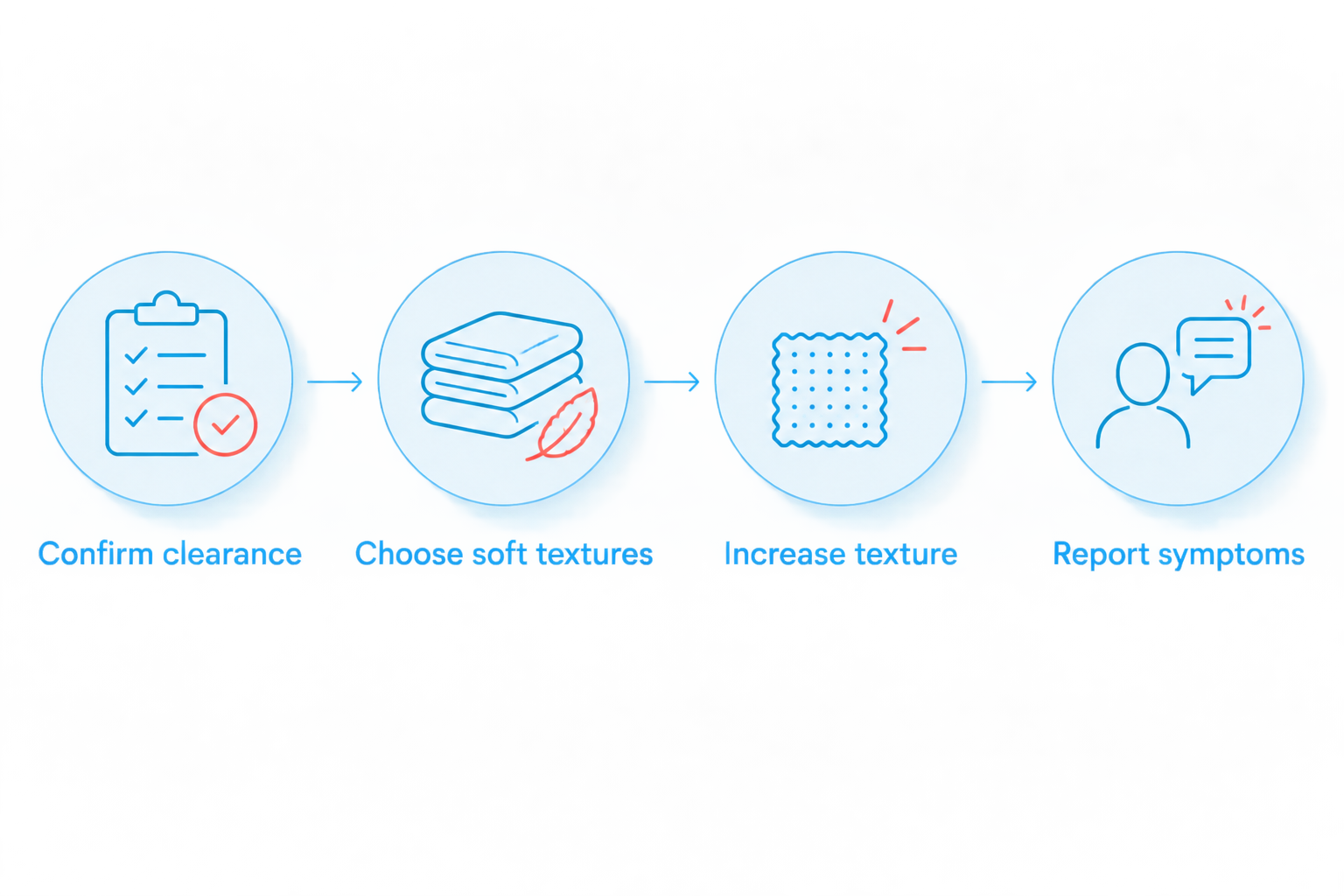
Use this sequence to make the transition clear:
- Confirm clearance. Ask whether the permission covers the implant site itself and the restoration currently attached to it.
- Choose soft textures. Begin with easy-to-chew meals that do not require forceful tearing or grinding.
- Increase texture. Introduce firmer foods within your dentist’s instructions, taking manageable bites.
- Report symptoms. Stop loading the area and contact your dentist if chewing causes pain, movement, or a changed bite.
The goal is comfortable function, not proving that the tooth can handle a particular food. Keep your follow-up appointment even if meals feel normal.
Why the return to normal chewing varies
Your dentist sets chewing restrictions around the actual treatment, not a generic calendar. These factors explain why another person’s recovery instructions might differ from yours:
- Implant stability. The implant’s initial stability and healing progress affect decisions about when it can carry chewing forces.
- Bone grafting or additional surgery. A graft, extraction, or other procedure can add its own precautions to your eating plan.
- Restoration design. A temporary crown, final crown, or full-arch restoration needs instructions suited to how it is supported.
- Treatment location and extent. Replacing a front tooth creates different eating challenges from treating several back teeth or an entire arch.
- Health and healing factors. Smoking, diabetes management, and other health considerations belong in the discussion with your treating team.
- Bite forces and grinding. Clenching, grinding, or an uneven bite can affect how an implant restoration is loaded.
Tell your dentist about habits that happen outside meals, too. Nighttime grinding and chewing on objects are relevant even when you carefully follow a soft-food diet.
Can I chew on the other side after an implant?
Chewing on the other side is appropriate only when your dentist permits it. It can help keep direct pressure away from a single surgical site, but it does not cancel the need for suitable food textures.
Food can shift across your mouth, and hard or sticky pieces remain difficult to control. If your procedure involved both sides or a full arch, ask for instructions that match that situation rather than adapting advice for a single implant.
Does getting the final crown mean I can eat anything?
A final crown does not automatically remove every restriction. Your dentist should confirm that the implant is ready for function and check how the new tooth meets the opposing teeth.
After clearance, an implant-supported tooth is intended to restore chewing—not to open packaging or crack hard objects. Report a bite that feels noticeably higher than the surrounding teeth instead of trying to wear it down through eating.
What if chewing hurts after it was getting better?
New or worsening pain deserves a call to your dentist, especially after symptoms had been improving. Stop chewing on the affected area rather than testing it repeatedly.
A moving restoration, changed bite, increasing swelling, drainage, or fever also needs prompt dental assessment. Seek emergency medical care for difficulty breathing or swallowing, or rapidly spreading swelling.
Questions to settle before your next meal
Clear instructions make recovery easier to manage. Before leaving a follow-up visit, ask which textures are allowed, where you can chew, whether your temporary tooth can bear pressure, and what finding will determine the next step.
Bring a short list of foods you actually eat. “Can I have chicken?” is less useful than explaining whether you mean tender shredded chicken or a crisp, chewy piece that requires forceful biting.
Dental Arts of Atlantis is a local dental implant care option for Lake Worth families. For your 2026 treatment discussion, bring your questions about chewing and any instructions from another clinician involved in your care. An individual assessment—not a general article—determines whether your implant is ready to use normally.
Discuss your implant recovery
Ask about chewing restrictions, temporary teeth, and your next healing milestone.
FAQ
How long until I can chew normally after dental implant surgery?
You can chew normally after dental implant surgery when your dentist confirms that healing and the restoration allow normal biting forces. Bone healing generally takes months, and relief from soreness alone does not establish readiness.
Can I eat solid food if my dental implant does not hurt?
A pain-free implant is not automatic permission to eat unrestricted solid food. Follow the texture and chewing-location instructions provided by your dentist.
Can I bite into a sandwich with a temporary implant tooth?
Do not bite directly with a temporary implant tooth unless your dentist has approved it. Bread texture, fillings, and the temporary tooth’s design all affect how demanding that bite is.
Can I eat normally with same-day implant teeth?
Same-day implant teeth do not automatically allow normal eating. A temporary restoration can still require a protective diet while the implants heal.
What should I do if my implant tooth feels loose?
Stop chewing on a loose implant tooth and contact your dentist promptly. Do not wiggle it or attempt to tighten it yourself; an examination is needed to identify what is moving.
Should I keep my implant follow-up if chewing feels fine?
Yes, keep your implant follow-up even if chewing feels comfortable. Your dentist needs to assess healing and the restoration rather than relying only on symptoms.
Can Dental Arts of Atlantis help me discuss implant treatment?
Dental Arts of Atlantis offers implant dentistry in Lake Worth for families in the Palm Beach County area. Ask about the assessment and recovery instructions appropriate to your treatment.
One last thing
Do not make your first hard bite a home test of implant healing. The absence of pain cannot tell you whether the bone connection or temporary restoration is ready for that force.
For your 2026 recovery, replace the question “Has enough time passed?” with “Has my dentist cleared this implant and this tooth for this food?” That is the more useful question to bring to Dental Arts of Atlantis or your treating implant clinician.
Related guides
- How long a dental implant takes from start to finish
- How long All-on-4 recovery takes
- Night guards for teeth grinding and jaw pain