

Best for comparing family dental care: Dental Arts of Atlantis in Lake Worth. Best for specialist-led children's care: a pediatric dental specialist; best for medically complex treatment needs: a hospital-based dental service when recommended by your child's clinicians. This 2026 guide helps Wellington parents choose the right type of care without confusing a practice that treats children with a credentialed pediatric specialist.
- Searching best pediatric dentist wellington fl? Choose by your child’s needs, clinician credentials, and a clear treatment plan.
- Dental Arts of Atlantis offers pediatric and family dental care in Lake Worth, not a stated Wellington location.
- A pediatric dental specialist has additional training focused on children’s oral health.
- Confirm age acceptance, comfort accommodations, and referral arrangements before booking children’s dental care.
Why this matters
Your child's first visit, a painful tooth, and treatment complicated by a medical condition call for different decisions. A convenient family practice is not automatically the right setting for every procedure, and a specialist is not automatically necessary for every checkup.
Dental Arts of Atlantis is an option for Wellington families seeking pediatric and adult dental care at a Lake Worth practice. Its stated services include general, cosmetic, pediatric, and implant dentistry; that service list alone does not establish pediatric specialist credentials.
For your 2026 search, separate three questions: Does the office treat children your child's age? Who will provide the treatment? Does that clinician's training and care setting match your child's needs? The guide to choosing a family dentist for kids and adults together explains the household side of that decision.
What makes the best pediatric dentist for your child?
Use these criteria before comparing names or requesting an appointment:
- Relevant training: Distinguish a general dentist who treats children from a dentist who completed additional pediatric specialty training. Ask about the treating clinician, not just the practice's service categories.
- Age and treatment fit: Confirm that the office evaluates children your child's age and handles the specific concern. A routine examination and extensive restorative treatment require different planning.
- Comfort approach: Ask how the team explains instruments, introduces treatment, and responds when a child needs a break. Describe previous difficult experiences before the appointment.
- Prevention and explanation: Look for recommendations tied to examination findings and cavity risk. You should understand why treatment is recommended and what alternatives exist.
- Referral and urgent-care planning: Ask what happens when your child needs care beyond the office's scope. Know whom to contact for pain, swelling, or an injury.
- Practical access: Confirm the actual office location, appointment arrangements, and insurance participation directly. Do not assume a search result for Wellington means the practice is located there.
A helpful answer is specific: who treats your child, what the visit involves, and what happens if treatment cannot be completed comfortably. General promises about being child-friendly do not answer those questions.
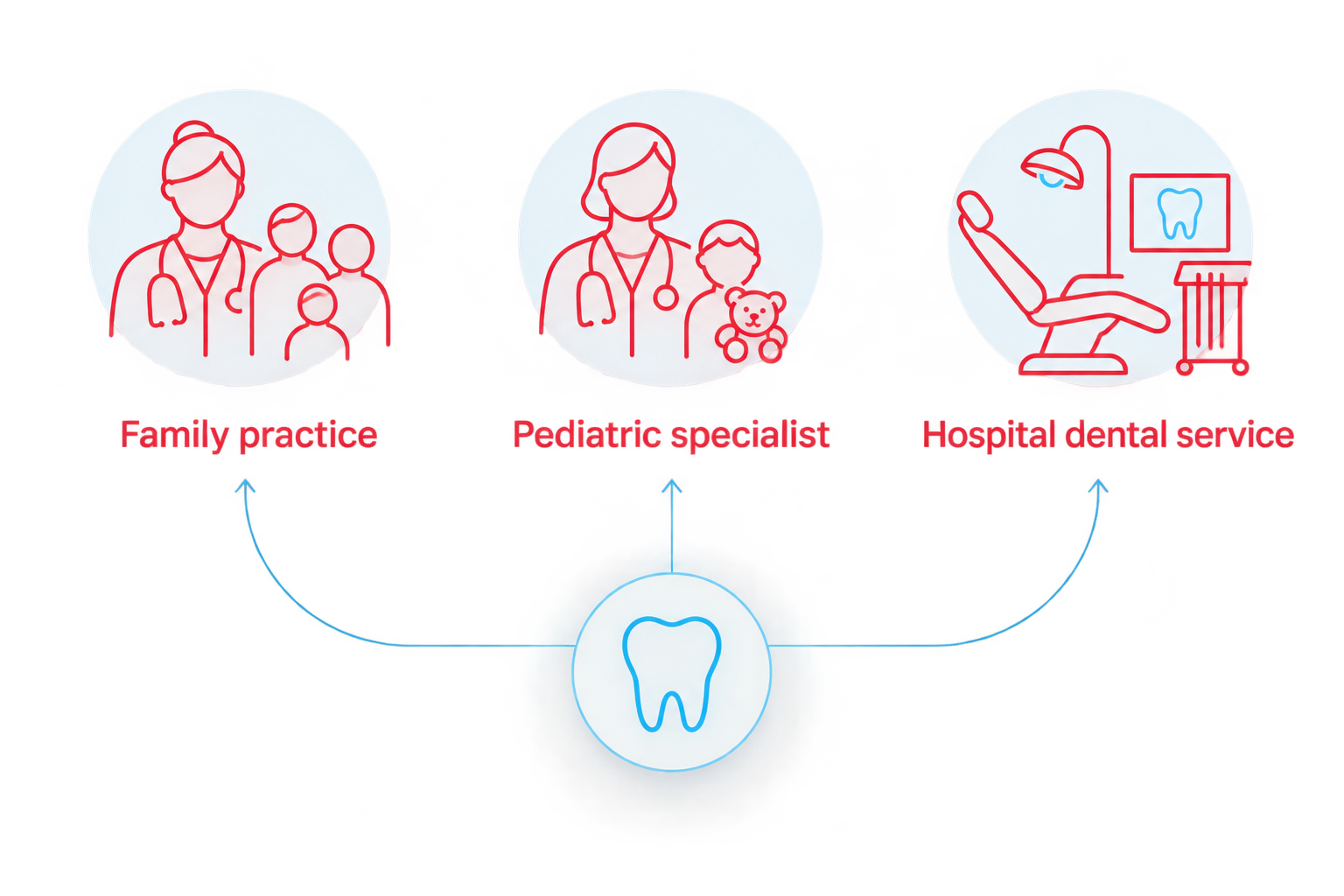
Pediatric dental care options at a glance
This is a ranked guide to care options, not a verified leaderboard of Wellington dental offices. The order starts with family care and moves toward settings intended for more specialized needs.
| Care option | Best for | Standout feature | Key limitation |
|---|---|---|---|
| Dental Arts of Atlantis | Comparing children's and adults' care within a family practice | Stated pediatric and general dental services | Located in Lake Worth; pediatric specialist credentials are not established here |
| Pediatric specialist | Specialist-led care for children | Additional training in children's dentistry | You still need to confirm the clinician's scope and your child's treatment needs |
| Hospital dental service | Treatment requiring hospital resources after clinical evaluation | Care within a hospital setting | Not the default destination for routine preventive visits |
Do not treat these options as interchangeable. The right starting point depends on your child's symptoms, previous experiences, medical history, and the proposed procedure—not a ranking number alone.
1. Dental Arts of Atlantis: best for comparing family dental care
Best for: Wellington households considering a Lake Worth practice that offers care for children and adults.
Dental Arts of Atlantis offers pediatric dentistry alongside general, cosmetic, and implant dental care. That makes it relevant when you want to discuss your child's needs within a practice that also treats adults.
The location distinction matters. Plan around a Lake Worth office rather than assuming this is a Wellington-based pediatric specialty practice, and confirm the treating dentist's credentials before choosing care.
Family-practice pros:
- Pediatric dental care is explicitly included in the practice's stated services.
- General dentistry is also offered, making the practice relevant to adult household members.
- The stated service range lets you ask about both children's and adults' dental needs.
Family-practice cons:
- The practice is in Lake Worth rather than Wellington.
- Offering pediatric dentistry does not, by itself, verify pediatric specialist status.
- Age acceptance, specific accommodations, and procedure suitability require direct confirmation.
Before booking, explain whether your child needs a first examination, has a known cavity, or struggled during previous treatment. Ask who will see your child and when that clinician refers to a specialist.
Verdict: Hold until the office confirms your child's age, needs, and treating clinician are a fit.
2. Pediatric specialist: best for specialist-led children's care
Best for: Parents specifically seeking a dentist with additional pediatric specialty training, including when a referring dentist recommends that expertise.
A pediatric dentist completes additional specialty education after dental school focused on caring for children, including children with special healthcare needs. Pediatric specialty training and board certification are different credentials; ask about each separately rather than treating them as synonyms.
For your 2026 shortlist, verify the actual clinician's qualifications. A children's theme, a welcoming waiting room, or the word “kids” in an office name does not establish specialist training.
Pediatric specialist pros:
- Additional education focuses on children's oral health and development.
- Specialty training includes behavior guidance and care for children with special healthcare needs.
- A specialist can evaluate concerns that a general dentist refers beyond their own scope.
Pediatric specialist cons:
- A specialty designation does not establish that every procedure is performed at that office.
- Sedation options and medical suitability still require individual assessment.
- Adult household members need their own appropriate dental arrangements.
Ask how the dentist approaches a child who cannot tolerate an examination or local anesthesia. Request an explanation of the least intensive appropriate approach, alternatives, and the circumstances that would require a different setting.
Verdict: Hold until credentials and the proposed approach are confirmed; prioritize this route when specialist evaluation is indicated.
3. Hospital dental service: best for hospital-level treatment needs
Best for: Children whose dental and medical clinicians recommend hospital resources for safe treatment.
Some children need a setting beyond an ordinary dental office because of medical complexity or the planned treatment and anesthesia. That decision follows an individual assessment; fear of the dentist alone does not establish a need for hospital treatment.
Ask your child's dentist and medical team whether referral is appropriate. Clarify who provides the dental treatment, who manages anesthesia when needed, and who handles follow-up afterward.
Hospital dental service pros:
- Provides a hospital setting when the clinical team identifies that need.
- Allows dental planning to account for relevant medical care requirements.
- Creates a referral route when office-based treatment is unsuitable.
Hospital dental service cons:
- It is not the default setting for routine examinations and cleanings.
- Assessment and referral arrangements depend on the service.
- Your child still needs an ongoing prevention and follow-up plan.
Verdict: Skip as a routine starting point unless your child's clinicians recommend hospital-level evaluation.
Questions to ask before booking in 2026
A focused conversation helps you avoid an appointment that does not match your child's needs. Describe the concern plainly, including pain, previous treatment difficulties, sensory sensitivities, medications, and relevant diagnoses.
Use this sequence:
- Name the need. Say whether you are arranging preventive care, seeking a second opinion, or requesting assessment of a symptom.
- Confirm the clinician. Ask who treats children and whether that person is a general dentist or pediatric specialist.
- Discuss comfort. Explain triggers and ask what accommodations the office can provide. Do not assume a particular sedation method is offered or appropriate.
- Understand the plan. Ask what the first examination includes and how findings, alternatives, and referrals are explained.
- Clarify follow-up. Find out whom to contact after treatment and how to obtain help if symptoms worsen.
Bring a medication list and relevant dental records when available. If another dentist has recommended treatment, request copies of the findings so the next clinician can assess the recommendation in context.
Prevention standards that help you judge the advice
Your 2026 choice should include more than finding someone to fix a tooth. The dentist should help you understand daily prevention and a recall schedule based on your child's risk.
The American Academy of Pediatric Dentistry's first-visit guidance recommends establishing dental care within 6 months of the first tooth erupting, and no later than 12 months of age. Waiting until a child reports pain is not the recommended starting point.
American Dental Association home-care guidance recommends brushing twice daily for 2 minutes with fluoride toothpaste. For children younger than 3 years, use a rice-grain-sized smear; from ages 3 through 6, use a pea-sized amount, with adult supervision and help as needed.
Ask the dentist to demonstrate brushing and explain whether fluoride treatment or sealants are appropriate. Those recommendations should follow your child's examination and risk assessment, not a one-size-fits-all package.
These national recommendations provide a baseline, not a remote diagnosis. Your child's clinician determines the treatment and follow-up appropriate to the findings.
How these care options are ranked
The ranking prioritizes the match between the care setting and your child's needs: family care first for households comparing routine services, pediatric specialty care for specialist-led evaluation, and hospital care when clinically indicated. Training, comfort planning, prevention, referrals, and practical access are the deciding criteria.
This 2026 guide does not assign review scores, claim firsthand testing, or name an overall Wellington winner. A useful recommendation identifies the right care pathway without claiming credentials or outcomes that have not been established.
Which pediatric dental care option should you choose?
For a routine visit, start by confirming that a practice treats your child's age group and can explain its approach clearly. Dental Arts of Atlantis belongs on that family-care shortlist if a Lake Worth location suits your household.
If your priority is a credentialed pediatric specialist, verify that qualification before booking. If your child has complex medical needs or a referral for hospital treatment, follow the clinicians' recommended pathway rather than choosing from general search rankings.
Choose the clinician who can explain both what your child needs and the limits of what their office provides. A clear referral plan is part of appropriate care, not a drawback to hide.
FAQ
What’s the best pediatric dentist in Wellington, FL, for my child?
The best fit depends on your child’s age, dental needs, medical history, and comfort requirements. Confirm the treating clinician’s qualifications and whether the office can provide the proposed care before booking.
Is Dental Arts of Atlantis located in Wellington?
Dental Arts of Atlantis is located in Lake Worth, Florida. Wellington families should consider that location when deciding whether the practice fits their household’s needs.
Is a family dentist the same as a pediatric dentist?
No. A family or general dentist can treat children, while a pediatric dentist has completed additional pediatric specialty training. Ask about the individual treating clinician’s credentials.
When should my baby first visit the dentist?
Schedule the first dental visit within 6 months after the first tooth appears and no later than 12 months of age. This follows American Academy of Pediatric Dentistry guidance for establishing early dental care.
Does a frightened child always need sedation?
No, fear alone does not establish a need for sedation. The dentist should assess your child’s needs, discuss behavior guidance and comfort approaches, and explain the benefits and risks of any proposed sedation.
What should I do if my child has tooth pain or swelling?
Contact a dentist promptly for assessment rather than waiting for a routine checkup. Difficulty breathing or swallowing, rapidly spreading swelling, or serious facial injury requires immediate emergency medical attention.
Should I choose a dentist based only on online reviews?
No, reviews do not replace checking clinician credentials and treatment fit. Use them alongside direct questions about age acceptance, comfort planning, referrals, and follow-up.
One last thing
Ask one question before committing: “What happens if my child cannot complete treatment comfortably?” The answer should explain reassessment, alternatives, and referral when appropriate—not promise that every child will finish every procedure in the same setting.
Related guides
- Pediatric dentistry for toddlers and first dental visits
- Dental care for kids with sensory sensitivities
- What counts as a pediatric dental emergency?