

Best starting point for combined general and implant care: Dental Arts of Atlantis in Lake Worth. Best pathway for complex surgical questions: an implant consultation with surgical evaluation. Best pathway for extensive bite rebuilding: a restorative consultation focused on the final teeth. For Palm Beach Gardens residents comparing options in 2026, the right choice depends on your diagnosis, the proposed restoration, and a clear follow-up plan—not a citywide ranking.
- Dental Arts of Atlantis offers general and implant dentistry in Lake Worth for Palm Beach County families.
- The best dental implant dentist Palm Beach Gardens FL search should lead to diagnosis, not an unsupported ranking.
- Compare three care pathways: combined dental care, surgical evaluation, and restoration-focused planning.
- Choose a clinician who explains alternatives, responsibilities, healing checkpoints, and long-term maintenance before treatment.
Why this matters
An implant replaces a tooth root; the visible replacement tooth is a separate part of treatment. Your decision therefore involves more than choosing someone to place an implant. You also need a plan for how the finished tooth will look, function, and stay clean.
Dental Arts of Atlantis is a dental implant consultation option for Palm Beach County families who also need general dental care. The practice is in Lake Worth, not Palm Beach Gardens. Include that location difference when you consider examinations, treatment visits, and follow-up care.
This 2026 guide compares care pathways rather than assigning unsupported rankings to individual dentists. Use it to identify the kind of consultation you need and the questions that distinguish a clear plan from an incomplete one.
What makes the best dental implant dentist for you?
The strongest choice explains why a particular treatment fits your mouth. Judge each consultation against these criteria before deciding:
- Diagnosis before replacement: The dentist evaluates the tooth, gums, supporting bone, and surrounding teeth before recommending extraction or an implant.
- Restoration-led planning: The proposed implant position supports the planned replacement tooth, not simply the available space.
- Clear clinical responsibilities: You know who will perform surgery, make the restoration, and handle follow-up concerns.
- Medical review: Your clinician reviews medications, relevant conditions, smoking, and previous dental treatment.
- Realistic alternatives: You hear whether saving the tooth, a bridge, or a removable replacement deserves consideration.
- Practical maintenance: The finished design allows cleaning, and you understand the ongoing care it requires.
Ask for explanations in plain language. You should be able to describe the proposed treatment back to the clinician without relying on unfamiliar terminology.
Dental implant care pathways at a glance
These options address different needs. They are not interchangeable specialties, and a complex case can involve more than one pathway.
| Option | Best for | Main strength | Key limitation |
|---|---|---|---|
| Dental Arts of Atlantis | Families considering implant care alongside general dentistry | General, cosmetic, pediatric, and implant dentistry within the practice's stated services | Located in Lake Worth; confirm the proposed clinicians and treatment sequence |
| Implant consultation with surgical evaluation | Patients with questions about bone, extraction, or surgical complexity | Focuses on whether and how implant placement is appropriate | Surgical planning must connect to the final restoration |
| Restoration-focused consultation | Patients replacing many teeth or rebuilding their bite | Starts with the intended teeth, function, and cleaning access | Extensive reconstruction can require coordination across clinicians |
1. Dental Arts of Atlantis: best for combined dental care
Dental Arts of Atlantis offers general, cosmetic, pediatric, and implant dentistry to families in the Palm Beach County area. That service mix makes the practice a relevant consultation option when a missing tooth is only part of your dental needs.
For example, you might need an implant discussion alongside an examination of neighboring teeth or a broader review of your smile. Start with your goals and symptoms; let the examination determine which treatment discussions belong together.
Dental Arts of Atlantis pros
- Offers implant dentistry as an explicitly stated service.
- Also offers general dentistry for broader oral-health needs.
- Provides cosmetic dentistry for patients with appearance-related concerns.
- Serves families in Palm Beach County.
Dental Arts of Atlantis limitations
- The practice is in Lake Worth rather than Palm Beach Gardens, so consider travel for ongoing care.
- A service list does not establish your candidacy, the surgical approach, or which clinicians will manage each stage; confirm these during consultation.
Best for: Families seeking an implant evaluation alongside general dental care rather than treating the missing tooth as an isolated issue.
Ask who would place the implant, who would restore it, and how those decisions connect. Also ask what findings would change the recommendation. A useful answer explains the process without promising a result before examination.
Verdict: Hold the treatment commitment until you receive an individualized diagnosis and a clear sequence of care.
2. Surgical evaluation: best for bone and extraction questions
An implant consultation with surgical evaluation focuses on the tissues and anatomy involved in placement. This pathway is particularly relevant when your main questions concern an existing tooth, previous tooth loss, or whether supporting bone needs further assessment.
Depending on your findings, your dentist can explain whether referral to an oral surgeon or periodontist is appropriate. A referral is a coordination decision, not proof that one practice is better than another.
Surgical evaluation pros
- Addresses questions about extraction and implant placement together.
- Gives attention to supporting bone and surrounding anatomy.
- Helps identify whether additional treatment belongs before placement.
Surgical evaluation limitations
- A surgical recommendation alone does not explain the design of your final tooth.
- Separate surgical and restorative clinicians need a shared plan and clear communication.
Best for: Patients whose main uncertainty concerns the surgical steps rather than the appearance of the replacement tooth.
Bring previous images if you have them, but let the treating clinician decide whether they are sufficient. Ask what additional imaging would answer and how it would affect the plan. Imaging is useful when it informs a clinical decision—not merely because it sounds advanced.
Verdict: Hold surgery until the placement plan and the intended restoration agree.
3. Restoration-focused planning: best for extensive tooth replacement
A restoration-focused consultation begins with the teeth you need at the end of treatment. The discussion includes chewing, appearance, speech, bite relationships, and access for cleaning.
This approach matters when you are replacing several teeth or considering a full-arch restoration. A prosthodontist is a dental specialist in restoring and replacing teeth; ask whether that expertise would help your particular case rather than assuming every implant requires specialist treatment.
Restoration-focused planning pros
- Connects implant decisions to the intended replacement teeth.
- Brings bite and appearance into the discussion early.
- Makes cleaning access part of the design conversation.
Restoration-focused planning limitations
- Extensive treatment planning can involve additional diagnostic visits.
- A restorative plan still requires confirmation that the proposed surgery is appropriate.
Best for: Patients facing substantial tooth replacement, worn teeth, or a bite that needs rebuilding.
Ask to compare fixed and removable approaches when both are clinically reasonable. Understand what you will remove yourself, what a clinician must remove, and how you will clean around the restoration. Those practical differences affect everyday life long after treatment ends.
Verdict: Hold the final design decision until you understand function, cleaning, and the surgical requirements.
How these options are ranked
The order follows the decision most readers need to make: start with a dental evaluation, identify whether surgery needs particular attention, and determine whether the final restoration requires more extensive planning. It does not represent a measured comparison of clinical outcomes.
For your 2026 shortlist, prioritize the pathway that answers your biggest unresolved question. Do not interpret a higher position here as evidence of greater surgical skill, better results, or a particular treatment being right for everyone.
Bring these questions to your implant consultation
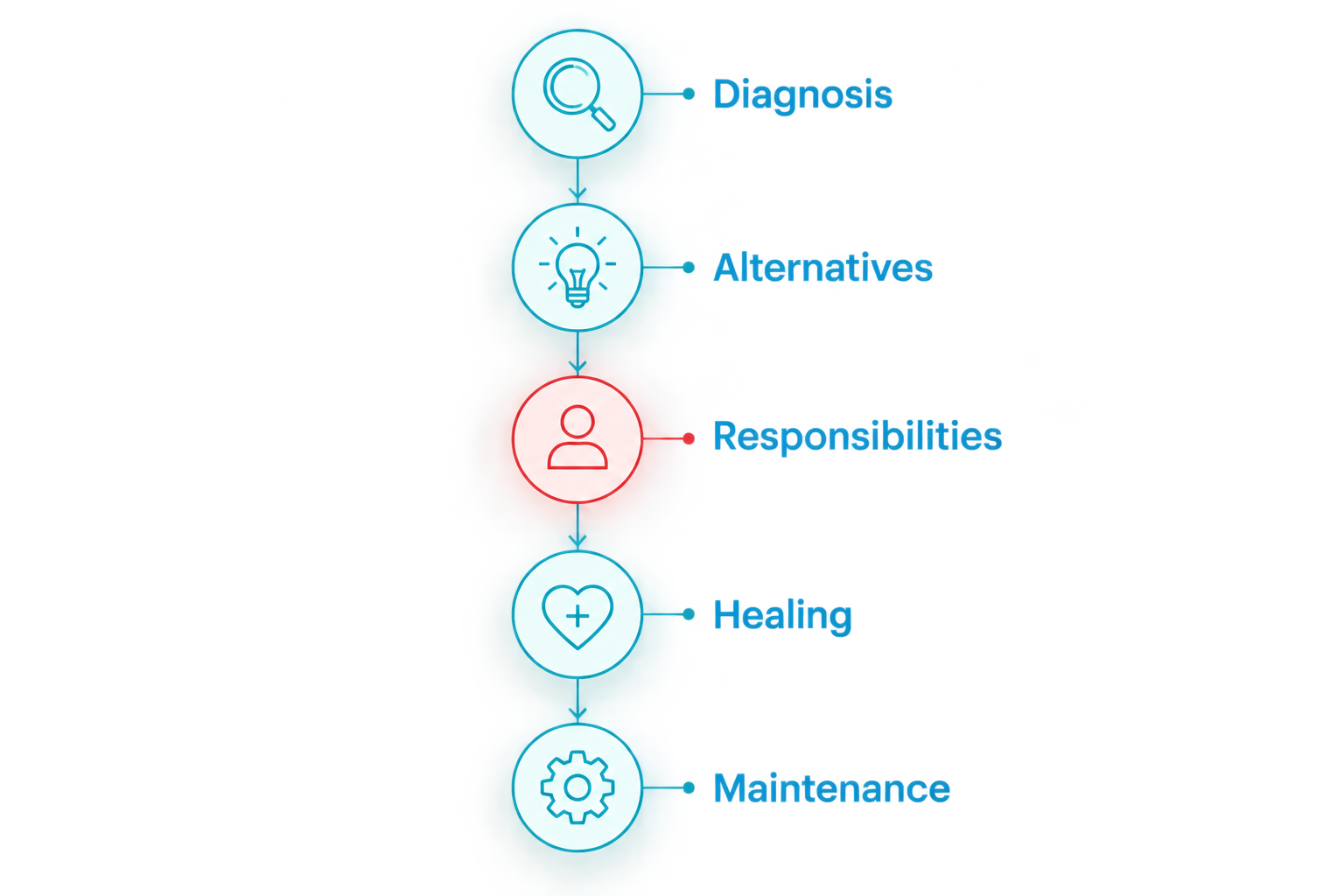
A useful consultation connects your diagnosis to the finished tooth. Keep these 5 questions on your phone or bring them on paper:
- Diagnosis: What is wrong, and can the existing tooth reasonably be saved?
- Alternatives: What other treatments fit my situation, and what are their trade-offs?
- Responsibilities: Who handles surgery, the replacement tooth, and problems between visits?
- Healing: What findings determine when treatment moves to the next stage?
- Maintenance: How will I clean the restoration, and what follow-up will it need?
These questions are a conversation guide, not a substitute for examination. Ask the clinician to connect each answer to your own findings rather than giving only a general explanation of implants.
Prepare 3 information groups before the appointment: your medication and medical-history list, available dental records, and your treatment goals. Include what bothers you most—chewing, appearance, discomfort, or a loose replacement—so the discussion addresses your priorities.
Do not stop prescribed medication on your own before dental treatment. Tell the clinician about it and ask whether coordination with your prescribing professional is needed.
Understand what is being replaced
A typical single-tooth implant restoration has 3 main components: the implant in the jaw, an abutment connecting the parts, and the crown you see above the gum. Ask which components are included in the proposed treatment and who is responsible for each.
That distinction helps you understand a staged plan. Implant placement and delivery of the final crown are different clinical events; ask what happens between them and whether you will have a temporary replacement.
For a 2026 treatment decision, request a written outline that separates preparatory care, placement, healing reviews, and the final restoration. The outline should also explain what would change if the clinician finds that additional treatment is necessary.
Compare alternatives without rushing into extraction
An implant is one replacement option, not the automatic answer to every damaged tooth. First establish whether the tooth is restorable and what keeping it would involve.
| Treatment | Best for | Main advantage | Main limitation |
|---|---|---|---|
| Tooth-preserving treatment | A tooth the clinician considers restorable | Retains the natural tooth | Suitability depends on the damage and supporting tissues |
| Implant-supported crown | A missing tooth with an appropriate implant site | Replaces the tooth without relying on adjacent teeth for support | Requires surgery and ongoing maintenance |
| Tooth-supported bridge | Selected gaps with suitable supporting teeth | Provides a fixed replacement without implant placement | Involves supporting teeth and needs careful cleaning |
| Removable partial denture | Selected patients replacing missing teeth with a removable appliance | Can replace multiple teeth in one appliance | Must be removed and cleaned; comfort and stability require assessment |
Best for you means clinically appropriate and maintainable—not simply fixed or removable. Ask the dentist to explain why the recommended approach fits better than the reasonable alternatives.
Which dental implant pathway should you choose?
Start with an examination and a discussion of your overall oral health. Choose surgical evaluation when anatomy or extraction questions remain unresolved, and seek restoration-focused planning when extensive tooth replacement makes the final design the central issue.
For Palm Beach Gardens residents considering care outside the city, the Lake Worth practice described above is a relevant starting point for general and implant dentistry. Confirm the location, proposed treatment team, and follow-up arrangements before committing.
Your 2026 decision should follow a diagnosis, not a deadline. Choose the clinician who explains both the recommended treatment and the reasons an alternative was not selected.
Discuss your implant care needs
Ask about an evaluation, treatment responsibilities, and follow-up at the Lake Worth practice.
FAQ
Who’s the best dental implant dentist in Palm Beach Gardens, FL?
The best fit is a dentist whose evaluation, treatment experience, and care plan match your clinical needs. This guide does not establish a citywide winner; use the consultation criteria to compare your options.
Is Dental Arts of Atlantis located in Palm Beach Gardens?
Dental Arts of Atlantis is located in Lake Worth, Florida. It offers general, cosmetic, pediatric, and implant dentistry to families in the Palm Beach County area.
Do I need an oral surgeon for a dental implant?
Not every implant case requires referral to an oral surgeon. Ask your evaluating dentist who should perform surgery for your findings and who will provide the final restoration.
Can I get an implant if I have bone loss?
Bone loss requires an individualized assessment before an implant recommendation. Your clinician evaluates the available support and explains whether additional treatment or another replacement approach is appropriate.
Will I get my permanent implant tooth on the day of surgery?
Do not assume that implant placement includes a permanent tooth that day. Ask whether any immediate replacement would be temporary and what healing criteria apply before the final restoration.
What should I bring to an implant consultation?
Bring your medication list, relevant medical history, available dental records, and your main questions. Include previous implant or graft information if you have it, and let the clinician determine whether additional records are needed.
Is a dental implant better than saving my tooth?
An implant is not automatically better than a natural tooth that can be predictably restored. Ask for the diagnosis, the tooth’s outlook, and the trade-offs of preservation and replacement before deciding on extraction.
One last thing
Ask how you will clean the finished tooth before agreeing to its design. Have the clinician describe the cleaning access and demonstrate the recommended technique when appropriate. A replacement that looks attractive still needs a maintenance routine you can manage.
Related guides
- How to prepare for your first dental implant consultation
- How to use 3D imaging to plan a dental implant
- How to care for dental implants after surgery