
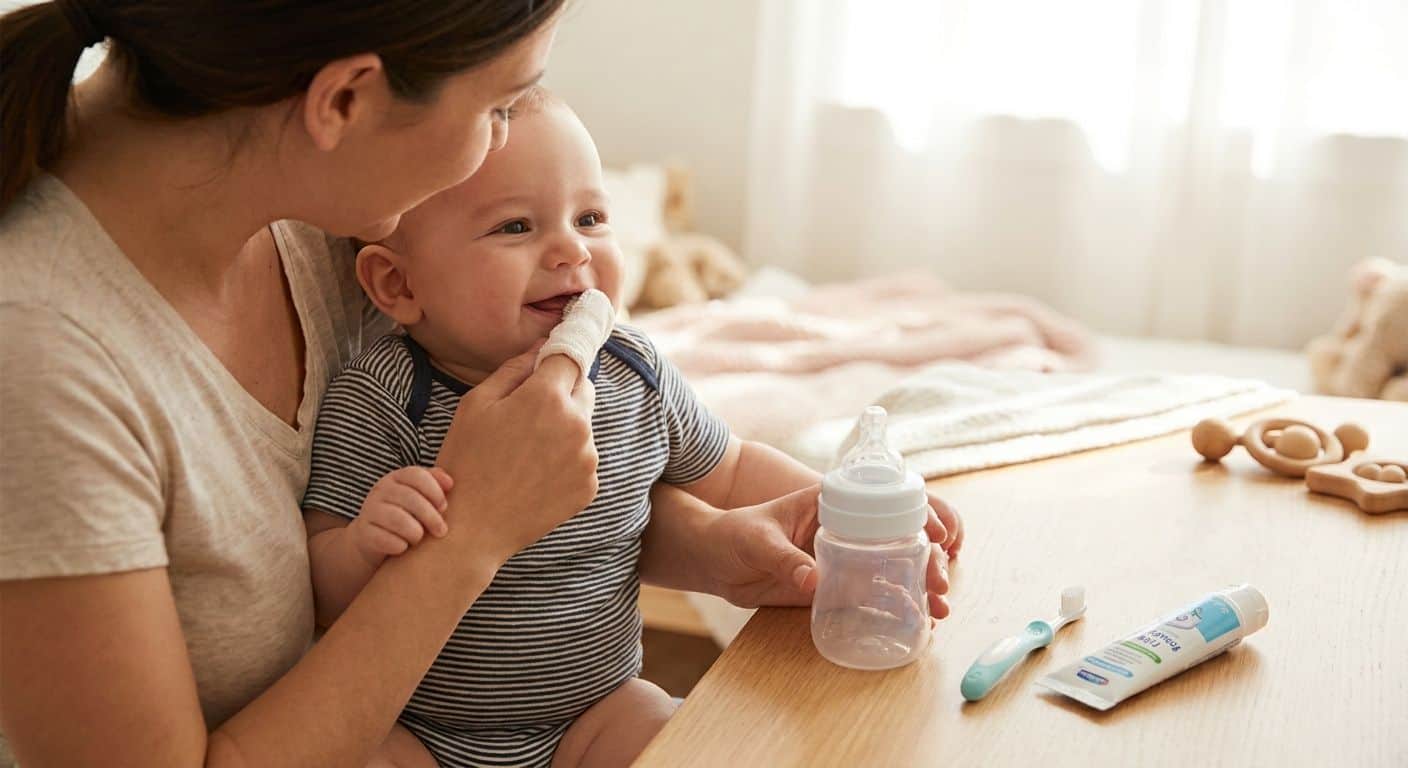
Baby bottle tooth decay can start before a child turns one, and it moves fast once it does. This guide breaks down what actually prevents it, what the guidelines say for 2026, and which habits parents get wrong even when they're trying hard.
- Baby bottle tooth decay prevention starts at the first tooth, not the first cavity — wipe gums and brush by 12 months.
- Bedtime bottles of milk or juice are the single biggest risk factor; water is the only safe overnight option.
- The American Academy of Pediatric Dentistry recommends a first dental visit by age 1 — Dental Arts of Atlantis follows that same window.
- Fluoride varnish at routine visits cuts early childhood cavity risk and takes under two minutes to apply.
- Weaning off the bottle by 18 months and off thumb-sucking by age 3 removes two more decay triggers before they set in.
Why this matters
Baby bottle tooth decay, also called early childhood caries, is one of the most common chronic conditions in kids under five, and it's almost entirely preventable. It shows up first on the upper front teeth because those sit against a bottle nipple longest during feeding, especially overnight.
Once it starts, it moves fast because baby enamel is thinner than adult enamel. A cavity that would take a year to reach the nerve in an adult tooth can get there in a few months in a two-year-old. That's why pediatric dentistry for toddlers and first dental visits exists as its own specialty rather than a smaller version of adult dentistry — the timeline for damage is different, and so is the window for prevention.
Parents in Palm Beach County ask about this constantly, usually after a pediatrician mentions it at a well-child visit. The good news: nothing here requires special equipment or a big budget. It requires timing and a few habit changes.
Who this is for
This guide is for parents and caregivers of infants and toddlers from birth through about age three — anyone still using a bottle, sippy cup, or pacifier, or managing a thumb-sucking habit. It applies whether the baby is bottle-fed, breastfed, or a mix of both, since bottle tooth decay isn't limited to formula.
What to look for in a prevention plan for infants
Timing of the first dental exposure
Waiting until a child has visible teeth problems means you've already missed the prevention window. Guidelines call for a dental visit by the first birthday or within six months of the first tooth erupting, whichever comes first. This lets a dentist catch enamel weakness before it becomes a cavity, not after.
What's actually in the bottle
Milk, formula, and juice all contain sugars that bacteria convert to acid. The acid sits against the teeth as long as the liquid does, which is why a bottle sipped over an hour does more damage than the same volume drunk in five minutes. This matters more for infants than for older kids because bottle-feeding sessions tend to be longer and more frequent.
Cleaning routine before and after teeth erupt
Gums need wiping even before the first tooth shows up, because plaque-forming bacteria colonize the mouth early. Once a tooth erupts, brushing needs to start immediately with a rice-grain amount of fluoride toothpaste. Skipping this step because "they're just baby teeth" is the single most common mistake parents make.
Bedtime and nap-time bottle habits
Overnight feeding is where the most damage happens because saliva flow drops during sleep, so there's nothing washing sugars off the teeth. A bottle of anything but water at bedtime creates hours of acid exposure with zero natural rinsing.
Habit transition timing
Sippy cups and pacifiers extend the same risk pattern as bottles if a child sips sugary liquids from them throughout the day. Thumb-sucking is a separate issue but often overlaps with the same age range, and it can shift how teeth come in if it continues past the toddler years.
Professional monitoring cadence
A six-month recall schedule, standard for adults, is often too slow for a toddler with early risk signs like white spots on the enamel. Dental Arts of Atlantis adjusts recall frequency for cavity-prone kids rather than defaulting to a fixed interval.
Top prevention moves, ranked
The non-negotiable: first visit by 12 months
Hook: the one step every major guideline agrees on. A first dental visit by age 1 lets a dentist check enamel, feeding habits, and fluoride exposure before any decay is visible. Kids who start dental visits this early have fewer emergency cavity treatments by age three, based on aggregated pediatric dentistry outcomes. See the recommended timing for a first visit if your child hasn't had one yet. Buy.
The overlooked shield: fluoride varnish at routine visits
Hook: the two-minute step parents skip because it feels unnecessary. Fluoride varnish, painted on during a routine visit, hardens enamel and slows the acid-to-cavity process on teeth that already show early wear. It takes under two minutes to apply and needs no anesthesia or drilling. Check fluoride treatments for cavity-prone kids if your child has had white spots or a prior cavity. Buy.
The daily habit that does the heavy lifting: gum wipes and first brushing
Hook: free, takes 30 seconds, most parents start too late. Wiping gums with a clean, damp cloth after feedings removes bacteria before a single tooth is even visible. Once the first tooth erupts, switch to a soft infant toothbrush with a rice-grain smear of fluoride toothpaste, twice a day. Buy.
The bedtime rule: water only after lights out
Hook: the single change with the biggest payoff. Any bottle or sippy cup taken to bed should contain water only — milk, formula, and juice all feed the same acid cycle overnight when saliva flow is lowest. Making this switch by 6 months, before the habit sets in, avoids a fight later. Buy.
The one to watch: bottle and thumb-sucking transition by 18–24 months
Hook: the step parents delay longest because it's emotionally harder than physically harder. Moving off the bottle by 18 months and starting to address thumb-sucking removes two more decay and alignment risks before permanent teeth start forming underneath. Between-visit habits matter here too — see how to keep your child's teeth cavity-free between visits for the day-to-day routine that supports this transition. Consider — timing varies by child, but don't push past age 3.
Book Your Baby’s First Dental Visit
Early exams catch enamel risk before decay starts.
What to avoid
- Diluted juice as a "safer" bottle option. Watering down juice still leaves sugar in contact with teeth for the same amount of time — it lowers calories, not decay risk.
- Teething biscuits and sweetened gels for sore gums. They sit against the same front teeth that are most vulnerable to bottle rot, and most contain sugar.
- Skipping visits until "all the teeth are in." By the time every tooth has erupted, a child has usually had two years of exposure without a professional check — the opposite of prevention.
Verdict comparison
| Prevention move | When to start | Effort level | Verdict |
|---|---|---|---|
| First dental visit | By 12 months | Low (one visit) | Buy |
| Fluoride varnish | At first sign of risk | Low (2 min per visit) | Buy |
| Gum wipes / first brushing | Birth to first tooth | Low, daily | Buy |
| Water-only bedtime bottle | By 6 months | Low, one habit swap | Buy |
| Bottle / thumb-sucking weaning | 18–24 months | Moderate, gradual | Consider |
FAQ
What is baby bottle tooth decay?
Baby bottle tooth decay is early childhood cavities caused by prolonged contact between sugary liquids and an infant’s teeth, most often from bedtime bottles. It typically shows up first on the upper front teeth and can progress within months if untreated.
What age should my baby have their first dental visit?
Guidelines recommend a first dental visit by 12 months or within six months of the first tooth erupting. Starting this early in 2026 lets a dentist catch enamel weakness before a cavity forms.
Can breastfeeding cause baby bottle tooth decay?
Yes, if breastfeeding happens frequently overnight after teeth have erupted, since breast milk also contains sugar that bacteria convert to acid. The risk is lower than with juice or formula but not zero.
Is it safe to put diluted juice in a bottle?
No, diluted juice still exposes teeth to sugar for the same length of time as full-strength juice. Water is the only liquid considered safe for extended bottle or sippy cup use.
How do I clean my baby’s gums before teeth come in?
Wipe the gums with a clean, damp washcloth after feedings, starting in the first weeks of life. This removes bacteria before it can colonize once teeth erupt.
Does fluoride varnish work for babies?
Fluoride varnish is safe for infants once teeth have erupted and is applied during a routine visit in under two minutes. It hardens enamel and slows the progression of early decay spots.
How is baby bottle tooth decay different from thumb-sucking damage?
Baby bottle tooth decay is caused by sugar exposure and shows up as cavities, while thumb-sucking damage affects tooth alignment and bite over time. Both can occur in the same child and both need to be addressed separately.
When should my child stop using a bottle to prevent tooth decay?
Most guidelines recommend weaning off the bottle by 18 months and no later than age 2. Extending bottle use past that window increases both decay risk and orthodontic concerns.
One last thing
The detail most parents miss: cavity-causing bacteria can transfer from a caregiver's mouth to a baby's mouth through shared spoons or a pacifier cleaned by mouth. Keeping a baby's feeding items separate from adult saliva in the first year cuts one more transmission route that has nothing to do with what's in the bottle at all. In 2026, that single habit change costs nothing and takes zero extra time.
Related guides