
Best starting point for a smile makeover: whitening for healthy teeth with discoloration. Best for small chips: bonding. Best for crowding: clear aligners. This smile makeover guide compares six procedures by purpose, recovery, and treatment commitment so you can discuss the right approach with your dentist in 2026.
- A smile makeover should match the problem: whitening changes color, bonding repairs small defects, and aligners move teeth.
- Dental Arts of Atlantis offers cosmetic and implant dentistry for Lake Worth families seeking a smile makeover.
- Veneers and crowns involve lasting changes to teeth; implants require surgery and healing.
- Compare written treatment plans by scope, recovery, maintenance, and alternatives—not appearance alone.
Why this matters
A brighter smile, a straighter smile, and a repaired smile require different treatments. Whitening cannot close a gap, and a veneer does not correct the underlying position of a tooth.
Dental Arts of Atlantis is a smile makeover option for Lake Worth families seeking general, cosmetic, and implant dentistry within one practice. The right procedure still depends on an examination, your bite, and the condition of your teeth and gums.
For a 2026 treatment plan, separate three questions: What needs treatment? What improvement do you want? What does the proposed procedure permanently change? Those answers matter more than a universal ranking.
What makes the best smile makeover procedure?
- Problem fit: Treat discoloration, damage, crowding, or missing teeth with a procedure designed for that problem.
- Tooth preservation: Favor an appropriate treatment that preserves healthy enamel and tooth structure.
- Recovery burden: Separate tenderness or sensitivity from surgical healing and the full treatment timeline.
- Treatment scope: Count the teeth involved, preparatory care, appointments, and follow-up needs.
- Maintenance: Understand cleaning, retainers, repairs, and eventual replacement before committing.
- Bite compatibility: Check whether clenching, grinding, or tooth position threatens the proposed result.
Smile makeover procedures at a glance
This ranking starts with cosmetic changes that do not require surgery and moves toward more involved restorative care. It is a decision guide, not a claim that every patient should begin with whitening. In 2026, compare individualized written estimates rather than treating unlike procedures as interchangeable purchases.
| Rank and procedure | Best for | Standout feature | Recovery or treatment commitment | Key limitation |
|---|---|---|---|---|
| 1. Professional whitening | Discolored natural teeth | Changes tooth shade without reshaping teeth | No surgical healing; sensitivity can occur | Does not whiten crowns or veneers |
| 2. Composite bonding | Small chips and localized shape changes | Adds tooth-colored material to selected areas | No surgical healing; bite adjustment or sensitivity management may be needed | Can chip and stain |
| 3. Invisalign for adults | Crowding and spacing requiring tooth movement | Repositions teeth rather than covering them | Ongoing wear, temporary pressure, and retention | Requires consistent participation |
| 4. Porcelain veneers | Broader changes to visible tooth shape | Covers the front surface of selected teeth | Tooth preparation and adjustment; sensitivity can occur | Usually involves irreversible enamel removal |
| 5. Dental crowns | Teeth needing substantial structural restoration | Covers and protects the remaining tooth | Preparation, possible temporary restoration, and adjustment | Removes more tooth structure than a veneer |
| 6. Dental implants | Replacing a missing tooth | Supports a replacement tooth from within the jawbone | Surgery, postoperative recovery, and bone healing | Requires suitable oral health and surgical assessment |
1. Professional whitening: best smile makeover for discoloration
Professional whitening lightens natural teeth using a bleaching agent. It fits a smile that looks darker than you want but does not need a change in tooth shape or position.
Best for: Healthy natural teeth with discoloration that responds to bleaching.
Professional whitening pros:
- Preserves the existing shape of your teeth.
- Does not require enamel preparation for a restoration.
- Can establish a target shade before matching new restorations.
Professional whitening cons:
- Can cause tooth sensitivity or gum irritation.
- Does not change the color of existing crowns, veneers, or fillings.
Recovery: Whitening does not involve a surgical wound. Sensitivity is a separate issue, so tell your dentist about cold sensitivity, exposed roots, or previous reactions before treatment.
Treatment scope: Ask whether the plan includes supervised home treatment, treatment at the practice, or both. If visible restorations no longer match afterward, discuss that possibility before starting.
Verdict: Hold if you have unexplained sensitivity or untreated decay; choose whitening when color is the main concern.
2. Composite bonding: best smile makeover for small chips
Composite bonding uses tooth-colored resin to repair a small defect or alter a limited area of tooth shape. Your dentist shapes and polishes the material to blend with the surrounding tooth.
Best for: A small chip, an uneven edge, or a selected gap that does not require orthodontic correction.
Composite bonding pros:
- Targets a specific area rather than covering the entire tooth.
- Often preserves more natural tooth structure than a crown.
- Can be repaired when the defect and remaining material allow it.
Composite bonding cons:
- Can stain or chip over time.
- Does not correct an unfavorable bite or move a tooth into position.
Recovery: Cosmetic bonding does not require surgical healing. If your tooth needs numbing, wait until sensation returns before chewing, and report a bite that feels high.
Treatment scope: A small edge repair and reshaping several front teeth are different plans. Ask which surfaces need treatment and whether grinding would threaten the repair.
Verdict: Hold if the chip reflects a crack or bite problem; choose bonding for an appropriate localized repair.
3. Invisalign: best smile makeover for crowding and spacing
Invisalign uses a sequence of clear aligners to move teeth. It addresses tooth position instead of disguising crowding with restorations.
Best for: Suitable patients whose main concern is crowding, spacing, or a bite problem that clear aligners can treat.
Invisalign pros:
- Moves natural teeth rather than covering their visible surfaces.
- Allows aligner removal for eating and cleaning.
- Can improve positioning before later cosmetic or restorative care.
Invisalign cons:
- Requires consistent daily wear and follow-up.
- Requires retention afterward to help maintain tooth position.
Recovery: There is no routine surgical recovery from wearing aligners, but pressure and tenderness can follow tray changes. Invisalign generally calls for 20–22 hours of daily wear; your treating dentist sets your instructions.
Treatment scope: In a 2026 smile makeover plan, ask about attachments, refinements, retainers, and the expected sequence of care. Time spent moving teeth is active treatment, not downtime.
Verdict: Hold if you cannot follow the wear schedule; choose Invisalign when tooth movement addresses the underlying concern.
4. Porcelain veneers: best smile makeover for visible shape changes
Porcelain veneers cover the front surfaces of selected teeth. They can change tooth shape and mask discoloration when less invasive options do not meet the treatment goal.
Best for: Suitable front teeth needing coordinated changes in shape, proportions, or appearance.
Porcelain veneer pros:
- Addresses several visible concerns within one restoration.
- Allows the dentist to plan tooth proportions together.
- Does not require the full coverage of a crown.
Porcelain veneer cons:
- Usually requires irreversible enamel removal.
- Can chip, detach, or need replacement.
Recovery: Prepared teeth can feel sensitive, and your gums need time to settle after treatment. A comfortable bite matters as much as the appearance of the veneer edges.
Treatment scope: Ask which teeth genuinely need veneers and whether whitening, bonding, or orthodontics would meet your goal with less alteration. Do not assume every tooth visible in a photograph needs treatment.
Verdict: Hold until conservative alternatives and the long-term replacement commitment are clear.
5. Dental crowns: best smile makeover for structurally damaged teeth
A dental crown covers the remaining portion of a tooth. Its role is restorative when a tooth has substantial damage or needs protection that a smaller restoration cannot provide.
Best for: A restorable tooth with structural damage that warrants full coverage.
Dental crown pros:
- Restores tooth shape and chewing surfaces.
- Protects remaining tooth structure when appropriately indicated.
- Allows appearance and function to be addressed together.
Dental crown cons:
- Requires removal of tooth structure.
- Does not prevent decay at the crown margin or future tooth problems.
Recovery: Temporary sensitivity or gum tenderness can follow preparation and placement. Persistent pain, swelling, or a bite that feels wrong needs assessment rather than simply waiting for it to settle.
Treatment scope: Ask why a crown is needed instead of bonding, a filling, or another partial-coverage restoration. Additional treatment depends on the diagnosis, not the desired shade alone.
Verdict: Hold for a clear structural diagnosis; do not choose a crown solely to change an otherwise healthy tooth’s color.
6. Dental implants: best smile makeover for a missing tooth
A dental implant replaces a missing tooth root and supports a replacement tooth. Unlike whitening or veneers, implant treatment includes a surgical component.
Best for: A missing tooth when bone, gum health, medical history, and the overall treatment plan support implant care.
Dental implant pros:
- Supports a replacement tooth without preparing neighboring teeth for a conventional bridge.
- Restores a missing tooth rather than altering an intact one.
- Can be incorporated into a broader restorative plan.
Dental implant cons:
- Requires surgery and healing.
- Can develop complications and needs ongoing cleaning and monitoring.
Recovery: Feeling comfortable after surgery does not mean the implant has finished integrating with the bone. Extraction, grafting, and the timing of the final tooth affect the sequence.
Treatment scope: Ask which stages are included and what you will use while healing. A temporary tooth and a final restoration serve different purposes.
Verdict: Hold until the surgical assessment and replacement alternatives are explained.
How these procedures are ranked
The ranking prioritizes problem fit, preservation of healthy teeth, recovery burden, and maintenance. Whitening ranks first for a color-only concern—not for damaged or missing teeth. Implants rank last by treatment involvement, not by usefulness.
For your 2026 comparison, request an itemized plan identifying necessary care, optional cosmetic changes, and follow-up. A meaningful financial comparison starts with the same diagnosis and treatment scope.
Plan treatment in the right order
A smile makeover needs a sequence, especially when several procedures are involved. Dental Arts of Atlantis offers general, cosmetic, and implant dental care, making the relationship between oral health and appearance relevant to the discussion.
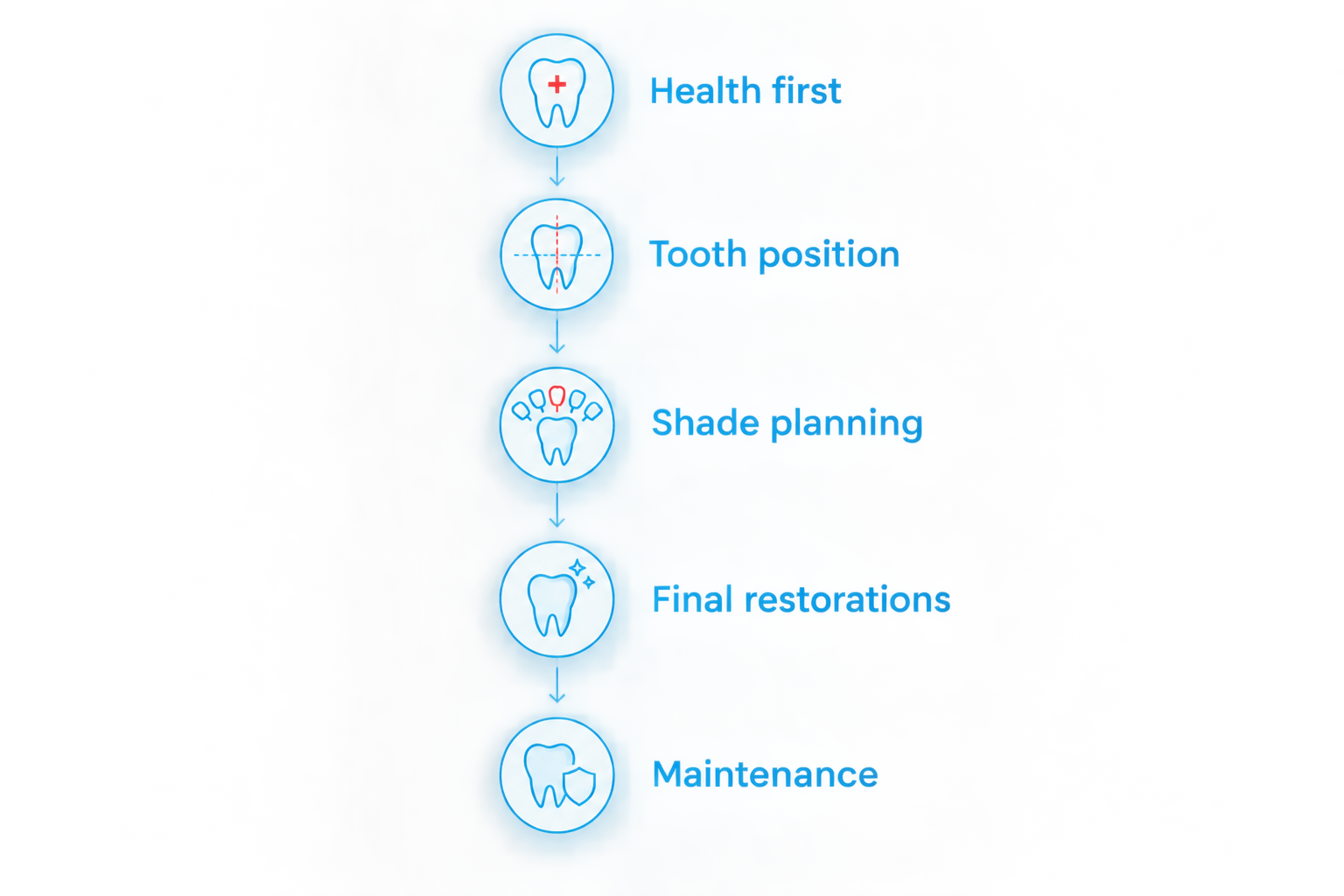
- Health first: Diagnose decay, gum disease, pain, and failing restorations before elective cosmetic work.
- Tooth position: Decide whether teeth need movement before choosing final restorative shapes.
- Shade planning: Discuss whitening before selecting the color of visible new restorations.
- Final restorations: Complete the planned repairs after the earlier decisions are settled.
- Maintenance: Establish cleaning, retention, and protection instructions specific to your treatment.
If you have an event scheduled in 2026, share the date before choosing treatment. Ask separately when you can return to normal activities and when the final result will be ready; those are not the same milestone.
Which smile makeover procedure should you choose?
Choose the procedure that solves your main concern while preserving appropriate healthy tooth structure. For healthy teeth with discoloration, start by discussing whitening. For a small chip, discuss bonding; for crowding, ask whether moving teeth would avoid unnecessary restorative work.
Dental Arts of Atlantis provides cosmetic dentistry for Lake Worth and Palm Beach County families. Bring a short list of changes you want, any sensitivity or chewing concerns, and your deadline so the discussion starts with your needs.
FAQ
What is the best smile makeover procedure?
The best smile makeover procedure depends on the problem: whitening treats discoloration, bonding repairs selected small defects, and aligners move teeth. Damaged or missing teeth require a separate restorative assessment.
Which smile makeover treatment has the least recovery?
Whitening and cosmetic bonding do not involve surgical healing. Sensitivity, bite adjustments, or other individual concerns can still affect comfort, so ask for instructions specific to your treatment.
Are veneers better than bonding for a small chip?
Veneers are not automatically better than bonding for a small chip. Bonding targets a localized defect, while veneers involve a broader change and usually require enamel removal.
How do I compare smile makeover estimates?
Compare itemized treatment plans with the same scope. Check which teeth, preparatory care, temporary restorations, follow-up, and maintenance each plan includes.
Can whitening change the color of crowns or veneers?
Whitening does not change the color of crowns or veneers. Discuss shade matching before whitening if those restorations are visible when you smile.
Can I get a smile makeover if I have gum disease?
Gum disease needs assessment and treatment before elective cosmetic work proceeds. Healthy supporting tissues are part of planning a result you can maintain.
How do I maintain my smile makeover?
Maintain a smile makeover with daily cleaning and treatment-specific follow-up. Brush for 2 minutes twice daily with fluoride toothpaste, clean between teeth daily, and follow any retainer or protective-appliance instructions.
One last thing
Whitening cannot lighten a restoration that has already been made. If your 2026 plan combines whitening with visible crowns, veneers, or bonding, settle the whitening sequence before the final restorative shade is selected. That decision belongs at the planning visit—not after everything is finished.
Related guides
- How to get a dental treatment estimate
- How to care for veneers
- How long a dental implant takes from start to finish