
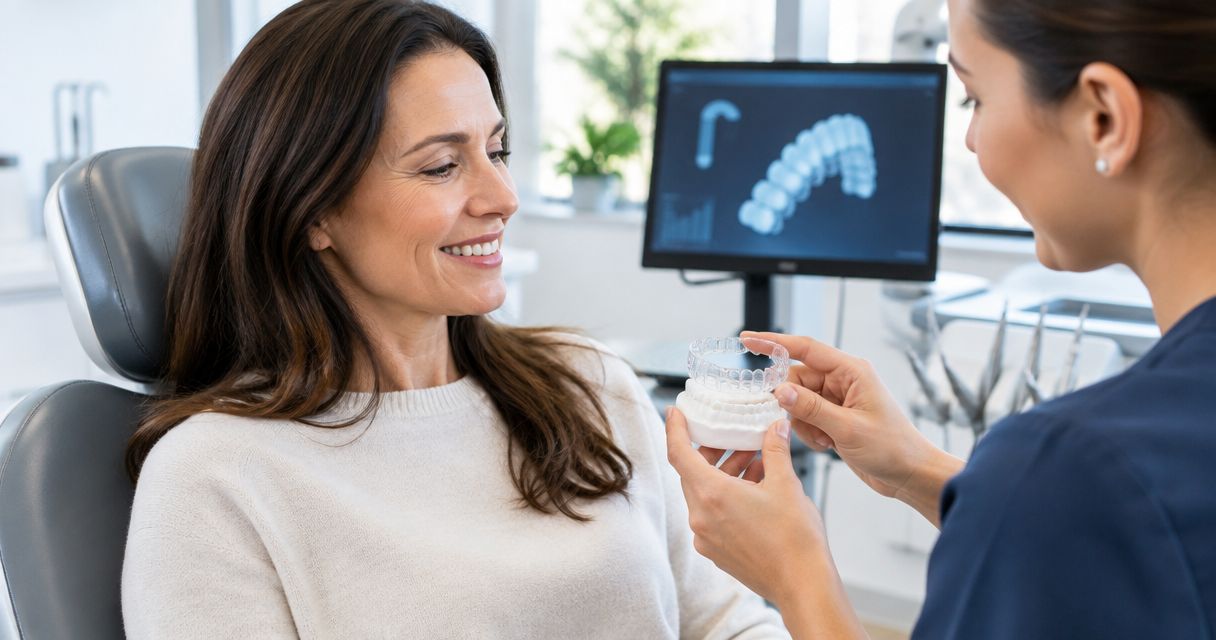
Yes, adults can get orthodontic treatment at any age when their teeth, gums, and supporting bone are healthy enough for planned tooth movement. There is no universal upper age limit, but active gum disease, untreated decay, and certain dental or medical conditions need attention before treatment begins.
- Can adults still get orthodontic treatment at any age? Yes—oral health matters more than your birthday.
- Adult braces and clear aligners move teeth; neither replaces treatment for active gum disease.
- Dental Arts of Atlantis offers Invisalign; an examination determines whether it suits your adult orthodontic needs.
- Plan for retainers after treatment because teeth can shift again throughout adulthood.
Why this matters
Waiting until adulthood does not mean you have missed your opportunity to straighten your teeth. The useful question in 2026 is not whether you are too old; it is whether treatment can safely improve your particular alignment or bite.
Dental Arts of Atlantis offers Invisalign alongside general and family dental care in Lake Worth. For an overview of the process, read Invisalign for adults: how it works and what to expect. An examination comes before choosing an appliance.
Can adults still get orthodontic treatment at any age?
Yes. Adult orthodontic eligibility depends on oral health and treatment goals, not a birthday cutoff. The American Association of Orthodontists identifies healthy teeth and gums as central considerations for adult treatment.
Teeth move through changes in the bone surrounding their roots. That process remains possible in adulthood, although adult jaws no longer have the growth potential used in some childhood treatments.
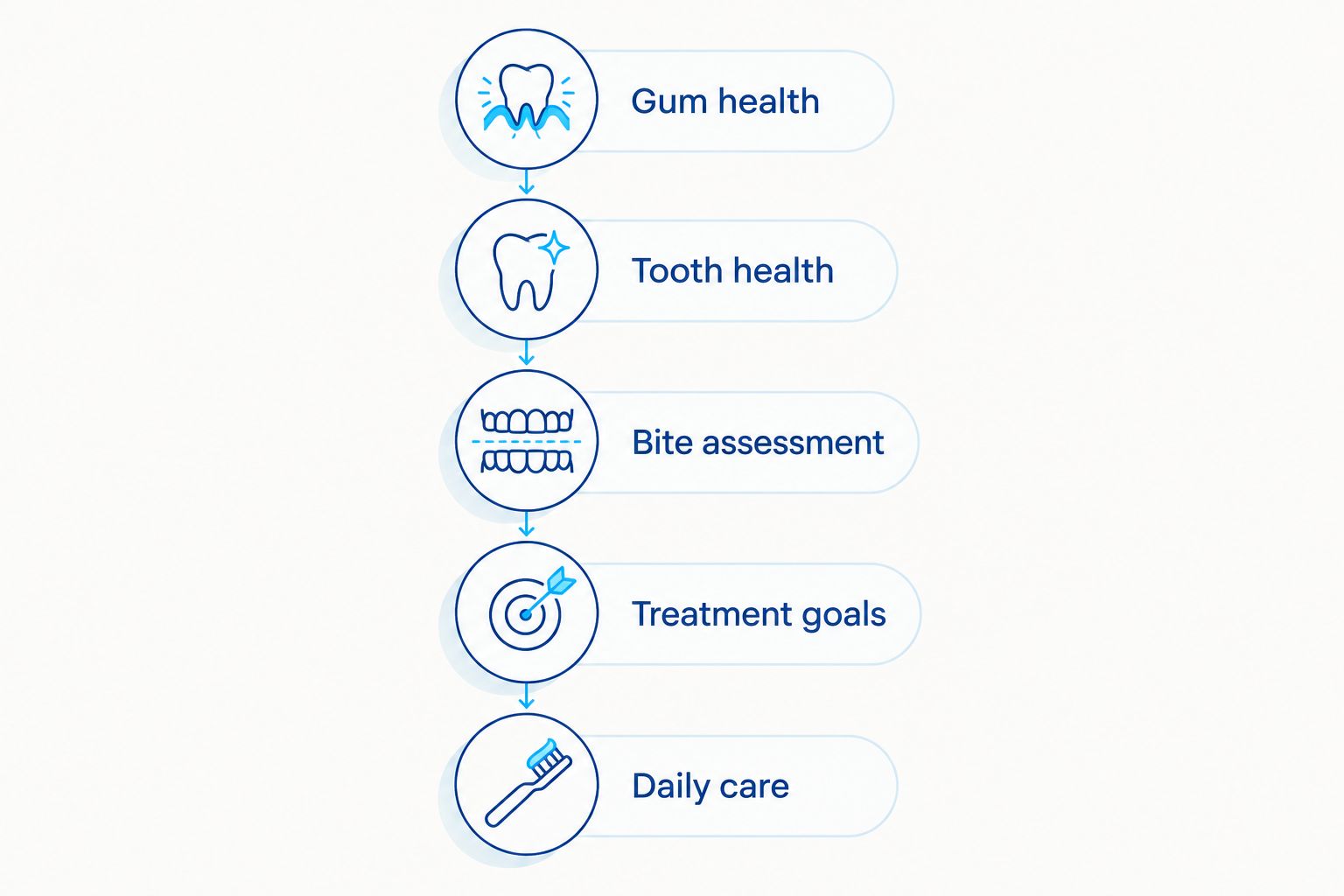
Your evaluation should establish the following before treatment starts:
- Gum health: Check for inflammation, gum pockets, recession, and loss of supporting bone.
- Tooth health: Identify cavities, damaged teeth, root problems, and restorations needing attention.
- Bite assessment: Evaluate how the upper and lower teeth meet, not just whether front teeth look straight.
- Treatment goals: Separate achievable tooth movement from changes requiring restorative care or jaw surgery.
- Daily care: Confirm that you can clean around the appliance and follow the prescribed treatment routine.
A photograph of your smile cannot answer all these questions. Your clinician needs an examination and appropriate diagnostic records to determine which movements are safe.
Clear aligners: best for adults who can follow a removable-appliance routine
Clear aligners use a sequence of removable trays to apply planned forces to teeth. Invisalign is one clear-aligner system, and suitability depends on the movements your case requires.
The practical advantage is removability. You take aligners out for meals and oral hygiene, which gives you direct access to your teeth when brushing and cleaning between them.
The limitation is responsibility. Invisalign generally requires 20–22 hours of wear per day; follow your clinician's exact instructions. Frequent removal or leaving trays out for extended periods disrupts the prescribed routine.
Aligners also do not mean treatment without attachments or other aids. Tooth-colored attachments and elastics are used when needed, so ask what your own plan involves before deciding based on appearance alone.
Fixed braces: best for adults who need a fixed-appliance approach
Fixed braces use brackets and wires to guide tooth movement. Because the appliance stays attached, treatment does not depend on remembering to put trays back in after meals.
That does not make braces maintenance-free. You still need careful cleaning, attendance at adjustment visits, and any prescribed elastic wear.
The trade-off is cleaning access and food precautions. Brackets and wires create additional surfaces where plaque collects, and hard or sticky foods can damage the appliance. The appropriate choice depends on the movement required and the routine you can maintain—not age alone.
How do clear aligners and fixed braces compare?
For adults comparing orthodontic options in 2026, the most useful differences are daily responsibilities and clinical suitability. Neither appliance is the automatic winner for every bite.
| Consideration | Clear aligners | Fixed braces |
|---|---|---|
| Best for | Suitable cases where you can maintain prescribed tray wear | Cases benefiting from a fixed-appliance approach |
| Main advantage | Removable for meals and cleaning | Stay attached rather than relying on tray replacement |
| Main limitation | Require consistent wear and careful tray handling | Require cleaning around brackets and wires |
| Eating routine | Remove trays before eating | Follow appliance-specific food precautions |
| Appearance | Clear trays; attachments can remain visible | Visible brackets and wires |
| Clinical limit | Not appropriate for every planned movement | Not a substitute for gum treatment or necessary jaw surgery |
Ask your clinician to explain why a recommended appliance fits your bite. A preference for something less noticeable is reasonable, but it should not replace a discussion of safety and expected results.
Why adult orthodontic plans vary
Adults bring different dental histories to treatment. These factors explain why the plan for a coworker or family member is not a reliable template for yours:
- Gum and bone support: Previous periodontal damage changes how tooth movement must be planned and monitored. Active disease needs treatment before orthodontic movement.
- Bite complexity: Closing a small space differs from correcting a substantial bite discrepancy. Some adult jaw relationships require a surgical consultation rather than tooth movement alone.
- Existing dental work: Crowns, bridges, and implants affect appliance placement and treatment sequencing. A dental implant does not move like a natural tooth.
- Missing or damaged teeth: Orthodontics sometimes prepares space for later restorative treatment. The final tooth replacement should be considered before moving neighboring teeth.
- Health and medications: Medical conditions and medicines affecting bone metabolism require review. Bring an accurate medication list rather than stopping anything yourself.
- Daily habits: Tray wear, cleaning, smoking, and attendance influence whether the proposed routine is workable and how closely oral health needs monitoring.
A sound adult orthodontic plan accounts for the entire mouth, not just the teeth you see when smiling. Ask how any existing dental work changes the order of treatment.
What if you have gum disease, crowns, or implants?
A history of gum disease does not automatically exclude orthodontic treatment. However, active periodontal disease needs control first, and teeth with reduced bone support need careful assessment and ongoing monitoring.
Bleeding gums, new spaces, or teeth that feel loose deserve an examination before you pursue cosmetic straightening. Do not assume that a newly developing gap is simply a harmless alignment issue.
Crowns also do not automatically rule out treatment. Your clinician must assess the underlying tooth, restoration condition, and how any attachments or brackets would be secured.
Implants require a different approach because they are anchored to bone and cannot be orthodontically repositioned like natural teeth. If you need both alignment and an implant, discuss the sequence before the implant is placed.
Is orthodontic treatment different for older adults?
The basic principle of moving teeth is the same, but the planning context changes. Older adults often have existing restorations, missing teeth, gum recession, or medical considerations that need coordination.
Adult treatment also cannot rely on remaining jaw growth. When the main problem is the position of the jaws rather than the teeth, the clinician should explain whether orthodontics alone can meet your goals.
For an adult considering treatment in 2026, the goal should be a stable, cleanable result that respects existing dental health. A straighter smile is valuable, but moving every tooth into an idealized position is not always the appropriate objective.
Ask what will improve, what will remain unchanged, and why. That conversation is more useful than asking whether someone your age has worn braces before.
Will adult orthodontic treatment hurt?
Temporary soreness or pressure is common after braces are adjusted or a new aligner is introduced. The sensation should be discussed with your clinician, especially if it interferes with eating or does not settle as expected.
Sharp pain, swelling, a loose tooth, or an appliance cutting your mouth needs professional advice. Do not assume every new symptom is normal tooth movement, and do not change trays faster than prescribed to finish sooner.
Tell the dental team about previous dental anxiety before starting. Knowing how to report a problem and what follow-up involves helps you approach treatment with clearer expectations.
What should you do before starting treatment in 2026?
Start with a dental evaluation rather than choosing trays from appearance alone. Bring your medication list, information about previous orthodontic treatment, and details about crowns, bridges, implants, or gum treatment.
Use these questions to make the appointment productive:
- What is causing the crowding, spacing, or bite problem?
- Is my gum and bone support healthy enough for the proposed movement?
- Do I need dental treatment before straightening begins?
- Which appliance fits my case, and what are its limitations?
- What happens if the planned tooth movement does not progress as expected?
- What retention and maintenance will I need afterward?
Dental Arts of Atlantis is a local Invisalign option for adults in Lake Worth seeking care within a family dental practice. Its Invisalign offering does not mean every adult is a candidate; an examination determines whether that approach fits your teeth and bite.
How do you protect your teeth during adult treatment?
Brush with fluoride toothpaste for 2 minutes per session, 2 times per day, and clean between your teeth daily. These routine recommendations remain important whether you use clear aligners or fixed braces.
With aligners, remove the trays for cleaning and follow the instructions for cleaning the appliance itself. Avoid trapping sugary drinks against your teeth under the trays; remove aligners for drinks other than water as directed.
With braces, clean carefully around brackets and beneath wires using the aids recommended by your dental team. Keep routine dental visits during orthodontic care because adjustment appointments do not replace examinations and professional cleaning.
If hand mobility, dry mouth, or another condition makes cleaning difficult, say so before treatment starts. Your daily care plan needs to be realistic, not merely written down.
FAQ
Am I too old for braces or Invisalign?
Age alone does not make you too old for braces or Invisalign. Your teeth, gums, supporting bone, bite, and medical history determine whether treatment is appropriate.
Can I straighten my teeth if I already have crowns?
Crowns do not automatically prevent orthodontic treatment. Your clinician needs to assess the crowned teeth, restoration condition, and how the appliance would attach.
Can adults get orthodontic treatment after gum disease?
Adults with a history of gum disease need an assessment of disease stability and remaining bone support before orthodontic treatment. Active periodontal disease needs treatment first, and ongoing monitoring remains essential.
Is Invisalign better than braces for older adults?
Invisalign is not automatically better than braces for older adults. The best choice depends on the required tooth movements, oral health, cleaning needs, and ability to follow the appliance routine.
Will straightening my teeth fix my jaw pain?
Orthodontic treatment is not a guaranteed treatment for jaw pain. Jaw pain needs its own assessment rather than an assumption that straightening teeth will resolve it.
Do adults need retainers after orthodontic treatment?
Adults need retainers after orthodontic treatment to help maintain tooth positions. Follow the prescribed long-term wear schedule because teeth can shift throughout life.
Can I use an old retainer to straighten teeth that shifted?
Do not force an old retainer onto teeth if it no longer fits. A clinician should assess the movement and determine whether you need a replacement retainer or additional orthodontic treatment.
One last thing
Finish-line planning starts before the first tooth moves. Ask about retainers during your initial consultation, not only when treatment ends; maintaining the result is part of the commitment.
If adult orthodontic treatment is on your list for 2026, start by finding out whether your mouth is ready. Dental Arts of Atlantis offers Invisalign within its Lake Worth dental practice, but the next move is an individual assessment—not choosing an appliance from a photograph.
Related guides
- Can you get Invisalign with dental crowns?
- How long does Invisalign treatment take?
- How to care for your retainer after Invisalign treatment
- How to spot early signs of gum disease at home