
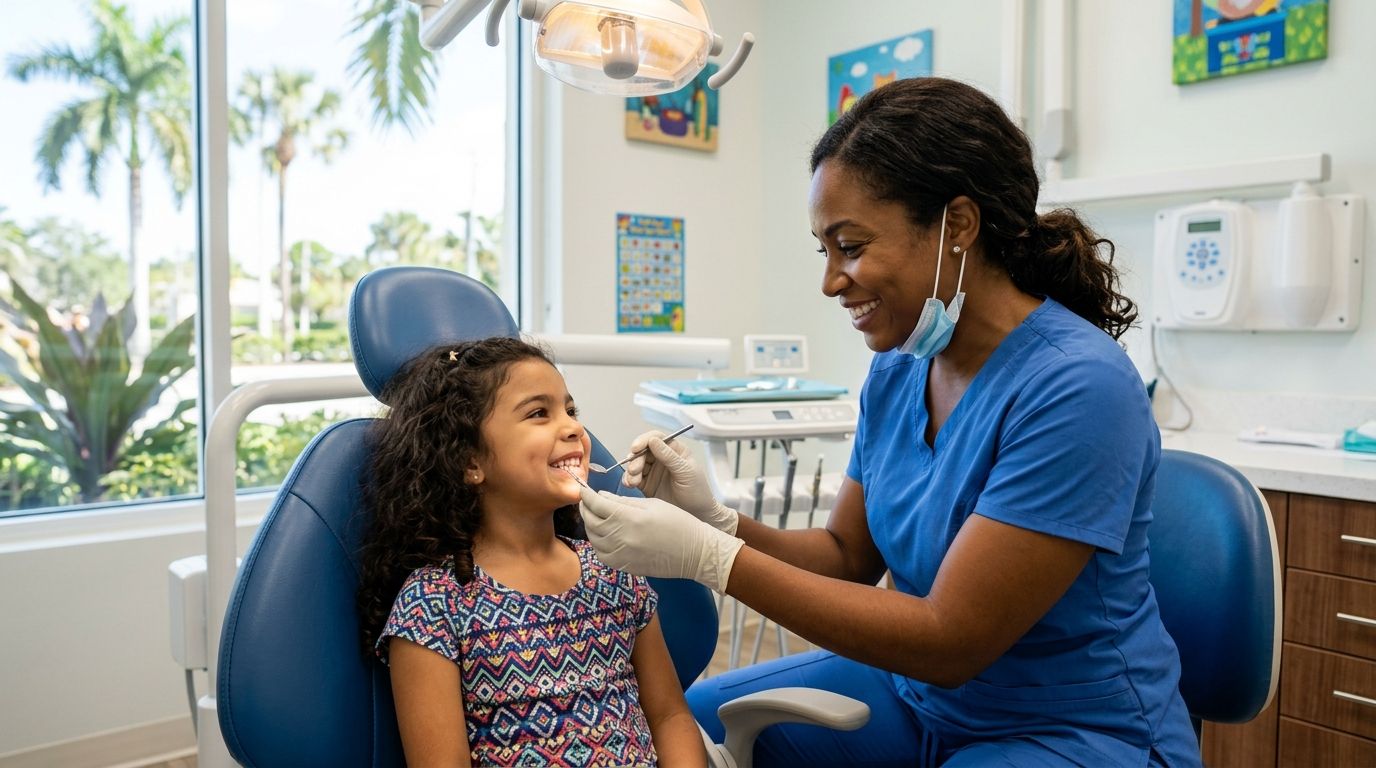
Pediatric dental care for children on Medicaid in Palm Beach County means using Florida's Medicaid managed care dental benefit to get exams, cleanings, sealants, fillings and emergency treatment for kids under 21 at no added cost when the office is in-network. The catch for Palm Beach County families isn't the coverage itself — federal EPSDT rules require it — it's finding an enrolled pediatric dentist with open appointment slots close to Lake Worth, Greenacres, Palm Beach Gardens or West Palm Beach. This guide, built from the pediatric care perspective at Dental Arts of Atlantis, a general, cosmetic, pediatric and implant dental practice in Lake Worth, walks through exactly how to confirm eligibility, find a network provider, and get a first visit booked before a toothache forces the issue.
- Florida Medicaid covers pediatric dental exams, cleanings, sealants and emergency care for kids under 21 through managed care dental plans in 2026.
- Finding a pediatric dentist on Medicaid in Palm Beach County requires checking your specific plan’s provider directory, not a general Google search.
- The American Academy of Pediatric Dentistry recommends a first visit by age one or within six months of the first tooth, regardless of insurance type.
- Sealants and fluoride treatments are covered preventive benefits under EPSDT but often go unused because parents wait for a problem to appear.
- Confirming Medicaid participation directly with the office by phone before booking saves a wasted trip for Palm Beach County families.
Why Medicaid pediatric dental care works differently in Palm Beach County
Florida runs its Medicaid dental benefit through statewide managed care dental plans rather than paying dentists directly. That means a dentist can be a Medicaid provider in name but only contracted with one or two of the state's plans — not all of them. Toddlers getting their first dental visit is where most families first run into this mismatch: the plan directory lists a dentist, but that office stopped accepting new Medicaid patients months earlier.
Under EPSDT (Early and Periodic Screening, Diagnostic and Treatment), Medicaid is legally required to cover medically necessary dental care for children, including preventive visits, X-rays, fillings, and emergency extractions. That federal mandate doesn't change by county. What changes locally is provider capacity — Palm Beach County has a dense population of pediatric and family dental offices, but not all of them carry Medicaid managed care contracts in 2026, and even fewer have same-week openings for new patients.
Verdict: a Medicaid-enrolled pediatric dentist in Palm Beach County covers your child's routine and emergency dental needs at no added cost in 2026 — the work is confirming which specific office takes your specific plan.
The Medicaid dental care roadmap for Palm Beach County parents
Confirm your child's Medicaid or KidCare dental eligibility
Before calling any dentist, confirm which managed care dental plan your child is actually assigned to — Florida's Medicaid dental benefit is administered by managed care plans, and the plan name on your card is what any office's front desk will ask for first.
- Pull up your child's Medicaid or Florida KidCare member ID card and note the plan name
- Log into the Florida Medicaid managed care member portal to confirm active enrollment status
- Check whether coverage is active for the current benefit year, not a prior one
- Note the plan's member services phone number for provider questions
- Confirm whether siblings are on the same plan or split across different ones
Find dentists in your Medicaid managed care dental network
Every Medicaid dental plan publishes its own provider directory, and directories go stale — offices close panels to new patients without always updating the listing.
- Search the plan's own online directory filtered by pediatric dentistry and your ZIP code
- Call the plan's member services line and ask for a current list, since directories lag
- Call the dental office directly and ask if they're accepting new Medicaid patients, not just existing ones
- Ask how far out the next new-patient opening runs
- Check whether the office has a separate pediatric dentist on staff or refers out
Know what Florida Medicaid covers for kids' teeth
Coverage under EPSDT is broader than most parents assume, but it's not unlimited — cosmetic work and elective orthodontics generally fall outside it.
- Diagnostic exams and X-rays at set recall intervals
- Cleanings and fluoride varnish as preventive care
- Dental sealants on permanent molars
- Fillings, stainless steel crowns, and extractions when medically necessary
- Emergency treatment for pain, infection, or trauma
- Orthodontic treatment only when a child meets medical necessity criteria for a severe malocclusion — not for cosmetic straightening
Book the first exam by age one, not by symptom
The American Academy of Pediatric Dentistry recommends a first dental visit by age one or within six months of the first tooth erupting — a standard that applies regardless of insurance type. Waiting until a child complains of pain usually means the visit starts with treatment instead of prevention.
- Schedule the first visit around the first birthday, even with no visible teeth issues
- Bring the Medicaid card and a photo ID to the first appointment
- Ask the office to flag the child's file for future preventive recall reminders
- Request a written summary of findings for your own records
Line up sealants and fluoride before the six-year molars come in
Permanent molars typically erupt around age six, and that's the window when sealants do the most good — they're a covered EPSDT benefit that many Medicaid families never request because no cavity has shown up yet.
- Ask specifically for sealants once six-year molars are visible
- Request fluoride varnish at every covered recall visit
- Ask the dentist to flag any early enamel white spots before they progress
- Keep a simple log of which molars have sealants and which don't
Prepare an anxious or sensory-sensitive child for the chair
Some kids need more than a friendly hygienist — sensory sensitivities, needle fear, or a first-time visit can turn a routine cleaning into a standoff. Practices across Lake Worth, Greenacres and Palm Beach Gardens, including general and pediatric offices such as Dental Arts of Atlantis, handle this differently depending on staff training and sedation options available, so it's worth asking directly rather than assuming. Reviewing dental anxiety solutions for kids afraid of needles before the appointment gives you language to use with the office ahead of time.
- Ask the office what sedation or comfort options they offer for young or anxious patients
- Request a short "meet the chair" visit before any actual treatment if the office allows it
- Bring a comfort item and keep pre-visit talk matter-of-fact, not dramatic
- Ask if the same hygienist or dentist can see the child at every visit for consistency
Track re-enrollment dates so coverage doesn't lapse
Medicaid and KidCare eligibility isn't permanent — it's reviewed periodically, and a missed renewal form is the most common reason a scheduled cleaning turns into a denied claim.
- Mark the renewal or redetermination date on a calendar the moment you get the notice
- Update mailing address and phone number with the state Medicaid office immediately after any move
- Call the plan before a scheduled appointment if a renewal notice recently arrived
- Keep copies of submitted renewal paperwork in case of processing delays
Comparison table: Medicaid dental options for kids in Palm Beach County
| Option | Best for | Key limitation |
|---|---|---|
| Medicaid managed care network pediatric dentist | Families wanting $0 out-of-pocket routine and emergency care | Provider directories often list dentists no longer accepting new patients |
| Federally qualified health center (FQHC) dental clinic | Families needing guaranteed Medicaid acceptance with flexible scheduling | Longer wait times for non-urgent appointments |
| University or dental school clinic | Families willing to trade longer visits for supervised, lower-cost care | Appointments run longer and often require multiple visits |
| Private general or pediatric practice, self-pay or secondary billing | Families wanting appointment flexibility outside network hours | Full or partial out-of-pocket cost applies unless the practice is Medicaid-enrolled |
Families weighing a self-pay pediatric visit against a Medicaid network wait often want a real number to compare against, and looking at affordable dental treatment costs ranked by procedure gives a starting point before deciding whether to pay out of pocket or hold out for an in-network opening.
“If a Medicaid dental office quotes more than a two-week wait for an urgent toothache, call your managed care plan’s member services line for a faster referral.”
Common mistakes Palm Beach County Medicaid parents make
- Trusting the plan directory without calling first — many listed offices have closed their new-patient panel months earlier.
- Waiting for a cavity to book the first visit — sealants and fluoride are covered preventive benefits that go unused when the first appointment happens reactively.
- Letting Medicaid or KidCare renewal paperwork lapse — a missed redetermination date cancels a scheduled cleaning with no warning.
- Assuming orthodontic coverage includes cosmetic straightening — Florida Medicaid only covers orthodontics that meet medical necessity criteria for severe malocclusion.
- Not asking about transportation benefits — many Medicaid managed care plans include non-emergency medical transportation to dental appointments, and parents without a car often don't know to ask.
Questions about scheduling a pediatric visit?
Confirm insurance details and book a pediatric exam with the Lake Worth office.
FAQ
What’s the best way to find a pediatric dentist that accepts Medicaid in Palm Beach County?
Start with your specific Medicaid dental plan’s own provider directory, then call the office directly to confirm they’re accepting new Medicaid patients in 2026 — directories often list offices with closed panels.
Does Florida Medicaid cover dental sealants for kids?
Yes, sealants on permanent molars are a covered preventive benefit under EPSDT. Ask for them specifically once six-year molars come in, since many parents never request the benefit.
How much does pediatric dental care cost under Medicaid in Palm Beach County?
Medicaid-enrolled exams, cleanings and most medically necessary treatment carry no added cost for eligible children. Any copay or coverage limit depends on the specific managed care plan the child is enrolled in.
Is Invisalign or orthodontic treatment covered under Medicaid for kids?
Florida Medicaid covers orthodontic treatment only when a child meets medical necessity criteria for a severe malocclusion. Cosmetic-only alignment, including standard Invisalign for straightening alone, isn’t covered.
What age should a child on Medicaid have their first dental visit?
The American Academy of Pediatric Dentistry recommends a first visit by age one or within six months of the first tooth erupting, regardless of insurance type.
Can Medicaid dental plans help with transportation to appointments?
Many Florida Medicaid managed care plans include non-emergency medical transportation as a covered benefit. Call the plan’s member services line to ask what’s available before an appointment.
What happens if my child’s Medicaid coverage lapses before a scheduled dental appointment?
A lapsed renewal cancels coverage until reprocessed, which can turn a scheduled cleaning into a denied claim. Mark redetermination dates on a calendar and update your address with the state Medicaid office right after any move.
Are dental emergencies covered under Medicaid for children in Florida?
Yes, emergency treatment for pain, infection or trauma is covered under EPSDT. Call the assigned managed care plan’s member line first if the child’s regular dentist can’t see them same-day.
One last thing
The benefit families skip most often isn't a filling or a cleaning — it's the sealant. EPSDT covers it, the six-year molar window is predictable, and a five-minute application at a routine cleaning heads off years of cavity risk. If your child is on Medicaid and hasn't had sealants placed by age seven, that's the single question to ask at the next appointment before anything else.
Related guides