
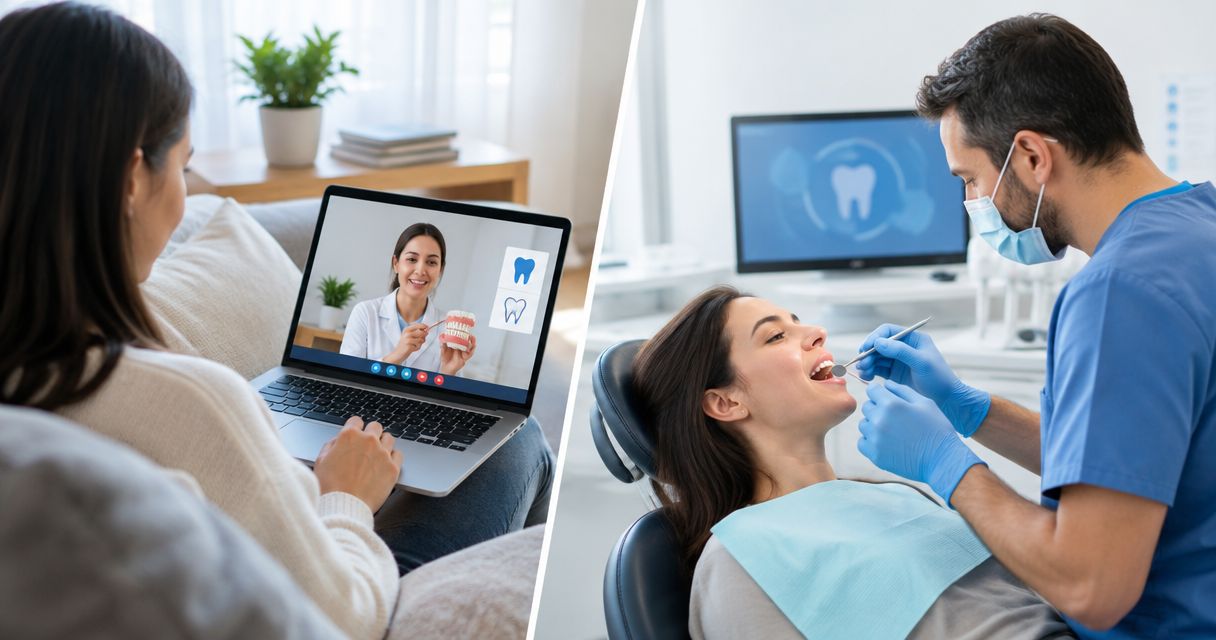
No—teledentistry is useful for discussing symptoms, reviewing records, and deciding what care you need, but it does not replace an in-person dental examination or treatment. A video call cannot provide dental X-rays, measure gum pockets, or repair a damaged tooth. In 2026, the right choice depends on whether you need guidance or hands-on care.
- Is teledentistry as good as an in-person dental visit? No—not for a complete examination, cleaning, or treatment.
- Teledentistry is best for initial guidance and selected follow-ups; in-person dentistry is best for examination and treatment.
- Dental Arts of Atlantis provides family dental care in Lake Worth for Palm Beach County households.
- Trouble breathing or swallowing with dental swelling requires emergency medical care, not a video appointment.
Is teledentistry as good as an in-person dental visit?
Teledentistry can answer some questions well, but it cannot perform the same tasks as an office visit. A dentist can listen to your history, look at visible changes, and explain next steps remotely. An office visit adds direct examination, appropriate imaging, and the ability to treat the problem.
The distinction matters when you connect a teledentistry consult to an in-office follow-up. Treat the remote consultation as part of your care—not proof that an office examination is unnecessary.
| What you need | Teledentistry | In-person dental visit |
|---|---|---|
| Best for | Initial guidance, records review, selected follow-ups | Direct examination, diagnostic tests, preventive care, treatment |
| Discuss symptoms and medical history | Yes | Yes |
| Review existing X-rays or treatment records | Yes, when records are provided | Yes, when records are provided |
| Look at a visible chip or sore | Limited by lighting, camera angle, and image quality | Direct view with examination tools |
| Take new dental X-rays | Not through a home video call | Available when clinically indicated |
| Measure gum pockets | Not through a home video call | Part of an appropriate gum examination |
| Clean teeth or repair damage | No | Yes, according to your treatment needs |
| Main advantage | Guidance without traveling for the conversation | Examination and hands-on care |
| Main limitation | Incomplete physical information; another visit can still be necessary | Requires travel and time at the office |
This comparison refers to a home video call or submitted photographs. Some teledentistry arrangements involve an on-site dental professional collecting information for a remote dentist. Those arrangements provide different information from a phone camera alone.
Why this matters
Convenience is helpful when it connects you with appropriate care. It becomes a problem when reassurance from a screen delays an examination that your symptoms require.
A tooth can look normal in a photograph and still have decay between teeth, a crack, or a problem beneath an existing restoration. Gum disease also requires more than a visual check. A clear photograph is not a clean bill of dental health.
For your 2026 dental care decisions, separate two questions: “Can a dentist discuss this remotely?” and “Can this problem be fully assessed remotely?” The first answer is often yes. The second depends on the information needed.
Teledentistry: best for guidance and selected follow-ups
A remote consultation is useful when the main task is a conversation. You can explain a concern, describe changes since treatment, or review a proposed plan with a dentist who has the relevant records.
Examples include:
- Understanding a treatment plan. Ask what each recommended procedure addresses and which findings support it.
- Discussing a visible change. Show a chip, irritation, or broken appliance so the dentist can help determine the next step.
- Reviewing home-care instructions. Clarify cleaning techniques or instructions already provided after treatment.
- Selected follow-ups. Discuss progress when your treating dentist decides that a remote review is appropriate.
The advantage is access to professional guidance without traveling just for that conversation. The limitation is that the dentist must work with what you describe and what the camera shows.
Remote care also depends on usable technology and a private setting. If your connection cuts out or the image is unclear, the appointment loses information. Choose teledentistry for guidance—not as a substitute for tests or treatment you need.
In-person dentistry: best for examination and treatment
An office visit is the better choice when the dentist needs to inspect, measure, test, or treat something directly. That includes cleanings, fillings, extractions, and assessments that require new imaging or a hands-on examination.
For tooth pain, an examination can include checking your bite, testing the tooth's response, and looking for tenderness or other findings. Appropriate X-rays can add information that photographs cannot show. No single test answers every question, so the dentist combines the findings with your history.
For gum concerns, measuring the spaces around teeth helps assess the tissues supporting them. A video of red or bleeding gums does not provide those measurements.
The trade-off is practical: you need to travel and set aside time. For patients with anxiety, mobility limitations, or caregiving responsibilities, that deserves planning. Choose an in-person dental visit when a complete assessment or hands-on care is the goal.
Why the usefulness of teledentistry varies
The appointment format alone does not determine whether you receive useful guidance. These factors determine what a dentist can responsibly assess:
- Your question. Explaining an existing treatment plan is different from diagnosing new, unexplained pain.
- Available records. Relevant X-rays, examination notes, and treatment history add information that a camera cannot supply.
- Image quality. Focus, lighting, access to the affected area, and camera position affect what is visible.
- Symptoms and changes. Worsening pain, swelling, trauma, or difficulty swallowing changes the urgency and the appropriate setting.
- Need for physical tests. Gum measurements, bite checks, and other chairside tests require direct access to your mouth.
- Follow-through. Remote advice is useful only when you complete the recommended examination, treatment, or monitoring.
In 2026, judge a virtual appointment by whether it answers the clinical question and gives you a clear next step. Do not judge it only by how easy it was to attend.
How do I choose the right appointment?
Start with what you need the dentist to do. If you need an explanation, remote guidance can fit. If you need an examination or treatment, arrange office care.
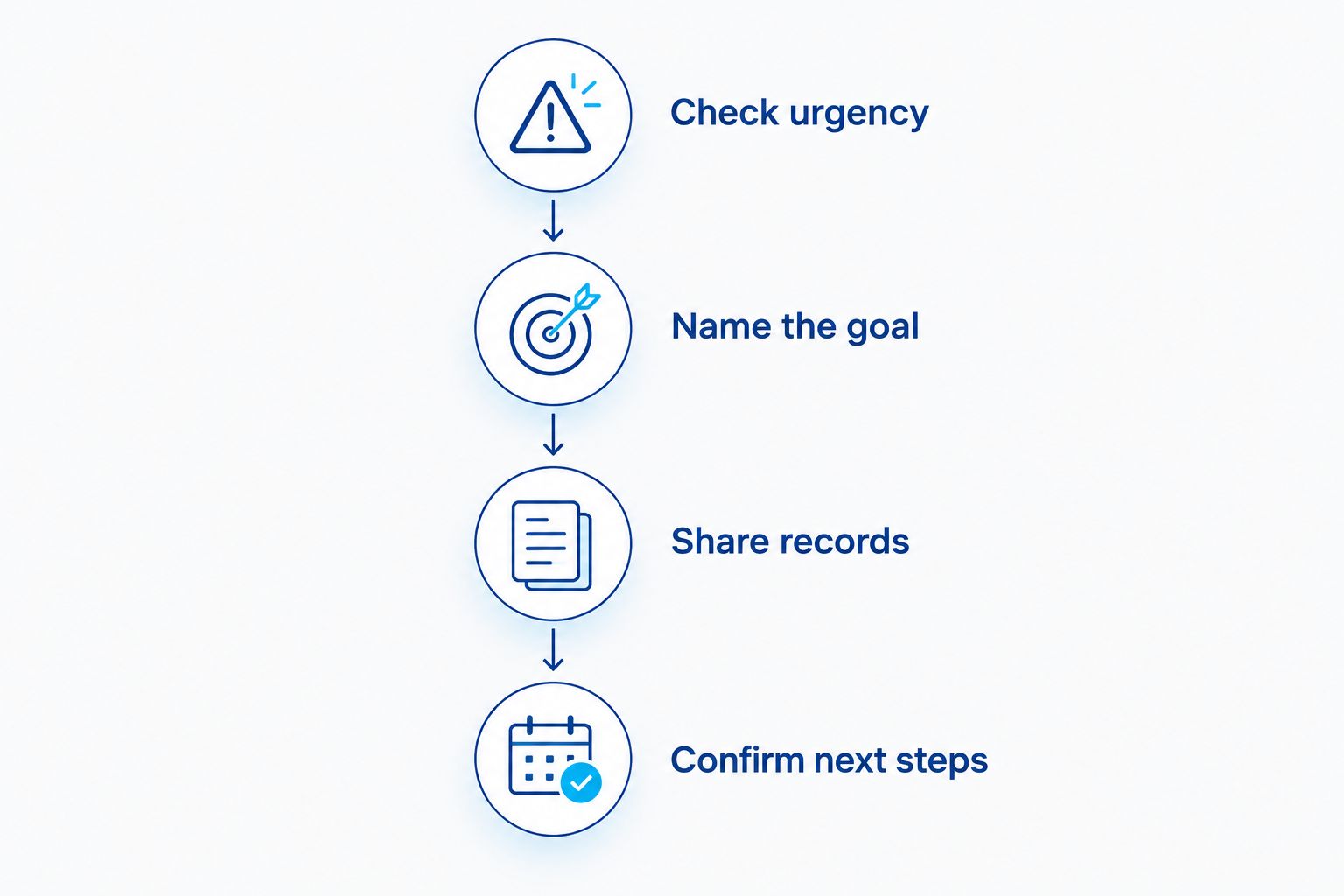
- Check urgency. Identify swelling, trauma, bleeding, severe pain, or symptoms that affect breathing or swallowing.
- Name the goal. Say whether you want help understanding symptoms, reviewing records, or addressing a problem that needs treatment.
- Share records. Ask how to provide relevant X-rays, photographs, medical history, and medication information securely.
- Confirm next steps. Before ending the consultation, establish whether you need an office examination and how to arrange it.
Do not assume that every dental practice offers virtual appointments. Ask about the appointment format, who evaluates your information, and how office follow-up works before you book.
If you are unsure which appointment to request, describe your symptoms to the practice rather than selecting the format yourself. Mention when the problem started, what makes it worse, and whether it is changing.
What should I prepare for a virtual dental consultation?
Prepare a brief symptom history and the records the dentist requests. Include your medications, allergies, relevant health conditions, and recent dental treatment. These details matter even when your concern seems limited to one tooth.
For photographs, follow the practice's instructions. Use good lighting and avoid filters that change tooth or gum appearance. Do not put sharp objects into your mouth or force a painful area open to get a better picture.
Write down the questions you want answered:
- What can you assess from these records and images?
- What still requires an office examination?
- What symptoms should change my next step?
- Who should I contact if the problem worsens?
Use the communication method the practice recommends for health information. A social-media message or public comment is not an appropriate place to share your medical history.
For a 2026 virtual consultation, your most useful preparation is a clear account of the problem—not a polished photograph that hides it.
Can a virtual dentist tell whether I have a cavity?
A virtual dentist can identify suspicious visible changes, but a home video call cannot reliably rule out cavities. Decay between teeth or beneath a restoration is not fully visible in ordinary photographs.
Existing X-rays and examination records can support a remote review. Whether you need new imaging or direct examination depends on the clinical question. Do not treat “I cannot see a cavity” as “you do not have a cavity.”
Can teledentistry help with a dental emergency?
Teledentistry can help direct you toward care, but it cannot repair trauma, drain an infection, or stop every cause of bleeding. Severe or worsening symptoms need prompt assessment rather than a routine virtual appointment.
Trouble breathing or swallowing, especially with facial or neck swelling, requires emergency medical care. Contact emergency services or go to an emergency department; do not wait for a dental video call. Contact a dentist promptly for a knocked-out permanent tooth, significant dental injury, or rapidly worsening dental symptoms.
Is teledentistry a good choice for children?
Teledentistry can help parents discuss symptoms, home care, or a child's difficulty tolerating dental visits. It does not replace the examination and preventive care a child needs.
A parent can describe eating changes, sleep disruption, swelling, or a recent injury. But a child who cannot clearly explain pain still needs an appropriate assessment. An unclear camera view should not become a reason to dismiss the concern.
Choosing family dental care in Palm Beach County
Dental Arts of Atlantis is best for Palm Beach County families seeking general, cosmetic, pediatric, and implant dentistry in Lake Worth. The practice's stated services cover both children and adults, which is relevant when your household needs ongoing family dental care.
When contacting Dental Arts of Atlantis, explain the care you need and ask which appointment format is appropriate. Confirm any virtual consultation option directly rather than assuming it is offered.
Dental Arts of Atlantis provides dental care, but a dental practice is not a replacement for emergency medical services when breathing or swallowing is affected. Wherever you receive care, the appointment must match the problem.
FAQ
Is teledentistry as good as an in-person dental visit in 2026?
No—teledentistry is not equivalent to an in-person dental visit for a complete examination or treatment in 2026. It is useful for guidance, reviewing records, and selected follow-ups, but home video cannot provide X-rays or hands-on care.
Can I replace my dental cleaning with a virtual appointment?
No—a virtual appointment cannot remove plaque and tartar through a professional dental cleaning. It can support a discussion about home care, but the cleaning itself requires an in-person visit.
Can a dentist diagnose tooth pain over video?
A dentist can assess your symptom history over video, but determining the cause of tooth pain often requires an examination and appropriate tests. Remote advice should include a clear plan for office care when needed.
Are phone photos enough to check for gum disease?
No—phone photographs do not provide the gum-pocket measurements used in a periodontal examination. They can show visible irritation, but they cannot establish the full condition of the tissues supporting your teeth.
Can I get a second opinion through teledentistry?
Yes—a remote consultation can help you review an existing treatment recommendation when relevant records are available. The reviewing dentist still needs an in-person examination if the records do not answer the clinical question.
Should I wait for a video appointment if my face is swollen?
Do not wait for a routine video appointment if facial swelling is worsening or you have other concerning symptoms. Trouble breathing or swallowing requires emergency medical care; contact a dentist promptly for dental swelling without those symptoms.
Does Dental Arts of Atlantis offer virtual dental appointments?
Ask Dental Arts of Atlantis directly whether a virtual appointment is offered and appropriate for your concern. Describe your symptoms and confirm how any necessary in-person follow-up would be arranged.
One last thing
The most useful outcome of a virtual consultation is sometimes a decision to examine you in person. That is not a failed appointment—it is recognition that the next question needs information a screen cannot provide.
Before any dental consultation ends, ask: “What remains unconfirmed, and what do I need to do next?” For your 2026 care, a clear answer to that question matters more than choosing the most convenient format.
Related guides
- How to get a second opinion on a dental treatment plan
- How to prepare for your first visit as a new patient
- How to choose a family dentist for kids and adults together