
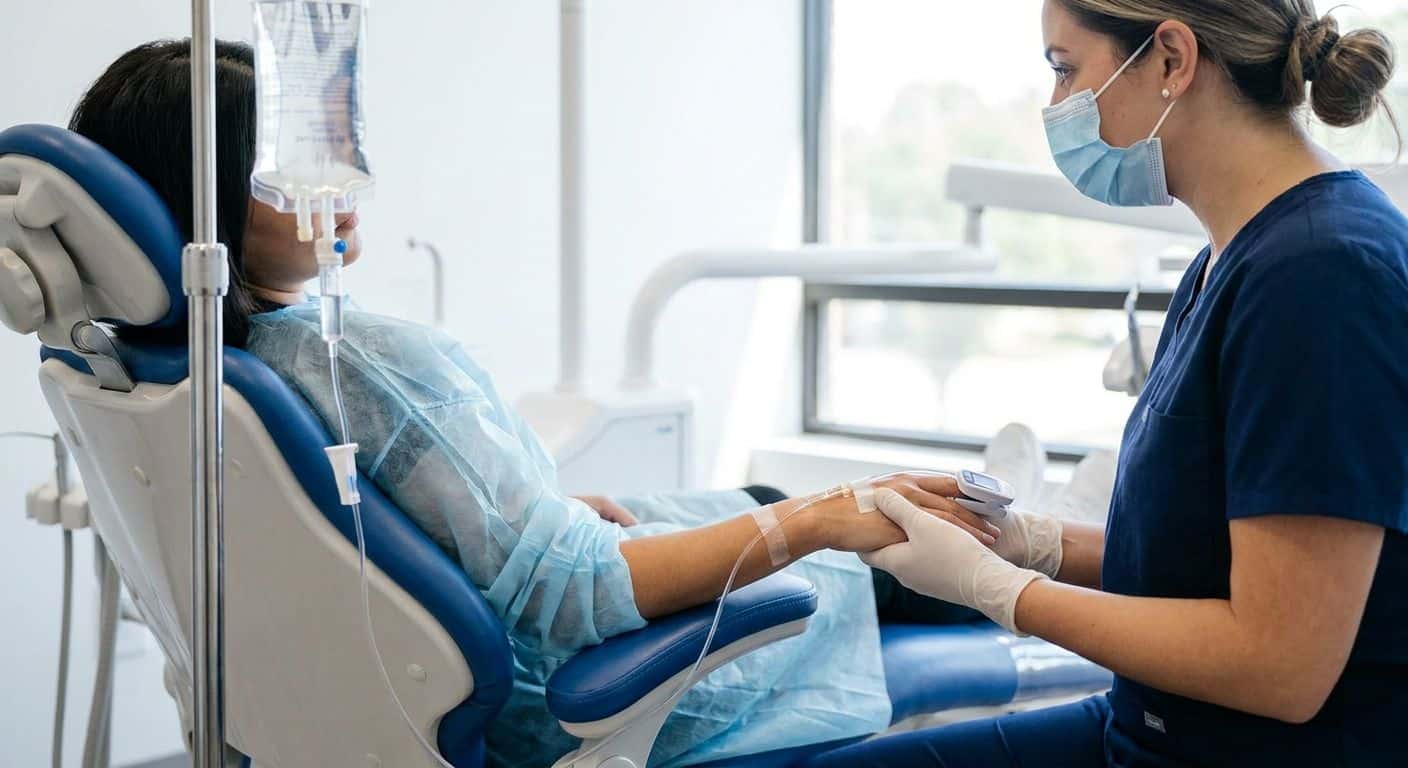
Wisdom teeth removal is stressful enough without wondering whether you will feel the drill, hear the crunch of extraction, or panic mid-procedure. IV sedation solves that problem for genuinely nervous patients by putting you in a twilight state where the surgery happens without conscious memory of it.
- IV sedation wisdom teeth removal puts anxious patients in a twilight state with no memory of the procedure — Buy for moderate to severe dental anxiety.
- Onset takes 1 to 2 minutes once the IV line is running, versus 30 to 60 minutes for an oral sedation pill.
- Nitrous oxide wears off in 3 to 5 minutes and works for mild nerves, not full-blown phobia.
- General anesthesia in an OR setting is reserved for complex impactions, not routine nervous-patient cases.
- A driver is mandatory after IV sedation — you cannot drive yourself home the same day.
Why this matters
Dental anxiety keeps a meaningful share of adults from scheduling extractions until a wisdom tooth is already infected or impacted. The longer that delay runs, the more likely the surgery gets more complicated, not less. Reading how to prepare for wisdom teeth removal before you book matters more for nervous patients than for anyone else, because knowing exactly what happens on sedation day is what actually lowers the anxiety, not just the drug itself.
IV sedation is not the only option, and it is not automatically the right one for every anxious patient. The rest of this guide breaks down who it fits, what separates a good sedation plan from a risky one, and where nervous patients get talked into the wrong choice.
Who this is for
This guide is for patients with moderate to severe dental anxiety who have already decided a wisdom tooth extraction is happening and are trying to figure out how to get through it without a panic response. That includes people with a documented dental phobia, a strong gag reflex, a history of a bad extraction experience, or multiple impacted wisdom teeth that will mean a longer chair time than nitrous oxide alone can comfortably cover.
What to look for in IV sedation for nervous patients
Credentials of the sedation provider
IV sedation involves administering controlled medication directly into the bloodstream, so the person managing the drip needs specific sedation training and state permitting beyond a general dental license. Ask directly who is monitoring you during the procedure and what their sedation certification covers.
Continuous vital sign monitoring
A legitimate IV sedation setup tracks pulse oximetry, blood pressure, and heart rate throughout the extraction, not just at check-in. For a nervous patient this matters twice: it keeps you safe, and it is the kind of detail that should be explained to you beforehand, not discovered mid-procedure.
Pre-sedation health screening
A real screening asks about current medications, allergies, sleep apnea, and cardiac history before anyone touches an IV line. Skipping this step is the single biggest red flag in a sedation consultation, because dosing decisions depend on it.
Fasting and recovery instructions
Most IV sedation protocols require nothing to eat or drink for 6 to 8 hours beforehand, and a firm requirement that someone else drives you home afterward. Nervous patients specifically benefit from written instructions they can review at home instead of trying to remember verbal directions while already anxious.
How the practice actually talks to anxious patients
The difference between a good and bad experience for a nervous patient often comes down to whether the team explains each step before doing it, versus treating anxiety as an inconvenience. If a consultation feels rushed or dismissive of your fear, that is a preview of how procedure day will go.
Talk through sedation options first
A consultation covers your anxiety history and which sedation level actually fits.
Top sedation options for nervous patients
IV sedation — the recommended pick for real dental anxiety
IV sedation puts you in a twilight state within 1 to 2 minutes of the line being started, and most patients report little to no memory of the extraction afterward. It is dose-adjustable in real time, which means the sedation provider can respond immediately if you need more or less than planned. For a patient with a documented phobia or a history of panicking in the chair, this is the option that actually solves the problem. Read more on sedation dentistry for anxious patients before your consult. Verdict: Buy for moderate to severe anxiety.
Oral conscious sedation — the budget-friendly middle ground
A sedative pill taken 30 to 60 minutes before the appointment leaves you drowsy and relaxed but still responsive to verbal cues. It costs less than IV sedation because it requires less monitoring equipment, but the dose is fixed once you swallow it — there is no adjusting mid-procedure. Verdict: Consider if your anxiety is moderate rather than severe.
Nitrous oxide — the light-touch option
Laughing gas takes effect within a couple of minutes and clears your system in 3 to 5 minutes after the mask comes off, letting most patients drive themselves home. It works well for mild nerves and needle anxiety but rarely covers a patient who genuinely panics at the thought of the procedure. Verdict: Consider for mild anxiety, Skip for severe phobia.
General anesthesia — the full-unconscious option
This puts you completely under in an operating room setting, typically reserved for complex bony impactions or patients who cannot tolerate any level of consciousness during oral surgery. It requires an anesthesiologist and carries more logistical overhead than office-based IV sedation. Verdict: Consider only when the extraction itself is unusually complex, not as a default anxiety fix.
Local anesthesia only — the wildcard that backfires for nervous patients
Numbing the extraction site without any sedation keeps you fully awake and aware of pressure, sound, and time passing. For a patient who is not anxious, this is standard and fine. For someone who already dreads the appointment, being conscious through it is often the exact experience that reinforces the fear. Verdict: Skip if you identify as a nervous patient.
What to avoid
- Skipping the pre-sedation screening call. If a practice books you for IV sedation without asking about medications, allergies, or sleep apnea first, that is a scheduling shortcut, not a safety process.
- Assuming nitrous oxide will cover severe anxiety. It is genuinely effective for needle nerves and mild unease, but patients with a real phobia often report it wears off before the anxiety does.
- Driving yourself home after IV sedation. The sedative effects linger longer than you feel them; a driver is not optional. If you are still working through the anxiety itself, manage dental anxiety before a procedure covers steps that help before sedation day even arrives.
Verdict comparison
| Sedation type | Monitoring level | Onset | Driver needed | Memory of procedure | Verdict |
|---|---|---|---|---|---|
| IV sedation | Continuous (pulse ox, BP, HR) | 1-2 min | Yes | Little to none | Buy |
| Oral conscious sedation | Periodic checks | 30-60 min | Yes | Partial, hazy | Consider |
| Nitrous oxide | Basic | 2-3 min | No | Full, aware throughout | Consider (mild anxiety only) |
| General anesthesia | Continuous, OR-level | Immediate | Yes | None | Consider (complex cases) |
| Local anesthesia only | Basic | N/A | No | Full, aware throughout | Skip for nervous patients |
FAQ
What is IV sedation for wisdom teeth removal?
IV sedation delivers sedative medication directly into the bloodstream, putting you in a twilight state with little to no memory of the extraction. It takes effect within 1 to 2 minutes and is adjustable throughout the procedure based on how you respond.
Is IV sedation safe for nervous patients?
Yes, when administered by a provider with sedation-specific training who monitors pulse, blood pressure, and heart rate continuously. A pre-sedation health screening covering medications and allergies is the step that makes it safe, so ask about it directly before booking.
How long does IV sedation last after wisdom teeth removal?
The sedative effect itself wears off within a few hours, but grogginess and impaired judgment can linger longer than you feel. That is why a driver and a day off work are standard recommendations, not overcautious advice.
Do you need someone to drive you home after IV sedation?
Yes, driving yourself home after IV sedation is not safe and most practices will not proceed without a confirmed driver. Nitrous oxide is the exception since it clears your system within 3 to 5 minutes.
How much does IV sedation for wisdom teeth removal cost in 2026?
Cost depends on the number of teeth extracted, whether impaction surgery is needed, and your insurance coverage, so get a written estimate at consultation rather than relying on a general figure. Ask specifically whether sedation is billed separately from the extraction itself.
Is IV sedation better than nitrous oxide for severe dental anxiety?
For severe or phobia-level anxiety, yes — IV sedation removes conscious awareness of the procedure in a way nitrous oxide does not. Nitrous is better suited to mild nerves or needle anxiety where staying responsive is not a problem.
Can you eat before IV sedation for wisdom teeth removal?
No, most IV sedation protocols require 6 to 8 hours of fasting beforehand to reduce the risk of complications. Follow the exact written instructions from your provider since timing varies by individual health history.
How do I know if my wisdom teeth are impacted or infected?
Swelling, jaw pain, and a bad taste near the back molars are common signs worth getting checked before symptoms escalate. A dental exam and imaging confirm impaction or infection well before it turns into an emergency.
One last thing
The most overlooked detail in IV sedation planning is not the drug, it is the driver. Patients spend weeks worrying about the needle and then scramble the morning of the appointment because they forgot they cannot drive themselves home — that single logistics gap causes more day-of cancellations than actual medical concerns.
“If you don’t remember the procedure afterward, the sedation did its job.”
Related guides