
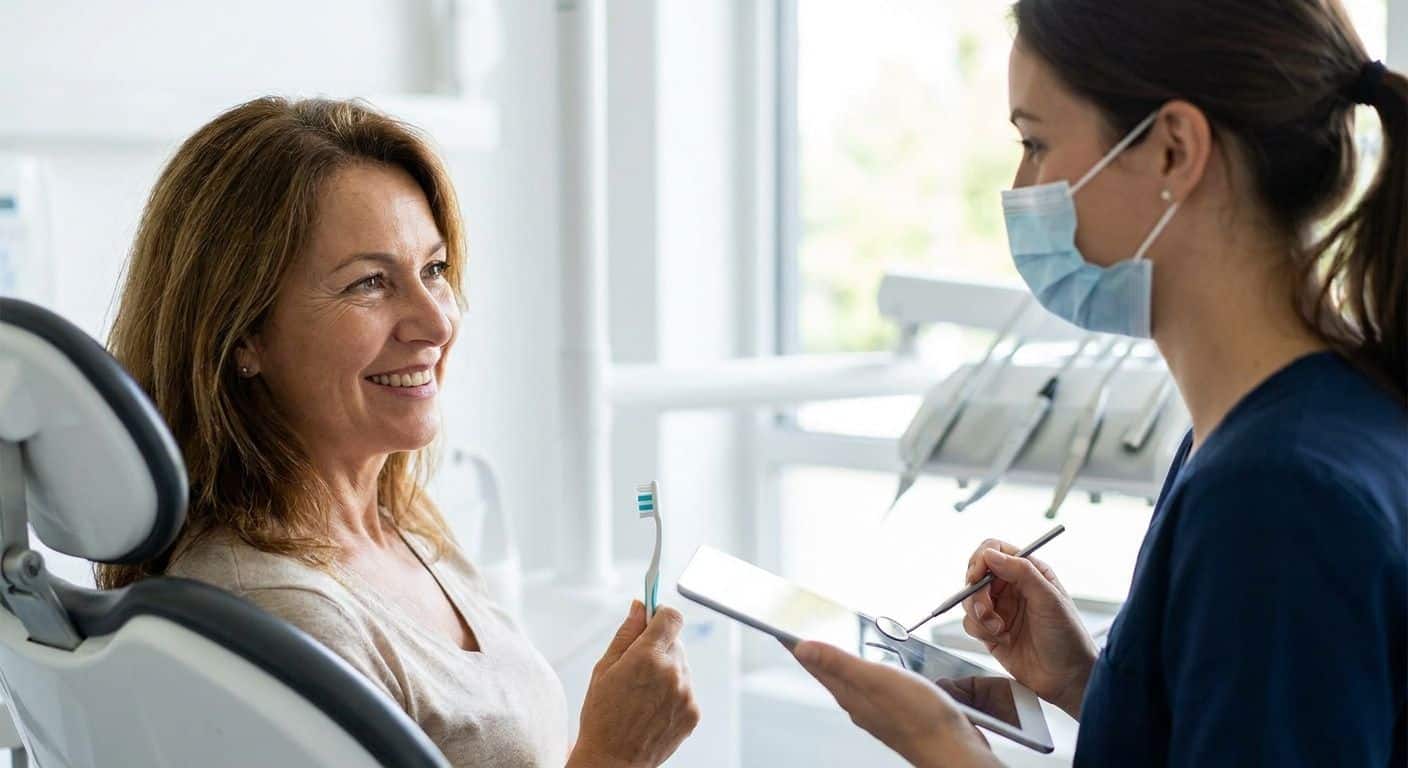
Menopause changes gum tissue, saliva flow, and bone density at the same time, and oral health during menopause needs a different game plan than what worked at 30.
- Oral health during menopause centers on gum disease risk, dry mouth, and bone density changes tied to falling estrogen.
- Dental Arts of Atlantis recommends periodontal checks every six months through perimenopause and menopause — schedule them, don’t skip.
- Dry mouth from hot flashes and medications needs a dentist-guided routine, not just more water.
- Root sensitivity and gum recession climb once estrogen drops; treat early instead of reaching for a whitening kit.
Why this matters
Estrogen does more than regulate cycles — it maintains bone density, saliva production, and the collagen that keeps gum tissue tight against the tooth. When estrogen drops during perimenopause and menopause, all three change at once, and the mouth often shows it before other parts of the body do.
The average age of menopause in the U.S. is 51, and the gum and bone changes that come with it don't wait for a diagnosis — they start in perimenopause, sometimes years earlier. Left unmonitored, early signs of gum disease can progress quietly because the usual pain signals are dulled by the same hormonal shift.
This is not a cosmetic issue. Bone loss in the jaw tracks with bone loss in the hip and spine, and periodontal disease left untreated during this window is harder to reverse than it would have been five years earlier.
Who this is for
This guide is for women in perimenopause or menopause — roughly mid-40s through late 50s — who've noticed new gum sensitivity, dry mouth, tooth sensitivity, or bleeding gums that weren't a problem before. It's also for anyone on hormone therapy or osteoporosis medication who wants to know how those treatments interact with dental care in 2026.
What to look for in oral health care during menopause
Gum tissue response to estrogen decline
Gum tissue relies on estrogen to stay firm and resist bacterial inflammation. As levels drop, gums can look redder, feel tender, or bleed with normal brushing — signs that are easy to write off as "just getting older" but that actually signal active inflammation.
Saliva flow and dry mouth
Hot flashes and many menopause-related medications reduce saliva output, and saliva is the mouth's main defense against acid and bacteria. Up to 80% of menopausal women report hot flashes, and dry mouth frequently follows the same hormonal pattern, raising cavity and gum disease risk together.
Bone density in the jaw
The jawbone loses density the same way the hip and spine do after menopause, with drops of up to 2% a year in the first several years. That matters directly for anyone considering implants, and it changes how aggressively a dentist should monitor bone-supported teeth.
Root exposure and sensitivity
As gum tissue recedes with hormonal change, root surfaces that were once covered become exposed, and those surfaces are far more sensitive to hot, cold, and sweet than enamel. New sensitivity that shows up in your late 40s or 50s is often a recession story, not a cavity story.
Stress, sleep disruption, and clenching
Menopause disrupts sleep for a large share of women, and disrupted sleep correlates with more nighttime clenching and grinding. That added force on teeth and jaw joints shows up as headaches, worn enamel, or jaw pain that a dentist can trace back to nighttime habits.
Medication interactions
Hormone therapy, antidepressants, blood pressure medication, and osteoporosis drugs are all common in this age group, and several of them independently cause dry mouth or affect bone healing. A dentist needs the full medication list, not just the dental history, to plan care correctly in 2026.
Where to focus dental care during menopause
Twice-yearly periodontal cleanings — the baseline. Six-month cleanings catch inflammation before it becomes bone loss, and a periodontal charting at each visit tracks gum pocket depth over time rather than reacting after damage shows up. Check how often adults should get a dental checkup and cleaning if you've been stretching the interval past six months. Verdict: Schedule it.
A dry mouth management routine — the overlooked fix. Most women treat dry mouth with more water, which helps for minutes, not hours. A dentist-guided plan — specific rinses, saliva substitutes, and timing around medication — addresses the actual mechanism. Dental Arts of Atlantis walks patients through how to manage dry mouth caused by medication as part of a menopause-specific care plan. Verdict: Schedule it.
Sensitivity treatment for exposed roots — the quick win. In-office desensitizing treatments and prescription-strength toothpaste close the exposed dentin tubules that cause hot-and-cold pain, often within a couple of visits. If cold drinks or ice cream have started to sting, stopping tooth sensitivity to hot and cold is worth addressing before it worsens. Verdict: Consider it.
A nightguard for new clenching or grinding. If you're waking up with jaw soreness or headaches that weren't there two years ago, sleep disruption from menopause is a plausible driver, and a custom nightguard is a low-effort fix compared to letting enamel wear down. Verdict: Consider it.
Whitening while gums are inflamed — the one to skip. Whitening gel on inflamed, receded gum tissue causes more sensitivity, not a better smile. Treat the gum inflammation first; whitening can wait a few months. Verdict: Skip it for now.
Book a menopause-focused dental checkup
Get a plan for gum health, dry mouth, and bone density before small issues grow.
What to avoid
- Ignoring bleeding gums as "normal aging." Bleeding during brushing at 48 is inflammation, not an inevitability — it's treatable and worth flagging at your next cleaning.
- Assuming hormone therapy fixes dental symptoms. Hormone therapy can ease some gum and dry mouth symptoms for some women, but it's not a substitute for a dental visit, and it doesn't reverse bone loss that's already occurred.
- Over-brushing to compensate for sensitivity. Harder brushing to "get it clean" accelerates gum recession and makes sensitivity worse, not better — a soft brush and proper technique matter more than pressure.
Verdict comparison
| Care Focus | Why It Matters at Menopause | How Often | Verdict |
|---|---|---|---|
| Periodontal cleanings | Estrogen decline raises gum disease risk | Every 6 months | Schedule |
| Dry mouth management | Hot flashes and medications cut saliva flow | Daily habit + dentist check-in | Schedule |
| Sensitivity treatment | Gum recession exposes root surfaces | As needed, confirm at checkup | Consider |
| Nightguard for grinding | Stress and sleep disruption raise clenching risk | Nightly if diagnosed | Consider |
| Whitening during active inflammation | Irritates already-sensitive gum tissue | N/A | Skip for now |
FAQ
What causes oral health problems during menopause?
Falling estrogen reduces saliva flow, weakens gum tissue collagen, and accelerates jaw bone loss, which together raise the risk of gum disease, dry mouth, and root sensitivity. These changes often start in perimenopause, before periods stop completely.
Is dry mouth normal during menopause?
Dry mouth is common during menopause, driven by hot flashes and by medications many women take in this age group. It’s manageable with a dentist-guided routine, but left untreated it raises cavity and gum disease risk.
Can menopause cause gum disease?
Menopause doesn’t cause gum disease directly, but reduced estrogen weakens gum tissue and lowers its resistance to bacteria, making existing plaque more likely to progress to gum disease. Regular periodontal checks catch this early.
Should I get more frequent dental cleanings during menopause?
Most women do well on the standard six-month interval, but anyone with active gum bleeding, recession, or bone density concerns should ask their dentist about a shorter interval. A periodontal evaluation determines the right schedule.
Does menopause affect tooth sensitivity?
Yes — gum recession tied to hormonal changes exposes root surfaces that are far more sensitive to hot and cold than enamel. In-office desensitizing treatment and prescription toothpaste address this directly.
What’s the link between osteoporosis and tooth loss?
Osteoporosis reduces bone density throughout the body, including the jaw, and lower jaw bone density can compromise the support around natural teeth and affect candidacy for dental implants. Dentists monitor this with imaging over time.
Can hormone replacement therapy help with oral health?
Hormone replacement therapy can ease some dry mouth and gum symptoms for some women, but it doesn’t replace regular dental care or reverse existing bone loss. Discuss any hormone therapy with your dentist so it factors into your care plan.
When should a menopausal woman see a dentist for gum problems?
See a dentist as soon as you notice bleeding, swelling, or recession that’s new — waiting until pain shows up usually means the gum disease has already progressed. Early treatment during menopause is far easier than reversing damage later.
One last thing
The jaw bone loses density on the same timeline as the hip and spine after menopause, which is exactly why a bone-density conversation belongs in a dental checkup, not just a doctor's office. If you're already tracking bone health with your physician in 2026, bring those results to your next cleaning — it changes how your dentist plans everything from cleanings to implant candidacy.
Related guides