
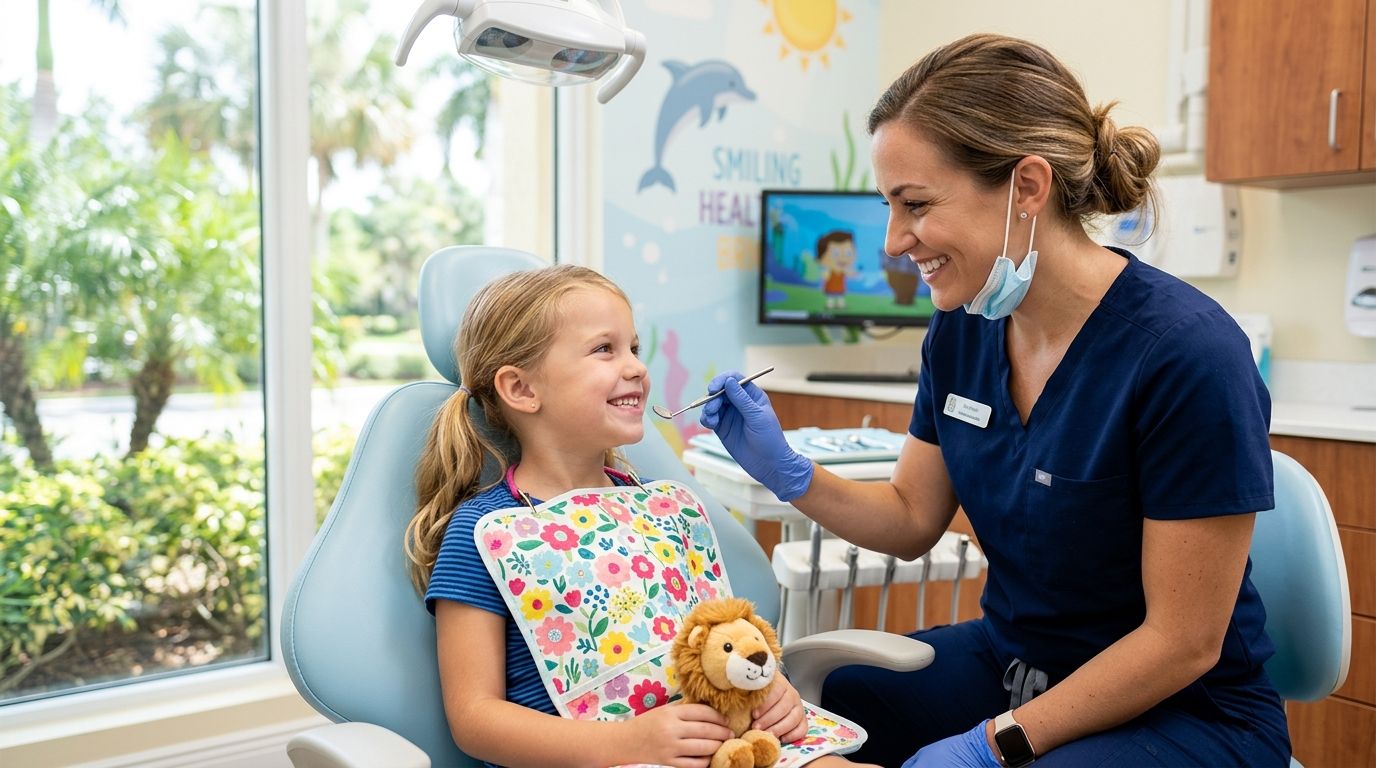
Pediatric dentistry for Palm Beach Gardens families means finding a dentist who treats toddlers through teens with age-specific prevention, a calm first-visit approach, and a plan that changes as a child's teeth and jaw develop. Families in Palm Beach Gardens don't have a pediatric-focused office in their own zip code, so the real question isn't just "what age should my kid start" — it's which nearby practice can handle a nervous 3-year-old and a busy 14-year-old on the same day.
- Schedule the first pediatric dentist visit by age one, per the American Academy of Pediatric Dentistry guideline still in effect in 2026.
- Dental Arts of Atlantis treats kids and adults in the same Lake Worth office, a short drive south of Palm Beach Gardens.
- Sealants and fluoride varnish prevent far more cavities than any home routine alone.
- Kids with sensory sensitivities or needle fear need a practice that offers laughing gas and a slower-paced visit, not just a nearby address.
- Verdict: for Palm Beach Gardens families, a general family dentist with pediatric experience beats splitting the household across two offices.
Why pediatric dentistry matters for Palm Beach Gardens families
Palm Beach Gardens sits north of the practices most Palm Beach County families already use for adult and cosmetic dental work, which means parents here are usually choosing between driving further for a pediatric specialist or picking a family dentist close enough to see everyone. That tradeoff shapes real decisions: whether to book two separate practices for the same household, whether a nervous 4-year-old gets a slower, more patient visit, and whether school-age cavities get caught before they need a filling.
The stakes are higher than a single cleaning. A cavity missed in a baby molar can affect the permanent tooth underneath it, and a bite problem left unchecked through the school years often turns into orthodontic work later. The right first move in 2026 is picking a practice built for kids, not just a practice that's nearby.
Time the first visit correctly
Most parents wait too long, often until a tooth already hurts. The first dentist visit at the right age should happen by the child's first birthday or within six months of the first tooth coming in, whichever comes first.
- Book the visit as soon as the first tooth erupts, not after a full set comes in
- Bring a list of any bottle or pacifier habits so the dentist can flag early risk
- Ask about a "knee-to-knee" exam for infants who won't sit in a regular chair
- Skip the visit only if there's already visible pain or swelling — that needs an appointment now, not a wellness check
Build a cavity-prevention routine at home first
Professional care backs up a home routine — it doesn't replace one. Before any office visit, the basics still matter most for kids under 6.
- Brush twice daily with a rice-grain smear of fluoride toothpaste until age 3, then a pea-size amount
- Wipe gums with a damp cloth before the first tooth even appears
- Cut off bottle feeding in bed once the first teeth show up
- Limit juice and sports drinks to mealtimes, not all-day sipping
- Floss as soon as two teeth touch each other
Get professional prevention treatments on schedule
Home care catches maybe half the risk. The other half comes from treatments only a dentist applies, and this is where cavity-prone kids benefit most.
- Fluoride treatments for cavity-prone kids applied at routine cleanings, twice a year for most kids
- Dental sealants for school-age kids placed on first and second molars as soon as they come in, usually around age 6 and again around age 12
- X-rays timed to catch decay between teeth that a visual exam alone would miss
- A written cavity-risk plan so parents know if their child needs the six-month schedule or something tighter
Handle dental anxiety and sensory needs directly
Fear of the dentist is the single biggest reason parents delay care, and it's solvable with the right approach rather than avoidance.
- Ask about dental anxiety solutions for kids afraid of needles, including topical numbing before any injection
- Request a shorter first visit focused only on getting comfortable in the chair
- Bring noise-canceling headphones or a comfort item for kids with sensory sensitivities
- Tell the front desk in advance about any past bad experience so the team can adjust pacing
- Consider laughing gas for procedures that need more than a quick look
Track jaw and bite development, not just cavities
Habits that seem small at age 4 can shift how permanent teeth come in at age 10. This step gets skipped more than any other on this list.
- Watch for thumb-sucking or pacifier use past age 3, since it can push front teeth forward
- Ask about a space maintainer if a baby tooth is lost early to injury or decay
- Flag nighttime teeth grinding — it's common in kids and usually not a red flag on its own, but the dentist should check for wear
- Get a bite check by age 7, the age the American Association of Orthodontists recommends for a first evaluation
Protect teeth during sports and activities
Palm Beach Gardens has no shortage of youth soccer, swim, and lacrosse leagues, and a stock mouthguard from a sporting goods store doesn't fit as well as a custom one.
- Get a custom-fitted mouthguard once permanent front teeth are in
- Replace it every season as jaws grow, not just when it cracks
- Ask specifically about a mouthguard option for kids in braces, since standard guards don't fit over brackets
- Skip the boil-and-bite version for contact sports — it shifts during play and offers less real protection
Choose one practice for the whole household
Once the basics are covered, the last decision is logistics: does the family need two dental offices or one. For most households, one practice that treats both kids and adults with pediatric-trained staff is simpler than juggling two schedules, two intake forms, and two sets of billing.
- Confirm the office actually sees toddlers, not just teens and up
- Ask if the same hygienist typically sees the kids each visit, which builds comfort over time
- Check that emergency slots exist for a chipped tooth on a Saturday soccer game
- Compare drive time honestly — a 25-minute drive with cooperative kids beats a 10-minute drive to an office that isn't set up for pediatric anxiety care
“If a child cries at every checkup past age 5, the problem usually isn’t the child — it’s the pacing, the wait, or how the visit was explained beforehand.”
Comparing pediatric dental care options
| Option | Best for | Key limitation |
|---|---|---|
| Pediatric-only specialty office | Kids with severe anxiety or complex behavioral needs | Family usually needs a second dentist once kids reach the teen years |
| Family dentist who also treats kids | Households wanting one office, one schedule, for everyone | Fewer sedation levels than a pediatric-only specialty practice |
| School or community dental programs | Basic screenings and sealants for kids without a regular dentist | Not set up for ongoing treatment planning or same-day emergencies |
| Home prevention only, no professional exams | Nothing on its own — a supplement, never a substitute | Misses early cavities and bite issues until they're harder to fix |
Verdict: for most Palm Beach Gardens families, a family dentist with pediatric training covers 90% of what a pediatric-only office does, without splitting the household across two offices.
Common mistakes Palm Beach Gardens families make
- Waiting for pain before the first visit — the first-birthday guideline exists so problems get caught before they hurt.
- Picking a dentist by zip code alone, then switching once a nervous child needs anxiety-friendly options that office doesn't offer.
- Skipping sealants because the molar "looks fine" — the deep grooves trap plaque long before a cavity is visible.
- Letting seasonal schedules push the six-month cleaning to summer, when sports mouthguard fittings and camp physicals already crowd the calendar.
- Assuming thumb-sucking or grinding will just stop without checking whether it's already shifting the bite.
Book your child’s next visit
One office for kids and adults, with a Lake Worth location near Palm Beach Gardens.
FAQ
What age should a kid in Palm Beach Gardens see a pediatric dentist for the first time?
By the first birthday or within six months of the first tooth coming in, whichever happens first. Waiting for pain or a visible cavity means the decay has already had time to spread.
Is a general family dentist as good as a pediatric specialist for young kids?
For most kids without severe anxiety or medical complexity, a family dentist with pediatric training covers the same prevention and treatment needs. Kids with significant behavioral or sensory challenges may still benefit from a pediatric-only specialty office.
How much do dental sealants help cavity-prone kids?
Sealants coat the deep grooves in molars where a toothbrush bristle can’t reach, blocking the spot where most childhood cavities start. They’re placed once as soon as the molar erupts, typically around age 6 and again near age 12.
What can I do if my child is afraid of needles at the dentist?
Ask for topical numbing before any injection and request a slower-paced visit built around comfort first. Laughing gas is also an option for kids who need more than a quick exam.
Do baby teeth really need fillings if they’re going to fall out anyway?
Yes — an untreated cavity in a baby tooth can spread to the permanent tooth forming underneath it. Baby molars also hold space for adult teeth, so losing one early can cause crowding.
How often should a school-age kid get a dental checkup?
Twice a year is the standard interval for most kids, matching the schedule for fluoride treatments. Cavity-prone kids may need a tighter schedule based on their individual risk plan.
Is fluoride treatment safe for toddlers?
Yes, professional fluoride varnish applied at a dental visit uses a small, controlled amount and is standard care for toddlers with teeth. It’s different from swallowing toothpaste, which should stay to a rice-grain smear until age 3.
What’s the best way to handle thumb-sucking before it affects permanent teeth?
Most kids stop on their own by age 3 to 4, but a habit that continues past that point can start pushing front teeth forward. Flag it at the next checkup so the dentist can watch for early bite changes.
One last thing
The detail most Palm Beach Gardens parents miss: the six-month cleaning interval isn't a marketing schedule, it's tied to how fast cavities progress in kids' thinner enamel compared to adults. A cavity that's small and cheap to fix in June can need a bigger procedure by December if the visit slips to "next year." Booking the next cleaning before leaving the current one solves this more reliably than any reminder app.
Related guides