
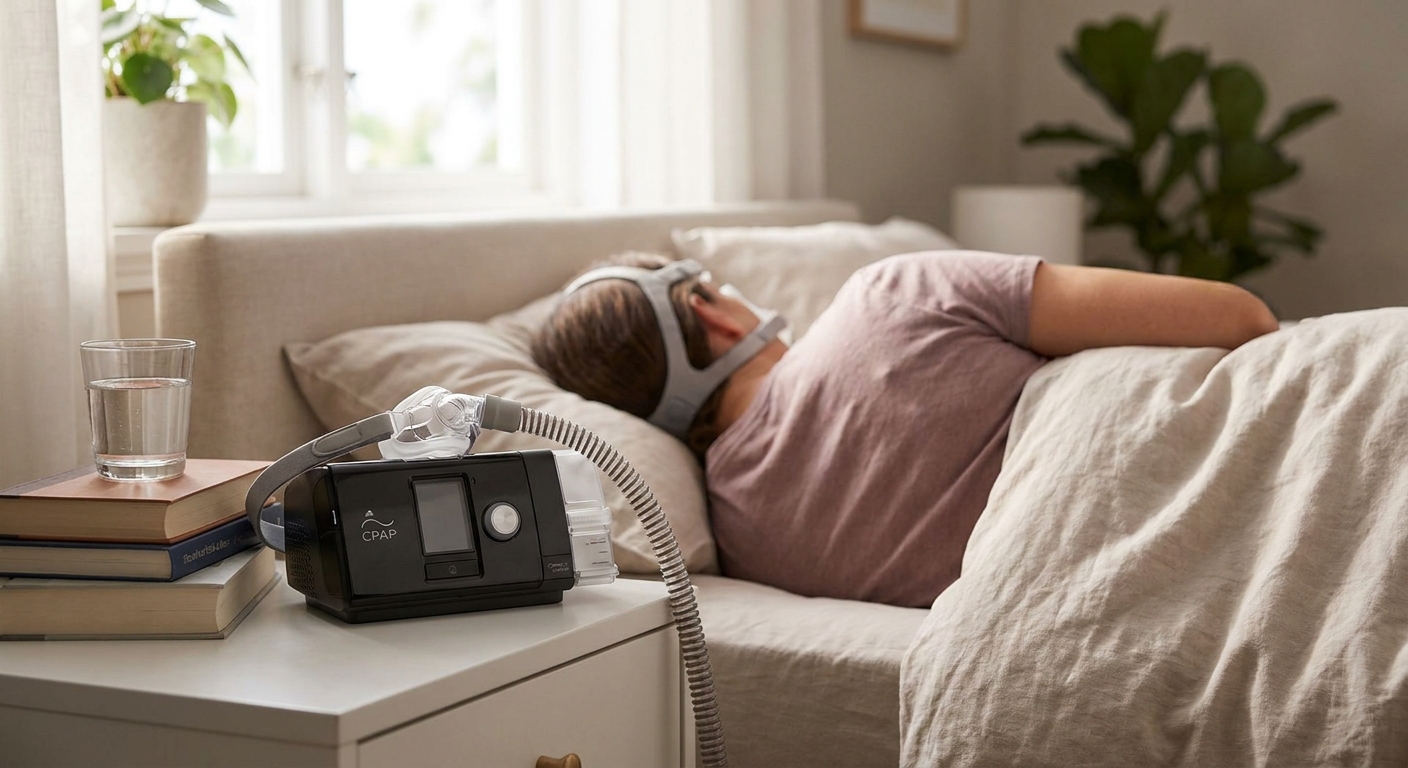
Chronic snoring that keeps the whole house awake at night usually means something more than a bad night's sleep — it's often obstructive sleep apnea (OSA), and the dental treatments built to calm it down in 2026 go far beyond a drugstore mouthguard.
- Custom oral appliance therapy is the strongest first-line sleep apnea treatment for snoring in 2026 for mild-to-moderate OSA — Buy.
- Combination CPAP plus oral appliance therapy handles cases CPAP alone hasn’t fixed — Consider before switching machines again.
- Boil-and-bite mouthguards and nasal strips alone are not real sleep apnea treatment for snoring once OSA is diagnosed — Skip.
- Sedation-assisted appliance fitting exists for patients who’ve avoided treatment for years out of dental anxiety — Buy if anxiety is the barrier.
Why this matters
Snoring is a symptom, not a diagnosis. When it's loud, nightly, and paired with gasping or daytime exhaustion, it's frequently obstructive sleep apnea — a condition linked to high blood pressure, heart strain, and next-day fatigue that outlasts a full night in bed.
A general dentist can't treat heart disease, but a dentist trained in sleep medicine can screen for airway collapse, fit a custom appliance, and coordinate with a sleep physician on diagnosis. That's the lane Dental Arts of Atlantis works in for patients across Lake Worth and Palm Beach County who've been told "just lose weight" or "try a strip" one too many times.
Who this is for
This guide is for the adult who snores hard enough that a partner sleeps in another room, who's tried nasal strips and white-noise machines with no real change, and who either has a sleep apnea diagnosis already or strongly suspects one. It's also for anyone who tried CPAP once, hated the mask, and quietly gave up — without knowing an oral appliance was ever an option. If daytime fatigue, morning headaches, or a partner's complaints are part of the pattern, this is the buyer profile the rest of this guide is written for.
What to look for in sleep apnea treatment for chronic snorers
A sleep study before any appliance
No dentist should fit an oral appliance for OSA without a diagnosis in hand, whether that's a home sleep test or an in-lab study. Skipping this step means guessing at severity, and mild snoring gets treated the same as severe apnea — which is how appliances fail.
Custom-fit over boil-and-bite
A appliance molded from a dental impression positions the lower jaw with millimeter precision; a $40 boil-and-bite kit doesn't. The difference shows up in results — custom devices are the ones behind that 50-70% AHI reduction figure, not the drugstore versions.
A titration and follow-up schedule
Jaw position gets adjusted gradually over weeks, not set once and forgotten. A practice that books a single fitting appointment and no follow-up is setting the device up to underperform or cause jaw soreness.
Compatibility with CPAP if you already use one
Some patients need both — CPAP for the bulk of the night, an appliance as backup or travel option. If a provider won't discuss combination therapy, they're not thinking about your whole sleep picture, just selling one device.
Bite and TMJ safety checks
Pushing the jaw forward every night to open the airway can shift bite alignment or aggravate the jaw joint over months of use. A provider who checks bite and joint function at every follow-up is protecting against that trade-off; one who doesn't is gambling with your jaw to fix your airway.
Top picks for chronic snorers in 2026
1. Custom Mandibular Advancement Device — the workhorse pick
This is the standard dental sleep apnea treatment for snoring: a custom acrylic device that holds the lower jaw slightly forward to keep the airway open overnight. Clinical data cited by sleep medicine sources puts AHI reduction at 50-70% for mild-to-moderate OSA, which is competitive with CPAP for that severity range. Verdict: Buy for anyone with a confirmed mild-to-moderate diagnosis who wants something quieter than a machine.
2. Combination CPAP + Oral Appliance Therapy — the escalation pick
For moderate-to-severe OSA where CPAP pressure alone isn't tolerated well, pairing a lower-pressure CPAP setting with a custom appliance can hold results steady without the mask discomfort that causes people to quit CPAP within the first year. Verdict: Consider before assuming you've exhausted every option after one bad CPAP experience.
3. Sedation-Assisted Appliance Fitting — the anxious patient's route
Some chronic snorers have avoided any dental sleep treatment for years purely because impressions, fittings, and follow-ups trigger dental anxiety. Sedation dentistry for anxious patients removes that barrier so the fitting itself doesn't become the reason treatment never happens. Verdict: Buy if anxiety, not the device, is what's been stopping you.
4. Implant-Supported Denture Rebuild — the structural fix
Multiple missing teeth change jaw support and can make the airway more prone to collapse during sleep, especially in older adults. Dental implants for seniors missing multiple teeth rebuilds that structure first, which sometimes has to happen before an oral appliance even fits correctly. Verdict: Consider if tooth loss is part of the airway picture, not just the snoring.
5. Positional Therapy Devices and Nasal Strips — the wildcard
Wedge pillows, positional vests, and adhesive nasal strips can reduce snoring volume for people whose OSA is mild and purely positional. They do nothing for airway collapse caused by soft tissue or jaw position in moderate-to-severe cases. Verdict: Skip as a standalone fix once a sleep study confirms anything beyond mild OSA — use as an adjunct at most.
Get a real sleep apnea evaluation
Talk through your snoring pattern and appliance options with Dental Arts of Atlantis.
What to avoid
- Boil-and-bite kits sold as "anti-snoring devices." They aren't fitted to your bite, don't get titrated, and aren't a substitute for diagnosed sleep apnea treatment for snoring.
- Treating the noise instead of the airway. A device that quiets snoring but doesn't improve airflow can mask a diagnosis that still needs medical attention.
- Giving up after one CPAP attempt. Mask intolerance is common in year one, but it doesn't rule out combination therapy or a full switch to an oral appliance.
Verdict comparison table
| Treatment | Best for | Key number | Verdict |
|---|---|---|---|
| Custom Mandibular Advancement Device | Mild-to-moderate OSA | 50-70% AHI reduction | Buy |
| Combination CPAP + Oral Appliance | Moderate-to-severe OSA, CPAP-intolerant | Lower pressure + backup coverage | Consider |
| Sedation-Assisted Fitting | Dental anxiety blocking treatment | Removes the fitting barrier entirely | Buy |
| Implant-Supported Denture Rebuild | Multiple missing teeth affecting airway | Rebuilds jaw/airway support | Consider |
| Positional Devices / Nasal Strips | Mild, positional snoring only | Adjunct use only | Skip as standalone |
FAQ
What’s the best sleep apnea treatment for chronic snoring?
For mild-to-moderate obstructive sleep apnea, a custom oral appliance is the best sleep apnea treatment for snoring in 2026, cutting AHI by 50-70% based on aggregated sleep medicine data. Severe cases usually need CPAP or combination therapy alongside the appliance.
Can a dentist treat sleep apnea?
Yes, dentists trained in dental sleep medicine fit custom oral appliances that reposition the jaw to keep the airway open overnight. Diagnosis still comes from a sleep study, and treatment is typically coordinated with a sleep physician.
Is an oral appliance as effective as CPAP?
For mild-to-moderate OSA, a custom oral appliance performs close to CPAP in reducing breathing interruptions. For severe OSA, CPAP or combination therapy with an appliance usually outperforms an appliance alone.
How much does a custom sleep apnea appliance cost in 2026?
Costs vary by case complexity, insurance coverage, and whether a sleep study or follow-up titration visits are included. Check current pricing directly with a dental sleep provider before committing.
Do I need a sleep study before getting a dental appliance?
Yes, a sleep study establishes OSA severity before any appliance is fitted. Skipping this step means treating a guess instead of a diagnosis, which is how appliances underperform.
What happens if chronic snoring is left untreated?
Untreated obstructive sleep apnea is linked to high blood pressure, heart strain, and chronic daytime fatigue beyond normal tiredness. The snoring itself is a symptom of airway collapse that repeats dozens of times a night.
Is dental sleep apnea treatment covered by insurance?
Coverage depends on the diagnosis, the specific plan, and whether the appliance is billed through medical or dental insurance. A sleep study on file typically strengthens the coverage case.
Can I combine a nightguard with a sleep apnea appliance?
Some patients grind their teeth and have OSA at the same time, and a combined device can address both in certain cases. That decision depends on bite pattern and appliance design, so it needs a dental evaluation first.
One last thing
Most patients who abandon a sleep apnea appliance within six months didn't fail the device — they skipped the titration follow-ups that adjust jaw position over time. A device fitted once and never rechecked in 2026 is treated the same as a device from 2016; the technology hasn't changed, the neglect has. Book the follow-up visits, and the appliance that felt useless in month one often becomes the one that finally quiets the room.
Related guides
- Invisalign for adults: how it works and what to expect
- Invisalign for teens: what parents should know