
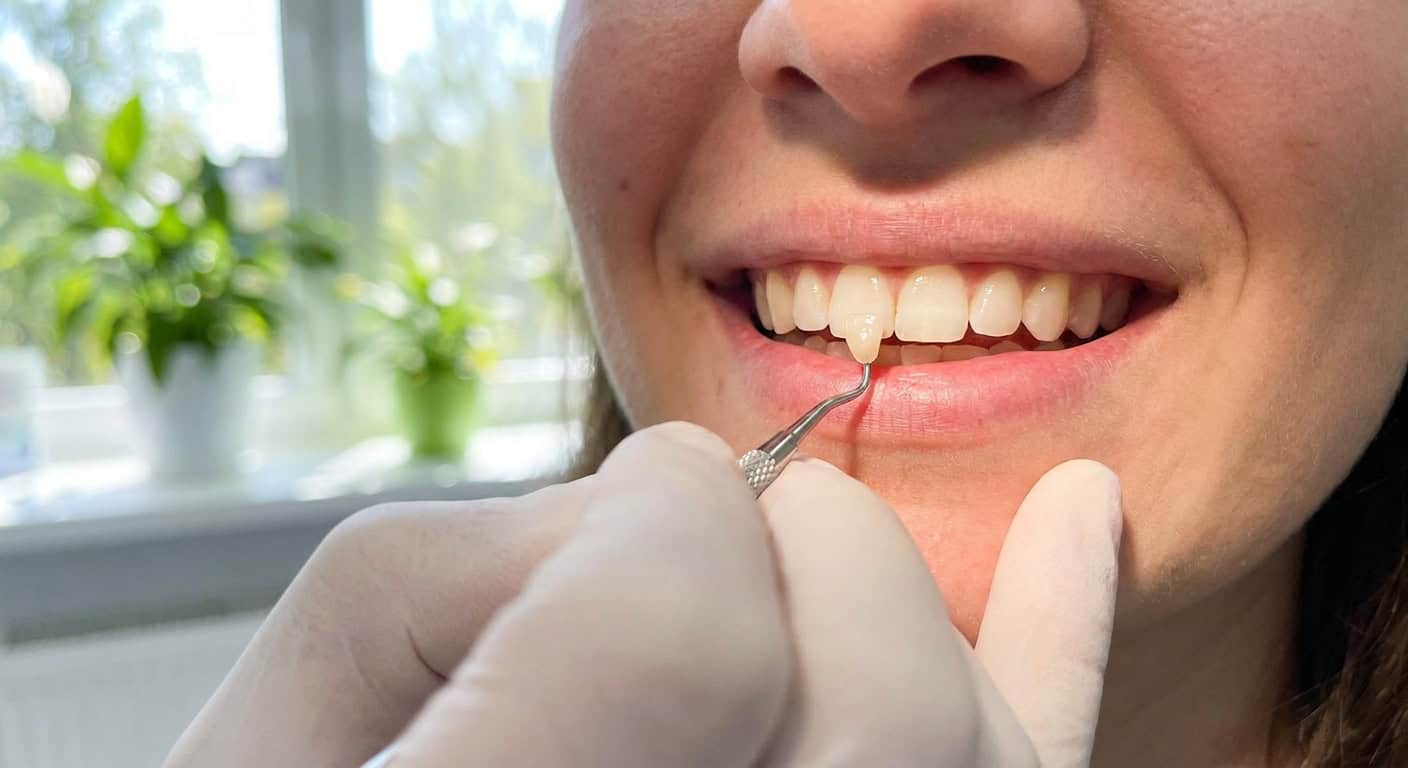
A small chip on a front tooth doesn't always need a veneer — dental bonding, enamel contouring, or a combination of the two usually fixes it in one visit for less time in the chair and less enamel removed.
- Dental bonding is the top fix for a small chip in tooth without veneer — one visit, no enamel shaved down.
- Composite resin bonding typically holds up 5 to 7 years before it needs a touch-up.
- Enamel contouring works only for hairline chips under 1mm and can’t rebuild lost structure.
- Veneers make sense for multiple chips or worn edges across several teeth — skip them for one small chip.
- Same-day crowns are overkill for a chip that hasn’t reached the tooth’s inner layers.
Why this matters
A veneer solves a chip permanently, but it also means grinding down healthy enamel that never grows back — a real tradeoff for damage the size of a fingernail clipping. Most patients who search for how to fix a small chip in tooth without veneer aren't trying to avoid dentistry; they're trying to avoid a procedure that's disproportionate to the problem.
The decision comes down to how much tooth structure is actually missing. A hairline chip on the biting edge is a different repair than a corner broken off a front tooth, and treating them the same way either overtreats a small problem or undertreats a bigger one. Get that distinction right and the fix is fast, affordable, and reversible if your needs change later.
How this list is ranked
Each option below is ranked on four things: how much natural enamel it preserves, how long it realistically lasts under normal chewing and brushing, how many visits it takes, and whether it can be reversed or adjusted later without more damage to the tooth. Options that require removing healthy enamel or committing to a permanent restoration rank lower for a chip this size, even when they're excellent solutions for larger damage. If a chip has reached the dentin or is causing sensitivity to hot and cold, some of these options move down the list fast — that's a different repair, not a cosmetic one.
The ranked fixes
1. Dental bonding — the default pick
Dental bonding uses a tooth-colored composite resin that's sculpted onto the chipped edge, shaped to match the surrounding tooth, then hardened with a curing light. The whole appointment runs 30 to 45 minutes with no anesthesia needed in most cases, and no enamel is removed to make room for it.
It's the closest thing to a reversible cosmetic fix in 2026 — if the bond chips or discolors down the line, a dentist can polish it, patch it, or replace it without touching the natural tooth underneath. The tradeoff is a shorter lifespan than a veneer, typically 5 to 7 years before a touch-up is worth doing.
For a single small chip on a front tooth, this is the option most patients leave with the same day. Dental Arts of Atlantis treats bonding as the standard first recommendation for exactly this kind of damage, and it pairs well with a look at the best replacement for a chipped or broken front tooth if the chip turns out to be bigger than it looks in the mirror. Buy.
2. Enamel contouring — for chips smaller than a grain of rice
Enamel contouring (sometimes called odontoplasty) doesn't add material — it removes a tiny amount of enamel around the chip to smooth the edge so the damage isn't visible or catchable with your tongue. It only works when the chip is shallow, under roughly 1mm deep, because there's nothing to rebuild here, only reshape.
This is the fastest and cheapest option on the list, often finished in under 15 minutes. It's a poor fit the moment the chip is deep enough to expose dentin or change the tooth's outline noticeably, since contouring alone can't restore lost length. Consider it only after a dentist confirms the chip is genuinely minor.
3. Bonding plus contouring combo
Many small chips get a hybrid fix: contouring smooths any sharp edges first, then a small amount of composite rebuilds shape and length in one sitting. This combo shows up often for chips near the biting edge where a clean line matters for how the tooth looks when you smile or talk.
It takes slightly longer than bonding alone — closer to 45 to 60 minutes — but it produces a more natural result on edge chips than bonding by itself. Buy, especially if the chipped edge is uneven rather than a clean break.
4. Tooth-colored filling material (for chips near a cavity)
If the chip sits near or overlaps an existing cavity or old filling, a dentist may use the same composite filling material to repair both problems at once instead of doing two separate procedures. This isn't a distinct product so much as a practical shortcut when decay and chip damage overlap.
It only applies to a specific overlap scenario, so it's not a general recommendation — but when it fits, it saves a second appointment. Consider if your dentist flags a cavity during the same exam.
5. Veneer — skip it for this size of damage
A veneer is a thin shell bonded over the entire visible face of the tooth, which means grinding down a layer of enamel across the whole front surface, not just the chipped section. That's the right call for multiple chips, worn or discolored edges across several teeth, or a chip combined with other cosmetic issues — see the veneers option for chipped or worn front teeth for that scenario.
For one small chip on one tooth, a veneer removes enamel you don't need to lose and costs more time and money for the same visible result bonding gives you. Skip it unless the chip is one of several issues on that tooth.
6. Same-day crown — reserved for structural damage
A crown caps the entire tooth and is built for chips that have compromised the tooth's structural strength, not surface damage. If a chip goes deep enough to threaten the tooth when you bite down, that's a different conversation — worth comparing against the best same-day option for a cracked molar if the damage is more crack than chip.
For a small cosmetic chip, a crown is far more tooth removed than the problem calls for. Skip unless an exam finds the chip runs deeper than it appears.
Comparison table
| Fix | Enamel removed | Time in chair | Typical lifespan | Verdict |
|---|---|---|---|---|
| Dental bonding | None | 30-45 min | 5-7 years | Buy |
| Enamel contouring | Minimal | Under 15 min | Permanent (no rebuild) | Consider |
| Bonding + contouring | None to minimal | 45-60 min | 5-7 years | Buy |
| Filling material overlap | Depends on cavity | Varies | 5-10 years | Consider |
| Veneer | Significant | 2+ visits | 10-15 years | Skip (for one small chip) |
| Same-day crown | Full tooth | 1-2 hours | 10-15 years | Skip (unless structural) |
Get the chip looked at first
A quick exam tells you if it’s a bonding fix or something bigger.
Where to get it done
- Start with a same-visit exam, not a phone quote. A chip that looks small in a mirror can be shallow or can extend closer to the dentin — a dentist needs to see it under light to know which repair applies.
- Ask specifically about bonding before agreeing to anything permanent. If a consultation jumps straight to a veneer recommendation for one small chip, get a second opinion.
- Bring up sensitivity if you have any. Chips that ache with hot or cold liquids sometimes need more than a cosmetic fix — worth reading how to stop tooth sensitivity to hot and cold before your appointment so you know what questions to ask.
FAQ
What’s the best way to fix a small chip in tooth without veneer?
Dental bonding is the best fix for a small chip without a veneer in 2026 — it’s a single-visit repair using tooth-colored composite resin and removes no enamel. Enamel contouring works too, but only on chips under 1mm deep.
Is bonding better than a veneer for a small chip?
Yes, for one small chip, bonding is the better choice because it preserves enamel and takes one visit instead of two or more. Veneers make more sense when several teeth have chips, wear, or discoloration together.
How long does dental bonding last on a chipped tooth?
Dental bonding typically lasts 5 to 7 years before it needs polishing or replacing. Lifespan depends on habits like nail-biting, ice-chewing, and grinding.
Does fixing a chipped tooth without a veneer hurt?
No, dental bonding and enamel contouring are typically painless and don’t require anesthesia since no drilling into the tooth is involved. Most patients feel nothing beyond mild pressure during shaping.
Can a small chip be left untreated?
A small chip can sometimes be left alone if it’s not causing sensitivity or catching on your tongue, but rough edges tend to catch on lips and cheeks over time. Left untreated, a chip can also widen with normal chewing.
How much enamel is removed for bonding versus a veneer?
Bonding removes no enamel at all since composite resin is applied directly to the existing tooth surface. A veneer requires grinding down a thin layer of enamel across the entire visible face of the tooth.
Will insurance cover bonding for a chipped tooth?
Coverage varies by plan and whether the chip is classified as cosmetic or restorative, so check with your provider before scheduling. Practices can usually verify benefits before the appointment.
What if the chip is on a molar instead of a front tooth?
Chips on molars often involve more bite force and may need a stronger repair than bonding, especially if the chip runs toward a cusp. A same-day option for a cracked molar is worth comparing if the damage is on a back tooth.
One last thing
The detail most patients miss: a chip that looks purely cosmetic in the mirror can still be sitting right next to an old filling or a hairline crack that doesn't show until it's under an exam light. Getting the quick look before picking a fix is what keeps a bonding appointment from turning into a bigger conversation later in 2026.
Related guides
- Best replacement for a chipped or broken front tooth
- Best veneers option for chipped or worn front teeth
- Emergency dentistry for a cracked or broken tooth
- Best same-day option for a cracked molar
- How to whiten teeth safely without damaging enamel