
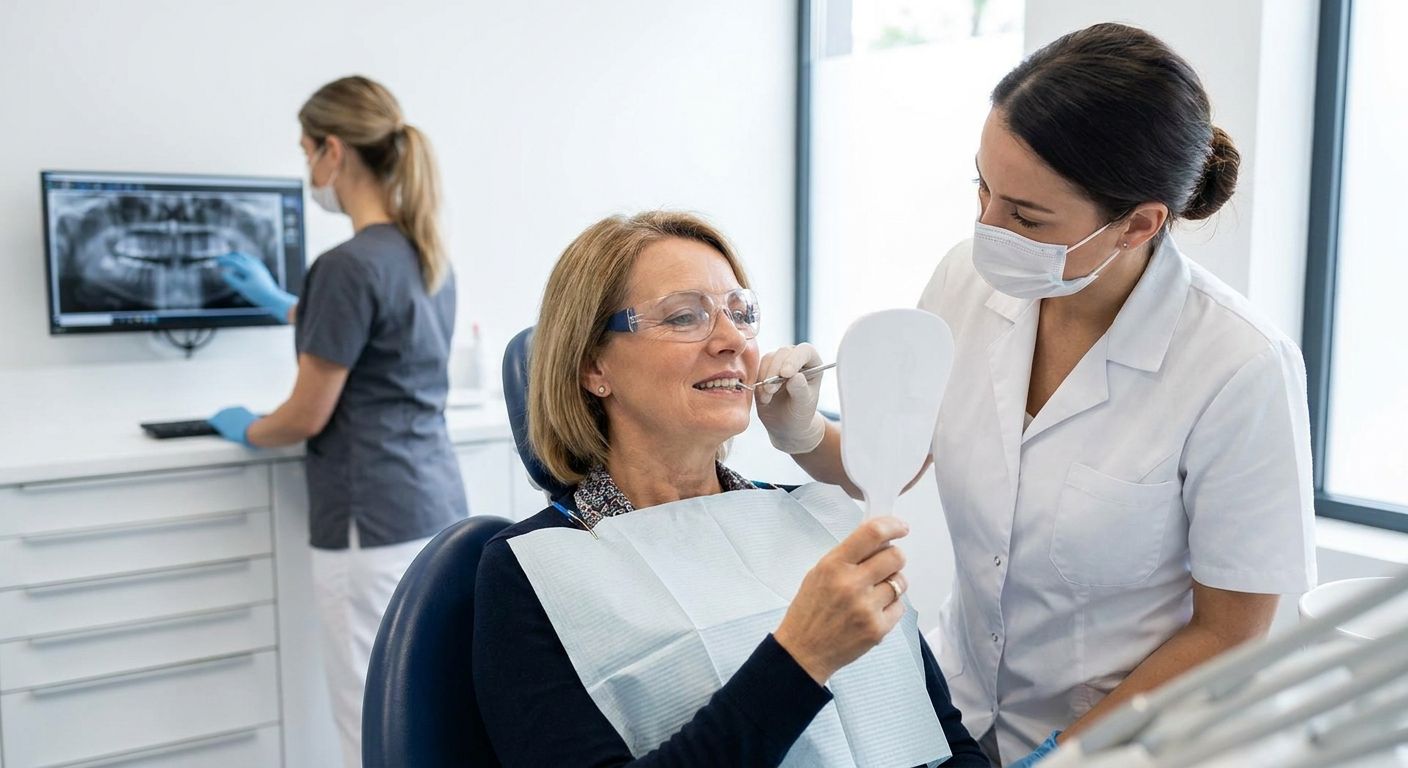
Adults returning after years without a dental checkup should expect a longer first appointment, full-mouth X-rays, and a real chance something needs treatment before a cleaning even happens — not a quick polish and a pat on the back. Dental Arts of Atlantis in Lake Worth sees returning patients every week and builds the first visit around finding out where things actually stand.
- Adults returning after years without a checkup in 2026 should expect full X-rays and gum charting before any cleaning happens.
- Dental Arts of Atlantis treats returning patients with staged plans that prioritize infection and pain first, cosmetics last.
- Gum disease often has no pain until it’s advanced — CDC NHANES data puts adult periodontitis prevalence near 42%.
- Sedation options exist for patients whose anxiety, not logistics, caused the years-long gap.
- Booking a same-day new patient exam removes the delay that turns a small problem into a root canal.
Why dental checkups matter for adults returning after years without care
Gum disease and decay don't announce themselves early. The American Dental Association recommends a checkup and cleaning twice a year, because most oral disease stays symptom-free until it isn't — and by the time pain shows up, the fix is bigger and the tooth is at higher risk.
The math gets worse the longer the gap. CDC data from the NHANES survey puts periodontitis prevalence in adults 30 and older at roughly 42%, and that figure reflects people who see dentists on a normal schedule. Skip an adult dental checkup and cleaning schedule for three, five, or ten years, and the odds something has progressed quietly go up, not down.
None of this is about guilt. Dental Arts of Atlantis treats returning adults constantly, and the first visit in 2026 is built around diagnosis first — not a lecture about the gap.
“If it’s been more than three years since your last checkup, assume there’s something to find, not just something to clean.”
What to do at your first visit back
Book the exam before you assume you need a cleaning
Call and say how long it's been — three years or thirteen, it changes what the front desk schedules for you.
- Expect the first visit to run longer than a routine cleaning, since it covers diagnostics, not just a polish.
- Ask whether the new patient exam includes X-rays and a written treatment plan, not just a look-and-clean.
- Bring a list of any medications, surgeries, or health changes since your last visit — a lot changes over several years.
- Say up front if anxiety caused the gap; front desks schedule anxious patients differently when they know in advance.
- Ask what a full exam actually covers before you show up, so nothing on the day surprises you.
Get full-mouth X-rays before anything else
- Ask specifically for a full-mouth series or panoramic image, not just two bitewings.
- Expect X-rays to catch decay between teeth and under old fillings that a visual exam alone misses.
- Plan on new X-rays even if old ones exist on file — most practices treat images as outdated after a year or two.
- Ask the office to pull records from a previous dentist if you have them, so new and old images can be compared.
Ask for full periodontal charting, not a quick look
- Periodontal charting means six probing measurements per tooth, recorded and compared against future visits — ask if it's part of the exam.
- Ask whether any pocket depths measure over 3mm, which is generally where early gum disease starts.
- If charting turns up deeper pockets, ask what a standard cleaning versus a deep cleaning (scaling and root planing) would look like for you.
- Request a bleeding index or gum health score if the office tracks one, so you have a baseline for next time.
Handle anxiety before you're in the chair
- Say out loud, before scheduling, if avoidance was about fear rather than logistics — it changes how the visit gets planned.
- Ask about sedation options for dental anxiety if the thought of the exam alone raises your pulse.
- Look into sedation dentistry for anxious patients if one visit needs to cover exam, X-rays, and cleaning at once. Dental Arts of Atlantis routes anxious returning patients into a sedation-assisted exam when the fear, not the schedule, is the real obstacle.
- Ask what nitrous oxide or oral sedation actually feels like — most of the fear is about the unknown, not the drug itself.
- Mention needle anxiety specifically if that's the trigger; numbing gel before injections handles most of it.
Get a treatment plan that's staged and prioritized
- Ask the dentist to rank findings by urgency — infection and pain first, cosmetics and minor wear last.
- Get the plan in writing with each item explained in plain language, not just procedure codes.
- Ask what happens if you complete only the top priority this year and revisit the rest later.
- Ask how the plan changes if the lower-priority items sit untreated for another six months versus another five years.
- Take the written plan home before committing to anything beyond the exam itself.
Set a real follow-up schedule this time
- Book the next cleaning before you leave the building — a date on the calendar beats a good intention.
- Set a reminder for the middle of 2026 if your next recall visit lands later in the year.
- If the gap happened because of a move, an insurance lapse, or a bad past experience, say so — it changes what gets scheduled going forward.
- Put a standing reminder on your phone for twice-yearly visits, matching the ADA's standard interval.
Comparison: what happens after years without a checkup
| Option | Best for | Key limitation |
|---|---|---|
| Comprehensive new patient exam | Anyone returning after 2+ years — always the first step | Diagnosis only; treatment gets scheduled separately |
| Standard cleaning | Patients whose charting comes back healthy | Skips tartar below the gumline if disease is already present |
| Deep cleaning (scaling and root planing) | Patients with periodontal pockets found during charting | Usually needs local anesthesia and more than one visit |
| Sedation-assisted exam | Patients whose anxiety is the reason for the years-long gap | Extra planning required; unnecessary for most returning patients |
For most adults returning after a long gap, the comprehensive new patient exam is the right starting point — book that first, decide on cleaning and treatment after the X-rays come back.
Common mistakes adults make coming back after years away
- Assuming a cleaning is step one, then getting blindsided when X-rays reveal a bigger problem.
- Skipping X-rays to save time or money in 2026, then missing decay hiding under an old filling.
- Waiting for pain as the trigger to book, when a large share of periodontal disease stays silent until it's advanced — the CDC's 42% figure includes plenty of people who felt fine.
- Treating the whole plan as one appointment and getting discouraged when it turns out to be three or four.
- Not mentioning the anxiety that caused the gap in the first place, so the visit gets scheduled like a routine recall instead of one built for a nervous patient.
Book your return visit
Same-day new patient exams are available for adults getting back on schedule.
FAQ
What happens at a dentist visit after years without a checkup?
The visit covers a full exam, full-mouth X-rays, and periodontal charting before any cleaning or treatment gets scheduled. Dental Arts of Atlantis builds this first visit around diagnosis, then hands you a staged treatment plan.
Will I need a deep cleaning if it’s been years since my last checkup?
Only if periodontal charting shows pocket depths over roughly 3mm — a standard cleaning is enough for gums that check out healthy. The charting itself, not the length of the gap, decides which cleaning you need.
Is it normal to feel nervous about a dentist visit after a long gap?
Yes, and it’s common enough that most practices plan for it. Mentioning the anxiety when you book lets the office schedule sedation or extra time instead of treating it as a routine recall visit.
How many visits does it take to catch up after years without dental care?
It depends on what the exam and X-rays find, but most returning patients need more than one visit — diagnosis first, then treatment staged by urgency. Infection and pain get addressed before cosmetic or minor issues.
Do I need X-rays if I had a cleaning years ago?
Yes — most practices treat X-rays as outdated after a year or two, so old images won’t reflect current decay or bone changes. New X-rays are standard practice for anyone returning after a multi-year gap.
What if the dentist finds a cavity or gum disease at my first visit back?
Expect a written, staged plan that prioritizes the finding by urgency rather than tackling everything in one appointment. Infections and active decay typically come first; cosmetic concerns come later.
How often should adults get checkups after catching up?
The ADA recommends two checkups a year for most adults, and that standard still applies in 2026 regardless of how long a previous gap lasted. Sticking to that interval is what prevents the next multi-year gap.
Is sedation available for anxious adults returning to the dentist?
Yes — options range from nitrous oxide to oral or IV sedation depending on what the visit needs to cover. Mentioning anxiety before booking lets the practice match the sedation level to the appointment.
One last thing
The most common surprise at these visits isn't a brand-new cavity — it's an old filling that's cracked or leaking at the edge after years of ordinary chewing stress, invisible until an X-ray catches it. It's a fixable problem when it's caught early and a root canal candidate when it's caught late, which is the entire argument for booking now in 2026 rather than waiting another five years to find out.
Related guides