
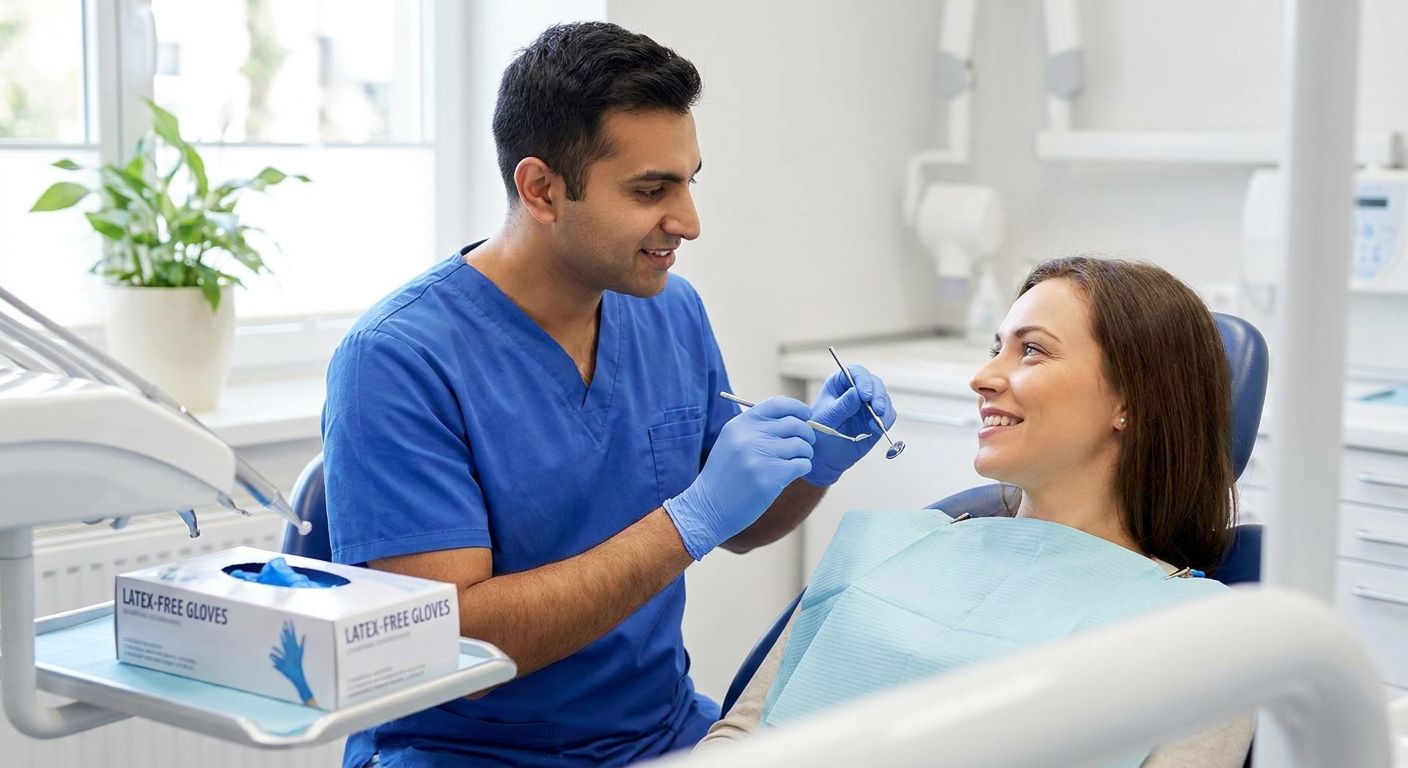
Dental care for patients with latex allergies means every material that touches your mouth — gloves, dams, prophy cups, anesthesia stoppers — has to be nitrile, vinyl, or silicone instead of natural rubber latex. A confirmed latex allergy changes the entire visit, not just the gloves the hygienist wears, because natural rubber latex proteins show up in dozens of dental supplies that never get a second thought from most patients.
- Dentist latex allergy care requires nitrile gloves, silicone dams, and latex-free anesthesia stoppers at every visit, not just swapped exam gloves.
- Latex-fruit cross-reactivity — banana, avocado, kiwi, chestnut — affects many patients with a true latex allergy, so mention both at booking.
- A written latex protocol beats a verbal promise; ask what’s documented in your chart, not just what’s said at the front desk.
- Carry an epinephrine auto-injector and a written allergy list if your reaction history includes swelling or anaphylaxis.
Why this matters for patients with latex allergies
Natural rubber latex was the dental industry's default material for decades because it stretches, seals, and costs less than synthetic alternatives. That default is exactly the problem for a patient with a true latex allergy: a rubber dam placed for a root canal, a prophy cup used during a cleaning, or the stopper inside an anesthesia cartridge can all trigger a reaction if nobody flags the allergy in advance.
Most dental offices in 2026 stock nitrile or vinyl gloves as the default, but "default" varies by practice, and dams, cups, and anesthesia components lag behind gloves in that shift. The reaction risk isn't hypothetical for anyone with a documented latex allergy — it's a materials-management problem the practice has to solve before you sit in the chair, not while you're in it.
Tell the practice before you book, not after you arrive
A phone call before scheduling gives the practice time to set up a latex-free room instead of scrambling mid-appointment.
- State "latex allergy" explicitly — not "sensitive to gloves" — since a documented allergy triggers a different prep checklist than a general sensitivity
- Describe your reaction history: hives, localized swelling, or anaphylaxis each change how cautious the team needs to be
- Ask whether the practice keeps a dedicated latex-free room or converts a standard room per patient
- Mention related food allergies in the same call, since fruit cross-reactivity is common in latex-allergic patients
- Request written confirmation in your chart so the note follows you to every future visit, not just this one
Confirm exactly what's stocked before the appointment
Gloves get the attention, but they're one piece of a longer supply list.
- Exam gloves: confirm nitrile or vinyl, not "low-protein" latex — reduced protein content still contains latex allergens
- Rubber dam: ask for a silicone or nitrile alternative instead of the standard natural rubber sheet
- Prophy cups and polishing wheels: latex-free versions exist and have to be requested by name
- Orthodontic elastics and bite blocks: flag this specifically if you're mid-treatment on Invisalign or braces
- Anesthesia carpule stoppers: some cartridges still use a latex plunger inside the syringe
Book with a practice that already runs a latex-free protocol
Calling around to vet every room, every supply drawer, and every anesthesia cartridge takes hours you don't have. The faster path is choosing a practice where latex-free is the standing protocol, not a special order.
- Ask if latex-free gloves, dams, and cups are default stock — not something ordered in after you call
- Confirm the protocol applies across services: cleanings, fillings, cosmetic work, and sedation consults
- New patients can flag the allergy directly while completing your first visit as a new patient, so it's in your chart before the first cleaning
- Ask how the office documents the allergy internally — a sticky note on a chart isn't the same as a flagged electronic record
Plan sedation and anesthesia around the allergy
Sedation and injectable anesthesia both involve equipment that can carry latex if nobody double-checks.
- Confirm anesthesia cartridges are latex-free before the injection, not after it's already loaded
- Ask how local anesthesia allergy protocols overlap with latex protocols — the two get confused often, but they're separate issues with separate fixes
- If anxiety is part of the picture, review sedation options for anxious patients since some sedation equipment (masks, tubing) historically used latex components
- Ask whether blood pressure cuffs and pulse oximeter clips used during sedation monitoring are latex-free too
Watch for cross-reactive exposure beyond the dental chair
Latex sensitivity doesn't stay confined to the exam room. The same natural rubber proteins show up in balloons, rubber bands, elastic waistbands, and household rubber gloves, and understanding proper condom use matters for the same reason — any product made from natural rubber latex carries the same trigger proteins, so a documented allergy shapes decisions well past the dental office.
- Balloons and rubber bands are common triggers at home and at school for kids with latex allergy
- Latex-fruit syndrome cross-reacts with banana, avocado, kiwi, and chestnut in a meaningful share of latex-allergic patients
- Medical devices outside dentistry — blood pressure cuffs, catheters, adhesive bandages — often use latex unless the packaging says otherwise
- Denture adhesive and retainer case packaging sometimes lists latex as an inactive ingredient; read labels instead of assuming
Carry documentation and emergency medication
A history of anaphylaxis changes what you should have on hand, not just what the practice stocks.
- Keep a written allergy list (latex plus any cross-reactive foods) in your wallet and phone
- Carry an epinephrine auto-injector if a past reaction included swelling of the throat or difficulty breathing
- Tell the front desk again at check-in, even if it's already in your chart — verbal confirmation catches gaps electronic records miss
- Ask the office how they'd handle a reaction on-site, and confirm that's a real plan, not a guess
Choose a practice with a written latex protocol, not a verbal one
A verbal "we'll take care of it" isn't the same as a documented procedure staff actually follow.
- Ask if the latex protocol is written down somewhere staff can reference, not just known informally
- Confirm the protocol covers hygienists, assistants, and the dentist — not just whoever answers the phone
- Ask how often supply orders are checked for latex content, since suppliers change formulations
Comparing latex-free options by situation
| Option | Best for | Key limitation |
|---|---|---|
| Nitrile exam gloves | Every routine cleaning and exam | Less elastic than latex, may need more pairs per longer visit |
| Silicone rubber dam alternative | Root canals and isolation-heavy procedures | Stiffer than latex, takes more practice to place correctly |
| Latex-free anesthesia carpules | Any injection-based procedure | Not stocked at every office — confirm before you book |
| Vinyl gloves | Short procedures and cleanings | Tears more easily during longer appointments |
| Full latex-free protocol office | Patients with a history of anaphylaxis | Fewer practices run this system-wide by default in 2026 |
“If the supply drawer doesn’t say latex-free, assume it isn’t.”
Common mistakes patients with latex allergies make
- Assuming "hypoallergenic" gloves are latex-free — many are just low-protein latex, and reduced protein content still triggers a reaction in sensitized patients
- Mentioning the allergy only once already in the chair, instead of at booking, which leaves no time to swap dams, cups, or anesthesia stoppers
- Overlooking cross-reactive food allergies on intake forms, which means the practice never connects a banana or avocado allergy to latex risk
- Forgetting that orthodontic elastics and retainer materials can carry latex residue between visits, not just during the appointment itself
FAQ
Can you get dental work done with a latex allergy?
Yes — dental work is safe for a latex allergy once the practice swaps in nitrile or vinyl gloves, silicone dams, and latex-free anesthesia stoppers. The allergy needs to be flagged before booking so the room and supplies are set up in advance.
Are dental gloves latex-free?
Most dental offices in 2026 default to nitrile or vinyl gloves, but this isn’t universal, so confirm with the specific practice. Ask specifically about nitrile or vinyl — not just ‘non-allergenic,’ which can still mean low-protein latex.
What is latex-fruit syndrome?
Latex-fruit syndrome is a cross-reactivity between latex proteins and certain foods, most commonly banana, avocado, kiwi, and chestnut. Patients with a confirmed latex allergy should mention these food allergies at booking, since the same proteins trigger both.
Do dental dams contain latex?
Standard rubber dams are made from natural rubber latex, so patients with a latex allergy need a silicone or nitrile alternative. This applies most directly to root canals and other isolation-heavy procedures where a dam is standard.
Is local anesthesia safe for a latex allergy?
Local anesthesia itself doesn’t contain latex, but some anesthesia cartridges use a latex plunger stopper inside the syringe. Confirm the cartridge is latex-free before the injection, separate from any local anesthesia allergy concerns.
How do you tell a dentist about a latex allergy?
Call before booking and state ‘latex allergy’ explicitly, along with your reaction history and any related food allergies. Ask for written confirmation in your chart so the note follows you to every future visit.
What happens if you have a latex reaction at the dentist?
Reactions range from localized swelling and hives to, in rare cases, anaphylaxis requiring epinephrine. Practices with a written latex protocol should have a plan for this already in place, which is worth confirming before your appointment.
Can kids have a latex allergy at dental visits?
Yes, children can have latex allergies, often from repeated exposure to latex balloons, gloves, or medical devices during earlier procedures. The same booking and material-checking steps apply for pediatric visits as for adults.
One last thing
Latex-fruit syndrome catches more patients off guard than the glove issue does. An estimated one-third to one-half of people with a confirmed latex allergy also react to at least one cross-reactive food — banana, avocado, kiwi, or chestnut — and most never connect the two until an allergist explains it. If you've had a reaction to any of those foods, mention it at your next dental booking even if you've never been formally diagnosed with a latex allergy. That single sentence on an intake form is often the only thing standing between a routine 2026 cleaning and an unplanned reaction.
Related guides
- Dental care for patients with Sjögren's syndrome
- How to check if dental insurance covers a procedure before you book