
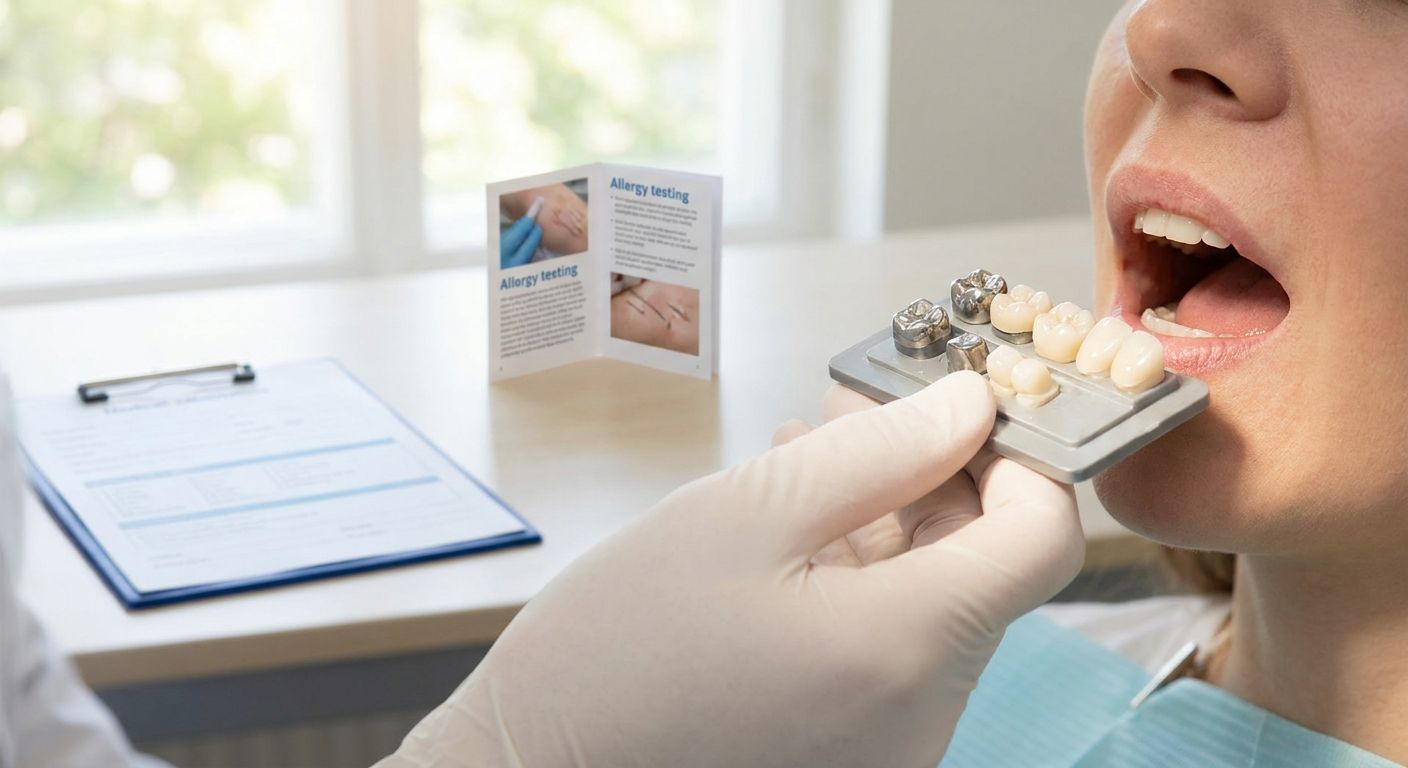
A suspected metal allergy to dental materials means tracking exactly which restoration triggers symptoms, getting patch testing through an allergist or dermatologist, and switching the confirmed trigger to a hypoallergenic alternative like zirconia or high-noble gold rather than replacing every metal restoration in your mouth at once. Nickel is the trigger in most confirmed cases, not titanium or amalgam, and the reaction usually shows up as localized gum redness, burning, or a metallic taste rather than a whole-mouth flare.
- Nickel causes most confirmed metal allergy dental materials cases, not titanium or amalgam.
- Patch testing through an allergist confirms the trigger before any restoration gets replaced.
- Zirconia crowns and high-noble gold are the standard hypoallergenic substitutes in 2026.
- Replace the suspect restoration first in 2026, then reassess before touching anything else.
- Titanium implant allergy is documented but affects under 1% of implant patients.
Why this matters
A burning sensation under a crown or unexplained gum redness near a filling gets blamed on gum disease or a bad bite far more often than it gets tested as an allergy. That delay means months of switching mouthwashes and toothpaste while the actual trigger, usually a nickel-containing alloy, stays in place.
Dental Arts of Atlantis sees this pattern with patients who already carry a known nickel allergy from earrings or watch bands and never connect it to the metal in a crown or partial denture. The fix isn't dramatic once the trigger is confirmed, but skipping the confirmation step means paying to replace the wrong restoration.
How to manage a suspected metal allergy to dental materials
Work through this in order rather than jumping straight to replacement:
- Log the symptom pattern. Note when burning, swelling, or a metallic taste started relative to any new crown, filling, partial denture clasp, or orthodontic wire. Delayed hypersensitivity reactions typically surface 24 to 72 hours after contact, not immediately.
- Pull your dental records. Ask your dentist which alloy was used in the suspect restoration. Most labs document whether a crown is high-noble gold, a nickel-chromium alloy, or zirconia, and this narrows the suspect list before any testing happens.
- Get referred for patch testing. An allergist or dermatologist runs a standard contact allergen panel that includes nickel sulfate and, in expanded panels, cobalt and chromium. This is the only way to confirm the trigger instead of guessing.
- Review hypoallergenic filling and crown options with your dentist once a trigger is confirmed, rather than before.
- Replace the confirmed restoration only. Swapping every metal-containing restoration in your mouth in 2026 wastes money if only one alloy is the actual problem.
- Recheck symptoms 4 to 6 weeks after replacement. If burning or gum irritation persists, the trigger may be something other than the replaced restoration, and testing should widen.
Nickel allergy: the most common trigger
Nickel-containing alloys show up in some crowns, partial denture frameworks, and orthodontic brackets and wires. Nickel allergy affects an estimated 10-20% of women and 1-3% of men, largely from jewelry and clothing snap exposure, and that same sensitivity carries over to dental alloys. If you already know you react to costume jewelry, flag it before any nickel-containing restoration goes in. Verdict: known nickel-sensitive patients should request nickel-free alloys upfront — this is the single most preventable version of this problem.
Titanium implant allergy: rare but real
Titanium is the standard material for dental implants because it's biocompatible for the overwhelming majority of patients. Documented titanium hypersensitivity is real but affects under 1% of implant patients, based on published implant dentistry literature, which makes it far less common than nickel reactions. Persistent inflammation or implant failure without an obvious infection is the pattern that should prompt a metal allergy work-up rather than a plaque or bite explanation. Anyone weighing implants with this concern in mind should raise it during a first implant consultation so the treatment plan accounts for it before surgery, not after.
Amalgam and mercury sensitivity
True allergic contact reactions to mercury in amalgam fillings are documented but less common than nickel reactions. Patients who suspect this usually describe a lichenoid reaction, a lace-like white patch on the cheek or tongue directly touching the filling, rather than a whole-mouth symptom. Anyone replacing older amalgam for this reason should look at mercury-free filling replacement as the direct next step once a dentist confirms the lesion sits against the amalgam surface.
Why reactions vary from patient to patient
- Alloy composition — nickel-chromium, cobalt-chromium, and high-noble gold all carry different reaction risk.
- Prior sensitization — jewelry, watch bands, and belt buckles pre-sensitize the immune system before a dental alloy ever goes in.
- Contact duration — a restoration under constant saliva contact provokes more reaction than one shielded by enamel.
- Concurrent allergies — patients with latex sensitivity often carry other contact allergies worth flagging during history-taking; see dental care for patients with latex allergies for how that history gets documented.
- Local anesthesia additives — a reaction near an injection site sometimes traces to preservatives, not metal at all; local anesthesia allergy management covers that distinction.
- Restoration age — older nickel-based crowns corrode over years, releasing more ions than a fresh restoration.
Ask about hypoallergenic materials
Review zirconia and high-noble gold options before any restoration gets replaced.
Related questions
Can a crown material cause an allergic reaction years after it's placed?
Yes, alloy corrosion increases over time, so a crown placed without issue in 2019 can start releasing enough nickel ions by 2026 to trigger a delayed reaction. This is why symptom onset with no recent dental work still warrants checking restoration age.
Does a metal allergy mean I need to avoid metal crowns entirely?
No, a confirmed nickel allergy only rules out nickel-containing alloys, not metal restorations broadly. High-noble gold, which contains little to no nickel, remains an option for patients who still want a metal crown on a back molar; see best crown material for a back molar for how that choice gets made.
Is patch testing covered before or after dental work starts?
Patch testing should happen before any suspect restoration gets placed whenever there's a known jewelry or metal sensitivity in your history, not after symptoms appear. Confirming the alloy tolerance ahead of time avoids a second procedure to remove and replace a restoration in 2026.
FAQ
What’s the most common metal allergy in dental materials?
Nickel causes most confirmed dental metal allergy cases, affecting an estimated 10-20% of women and 1-3% of men based on contact dermatitis data. It shows up in some crown alloys, partial denture frameworks, and orthodontic wires.
Is titanium implant allergy real?
Yes, but it’s documented in under 1% of implant patients according to published implant dentistry estimates. Persistent inflammation around an implant without infection is the typical warning sign.
How long after exposure does a dental metal allergy reaction show up?
Reactions typically surface 24 to 72 hours after contact because this is a delayed hypersensitivity response, not an immediate one. Symptoms include localized burning, redness, or swelling at the restoration site.
Can amalgam fillings cause metal allergy symptoms?
Amalgam-related contact reactions are documented but less common than nickel allergy, usually appearing as a lichenoid white patch directly touching the filling. Replacing the amalgam typically resolves the lesion.
How is a suspected dental metal allergy diagnosed?
An allergist or dermatologist confirms it through patch testing with a standard contact allergen panel that includes nickel sulfate. This identifies the exact trigger before any restoration gets replaced.
What materials count as hypoallergenic for crowns and fillings?
Zirconia and high-noble gold are the standard hypoallergenic substitutes once a nickel or other metal allergy is confirmed. Composite resin is also an option for smaller fillings.
Should every metal restoration get replaced if one triggers a reaction?
No, only the confirmed trigger needs replacement since a single alloy is usually responsible, not every metal restoration in the mouth. Replacing everything at once wastes money without testing first.
Does a nickel allergy from jewelry predict a reaction to dental metal?
Yes, patients already sensitized to nickel through jewelry or clothing snaps carry that same sensitivity into nickel-containing dental alloys. Flagging this history before treatment lets the dentist choose a nickel-free alloy from the start.
One last thing
The restoration age detail catches most patients off guard: a crown placed without any issue years ago can start triggering symptoms in 2026 simply because the alloy has corroded enough to release more ions than it did when new. If a metal restoration is old and symptoms appeared with no new dental work, restoration age belongs on the suspect list before anything else.
Related guides
- Best hypoallergenic fillings and crowns for sensitive patients
- Mercury-free filling replacement for old amalgam fillings
- Dental care for patients with latex allergies
- How to handle a local anesthesia allergy at the dentist
- Best crown material for a back molar