
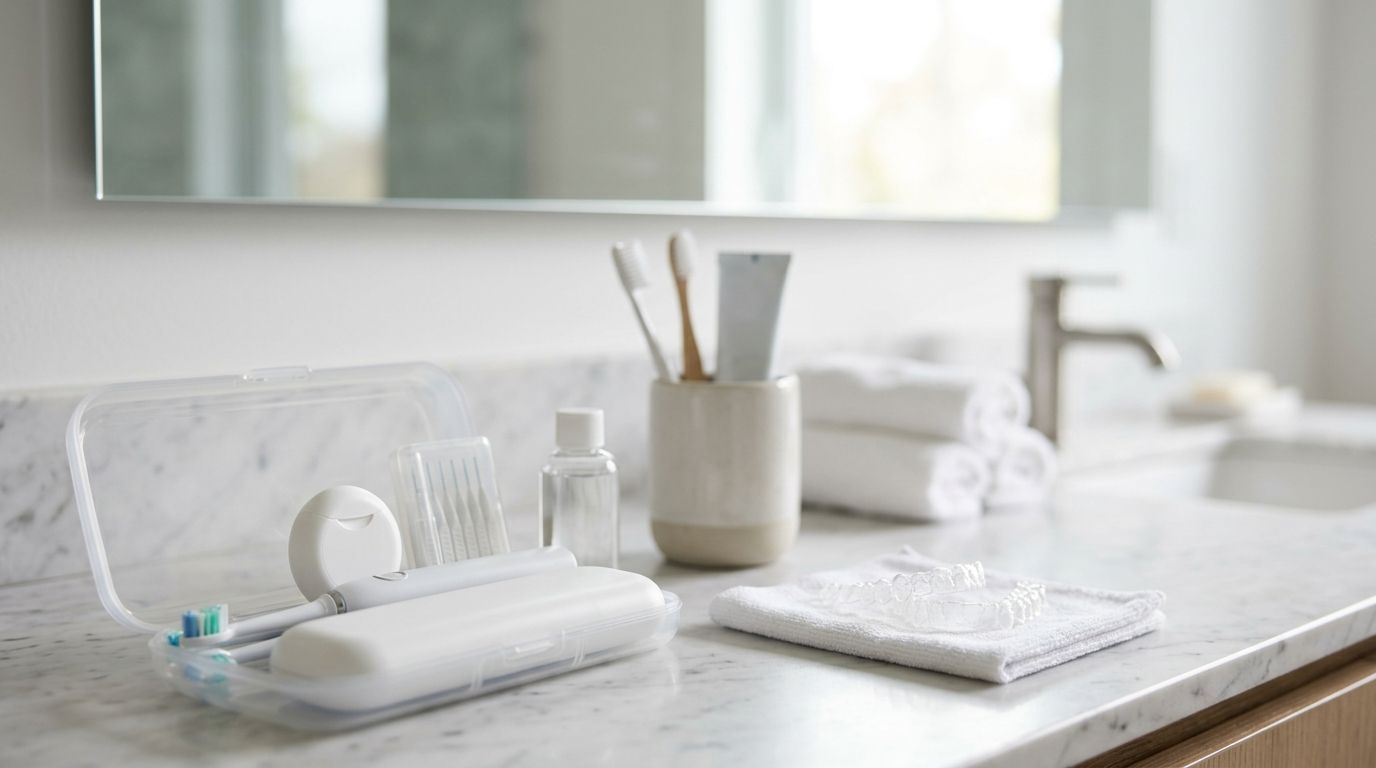
Invisalign trays trap plaque and food debris against your teeth for hours at a stretch, so the toothbrush and floss routine that worked before treatment isn't enough on its own in 2026. Best overall for daily aligner care: aligner cleaning crystals paired with a water flosser. Best for tight spots around attachments: interdental cleaning combined with a soft-bristle electric toothbrush. Best budget-friendly baseline: fluoride toothpaste and an alcohol-free rinse used consistently, even without extra gadgets.
- Aligner cleaning crystals plus a water flosser is the strongest daily combo for Invisalign wearers in 2026.
- Fluoride toothpaste for sensitive teeth protects enamel during the 20-plus hours a day trays stay on.
- Alcohol-free fluoride mouthwash helps prevent white-spot lesions forming under aligners.
- Xylitol gum is a Skip for anyone with active TMJ pain, but a Buy for managing dry mouth between meals.
Why this matters
Aligners hold saliva and bacteria against enamel for most of the day, and saliva is what naturally rinses and buffers your teeth when nothing is covering them. Without a deliberate hygiene routine, that trapped moisture becomes the exact environment that causes white-spot decalcification and gum inflammation around Invisalign treatment. The products on this list aren't optional extras — they're the difference between finishing treatment with a healthier mouth or finishing it with new sensitivity and staining that wasn't there when you started.
Dental Arts of Atlantis sees this pattern play out in Palm Beach County patients wearing Invisalign for both cosmetic and bite-correction reasons: the ones who add two or three of these products to their routine finish treatment with cleaner gum lines and fewer surprise cavities than the ones who rely on a plain toothbrush alone.
What makes the best oral hygiene products for Invisalign
- Enamel-safe abrasiveness — nothing gritty enough to scratch clear plastic trays or wear down enamel over months of daily use
- Fits inside a 20-22 hour wear schedule — has to work in the short windows when trays are actually out
- Reaches under attachments — the small tooth-colored bumps that hold trays in place trap food that a flat brush head can't clear
- Alcohol-free where it touches trays or gums — alcohol dries oral tissue and can cloud or warp aligner plastic over time
- Fluoride-forward — extended tray coverage means enamel gets less natural saliva contact, so topical fluoride matters more than usual
- Portable — Invisalign wearers brush and rinse in public bathrooms, at work, and between meals more often than typical patients
At a glance
| Product | Best for | Standout feature | Key limitation |
|---|---|---|---|
| Aligner cleaning crystals | Daily tray disinfecting | Dissolves plaque film without scrubbing | Won't clean teeth themselves |
| Water flosser | Rinsing under attachments | Reaches spots floss threaders miss | Takes longer than a quick brush |
| Soft-bristle electric toothbrush | Gentle daily brushing | Consistent pressure control | Needs charging, adds a device to travel |
| Sensitive-teeth fluoride toothpaste | Enamel protection during long wear | Built for prolonged tooth exposure to acid and plaque | Doesn't whiten as aggressively as some pastes |
| Alcohol-free fluoride mouthwash | Preventing white-spot lesions | Won't dry out gum tissue or cloud trays | Slower results than in-office fluoride |
| Xylitol gum or mints | Dry mouth between meals | Stimulates saliva flow without sugar | Not a substitute for brushing |
1. Aligner cleaning crystals: best for daily tray disinfecting
These are effervescent tablets or crystals dissolved in water that trays soak in for a few minutes each day. They dissolve the biofilm and odor-causing buildup that forms on plastic without the scratching risk of brushing trays with toothpaste.
Aligner cleaning crystal pros:
- Cleans without abrasive contact with the plastic
- Removes odor buildup that plain water rinsing misses
- Fast — most soaks run under 15 minutes
Aligner cleaning crystal cons:
- Does nothing for the teeth themselves, only the tray
- Recurring cost since they're a consumable, not a one-time purchase
Best for: anyone wearing trays 20+ hours a day who wants odor and film control without scrubbing.
Verdict: Buy.
2. Water flosser: best for rinsing under attachments
A water flosser aims a pressurized stream at the gumline and around the small attachment bumps bonded to teeth during Invisalign treatment. Those attachments are exactly where string floss struggles and where food debris sits longest.
Water flosser pros:
- Clears debris around attachments that floss threaders miss
- Faster than threading floss under trays multiple times a day
- Doubles as a general gum-health tool after treatment ends
Water flosser cons:
- Countertop models aren't practical for a lunch-break routine
- Doesn't replace brushing — it's a supplement, not a substitute
Best for: patients with multiple attachments who need a faster, more thorough midday rinse.
Verdict: Buy.
3. Soft-bristle electric toothbrush: best for gentle daily brushing
Invisalign wearers brush more often than average patients since trays come out for every meal. A soft-bristle electric brush applies consistent, controlled pressure so frequent brushing doesn't wear down enamel or irritate gums that are already adjusting to attachments.
Electric toothbrush pros:
- Even pressure reduces the risk of over-brushing enamel
- Timers help patients hit a full two-minute brush before trays go back in
- Rechargeable heads last longer than manual brush replacement cycles
Electric toothbrush cons:
- Adds a charging cable to travel bags
- Higher upfront setup than a manual brush
Best for: anyone brushing four or more times a day who wants pressure control built in.
Verdict: Buy.
4. Fluoride toothpaste for sensitive teeth: best for enamel protection during long wear
Extended tray coverage means less natural saliva contact with enamel throughout the day, which is exactly when sensitivity toothpaste earns its place. Formulas built for sensitive teeth combine fluoride with compounds that block the microscopic tubules that transmit hot-and-cold pain.
Sensitive-teeth toothpaste pros:
- Fluoride reinforces enamel during long stretches without saliva exposure
- Reduces cold-sensitivity that many Invisalign wearers report mid-treatment
- Works with any toothbrush, no extra equipment
Sensitive-teeth toothpaste cons:
- Whitening effect is milder than dedicated whitening pastes
- Sensitivity relief builds over days, not instantly
Best for: patients noticing new cold or sweet sensitivity a few weeks into Invisalign.
Verdict: Buy.
5. Alcohol-free fluoride mouthwash: best for preventing white-spot lesions
White-spot lesions are the chalky patches that show up when plaque sits against enamel too long — a known risk with any orthodontic appliance, aligners included. An alcohol-free fluoride mouthwash adds a topical fluoride layer without the drying effect that alcohol-based rinses have on gum tissue already working around attachments.
Alcohol-free mouthwash pros:
- Won't dry or irritate gums adjusting to attachments
- Adds fluoride exposure between toothpaste applications
- Safe to swish before reinserting trays, unlike alcohol-based rinses
Alcohol-free mouthwash cons:
- Results build over weeks, not overnight
- Doesn't remove plaque mechanically — brushing still has to happen
Best for: patients worried about white-spot staining showing up once trays come off for good.
Verdict: Buy.
6. Xylitol gum or mints: best for dry mouth between meals
Between meals, when trays are back in and saliva flow drops, xylitol gum stimulates saliva production and starves the bacteria that feed on sugar. It's a small habit that fills the gap between full brushing sessions.
Xylitol gum pros:
- Portable — fits in a pocket or bag for midday use
- Stimulates saliva flow, which naturally buffers acid
- Sugar-free, so it doesn't feed decay-causing bacteria
Xylitol gum cons:
- Not a brushing substitute
- Chewing gum with certain attachment types can loosen or dislodge trays if not fitted correctly
Best for: patients with dry mouth or long gaps between meals who need a saliva boost.
Verdict: Buy, with a check on attachment fit first.
How we ranked these
Each product on this list was weighed against the six criteria above: enamel safety, fit within a 20-22 hour wear schedule, ability to reach under attachments, alcohol-free formulation, fluoride content, and portability. Products that failed more than one criterion — like alcohol-based rinses or hard-bristle brushes — didn't make the cut for 2026 despite being common drugstore options.
Ask what your Invisalign plan needs
Get a hygiene routine matched to your attachments and wear schedule.
Which oral hygiene products should you choose?
For most Invisalign wearers in 2026, the combination of aligner cleaning crystals and a water flosser handles the two biggest risks: tray odor and attachment buildup. Add fluoride toothpaste for sensitive teeth if cold sensitivity shows up, and layer in an alcohol-free mouthwash if white spots are a concern given family history or past cavities. Xylitol gum is the easiest add for anyone managing dry mouth, but skip it if attachments are new and still settling.
Dental Arts of Atlantis builds Invisalign hygiene routines around each patient's attachment map and wear pattern rather than a one-size-fits-all kit, because a patient with six attachments needs a different daily routine than one with two.
FAQ
What’s the best way to clean Invisalign aligners daily?
Soak trays in aligner cleaning crystals for the time listed on the package, then rinse with lukewarm water before reinserting. Avoid toothpaste on the trays themselves since the abrasives can scratch and cloud the plastic.
Is a water flosser necessary with Invisalign?
It’s not required, but it clears food from around attachments faster and more thoroughly than string floss alone. Anyone with several attachments benefits most from adding one.
Can I use regular mouthwash with Invisalign attachments?
Alcohol-based rinses can dry gum tissue that’s already adjusting to attachments, so an alcohol-free fluoride mouthwash is the safer daily choice. Alcohol-based formulas are fine occasionally but shouldn’t be the everyday habit.
What toothpaste is safe for enamel while wearing Invisalign?
A fluoride toothpaste formulated for sensitive teeth protects enamel during the long stretches trays cover it each day. Look for one without high-abrasion whitening additives if sensitivity is already an issue.
How do I stop dry mouth from aligners?
Xylitol gum or mints between meals stimulate saliva flow and help buffer the mouth naturally. Staying hydrated throughout the day also reduces the dry-mouth effect trays can cause.
Do I need a special toothbrush for Invisalign?
A soft-bristle electric toothbrush isn’t mandatory, but it applies more even pressure during the frequent brushing Invisalign requires. That matters most for patients brushing four or more times a day.
How often should Invisalign aligners be cleaned?
Trays should be rinsed every time they come out and soaked in cleaning crystals once daily. Skipping daily soaks lets plaque film build up and causes the odor most wearers try to avoid.
What happens if I don’t clean my aligners properly?
Plaque and bacteria trapped against enamel for 20-plus hours a day raise the risk of white-spot decalcification and gum inflammation. Poor tray hygiene is one of the most common reasons Invisalign patients finish treatment with new sensitivity.
One last thing
The product most Invisalign wearers skip — and the one that matters most after treatment ends — is retainer care. Whatever cleaning routine works during active treatment should carry straight over to the retainer phase, since retainers trap plaque the same way trays do and get worn for years, not months.
Related guides
- How to care for your retainer after Invisalign treatment
- How to help a teen stay on track with Invisalign treatment