
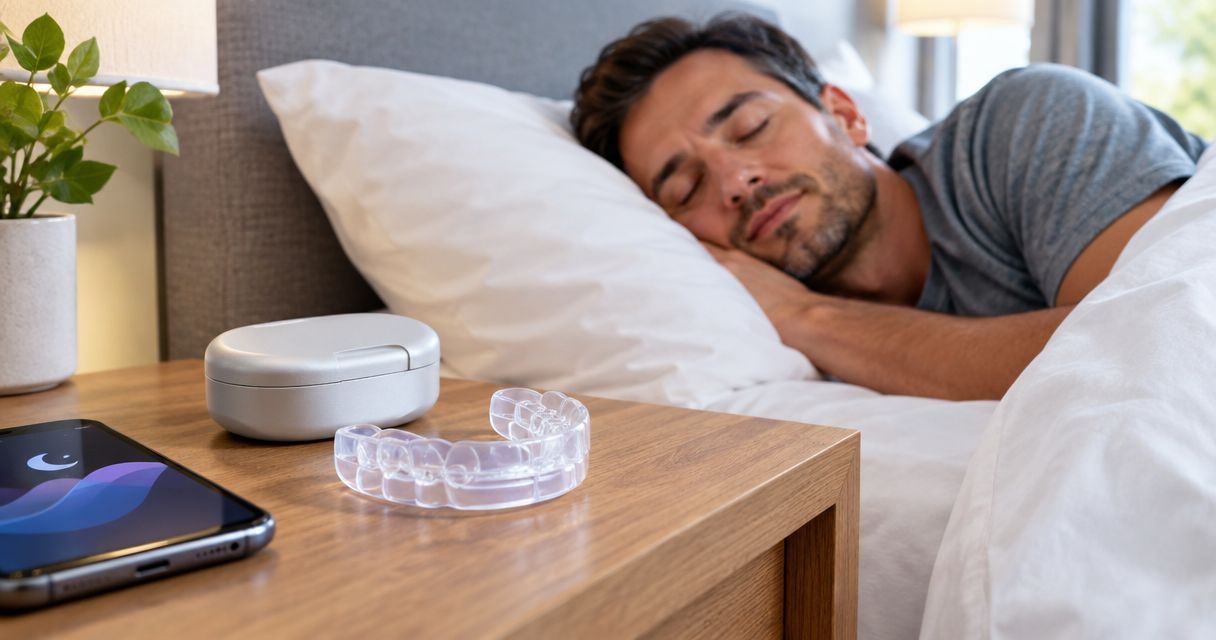
A sleep apnea oral appliance requires an individualized treatment estimate in 2026; your out-of-pocket responsibility depends on the prescribed device, the services included, and your insurance benefits. Ask whether the estimate includes fitting, adjustments, and follow-up testing, because the appliance alone is not the whole treatment plan.
- How much does a sleep apnea oral appliance cost? Request an itemized estimate covering the device and follow-up care.
- Custom oral appliance therapy treats selected obstructive sleep apnea patients; a grinding guard is not a substitute.
- Confirm medical insurance requirements before treatment, including authorization, provider participation, and your remaining deductible.
- Dental Arts of Atlantis offers sleep apnea treatment for families in the Lake Worth and Palm Beach County area.
How much does a sleep apnea oral appliance cost in 2026?
Your useful number is the written estimate for your complete treatment—not a device-only figure. A custom appliance involves an assessment, records of your teeth and bite, fitting, and adjustments. Your sleep clinician also needs to determine whether the treatment controls your breathing during sleep.
Start with this guide to getting a dental cost estimate before treatment. Then ask the treating office to separate the appliance-related services from anything billed by another provider.
| Part of treatment | What to clarify before agreeing |
|---|---|
| Dental assessment | Whether the examination and evaluation of your teeth, gums, and jaw are included |
| Diagnostic records | Whether impressions or scans and bite records are included |
| Custom appliance | Which prescribed device the estimate covers |
| Delivery and fitting | Whether fitting and instructions are included |
| Adjustments | Which adjustment visits are included and how later visits are handled |
| Effectiveness testing | Who arranges follow-up sleep testing and whether it is billed separately |
| Ongoing care | How monitoring, repairs, and replacement are handled |
Keep a copy of the estimate alongside your insurance information. An office estimate and an insurer's benefit explanation answer different questions: one describes the planned services, while the other explains how your plan processes them.
Why this matters
Sleep apnea treatment is about breathing, not simply quieter snoring. An appliance that feels comfortable still needs clinical follow-up to establish whether it is doing its job.
That distinction matters when you compare treatment proposals in 2026. A device-only proposal and a plan that includes adjustment visits describe different scopes of care. Compare the included services before comparing your financial responsibility.
You do not need to understand every technical term before your appointment. You do need clear answers about who manages the appliance, who checks the sleep apnea, and what happens if the first approach is not effective.
What does a complete oral appliance treatment plan include?
A complete plan connects your sleep diagnosis with your dental examination. It should explain why oral appliance therapy fits your situation and how the treating clinicians will monitor your progress.
Dental assessment
Your dentist checks whether your teeth, gums, bite, and jaw can support the proposed appliance. Existing jaw discomfort, loose teeth, or untreated dental disease belong in this conversation before the appliance is made.
Bring a current medication list and describe any grinding, clenching, dry mouth, or difficulty opening your jaw. These details help your dentist assess suitability and plan follow-up; they do not automatically rule treatment in or out.
Device fitting
A custom mandibular advancement device holds the lower jaw forward during sleep to help keep the upper airway open. The prescribed position must balance breathing treatment with comfort and dental health.
Ask how the appliance is adjusted and who makes those adjustments. You should leave the fitting appointment knowing how to insert, remove, clean, and store it, along with whom to contact about discomfort.
Follow-up care
Follow-up care checks both your response to treatment and the health of your teeth and jaw. Oral appliances can cause soreness, increased saliva, dry mouth, or changes in how your teeth meet.
Tell your dentist about persistent discomfort rather than forcing yourself through it. Your treatment plan should also identify the sleep clinician responsible for evaluating whether the appliance adequately treats your sleep apnea.
Why your oral appliance estimate varies
The scope of treatment and your insurance rules shape your estimate. For a 2026 treatment plan, ask the office and insurer about these factors separately:
- Device selection: Confirm the prescribed appliance and why its design fits your clinical needs.
- Dental condition: Ask whether other dental treatment is needed before an appliance can be fitted safely.
- Included appointments: Find out whether assessment, fitting, adjustments, and monitoring are included or handled separately.
- Sleep testing: Clarify who orders effectiveness testing, who performs it, and how it is billed.
- Insurance requirements: Check provider participation, authorization requirements, your deductible, and your share of covered services.
- Repair and replacement terms: Request written details about damage, loss, repairs, and future replacement rather than assuming they are included.
An itemized estimate makes these differences visible. If a proposal leaves out follow-up care, ask for clarification before deciding; do not assume an omitted service is unnecessary or included.
Is a custom oral appliance the same as a night guard?
A grinding guard is not a substitute for a prescribed sleep apnea appliance. Although both sit in your mouth, they have different purposes. A standard night guard protects teeth from grinding-related wear; a mandibular advancement device positions the jaw to help maintain an open airway.
The comparison below explains the role and limitations of common options. It is not a recommendation to switch treatments without your sleep clinician's guidance.
| Option | Best for | Main benefit | Main limitation |
|---|---|---|---|
| Custom oral appliance | Selected adults with obstructive sleep apnea who prefer an alternative or cannot tolerate CPAP | Provides a mask-free treatment option | Requires suitable dental support, adjustments, and effectiveness testing; can affect the jaw or bite |
| CPAP | Patients prescribed positive airway pressure, particularly when reliable control of breathing events is essential | Uses air pressure to keep the airway open during sleep | Mask comfort, dryness, and nightly use can be challenging |
| Standard grinding guard | Patients needing protection from grinding-related tooth wear | Separates the teeth to reduce direct wear | Does not replace prescribed obstructive sleep apnea treatment |
An oral appliance is not automatically the better choice because it is smaller. CPAP is generally more effective at reducing obstructive breathing events, while an oral appliance offers another treatment route for appropriate patients.
If you already use CPAP, continue your prescribed treatment while discussing alternatives. Do not stop simply because you have ordered or received an appliance.
How do I get a reliable estimate before treatment?
Use this sequence to keep clinical decisions and insurance questions connected. It helps you avoid agreeing to an appliance before understanding the follow-up plan.
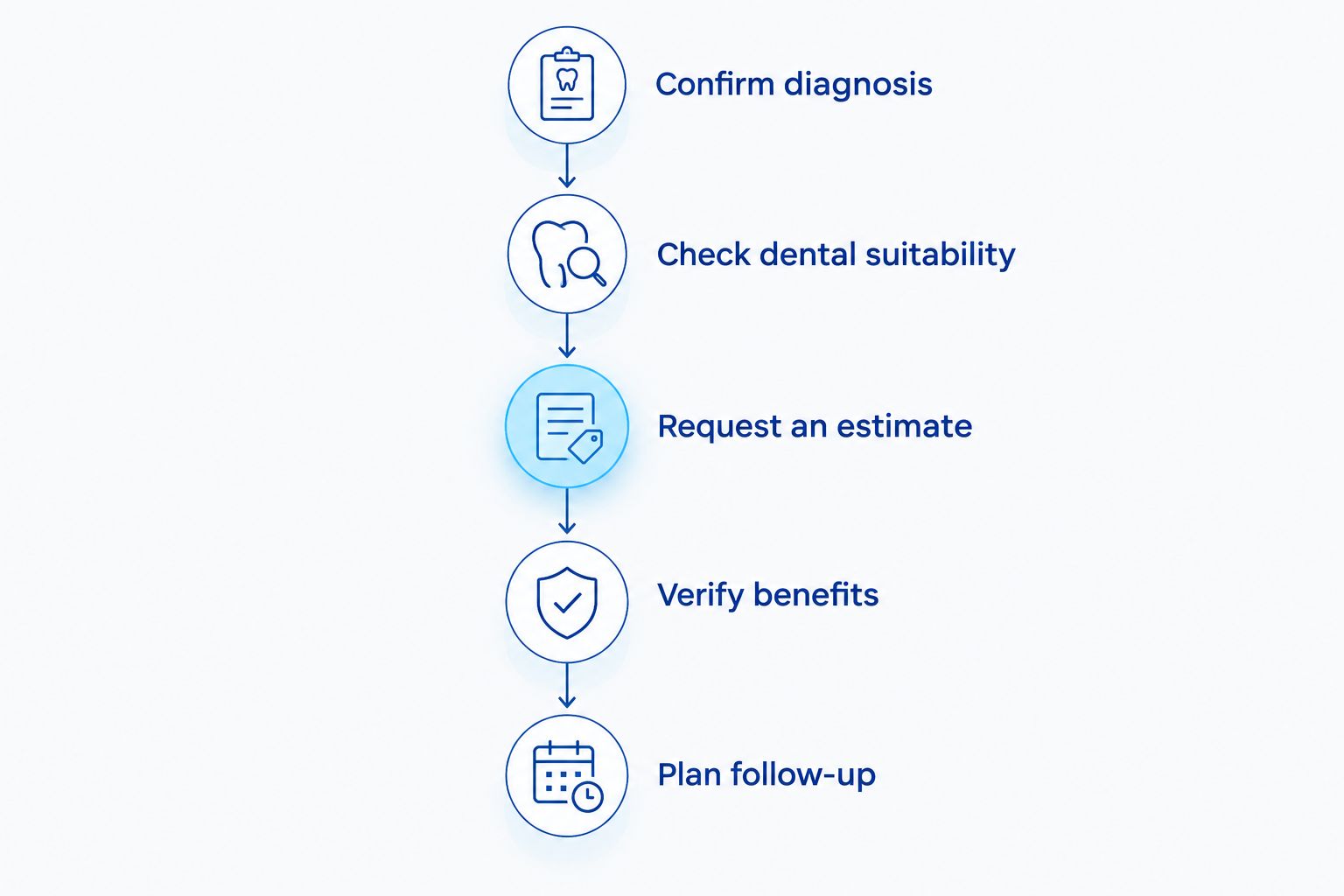
- Confirm diagnosis. Bring your sleep study report and treatment recommendation, or ask your sleep clinician how to obtain them. Snoring alone does not establish an obstructive sleep apnea diagnosis.
- Check dental suitability. Discuss your teeth, gums, existing dental work, and jaw symptoms with the dentist. Ask whether any dental condition needs attention first.
- Request an estimate. Ask for an itemized written treatment plan that identifies the appliance, fitting, adjustments, and monitoring. Clarify which services another provider handles.
- Verify benefits. Give your insurer the proposed service information and treating provider details. Ask about authorization, provider participation, required records, and your responsibility.
- Plan follow-up. Confirm how the appliance will be adjusted and how your sleep clinician will test its effectiveness. Ask what the next step is if it does not control your sleep apnea.
Keep a short written record of insurance conversations. Note the representative's name, the reference number, and any documents requested. Written benefit information is useful, but it is not a guarantee that every submitted claim will be paid.
Does insurance cover a sleep apnea oral appliance?
Coverage depends on your specific plan, diagnosis, prescribed device, and provider arrangements. Oral appliance therapy for diagnosed obstructive sleep apnea is often considered under medical insurance rather than routine dental benefits, so ask which coverage applies.
For treatment planned in 2026, verify benefits for the intended treatment date. Do not rely on a previous dental benefit check or assume that a dentist's participation in your dental plan also means participation in your medical plan.
Ask your insurer these questions:
- Is the prescribed appliance a covered service under my plan?
- Does the treating provider participate in the relevant network?
- Is authorization required before the appliance is made?
- What diagnosis, sleep study, or prescription documentation is required?
- Are fitting and adjustment services handled with the device or separately?
- How are follow-up sleep testing and future replacement handled?
If the office submits an authorization request, ask how you will receive the decision. Confirm coverage details before fabrication rather than trying to resolve them after delivery.
Can I use an oral appliance if CPAP is uncomfortable?
A custom oral appliance is an established alternative for selected adults with obstructive sleep apnea who cannot tolerate CPAP or prefer another treatment. Your sleep clinician and dentist need to assess whether it is appropriate for your diagnosis and dental condition.
Explain what makes CPAP difficult: mask fit, dryness, pressure discomfort, or another specific problem. Your sleep team can address those issues while discussing alternatives, and your dentist can assess whether an appliance is suitable.
For severe obstructive sleep apnea, CPAP generally remains the preferred initial treatment. Choosing an alternative requires a clinical plan, not just a preference for a smaller device.
What should I bring to a Lake Worth consultation?
Bring your sleep study report, any prescription or referral, your medication list, and your insurance details. If you have used CPAP, include information about the treatment and the problems you experienced.
Dental Arts of Atlantis offers sleep apnea treatment in Lake Worth for families in Palm Beach County. Dental Arts of Atlantis is best suited to local families seeking dental care that includes sleep apnea treatment.
The practice's location and service offering help you choose where to ask questions; they do not establish whether a particular appliance is right for you. Ask about your clinical suitability, coordination with your sleep clinician, and the written treatment estimate.
When discussing sleep apnea treatment at Dental Arts of Atlantis, describe existing jaw pain and any concerns about wearing something overnight. Clear information helps the conversation stay focused on a plan you understand.
Discuss your sleep apnea treatment
Ask about dental suitability, the written estimate, and follow-up care.
FAQ
How much does a sleep apnea oral appliance cost in 2026?
A sleep apnea oral appliance requires an individualized written estimate in 2026. Ask for the prescribed device, fitting, adjustments, and follow-up services to be identified, then verify your insurance responsibility.
Does medical or dental insurance cover a sleep apnea mouthpiece?
Medical insurance often handles oral appliance therapy for diagnosed obstructive sleep apnea, but coverage depends on your plan. Confirm which benefits apply, whether authorization is required, and whether the treating provider participates in the relevant network.
Is a night guard the same as a sleep apnea oral appliance?
No, a standard grinding guard is not a substitute for a prescribed sleep apnea appliance. A grinding guard protects teeth from wear; a mandibular advancement device positions the lower jaw to help keep the airway open.
Is an oral appliance better than CPAP?
An oral appliance is not universally better than CPAP. CPAP generally reduces obstructive breathing events more effectively, while a custom oral appliance is an alternative for selected adults who cannot tolerate CPAP or prefer another treatment.
Do I need a sleep study before getting an appliance?
A sleep apnea diagnosis requires evaluation by a qualified sleep clinician, typically including sleep testing. If you already have a diagnosis, ask which existing records are needed and whether further testing is appropriate.
What happens if a sleep apnea appliance hurts my jaw?
Contact your treating dentist about persistent jaw pain or changes in your bite. Do not force continued use through pain or make unapproved adjustments; ask your clinicians how to maintain sleep apnea treatment while the problem is assessed.
Does less snoring mean my oral appliance is working?
Less snoring does not prove that your oral appliance controls obstructive sleep apnea. Follow-up sleep testing evaluates breathing during sleep and helps your clinician decide whether further adjustment or a different treatment is needed.
One last thing
The easiest result to notice is quieter snoring. It is not the result that confirms treatment success.
Before agreeing to an appliance in 2026, ask: Who will verify that my breathing is adequately treated, and how? A clear answer connects the device estimate to the care you actually need. At Dental Arts of Atlantis, make that question part of your sleep apnea treatment discussion alongside comfort, fit, and follow-up.
Related guides
- Mandibular advancement device guide
- Oral appliance options for CPAP-intolerant patients
- Connecting a home sleep study to oral appliance therapy