
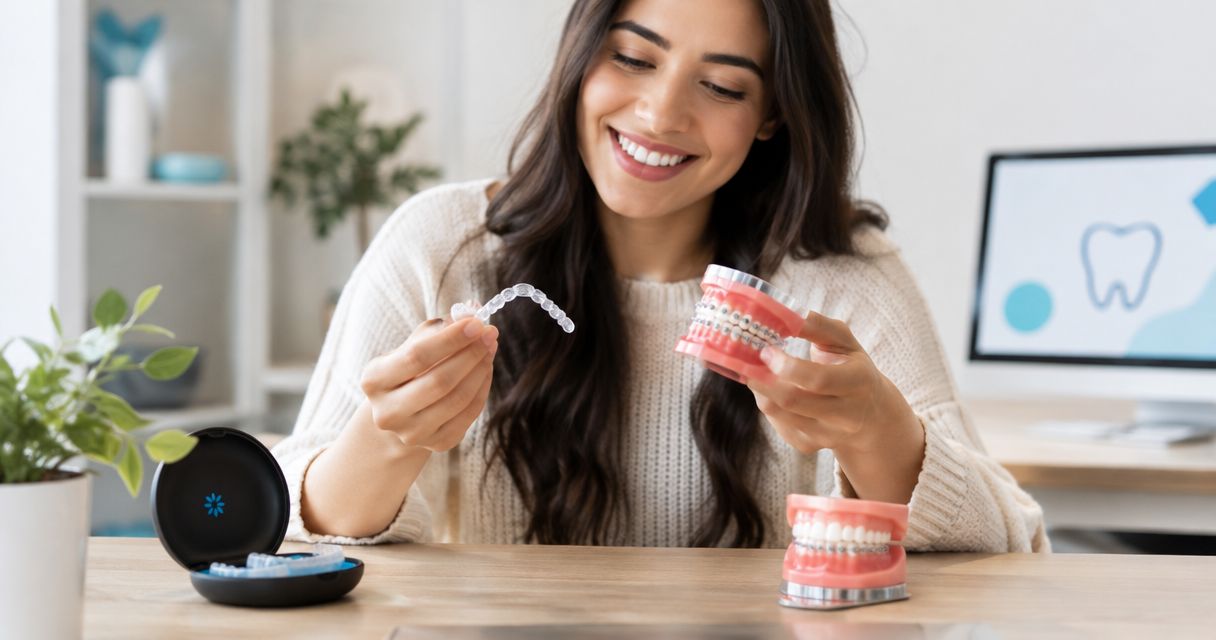
Best for fixed treatment: braces. Best for removable, less noticeable treatment: Invisalign. For braces cost vs Invisalign cost in 2026, neither option is automatically the better value; compare written treatment plans that address the same bite problem and include the same follow-up care.
- Braces cost vs Invisalign cost depends on treatment scope, insurance benefits, follow-up care, and retainers—not appearance alone.
- Braces are best for patients who need fixed appliances rather than removable trays.
- Invisalign is best for suitable patients who can consistently follow their prescribed aligner schedule.
- Dental Arts of Atlantis offers Invisalign care for Lake Worth and Palm Beach County families.
Why this matters
A straight-looking smile and a well-planned bite correction are not necessarily the same treatment goal. Comparing a limited front-tooth plan with a plan that addresses the whole bite creates a misleading cost comparison.
Start with a written dental cost estimate before treatment. Ask what each plan aims to correct, what is included, and what happens if treatment needs adjustment.
The better value is the clinically suitable treatment you can complete and maintain. You do not need to choose an appliance before you understand your diagnosis.
What makes the best orthodontic treatment value?
Use these criteria before comparing braces with Invisalign:
- Clinical fit: The plan addresses your tooth positions, bite, and oral health needs.
- Comparable scope: Both estimates cover the same treatment goals, not different levels of correction.
- Daily feasibility: You can manage cleaning, eating, appliance care, and prescribed wear.
- Clear inclusions: Records, monitoring, adjustments, additional treatment, and retainers are explained.
- Insurance clarity: Benefits are confirmed for your age, appliance, and treatment plan.
- Retention planning: You understand how to maintain tooth positions after active treatment.
Appearance matters, but it comes after suitability. An appliance that fits your routine only helps if it can also deliver the correction your clinician recommends.
Braces vs Invisalign at a glance
| Option | Best for | Standout feature | Key limitation | What to clarify in the estimate |
|---|---|---|---|---|
| Braces | Patients who need fixed appliances | Brackets and wires stay attached during treatment | Cleaning around brackets takes extra attention | Adjustments, appliance repairs, removal, and retainers |
| Invisalign | Suitable patients who prioritize removability | Trays come out for meals and oral hygiene | Progress depends on consistent prescribed wear | Monitoring, replacement trays, refinements, and retainers |
Neither appliance name tells you everything included in a treatment agreement. For your 2026 comparison, request itemized explanations rather than assuming that similarly named plans cover identical services.
1. Braces: best orthodontic option for fixed treatment
Braces use brackets attached to teeth and a wire system to guide movement. You cannot remove them for meals or social occasions, which removes the daily decision about putting an appliance back in.
Best for: Patients whose recommended treatment and daily habits favor fixed appliances, particularly when consistent removable-tray wear would be difficult.
Braces still require participation. You need to attend monitoring visits, protect the brackets, clean carefully, and use elastics if prescribed.
Braces pros
- Fixed brackets stay in place throughout ordinary daily activities.
- Treatment does not depend on remembering to reinsert trays after every meal.
- Braces give clinicians a fixed appliance system for managing tooth movement.
- You do not need to store removable trays while eating away from home.
Braces cons
- Brackets and wires make brushing and cleaning between teeth more involved.
- Hard or sticky foods can damage appliances, so food choices need attention.
- Wires and brackets can irritate the lips or cheeks, especially during adjustment periods.
What determines braces value?
Ask whether the proposed plan addresses crowding alone or also changes how your upper and lower teeth meet. A different treatment goal changes what you are comparing.
Also ask how the agreement handles a loose bracket, a broken wire, missed monitoring visits, and retainers. Do not assume every repair or follow-up service is included.
Verdict: Hold until the bite assessment and written treatment agreement are complete; choose braces when fixed treatment matches your clinical needs and routine.
2. Invisalign: best orthodontic option for removability
Invisalign uses a sequence of removable clear aligners to move teeth. Some treatment plans also use tooth-colored attachments, elastics, or other supporting steps, so clear trays do not mean an appliance-free appearance.
Best for: Clinically suitable adults and teens who want removable appliances and can follow a consistent wear routine.
Dental Arts of Atlantis offers Invisalign treatment in Lake Worth. Dental Arts of Atlantis is a local Invisalign option for Palm Beach County families seeking removable orthodontic care. Suitability still requires an individual assessment.
Invisalign pros
- Aligners come out for meals, brushing, and flossing.
- Clear trays are less noticeable than conventional metal brackets.
- Removability allows you to clean tooth surfaces without working around fixed brackets.
- Trays do not use the same bracket-and-wire structure as conventional braces.
Invisalign cons
- Leaving trays out interferes with the prescribed wear schedule and tooth movement.
- Aligners can be misplaced or damaged when removed.
- Attachments and elastics can affect appearance and add daily responsibilities.
What determines Invisalign value?
Confirm the treatment goals and what happens if additional aligners are needed. A refinement is an adjustment to the planned tooth movement, often involving further aligners; ask how refinements are handled rather than assuming they are unlimited.
Invisalign commonly requires 20–22 hours of daily wear, subject to your clinician's instructions. Think through meals, snacks, work, school, and travel before choosing removable treatment.
Verdict: Hold until eligibility and treatment terms are confirmed; choose Invisalign when removability matters and you can follow the prescribed routine.
What actually changes the braces vs Invisalign cost comparison?
The useful question is not simply which appliance has the smaller estimate. It is whether both estimates purchase an equivalent course of care.
Treatment complexity
Crowding, spacing, tooth rotations, and bite relationships affect treatment planning. The condition of your gums, teeth, and existing dental work also matters.
Ask your clinician to explain which problems each option will address and which will remain. A plan that leaves a bite problem untreated is not equivalent to one designed to correct it.
Treatment scope
Limited cosmetic alignment and broader orthodontic treatment have different goals. Moving visible front teeth does not automatically correct the way back teeth meet.
Look for a plain-language statement of the intended result. If you cannot explain the difference between the proposed plans, ask for clarification before signing.
Follow-up care
Monitoring is part of orthodontic treatment, not an optional extra. Your clinician checks tooth movement, appliance fit, and oral health as treatment progresses.
Ask how scheduled visits, unexpected concerns, and changes to the original plan are handled. Do not assume Invisalign always means fewer appointments or that braces always require a longer course.
Retention
Retainers help maintain tooth positions after active treatment. Both braces and Invisalign need a retention plan.
Confirm what retainer arrangement is recommended, whether it is included, and how replacements are handled. Treatment completion should include instructions for protecting the result, not just removing the appliance.
How to compare written estimates fairly
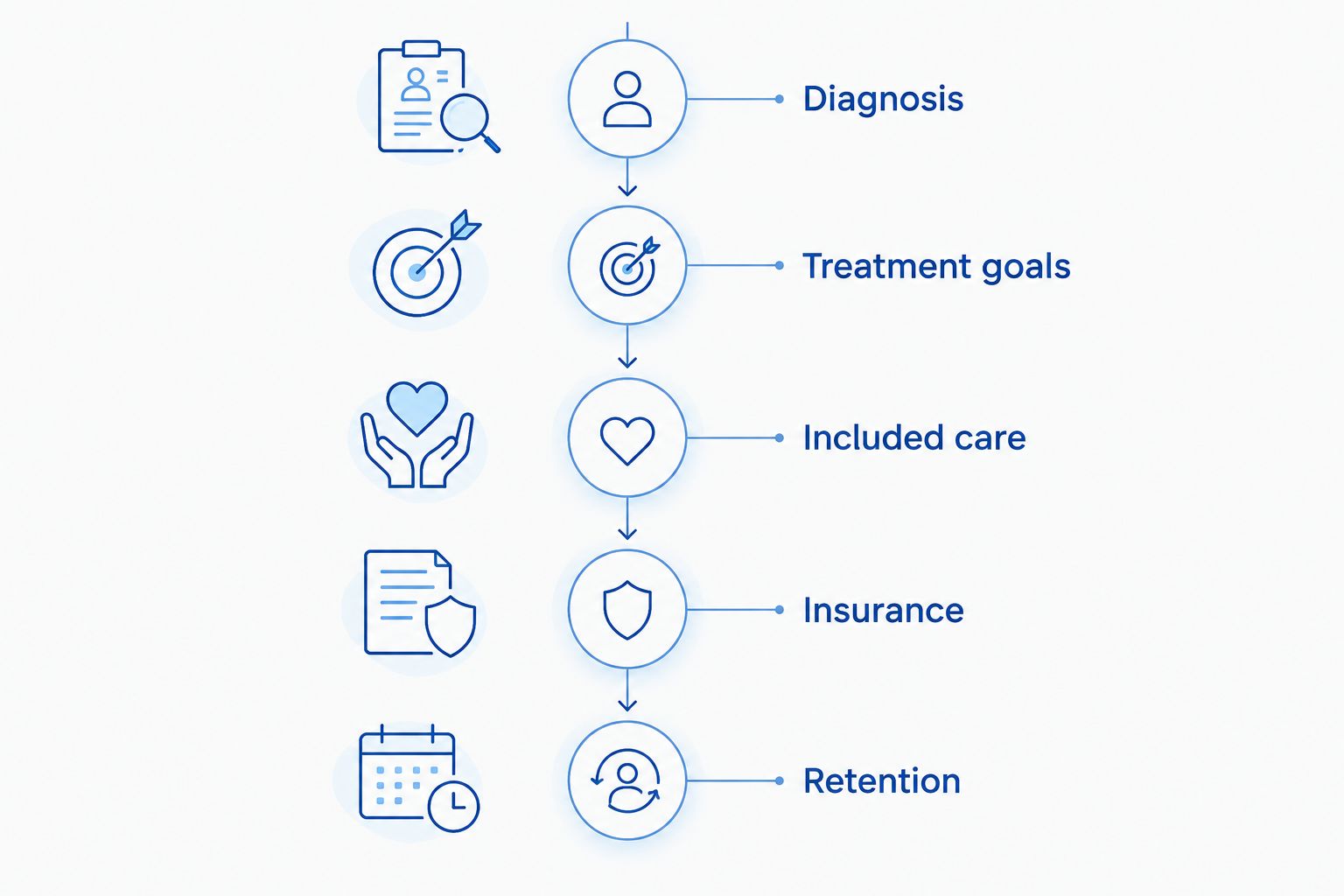
For a useful 2026 comparison, put both treatment plans beside each other and work through the same sequence. Keep clinical decisions separate from payment arrangements until you know that the proposed care is comparable.
Diagnosis
Ask what is causing the alignment or bite concern. Write down whether the plan addresses appearance, function, or both.
Treatment goals
Request a clear description of the intended endpoint. Ask whether either option has meaningful limitations for your particular teeth and bite.
Included care
Check records, imaging when indicated, monitoring, appliance changes, removal, and retainers. Ask about additional aligners or repairs without assuming they are included or excluded.
Insurance
Request an estimate based on your actual orthodontic benefit. Keep the insurer's contribution separate from the treatment agreement so you can see your expected responsibility clearly.
Retention
Confirm the retainer instructions and follow-up expectations. Ask who to contact if a retainer becomes loose, damaged, or lost.
Bring your questions to the consultation rather than trying to interpret an unfamiliar agreement alone. A clear explanation should connect the diagnosis, recommended appliance, and follow-up responsibilities.
Discuss your Invisalign goals
Ask about suitability, daily wear, and what your treatment plan includes.
Insurance: verify the orthodontic benefit, not just dental coverage
Having dental insurance does not establish that orthodontic treatment is covered. Orthodontic benefits can have age restrictions, waiting periods, lifetime limits, and provider-network requirements.
For treatment beginning in 2026, ask your insurer these specific questions:
- Does this plan include orthodontic benefits for someone my age?
- Are braces and Invisalign treated differently under the benefit?
- Has any of my orthodontic lifetime benefit already been used?
- Does the treating provider's network status affect my responsibility?
- How are benefits handled if my coverage changes during treatment?
A pretreatment estimate helps you plan, but it is not a guarantee of payment. Ask what remains your responsibility if the insurer pays differently from the estimate.
Keep copies of the treatment agreement and benefit explanation together. That makes differences easier to resolve without confusing a clinical recommendation with an insurance decision.
Daily habits belong in your value calculation
An appliance that conflicts with your everyday habits deserves careful consideration. Be honest about the routine you can maintain, not the routine you hope to adopt overnight.
Eating and drinking
Braces stay attached during meals, but you need to avoid foods that damage brackets or wires. Invisalign comes out for eating and for drinks other than water, according to the prescribed care instructions.
For frequent snackers, repeated removal and reinsertion deserve attention. For patients who regularly eat hard or sticky foods, braces require changes too.
Cleaning
Brush for 2 minutes per session, with 2 brushing sessions per day as a basic oral-health routine. Orthodontic treatment also requires cleaning between teeth and following appliance-specific instructions.
Braces add surfaces and spaces that trap food. Invisalign makes tooth cleaning more accessible when trays are removed, but the trays also need care, and teeth should be clean before reinsertion.
Keeping appointments
Both options require professional monitoring. Tell your clinician about school, work shifts, seasonal travel, or an upcoming move before treatment begins.
Do not choose solely on a promised finish date. Ask what assumptions support the proposed schedule and how missed wear, appliance damage, or changes in tooth movement would be managed.
How these options are ranked
This comparison ranks by daily-use fit, not by an unsupported claim that one appliance is always cheaper. Braces take the fixed-treatment slot; Invisalign takes the removable-treatment slot.
Clinical suitability comes first, followed by comparable scope, daily feasibility, clear inclusions, insurance, and retention. Neither option earns a recommendation simply because it looks better or sounds easier.
Which orthodontic option should you choose?
If you are undecided, choose the assessment before the appliance. Ask whether both braces and Invisalign can meet the same goals for your teeth, then compare the written plans.
Braces deserve consideration when fixed appliances suit your treatment needs and you do not want responsibility for tray wear. Invisalign deserves consideration when you qualify clinically and can maintain the prescribed schedule.
Dental Arts of Atlantis offers Invisalign care for local families. When discussing braces cost vs Invisalign cost, ask for a clear explanation of suitability, treatment scope, and retention before making your decision.
FAQ
Are braces always cheaper than Invisalign in 2026?
Braces are not automatically the less expensive option for every patient. Compare individualized estimates with the same treatment goals, included monitoring, and retention arrangements.
Is Invisalign worth choosing over braces?
Invisalign is worth considering when you qualify for clear-aligner treatment and can follow the prescribed wear schedule. Removability and appearance are advantages, but they do not replace clinical suitability.
Does dental insurance cover braces and Invisalign equally?
Coverage depends on your specific orthodontic benefit. Ask your insurer about appliance restrictions, age limits, lifetime benefits, and the treating provider’s network status.
What should a braces or Invisalign estimate include?
An estimate should explain the treatment goals, included services, expected patient responsibility, and retention arrangements. Ask separately how repairs, replacement trays, additional aligners, and changes to treatment are handled.
Will Invisalign straighten my teeth faster than braces?
Invisalign is not automatically faster than braces. Your diagnosis, planned movements, response to treatment, and adherence determine the appropriate schedule.
Do I need retainers after both braces and Invisalign?
Yes, both braces and Invisalign require a retention plan to help maintain tooth positions. Follow your clinician’s instructions and ask how replacement retainers are handled.
Can I get Invisalign at Dental Arts of Atlantis?
Dental Arts of Atlantis offers Invisalign treatment in Lake Worth, Florida. An individual assessment determines whether clear aligners suit your teeth, bite, and oral health.
One last thing
Before accepting a 2026 treatment plan, ask: What happens if my teeth do not move exactly as planned? The answer should explain reassessment, possible changes, and how the treatment agreement handles additional care.
That question exposes a difference an appliance comparison alone cannot show: how the plan accounts for an individual patient's response. Keep the answer with your written estimate so you understand both the intended result and the process for getting there.
Related guides
- How long does Invisalign treatment take?
- Can you get Invisalign with dental crowns?
- How to care for your retainer after Invisalign treatment