
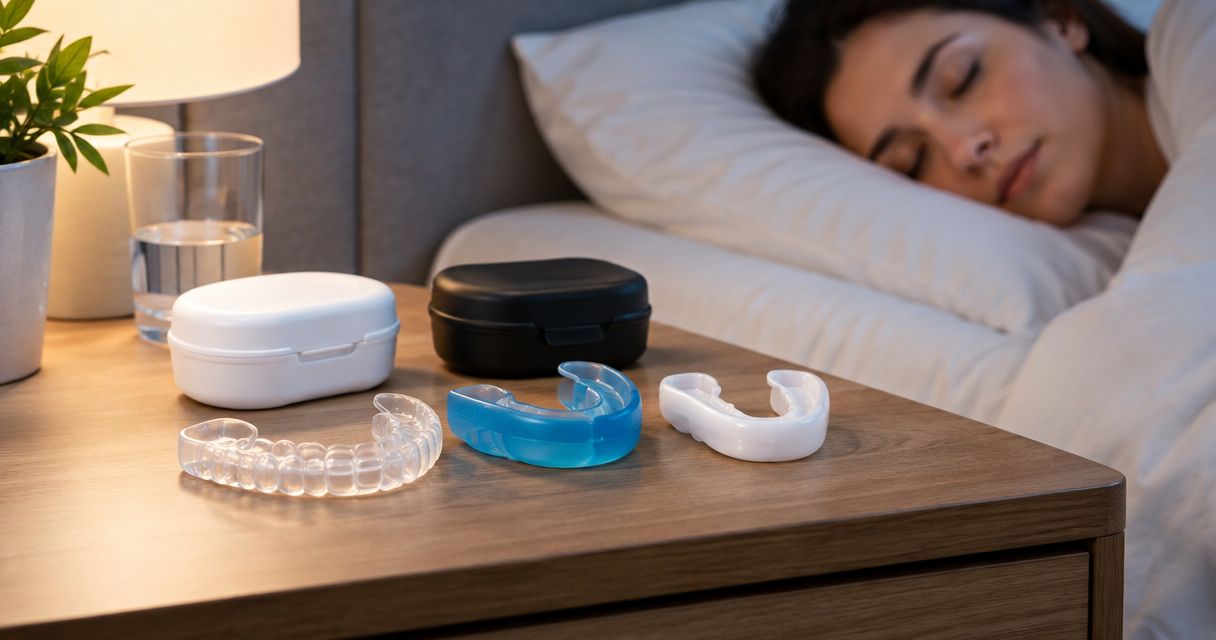
Choosing the wrong night guard material means a cracked shell in six weeks or a soft guard chewed through by month three — the material you pick decides whether the appliance actually protects your teeth or ends up in a drawer.
- Custom dual-laminate night guards win overall for moderate-to-severe grinders who want durability without bulk.
- Custom hard acrylic is the best night guard material for teeth grinding when clenching force is heavy or a soft guard already failed.
- Custom soft silicone/EVA suits mild grinders and daytime clenchers, not confirmed nocturnal bruxism.
- Boil-and-bite guards from the pharmacy are a short-term bridge, not a real fix, and usually need replacing within weeks.
Why this matters
Teeth grinding, or bruxism, wears flat facets into enamel, cracks fillings, and loosens crowns over years of nightly repetition. A lot of patients only find out how bad it is when a dentist points out flattened cusps or a fractured molar that never hurt until it did.
If jaw tightness or morning headaches led you here, it's worth checking whether bite misalignment is causing your headaches before assuming a night guard alone will solve it — grinding and bite problems often travel together. The guard material matters because a mismatch between grinding severity and material strength is the single biggest reason people give up on wearing one.
What makes the best night guard material
- Wear resistance — how the material holds up against repeated, forceful clenching night after night
- Fit precision — molded from an actual dental impression versus a generic boil-and-bite shape
- Comfort for all-night wear — thickness and flexibility that don't interfere with sleep
- Protection level matched to grinding severity — mild clenchers and heavy grinders need different materials entirely
- Adjustability — whether a dentist can reshape or polish the guard as your bite settles
- Lifespan under real use — some materials perforate in months, others hold for years
Night guard materials at a glance
| Material | Best For | Standout Feature | Key Limitation |
|---|---|---|---|
| Custom Dual-Laminate | Moderate-to-severe grinders wanting comfort plus durability | Soft inner layer bonded to a hard outer shell | Needs a dental impression and lab turnaround |
| Custom Hard Acrylic | Severe, heavy grinders and TMJ-related clenching | Highest wear resistance of the group | Feels rigid for the first week |
| Custom Soft Silicone/EVA | Mild grinding or daytime clenching | Most comfortable option for all-night wear | Wears through fastest under real grinding force |
| OTC Boil-and-Bite | Short-term use before a custom fit | Available the same day, no dental visit required | Bulky, imprecise fit that breaks down in weeks |
1. Custom Dual-Laminate Night Guard: best night guard material for moderate-to-severe grinders
A dual-laminate guard fuses a soft inner lining, which molds directly to your teeth from a dental impression, with a rigid outer shell that resists cracking under nightly clenching. Dentists reach for this material most often when a patient grinds hard enough to fracture a straight acrylic guard but finds hard acrylic uncomfortable against the gums and cheeks. A properly fitted custom-fit night guard from this category is usually the default recommendation once bruxism is confirmed.
Dual-laminate pros:
- Molds precisely to your bite from an actual impression
- Outer shell resists cracking under heavy clenching force
- Soft inner layer avoids the bulky feel of solid hard acrylic
- Holds up longer under nightly wear than single-layer materials
Dual-laminate cons:
- Costs more than a single-layer acrylic or soft guard
- Requires an impression visit plus a lab fabrication wait
- Thicker profile takes a few nights to adjust to
Dual-laminate verdict: Buy. If a dentist has already spotted wear facets or your partner hears grinding at night, this material is worth the extra appointment.
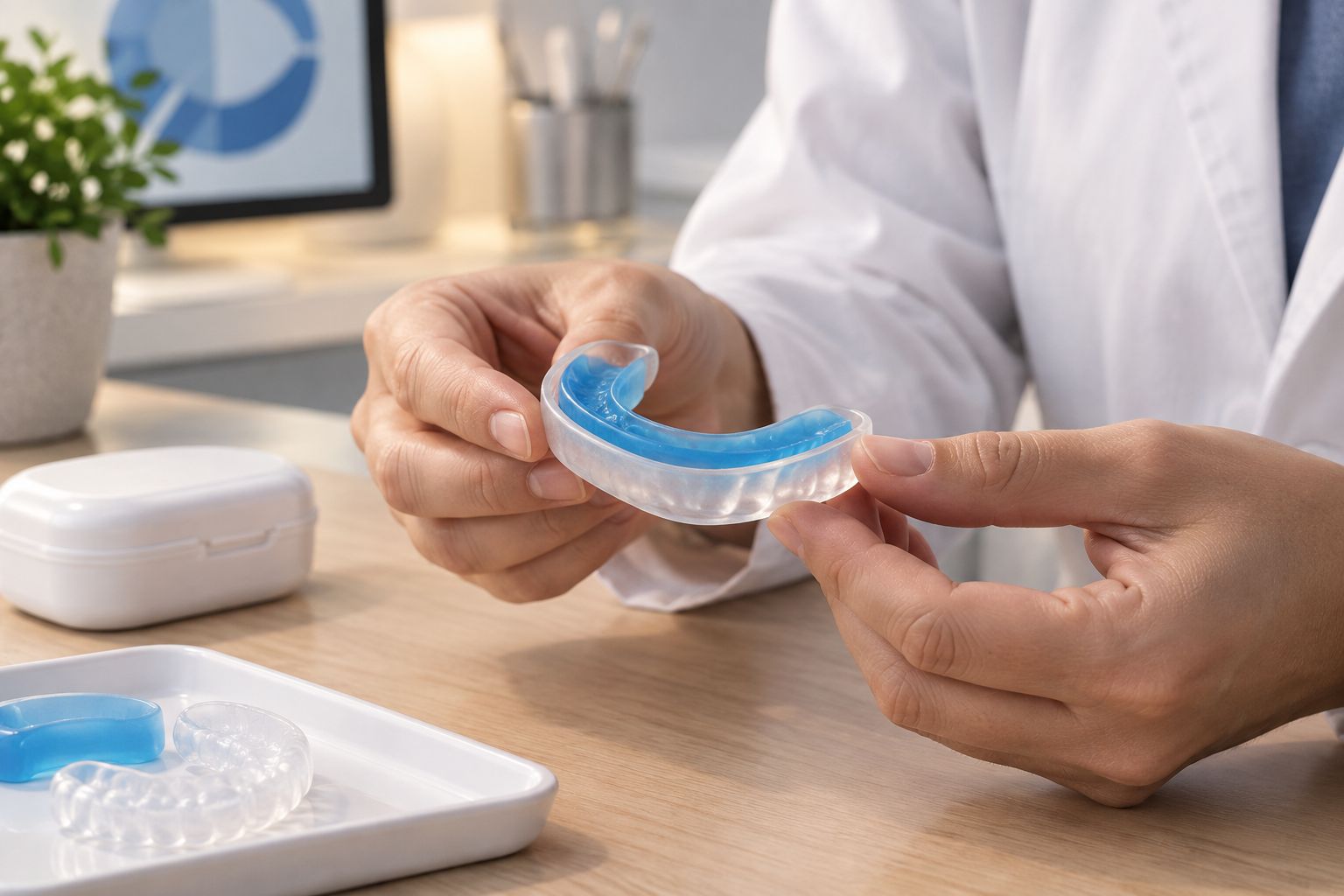
2. Custom Hard Acrylic Night Guard: best night guard material for severe grinders and TMJ clenching
Hard acrylic guards are a single rigid shell, generally fabricated in the 2-3mm thickness range depending on the severity of grinding, and they carry the highest wear resistance of any material on this list. This is the material a dentist moves you to after a soft or dual-laminate guard has already worn through faster than expected.
Hard acrylic pros:
- Handles the heaviest clenching forces without perforating
- Holds its shape over years of nightly use
- Can be reshaped chairside with a bur if your bite shifts
Hard acrylic cons:
- Feels rigid and can increase saliva production for the first several nights
- Less comfortable initial fit if TMJ pain relief is also part of the picture, where a softer starting material sometimes eases the transition
- No cushioning against lateral clenching movements
Hard acrylic verdict: Buy. Correct pick once a previous guard has already cracked or worn through from grinding force.
3. Custom Soft Silicone/EVA Night Guard: best night guard material for mild grinding or daytime clenching
This is a single-layer flexible EVA guard, thinner than the other custom options and the most comfortable to wear the first night. It's the right call for patients whose grinding is mild or who mostly clench during the day rather than grinding hard through the night.
Soft/EVA pros:
- Most comfortable material for all-night wear
- Fastest adjustment period, often a single night
- Good fit for occasional clenchers rather than confirmed heavy grinders
Soft/EVA cons:
- Wears through fastest of the three custom materials under real grinding force
- Not durable enough for confirmed nocturnal bruxism
- Can trap moisture against the gumline overnight
Soft/EVA verdict: Hold. Fine for mild cases, but tooth marks appearing within a few weeks means the material is undersized for your grinding and it's time to move up to hard acrylic or dual-laminate.
Get fitted for a custom night guard
A dental impression matches the material to how hard you actually grind.
4. Over-the-Counter Boil-and-Bite Guard: best night guard material for short-term, temporary protection
A boil-and-bite guard comes from the pharmacy, gets softened in hot water, and is bitten into a rough impression of your teeth at home. It's the fastest way to get something protective in your mouth the same night, but the fit is never as precise as one molded from an actual dental impression.
The difference between a lab-made guard and a drugstore one comes down to fit tolerance and material grade — custom versus store-bought guards comparisons consistently show the store-bought version shifting or perforating far faster under real nightly clenching.
OTC boil-and-bite pros:
- No dental visit needed; the guard is in your mouth that night
- Useful as a stopgap while waiting on a custom fit
- Low barrier if you just cracked a filling and need protection immediately
OTC boil-and-bite cons:
- Fit is bulkier and less precise than an impression-based guard
- Can trigger a gag reflex or shift loose overnight
- Breaks down fast — most need replacing every few weeks under regular grinding
OTC boil-and-bite verdict: Wait. It buys you time, not a solution. A smile worn down by years of teeth grinding is almost always traced back to relying on the drugstore version for too long instead of switching to a custom material.
How we ranked these materials
Each material was weighed against the six criteria above, with wear resistance and fit precision carrying the most weight — those two determine whether a guard survives a full year of nightly clenching or needs replacing every season. Comfort matters too, since a guard nobody actually wears protects nothing. Materials that only perform well for mild cases (soft/EVA) or only exist as a bridge (boil-and-bite) were ranked for their real use case rather than penalized for not being the universal answer.
Which night guard material should you choose in 2026?
If you haven't been fitted before, start with a dental exam to grade your grinding severity — the material choice depends entirely on how hard you clench, not personal preference. For most patients confirmed as moderate-to-severe grinders, a custom dual-laminate guard remains the best night guard material for teeth grinding heading into 2026, balancing durability with a fit you'll actually keep wearing. Severe grinders and anyone who's already cracked a softer guard should move straight to hard acrylic. Mild clenchers can stay with soft EVA as long as it's holding up between checkups.
Bottom line: the best night guard material is the one matched to how hard you actually grind, not the cheapest or most comfortable option on the shelf.
FAQ
What is the best night guard material for teeth grinding in 2026?
Custom dual-laminate is the best overall night guard material for teeth grinding in 2026, combining a soft inner lining with a hard outer shell that resists cracking. Severe grinders often do better with hard acrylic instead.
Is a hard or soft night guard better for bruxism?
Hard acrylic holds up better for severe, heavy grinding, while soft guards suit mild clenching or daytime jaw tension. Grinding hard enough to wear through a soft guard within weeks is a sign you need a harder material.
How long does a custom night guard last?
A custom hard acrylic or dual-laminate guard typically outlasts a soft single-layer guard by a wide margin under the same grinding force. Actual lifespan depends on grinding intensity and how consistently it’s worn each night.
Can I use a boil-and-bite guard long term?
Boil-and-bite guards are meant as a short-term bridge, not a permanent solution. They break down faster than custom-fitted materials and rarely fit precisely enough to stop grinding damage over the long run.
Does dental insurance cover a custom night guard?
Coverage varies significantly by plan, so it’s worth confirming benefits before scheduling an impression appointment. A dental office can usually verify what a specific plan covers before you commit to a material.
What’s the difference between a night guard and a TMJ splint?
A night guard primarily protects teeth from grinding wear, while a TMJ splint is designed to reposition the jaw and relieve joint pain. Some patients need both addressed together if clenching and jaw pain occur at the same time.
How do I know if my night guard needs replacing?
Visible tooth indentations, thin spots, or a guard that no longer seats snugly are signs it’s time to replace it. A dentist checking it during a routine visit can confirm whether the material is still doing its job.
Can children use the same night guard materials as adults?
Children’s grinding is often evaluated differently since their bite is still developing, and material choice can differ from an adult’s. It’s worth having a dentist assess whether a child’s grinding needs an appliance at all before assuming an adult-style guard applies.
One last thing
A night guard that fit perfectly in January 2026 can feel loose by the end of the year if your bite shifts, which is why dentists check guard fit at routine cleanings rather than assuming a one-time fitting lasts indefinitely. If your current guard rocks side to side or you can slide it off with your tongue, that's worn material talking, not a sizing fluke — bring it to your next visit instead of waiting for it to crack.
Related guides