
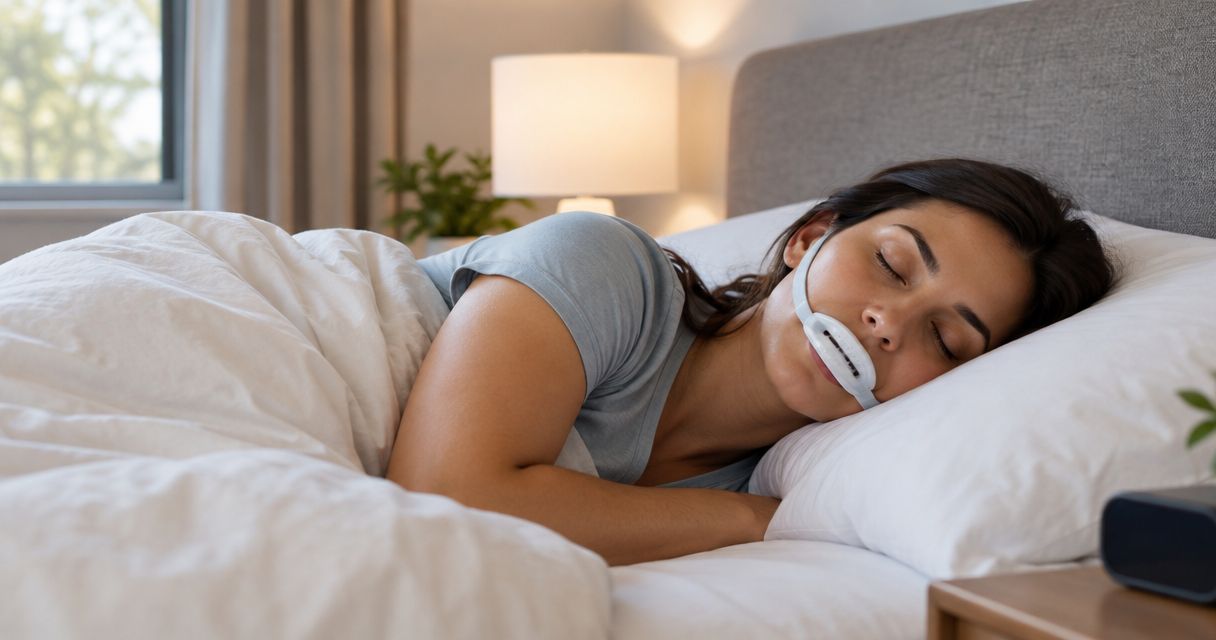
Best overall for suitable adults: a custom adjustable mandibular advancement device. Best specialist-only alternative when tooth retention is unsuitable: a tongue-retaining device. Best for patients who need positive airway pressure: a CPAP setup fitted for side sleeping. This 2026 guide explains which option fits your diagnosis, dental health, and sleeping position.
- The best sleep apnea appliance for side sleepers is usually a custom adjustable mandibular advancement device for suitable adults.
- Dental Arts of Atlantis offers sleep apnea treatment for families in Lake Worth and Palm Beach County.
- CPAP remains the usual first choice for severe obstructive sleep apnea; side sleeping alone does not replace treatment.
- Choose oral appliance therapy through a dental evaluation, medical diagnosis, and follow-up sleep testing.
Your sleeping position matters, but it does not determine your treatment by itself. Dental Arts of Atlantis offers sleep apnea care in Lake Worth; bring your sleep study and current treatment details when discussing your options.
Why this matters
Side sleeping can reduce breathing disturbances in positional obstructive sleep apnea, where events occur more often on your back. It does not prove that your airway stays open throughout the night. Less snoring is encouraging, but it is not a substitute for measuring breathing during sleep.
For your 2026 treatment decision, separate comfort from effectiveness. An appliance must feel tolerable against your pillow, stay securely in place, and control obstructive breathing events. A comfortable device that leaves apnea untreated is not a successful choice.
These recommendations concern adults with obstructive sleep apnea, not central sleep apnea or children. Central sleep apnea involves a different breathing-control problem and needs medical management rather than a self-selected dental appliance.
What makes the best sleep apnea appliance for side sleepers?
Judge an appliance by these criteria before choosing a design:
- Airway control: Your sleep clinician must confirm that treatment reduces obstructive events and addresses oxygen drops.
- Dental fit: Teeth, gums, restorations, and jaw joints must support the selected oral appliance.
- Adjustability: A custom adjustable mandibular advancement device allows supervised changes to lower-jaw position.
- Side-sleeping comfort: Check whether pillow pressure causes cheek irritation, displacement, or mask leakage.
- Secure retention: An oral appliance must remain seated without excessive pressure on individual teeth.
- Follow-up testing: Symptom improvement needs confirmation through a clinician-directed sleep study with treatment in place.
In 2026, choose by diagnosis and fit—not by a promise that one mouthpiece suits every side sleeper. More forward jaw movement is not automatically better; the goal is effective treatment with tolerable side effects.
Sleep apnea appliances at a glance
These are treatment categories, not interchangeable products. CPAP is included because some side sleepers need positive airway pressure rather than an oral appliance.
| Option | Best for | Standout feature | Key limitation |
|---|---|---|---|
| Custom adjustable mandibular advancement device | Suitable adults seeking oral appliance therapy | Individually fitted, adjustable lower-jaw positioning | Requires suitable dental support and monitoring for jaw or bite changes |
| Tongue-retaining device | Selected adults unable to use a tooth-retained advancement device | Holds the tongue forward using suction | Tongue discomfort and retention problems; less established evidence than custom advancement devices |
| CPAP with a side-sleeping-compatible interface | Patients who need positive airway pressure, especially severe disease | Delivers pressure to keep the airway open | Mask seal and tubing need attention when turning onto your side |
1. Custom adjustable mandibular advancement device: best oral option
A custom adjustable mandibular advancement device holds your lower jaw forward during sleep to help keep the upper airway open. It fits your teeth and allows a dentist to adjust advancement as part of a coordinated treatment plan.
Best for: Adults with obstructive sleep apnea who are suitable for oral appliance therapy, including patients who cannot tolerate CPAP or prefer an alternative after medical discussion.
For side sleepers, the practical advantage is that the appliance sits inside your mouth without an external mask seal or breathing tube. However, cheek pressure from a pillow can still expose rough edges or an uncomfortable fit. Discuss those pressure points rather than accepting them as unavoidable.
The mandibular advancement device guide explains the treatment category in more detail. Device selection should follow an examination, not precede it.
Custom adjustable mandibular advancement device pros:
- Fits your individual dental anatomy rather than relying on a generic shape.
- Allows supervised adjustment of the lower-jaw position.
- Avoids external mask contact with the pillow.
- Is an established oral appliance option for appropriately selected adults with obstructive sleep apnea.
Custom adjustable mandibular advancement device cons:
- Can cause jaw soreness, tooth discomfort, salivation changes, or dry mouth.
- Can change your bite over time and requires dental monitoring.
- Does not control apnea adequately for every patient; follow-up sleep testing is necessary.
Dental Arts of Atlantis offers sleep apnea treatment, but the right device category still depends on your examination and sleep diagnosis. Do not assume that missing teeth, crowns, or existing jaw pain automatically rule treatment in or out.
Verdict: Buy only after clinical selection and fitting. For a suitable side sleeper choosing oral appliance therapy, a custom adjustable mandibular advancement device is the strongest default—not a generic anti-snoring mouthpiece.
2. Tongue-retaining device: best specialist-only alternative
A tongue-retaining device uses suction to hold the tongue forward rather than advancing the lower jaw through tooth-supported trays. This gives clinicians another category to consider when a conventional mandibular advancement device is unsuitable.
Best for: Selected adults whose dental anatomy prevents reliable use of a tooth-retained appliance, following specialist assessment.
This is not a proven upgrade for side sleeping. Tongue comfort, suction retention, and the ability to keep the device positioned matter more than the position you start the night in. A clinician must determine whether this approach is reasonable for your airway and oral health.
Tongue-retaining device pros:
- Does not depend on the same tooth-retained mechanism as a mandibular advancement device.
- Holds the tongue forward without using jaw advancement as its primary mechanism.
- Avoids a CPAP mask and tubing.
Tongue-retaining device cons:
- Can cause tongue soreness, irritation, or excess saliva.
- Suction loss can interfere with retention during sleep.
- Has a less established evidence base than custom adjustable mandibular advancement devices.
Do not select this category simply because you wear dentures or have loose teeth. Those findings require an examination, and positive airway pressure might remain the better treatment.
Verdict: Hold until specialist review. A tongue-retaining device fills a narrower clinical role; it is not the routine first recommendation for a side sleeper.
3. CPAP with a fitted interface: best when airway control comes first
Continuous positive airway pressure, or CPAP, delivers pressurized air through a mask to keep your upper airway open. It is not an oral appliance, but excluding it would leave out an important treatment for side sleepers.
Best for: Patients whose sleep clinician recommends positive airway pressure, particularly those with severe obstructive sleep apnea or inadequate control from an oral appliance.
A nasal-pillow or nasal interface can be worth discussing when pillow contact disrupts a larger mask. Neither is automatically right for you: nasal obstruction, mouth leakage, prescribed pressure, and individual fit all affect the choice.
Side-sleeping-compatible CPAP pros:
- Is generally more effective than oral appliances at reducing obstructive breathing events.
- Offers several interface styles for individualized fitting.
- Provides treatment information that helps your sleep team assess use and identify problems.
Side-sleeping-compatible CPAP cons:
- Pillow contact can disrupt the mask seal.
- Tubing can pull when you change position.
- Dryness, nasal symptoms, or pressure discomfort can interfere with use and need troubleshooting.
Ask your equipment provider to assess the mask while you lie in your usual sleeping position. A good seal while sitting upright does not establish a good seal against your pillow.
Verdict: Buy the prescribed setup after fitting. Do not abandon effective CPAP because you sleep on your side; address the interface problem with your treatment team first.
How severity changes your choice
Adult obstructive sleep apnea severity commonly uses the apnea-hypopnea index, or AHI: the number of apneas and hypopneas per hour of sleep. The American Academy of Sleep Medicine's adult classification uses these ranges:
- Mild: At least 5 but fewer than 15 events per hour.
- Moderate: At least 15 but fewer than 30 events per hour.
- Severe: 30 or more events per hour.
These thresholds are clinical categories, not appliance success predictions. Oxygen levels, symptoms, other medical conditions, and the pattern of events also influence treatment.
For your 2026 consultation, ask whether the report separates back-sleeping from side-sleeping results. If breathing remains abnormal on your side, changing position alone does not adequately address the problem. Severe disease generally puts CPAP first; an alternative needs medical oversight and objective confirmation of control.
From diagnosis to a side-sleeping fit
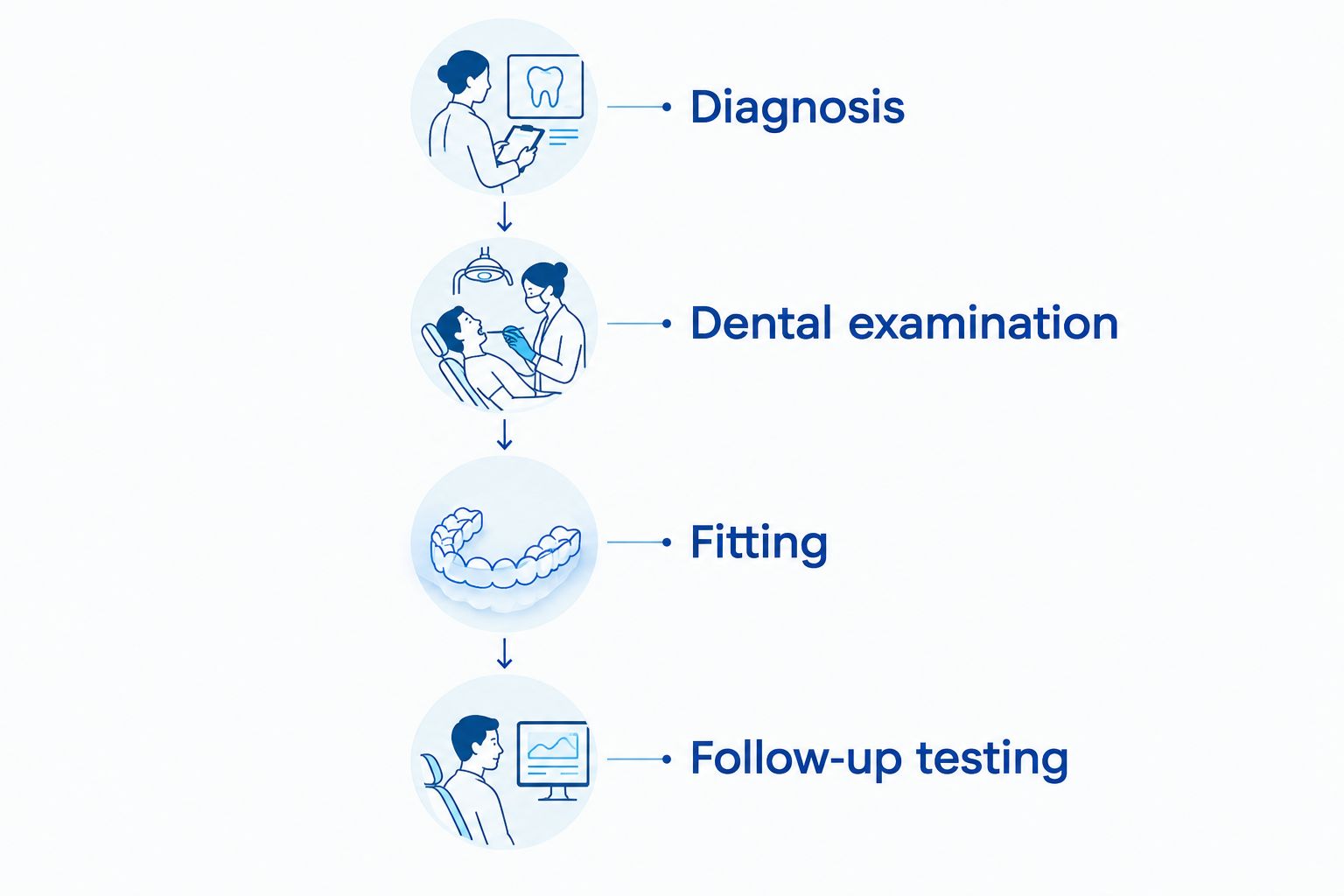
The safest sequence starts with your sleep diagnosis and ends with evidence that the treatment works. Dental Arts of Atlantis offers sleep apnea care for Lake Worth families; discuss how dental treatment will connect with your sleep clinician's recommendations.
Diagnosis
Bring your sleep study, medical history, and details of any current CPAP use. Ask whether the diagnosis is obstructive sleep apnea, whether position changes its severity, and what treatment your sleep clinician recommends.
Dental examination
Your dentist checks tooth stability, gum health, restorations, jaw movement, and existing pain. Report grinding, loose dental work, morning bite changes, and difficulty opening your mouth before an appliance is selected.
Fitting
For an oral appliance, check retention and comfort, then describe how your cheeks meet the pillow in your normal sleeping position. Follow the prescribed adjustment instructions; do not advance the jaw further on your own to chase quieter sleep.
Follow-up testing
After adjustment, your sleep clinician arranges appropriate testing to assess treatment effectiveness. Continue dental reviews to check the bite, teeth, gums, and appliance condition.
Keep using your prescribed treatment until your clinician approves a change. An oral appliance fitting appointment does not establish that an alternative is already effective.
How these options are ranked
This 2026 ranking prioritizes clinical suitability, adjustability, dental fit, side-sleeping comfort, and confirmation of effectiveness. It ranks treatment roles rather than commercial brands: custom adjustable advancement is the default oral category, tongue retention is a narrower alternative, and CPAP remains essential when medically indicated.
The American Academy of Sleep Medicine and American Academy of Dental Sleep Medicine's joint clinical guidance supports custom, titratable appliances over non-custom oral devices when oral appliance therapy is prescribed. No hands-on product comparison or side-sleeper-specific brand superiority is claimed here.
Which sleep apnea appliance should you choose?
Start with a custom adjustable mandibular advancement device if your sleep clinician and dentist agree that oral appliance therapy suits you. It offers individualized fitting and supervised adjustment without an external mask against your pillow.
Keep CPAP at the center of the discussion when it provides needed airway control, especially with severe disease. Consider tongue retention only when a clinician identifies a specific reason to use it. Dental Arts of Atlantis offers sleep apnea treatment for local families; your diagnosis determines the next step, not a shopping ranking.
FAQ
What’s the best sleep apnea appliance for side sleepers in 2026?
A custom adjustable mandibular advancement device is the usual first oral appliance category for suitable adults with obstructive sleep apnea. Your sleep clinician and dentist must confirm suitability, and follow-up sleep testing must check effectiveness.
Is an oral appliance better than CPAP if I sleep on my side?
Side sleeping does not make an oral appliance better than CPAP. CPAP generally controls obstructive breathing events more effectively; the choice also depends on diagnosis, tolerance, dental health, and treatment results.
Can I stop treatment if I only snore on my back?
No—do not stop prescribed treatment based on snoring or sleeping position alone. Ask your sleep clinician whether testing shows adequate breathing on your side and whether positional therapy is appropriate.
Can I use a regular night guard for sleep apnea?
A regular grinding night guard is not a substitute for a prescribed sleep apnea appliance. Protecting teeth and maintaining an open airway are different treatment goals.
What if an oral appliance hurts my jaw?
Contact the treating dentist for assessment rather than increasing advancement or forcing yourself to tolerate pain. Jaw symptoms require review of fit, adjustment, and whether the appliance remains appropriate.
Can I wear a sleep apnea appliance if I have missing teeth?
Missing teeth do not determine eligibility by themselves. Your dentist must assess retention and oral health; selected patients need a different appliance approach or non-dental treatment.
How do I know whether my oral appliance actually works?
Clinician-directed follow-up sleep testing checks whether the appliance controls obstructive sleep apnea. Quieter snoring, a sleep app, or feeling more rested cannot establish adequate control alone.
One last thing
Bring your usual pillow—or a clear description of your sleeping setup—to a fit discussion. Explain whether you tuck your chin, press your cheek firmly into the pillow, or change sides frequently. Those details help identify comfort problems, but your follow-up sleep study remains the check on treatment effectiveness.
Related guides
- Best oral appliance for CPAP-intolerant sleep apnea patients
- How to connect a home sleep study to oral appliance therapy
- Night guards for teeth grinding and jaw pain